Share This Gerry Dawes's Spain Post


Instagram

In 2026, ranked #7 in the Top 30 Gastronomy Blogs (and Websites for Gastronomists & Gastronomes by Feedspot. (Ranked in the top 50 since 2019). "The Best Gastronomy blogs selected from thousands of Food blogs, Culture blogs and Food Science. We’ve carefully selected these websites because they are actively working to educate, inspire, and empower their readers with . . . high-quality information.

More than 3,640,000 views since inception, 123,000+ views in August 2026.


Ranked #7. Gerry Dawes's Spain: An Insider's Guide to Spanish Food, Wine, Culture and Travel gerrydawesspain.com

"My good friend Gerry Dawes, the unbridled Spanish food and wine enthusiast cum expert whose writing, photography, and countless crisscrossings of the peninsula have done the most to introduce Americans—and especially American food professionals—to my country's culinary life. . .” - - Chef-restaurateur-humanitarian José Andrés, Nobel Peace Prize Nominee and Oscar Presenter 2019; Chef-partner of Mercado Little Spain at Hudson Yards, New York 2019

Showing posts with label Quique Dacosta. Show all posts

2/03/2021

Photo Album of Asisa Madrid Fusión 2017: The Shared Codes of Haute Cuisine, Paths of the Future, 15th Anniversary Edition, January 23-25, 2017


* * * * * 
 
 Asisa Madrid Fusión 2017 The Shared Codes of Haute Cuisine, Paths of the Future, 15th Anniversary Edition.   Photo by Gerry Dawes©2017

 Arturo Sánchez, one of Spain’s greatest producers of jamón Ibérico de Bellota and embutidos (charcuterie) from Guijuelo (Salamanca) with José Ángel Muñoz, his company’s cortador de jamones (professional ham carver) at Asisa Madrid Fusión 2017. Photo by Gerry Dawes©2017 #amf17 #arturosanchez


 My old friend Alicante restaurateur Pitu Perramón, husband of celebrity chef María José San Román at Asisa Madrid Fusión 2017. Photo by Gerry Dawes©2017 #amf17 


 Three-star chef Quique Dacosta (Quique Dacosta, Denia, Alicante) and journalist Alexander Forbes at Asisa Madrid Fusión 2017. Photo by Gerry Dawes©2017 #amf17 #alexandraforbes #quiquedacosta


 Three-star chef Quique Dacosta (Quique Dacosta, Denia, Alicante) and journalist Alexander Forbes at Asisa Madrid Fusión 2017. Photo by Gerry Dawes©2017 #amf17 #alexandraforbes #quiquedacosta


María José San Román (Monastrell, Alicante) and Quique Dacosta (Quique Dacosta) at Asisa Madrid Fusión 2017.  Photo by Gerry Dawes©2017 #amf17 #quiquedacosta #grupogourmet #mariajosesanroman 

 Wine and olive oil producer, Carlos Falcó, el Marqués de Griñón, and Gerry Dawes at Asisa Madrid Fusión 2017.  #amf17 Photo by Xandra Falcó.


 Wine and olive oil producer, Carlos Falcó (Marqués de Griñón), José Raventós (Director Nacional, Bodegas Roda-Corimbo-Aubocassa) and Esmeralda Capel (Directora Asisa Madrid Fusión) at Asisa Madrid Fusión 2017.  Photo by Gerry Dawes©2017 #amf17


 Video producer and gastronomy writer Pepe Barrena with three-star Michelin chef Joan Roca (Celler de Can Roca) at Asisa Madrid Fusión 2017.  Photo by Gerry Dawes©2017 #amf17


 Gerry Dawes, Mikel Urmeneta (former owner of Kukuxumusu and now founder-owner of Katuki Saguyaki; yes, he makes those faces in photographs on purpose) and Mikel’s friend Luis Alberto at Asisa Madrid Fusión 2017.  Photo by Gerry Dawes©2017 #amf17


 José Rodríguez Tarin, director general of Hotel Wellington, Madrid, and Gerry Dawes in the VIP lounge at Asisa Madrid Fusión 2017.  Photo by Gerry Dawes©2017 #amf17.


 Amaia Ortuzar, Chef-owner of the legendary San Sebastián pintxo bar-restaurant Ganbara, licks a dollop of oestra caviar off her hand as Fernando Remírez de Ganuza, owner of Bodegas Remírez de Ganuza looks on at at Asisa Madrid Fusión 2017.  Photo by Gerry Dawes©2017 #amf17


 Chef Tony Pérez, Alma Restaurant, La Mata-Torre Vieja (Alicante) at Asisa Madrid Fusión 2017.  Photo by Gerry Dawes©2017 #amf17 #Alma


Directora General de Turisme de la Generalitat Valenciana (Director of Tourism for La Comunitat Valenciana) Raquel Huete Nieves samples a chufa de Valencia (used to make the popular drink, horchata) at Asisa Madrid Fusión 2017.  Photo by Gerry Dawes©2017 #amf17 #Tigernuts


Chufa de Valencia, the Tigernut tuber that is using to make the very popular drink horchata, a sweet refreshing cold drink that can be readily found in the provinces of Valencia and Alicante.  Photo by Gerry Dawes©2017 #amf17 #Tigernuts 

Chufa de Valencia, the Tigernut tuber that is using to make the very popular drink horchata, a sweet refreshing cold drink that can be readily found in the provinces of Valencia and Alicante.  Photo by Gerry Dawes©2017 #amf17 #Tigernuts 


Black winter truffles from Morella (Castellón) at Asisa Madrid Fusión 2017.  Photo by Gerry Dawes©2017 #amf17

Licor de Crema de Trufa from la Comunitat Valenciana at Asisa Madrid Fusión 2017. Photo by Gerry Dawes©2017 #amf17

__________________________________________________  
About Gerry Dawes

 Gerry Dawes was awarded Spain's prestigious Premio Nacional de Gastronomía (National Gastronomy Award) in 2003. He writes and speaks frequently on Spanish wine and gastronomy and leads gastronomy, wine and cultural tours to Spain. He was a finalist for the 2001 James Beard Foundation's Journalism Award for Best Magazine Writing on Wine, won The Cava Institute's First Prize for Journalism for his article on cava in 2004, was awarded the CineGourLand “Cinéfilos y Gourmets” (Cinephiles & Gourmets) prize in 2009 in Getxo (Vizcaya) and received the 2009 Association of Food Journalists Second Prize for Best Food Feature in a Magazine for his Food Arts article, a retrospective piece about Catalan star chef, Ferran Adrià. 

In December, 2009, Dawes was awarded the Food Arts Silver Spoon Award in a profile written by José Andrés

". . .That we were the first to introduce American readers to Ferran Adrià in 1997 and have ever since continued to bring you a blow-by-blow narrative of Spain's riveting ferment is chiefly due to our Spanish correspondent, Gerry "Mr. Spain" Dawes, the messianic wine and food journalist raised in Southern Illinois and possessor of a self-accumulated doctorate in the Spanish table. Gerry once again brings us up to the very minute. . ." - - Michael & Ariane Batterberry, Editor-in-Chief/Publisher and Founding Editor/Publisher, Food Arts, October 2009. 
 
Pilot for a reality television series on wine, gastronomy, culture and travel in Spain.
 

7/20/2017

Looking Back on Lo Mejor de La Gastronómía 2009: San Sebastian Chefs' Conference Celebrates Spanish Extra Virgen Olive Oil with an Epilogue-Slide Show of the Olive Harvest

* * * * *


Lo Mejor de La Gastronomía*Star Chefs Compete Using Jaén Province’s Picudo Variety Olive Oil

Plus An Epilogue Featuring Slide Shows of the End of the Olive Harvest in Jaén with Bailén de Oro & in Córdoba with Soledad Serrano at Beloyana

With a visit to the fabulous Mesón Juan Peña in Córdoba

* * * * *

By Gerry Dawes

Premio Nacional de Gastronomia 2003


(Click on slide show to amplify and see full screen.)


The Lo Mejor de La Gastronómía chefs’ conference, held each November in the Rafael Moneo-designed Kursaal center in the stunning Basque seaside city of San Sebastián, is among the world’s top five culinary events. But Lo Mejor de La Gastronómía is a culinary conference with a difference, since almost all the attention is on chefs, primarily cocina de vanguardia - avant-garde cuisine chefs from around the world, but with a focus on Spain’s star chefs who come at the end of each year to show their best dishes and techniques from the current year and give glimpses of what is to come the following year.

This year’s Lo Mejor de La Gastronómía 2009 included a standout presentation from Ferran Adrià, the man called “the world’s greatest chef,” and jaw-dropping demonstrations from Can Roca’s Joan Roca, El Poblet’s Quique Dacosta and super-star pastelero (desserts and chocolates) Paco Torreblanca. Torreblanca, one of the greatest pastry chefs in the world, has devised ways of using Spanish olive oil instead of butter in his desserts and chocolates, so now all his lines of supernal Totel and Barry Callebaut desserts and chocolates use no animal fats in their preparation.

One of the highlights of the event was the VI Annual “Jaén, Paraiso Interior” Premio Internacional de Cocina con Aceite de Oliva Virgen Extra (International Cooking Prize for the Best Dish Featuring Spanish Extra Virgen Olive Oil), which carried a an astounding First Prize of 18,000 Euros (about $25,000). Sponsored by the Junta de Andalucía and the Diputación de Jaén, the competition featured 11 chefs from Spain (Madrid, Alicante, Jaén and the Basque Vizcaya province), France, Germany, Italy and Portugal. Each chef, a finalist chosen from a field of 135 contestants from seven countries in preliminary contest, presented a creative cuisine dish that used Spanish extra virgen olive as a prominent taste component.


Felipe López, President of the Diputación Provincial (regional government) de Jaén, said his administration was sponsoring the contest because Lo Mejor de LaGastronómía offers “an extraordinary showcase, since it represents cocina de vanguardia, for showing the excellence of the great olive oils of the province of Jaén.”

Rafael García Santos, Founder & Director of the conference, commenting on the leap in quality that extra virgen olive oils from Jaén have made–in the six years since they have been giving the prize at Lo Mejor de LaGastronómía–said “Jaén extra virgen olive oil producers are doing ever more select olive oils. They have changed their production techniques, harvesting and the final product, which has shown a steady evolution in quality. Before Jaén was known as the biggest producer and now the name is associated with brands of extra virgen olive oil that have become universally recognized for their high quality, which has brought world-class prestige to Jaén and raised the value of the product. This has made the oils of the province of Jaén an ever more important player in top kitchens everywhere.”

This writer came to cover the conference and the “Jaén, Paraiso Interior” Premio Internacional de Cocina con Aceite de Oliva Virgen Extra cooking contest for Foods From Spain News. But, I was soon pressed into service as a member of the jury panel by Lo Mejor de LaGastronómía’s founder and director, Rafael García Santos, whose directive I followed with honor and with gusto, since it entailed tasting all the finalists’ wonderfully creative dishes, accompanied by glasses of Spanish cava. The competing chefs, while making extra virgen olive oil a discernible component, still managed to smoothly integrate the oils into each dish and make most of them visually spectacular.

The very first dish by Vitor Manuel Da Silva from Le Poivron Rouge in Portugal, which was called Mi Conserva de Sardina, featured a olive-oil dressed sardine, a razor clam and a mussel in a shellfish tin, complete with a rolled-up lid. Fernando Pérez Arellano of Zaranda in Madrid presented a seawater-colored, arbequina olive oil-infused “gazpacho en aspic al aceite de arbequina,” which was gelatinous rectangle on which he had perched a clam, a cockle, a bit of sea urchin, a goose barnacle and several tiny mussels, with several pools of olive oil-sea urchin mayonnaise alongside. Another spectacular dish was “Tomate. . .un salmorejo con caviar,” a lovely, re-constructed light orange-red tomato “shell” filled with a delicious salmorejo--made with an extra virgen olive oil with a distinct personality--from Jaén’s own chef Raúl Clemente from Restaurante Paquito Diaz in Baeza.


The winner of the competition was Carlo Cracco’s chef de cuisine, Matteo Baronetto (Cracco, Milan, Italy) , who wowed the judges with his Crema Quemada al Aceite con Cañaillas (Crême Brûlée made with extra virgen olive and winkles, or sea snails) scented with vanilla. This sensational dish was presented in two artistic silver serving vessels, one resembling a tea steeper and holding the Crema Quemada, the other a scalloped silver dish holding butter-like ribbons of a creamy extra virgen olive oil that could have passed for butter except for their distinctive olive oil flavor.

The jury, an international panel that included Rafael García Santos, Cristino Álvarez (Spain), Duarte Calvao (Portugal), Licia Granello (Italy), Jean Paul Perez (Belgium), Bob Noto (Italy), Jacques Trefoir (Brazil) and myself, judged the creations on culinary virtuosity, imagination, originality, and aesthetics, as well as the techniques used in making each dish and on how the presence of extra virgen olive oil was handled by each chef. In all these dishes, there was a lightness and fresh, healthy flavors that would be hard, if not impossible, to achieve with animal fats, so good Spanish extra virgen olive oils have become essential to achieving this healthful effect in kitchens around the western world. Matto Baronetto was awarded the 18,000 Euro prize and a sculpture trophy designed by Jaén artist Antonio Blanca.

Surrounding this intensive star chef conference is a gastronomic fair featuring products from around Spain: Joselito and other hams from Guijuelo (Salamanca), the Dehesa de Extremadura and Jabugo; a daily walk around tasting of more than 100 wines from Navarra; a multitude of stands promoting Spanish foods–cheeses, paprika, olives, tinned seafood, etc.; cookbook publishers’ stands from Montagud, De Re Coquinaría and Everest; and, of course, Spain’s superb extra virgen olive oils. One of the most frequented stands was the “Jaén, Paraiso Interior” (Inland Paradise) pavilion itself, where there were daily guided tastings of the fine extra Virgen olive oils, sponsored by the Junta de Andalucía and the Diputación Provincial de Jaén, a province that is literally one vast picudo variety olive orchard. The olive orchards of Jaén are so vast in fact that the Spanish poet Manuel Machado (brother of Antonio Machado, one of Spain’s best known 20th Century poets), in his famous “Ode to Andalucía” described the province simply as “silvery Jaén” due to the fact that in the slightest breeze the olive trees provide a constant light show of the dark-green leaf tops of the olivares alternating with flashes of silvery grey from their flip sides.

The daily tastings, of some dozen different quality Jaén extra Virgen olive oils were led by Anunciación Carpio Dueñas, a biologist who specializes in olive oil. Sra. Carpio and Jesús Zafra Ocaña from the Tourism, Local Development and Sustainability office of the Diputación Provincial of Jaén set up and led me through a private tasting of ten high quality, mostly Picual variety-based extra virgen olive oils from their province.

Using a map to show me the location in Jaén province of each olive oil producer, they expertly explained each of the different extra virgen olive oils, which included the newly bottled Vadolivo Gran Selección Royal, a deep green-yellow, pungent, grassy, complex, silky oil made from the Royal olive variety in the wild game region of the Sierra de Cazorla; Eolea Zumo de Oliva (olive “juice”), a very pungent, grassy, piquant, almondy, full-bodied blend of Picual, Picudo and Arbequina olives grown around Mengíbar near the famous town of Bailén; Oro Bailén Reserva Familiar, a deep green and intensely aromatic (fresh cut grass, plantains) with pronounced, gutsy flavors of stone fruits, but with a smooth, silky feel on the palate and Ánima Áurea, a much lighter, more neutral flavored Picual and Arbequina blend, both from the immediate area of Bailén; and Tierras de Canena Escencia Milénario, a green-gold, finely aromatic, light, smooth, silky, balanced oil from the higher altitude Picual-based orchards near the monumental towns of Baeza and Úbeda in north-central Jaén.


From Escañuela, northwest of the capital, Jaén, the Cortijo de la Torre 100% Picual extra virgen olive oil was a pretty, deep green, had a pungent nose of fresh grass, green apples and green plantains, and was full of character with grassy, picante, almond and artichoke flavors that reached every corner of the mouth; from Torredonjimeno, just west of Jaén, Carmen Edición Limitada showed a lighter chartreuse color, had a ripe nose of apple and stone fruits and was very suave with only light bitterness and no picante flavors, which makes it ideal for dishes that call for a light olive oil flavor; from Pegalar, east of Jaén, Melgarejo Selección Gourmet was a pretty green-gold color, had a very clean nose with some typically grassy and appley aromas, and showed great structure, personality and balance with very pleasant grassy, bitter almond and olive flavors.

Two of the last oils came from the mountainous areas of northeastern Jaén province near La Puerta de Segura. Oro de Géave, which produces only 25.000 bottles of ecologically cultivated, unfiltered extra virgen olive oil was typically cloudy, had a nose of riper apple and was pungent with appley, bitter almond, picante flavors full of personality. Fuenroble, the Jaén oil with the greatest international distribution, comes from the Sierra de Segura National Park area. It had a deep green-chartreuse color, a nose with some grassiness, but more apple and green tomato and was very smooth and silky with complex, pleasing, apple, bitter almond and green tomato flavors.


I felt privileged to have been personally educated about the extra virgen olive oils of Jaén and the flavors of the Picual olive variety. Later on this same trip, at Adolfo Muñoz Tapas Bar in Toledo, right next to the Cathedral, I would get another impromptu tasting, this time with owner José I. Millán Valderrama, President of Valderrama, producer of extra virgen olive oils from orchards in Castilla La Mancha and Córdoba. And upon returning to New York, I was invited to come to the olive harvest at Beloyana in Córdoba and I still owe a visit to Extremadura to the estate of the Marqués de Valdueza, which produces oils with Arbequina, Picual, Hojiblanca and the rare Morisco olives.

I have a feeling that my education in the great extra virgen olive oils of Spain is just beginning.


–The End–

Epilogue:

The next phase of my olive oil education produced this slide show on the tail-end of the olive harvest (la recogida) and Bailén de Oro olive oil mill (almazara) near Bailén in the Andalucian Jaén province with Anuncia Carpio and José Gálvez as my guides and luncheon hosts at the Resturante del Hotel Bailén (a former Parador de Turismo). Those of you who have ever driven through Jaén know that it is one huge olive orchard. Anuncia Carpio is emphatic in pointing out that "these photos are the last of the harvest, when the olives are too ripe (over-ripeness is something that doesn't stop many winemakers these days!) and most of them have fallen to the ground. The highest quality olive oils are extracted when the olives are green (during the first two weeks of November) and all of the fruit is taken directly from the trees."


Still, if you have never seen the olive harvest, even the end of la recogida is fascinating as I think you can see in the photographs in the following two slide shows.


(Double click on the image above for a large screen view of my slide show on the fascinating harvest & milling process.)


After Jaén, I went on to take in another version of la recogida, this time with my old friend, Javier Hidalgo, owner of La Gitana Manzanilla (see COPA Jerez report and article on Manzanilla). We visited the Beloyana olive oil producing estate of Soledad Serrano near Espejo, a half hour southeast of Córdoba.


(Double click on the image above for a large screen view
of my slide show on the fascinating harvest & milling process.)


We spent the night at the Beloyana estate and my companion, Kay and I got a chance to go into Córdoba and arrived at the gates of La Mezquita just as the 5:30 bells were tolling. La Mezquita closes at six, but the security guards refused to let us in even for a quick look at it and closed the door in our faces, even after we told them that we had come to Córdoba especially for that. They were quite antipático in the bargain. These people live off tourism, but they seem to really dislike tourists, or what they think are tourists.

We strolled around the old quarter until it was time for the taberna/mesón of my old friend, Juan Peña, to open. Juan was not due until 10 p.m., but I had an employee call him and he soon appeared as did a selection of his incredible dishes, including the best salmorejo and berenjenas fritas (fried eggplant sticks) I have ever tasted. Juan makes a number of of salmorejos--his spectacularly good tomato-based one is the benchmark for this wonderful thick gazpacho-like dish that can be used like a sauce with his supernal fried eggplant. He also makes a green-and-white asparagus salmorejo and garnishes both with chopped Pedroches jamón Ibérico (a little-known, but now widely served ham from a mountain valley on the north side of the Sierra Morena mountains.

Stayed tuned for a slide show (coming soon) on la recogida at Soledad Serrano's Beloyana estate and the food at Mesón Juan Peña, one of the greatest tapas bars in Spain.

About the author

Gerry Dawes was awarded Spain's prestigious Premio Nacional de Gastronomía (National Gastronomy Award) in 2003. He writes and speaks frequently on Spanish wine and gastronomy and leads gastronomy, wine and cultural tours to Spain. He was a finalist for the 2001 James Beard Foundation's Journalism Award for Best Magazine Writing on Wine.
Experience Spain With Gerry Dawes: Culinary Trips to Spain & Travel Consulting on Spain

Gerry Dawes can be reached at
gerrydawes@aol.com; Alternate e-mail (use only if your e-mail to AOL is rejected): gerrydawes@hotmail.com


2/09/2016

Gastronomic Adventures in Alicante Province: Quique Dacosta Gets His Well-deserved Third Michelin Star; Plus Personal Adventures with Quique & Casa Elías in Xinorelet


* * * * *

Posted Image
Quique Dacosta at Casa Elías, Xinorlet (Alicante), October 18, 2012.
Photo by Gerry Dawes©2011. gerrydawes@aol.com

Quique Dacosta has long been a friend of mine.  I was very happy to hear that is was announced in November that he had received his third Michelin star, for which he has worked so hard for so many years.  I last ate at Restaurante Quique Dacosta in October 2011, when I was staying in Denia at Hotel La Posada del Mar.  I was traveling with Ryan Mcilwraith, Michael Chiarello's executive sous chef and we were supposed to go to Quique Dacosta that night.  Ryan was sick with a bad stomach, so I decided not to go either, but Quique called me on my cell phone at 10:30 p.m. and demanded that I get my ass over there (it is about 2 kilometers from the hotel), so I ended up going by myself.  I was pretty wiped out from ten days of taking Michael and Ryan around northern Spain (Michael had left the day before from Barcelona), so I told Quique I was only up for an abbreviated menu.  He sent out a dazzling parade of his incredible cocina de vanguardia estilo Quique dishes, then came out and sat with me for half an hour.


Posted Image
Quique Dacosta, Denia (Alicante). Dish with the spooky vapors of the dry ice beneath swirling around your food.
Photo by Gerry Dawes©2011. gerrydawes@aol.com

In October 2012, I was the inaugural speaker at the annual Turismo conference in Benidorm (Alicante) and I met Director General de Turismo de Valencia Sebastian Fernández, who told me he was going for lunch at one of my favorite restaurantes in Spain, Casa Elías, a exceptional family place in the small village of Xinorlet.   Casa Elías specializes in wonderful thin-layered arroses (rice dishes, call them paellas) con conejo y caracoles (rabbit and local snails [with fresh rosemary]) cooked over grape vine cuttings, usually from the local Monastrell vineyards.  Casa Elías also serves a number of other authentic local speciaties (see photos of the luncheon here: Xinorlet (Alicante) Casa Elias Rabbit & Snail Paella Paco Torreblanca - Quique Dacosta Oct 18, 2012).  Sr. Fernández also told me that two great friends--two of my favorite Spanish chefs--Quique Dacosta and Paco Torreblanca were also coming.  I managed to wrangle (not wangle) an invitation to accompany Sr. Fernández to the luncheon.  

We got to Casa Elías first and I hid in a private dining room until Paco, his wife Chelo, Quique and journalist Maria Canabal (http://www.gastronomad.eu) were in the main dining, then came out to surprise them (I took it as a good sign that they didn't flee).  I felt like I had hit the lottery.  Not only did I get to schmooze the Director of Tourism for Valencia on the hour-long ride from Benidorm to Xinorlet and have a chance to eat the terrific food at Casa Elías again, among my dining companions for the next two hours were two of Spain's real culinary super stars:  Paco Torreblanca may be the top chocolatier in Europe and Quique Dacosta could well be the heir apparent to Ferran Adrià's throne, now that elBulli has closed. 

* * * * *

Paco Torreblanca Slideshow, Including the Full Food Arts Article.

I never see Quique without remembering (how could I not?) that on September 11, 2001 I was having lunch with Santa Fe Chef Mark Miller (then owner of Coyote Cafe) at Quique's restaurant in Denia, at the time called El Poblet.  Halfway through a terrific meal--we were having a course of supernal grilled gambas de Denia  (superb rosa-colored shrimp that actually come from deep water off the Balearic island of Ibiza), when my Spanish cell phone rang.  It was chef Teresa Barrenechea, who then owned Marichu restaurant in Manhattan.  She, too, was traveling in Spain.  She told me that a plane had hit The World Trade Center.  I thought, "Wow, someone has had the misfortune to have crashed a private plane into The World Trade Center!"   Soon enough, Quique called us to the bar, where we saw the rest in real time, including the second plane crashing into the second tower.  Mark Miller, Quique, myself and his employees watched dumbfounded as we the events unfolded on television.  Mark Miller's Coyote Cafe restaurant managers from Santa Fe and Las Vegas were still in-flight headed for Valencia, where we were supposed to pick them up after lunch.  


Posted Image
Mark Miller (at the end of the table) and some friends tasting wines with me at Taberna La Boca in Santa Fe 
during the Santa Fe Wine & Chile Fiesta in September 2012

Miller's managers were able to get to Valencia on time, but, as we soon found out, there would be no going back to the U.S. right away, since all flights were grounded, so we continued on our planned intinerary to Barcelona, Navarra, The Basque Country, la Rioja and back to Madrid.   In Navarra, we had lunch in Tudela, and found out the next day that an Al-Qaeda operative who had planned to blow up the U.S. Embassy in Paris had been apprehended in a nearby village, where he had been living for several months.

For several days, I was sure that I had lost friends in The World Trade Center attack, including Michael Lomonaco, one of the original members of my Chefs From Hell Club, who was then Executive Chef of Windows on the World, Cellar in the Sky and The World Trade Center Club; Jules Roinnel, the Managing Director of The World Trade Center Club; and a number of others who had been on a trip to Spain with me that spring.


Posted Image
Chef Michael Lomonaco, now Chef-partner at Porterhouse New York.

Ironically, in May of 2001, I had led a group of 26 people from The World Trade Center Club around Spain for eleven days.  The group include Jules Roinnel, the Club's Director and my old friend, Michael Lomonaco, Executive Chef of Windows on the World, Cellar in the Sky and The World Trade Center Club.  Ironically, on that trip, we had gone for lunch one day in Madrid at a great seafood restaurant, La Trainera, on calle Lagasca.  Since the street was too narrow for our bus, the driver double-parked the bus alongside some parked cars on calle Goya across the street from Bar Goya and in front of a BBVA bank branch and we walked a block or so to the restaurant.  After a terrific lunch, at which on old friend of mine, John Ewing, joined the group, we drove back to our hotel and continuing touring Madrid in the afternoon.  

After dinner, some of us decided to have a drink in the Hemingway Bar at the Hotel Palace. John Ewing, who had also joined us for dinner, decided to call it night and took a cab back to his hotel, which coincidentally was the Hotel Lagasca, on the street where we had had lunch.  Within half an hour, Ewing called me on my cell phone and told me, "You won't believe what just happened!  A bomb just exploded and damned near blew me out of bed."The Basque separatist group ETA had planted a bomb in a car parked in front of that BBVA bank branch where our bus was parked during lunch.  

For all we knew the bomb could have been there while our bus was there.  The bomb injured 14 people, destroyed a number of cars and wrecked a number of business along calle Goya, including the Bar Goya, which got destroyed and was where John Ewing had considered stopping for a nightcap, but opted to return to his hotel, go to bed and read a book, a decision that may have saved his life.

The next morning, our World Trade Center Club group was preparing to leave for Ribera del Duero, Burgos and The Basque Country.  The Deputy Security Inspector for The Bridge and Tunnel Authority (in charge of The World Trade Center), had his offices on the 77th Floor of the tower that was home to the World Trade Center Club, Windows on the World, Cellar in the Sky and City Lights Bar.  He stood outside the cargo compartments of the bus and made sure that each bag belonged to its owner and was verified.  Looking back, I have always considered that Basque bomb on calle Goya as a harbinger of things to come.

As Mark Miller, his Coyote Cafe managers and I continued our trip, I checked newspapers at every stop and listened to Spanish radio in the car, but, in the absence of any direct news about my friends, I was almost sure that they had perished.  Then three days later, my daughter, Elena, who had dined with me at Windows on the World in August, called crying about the attacks, but told me that she had seen my friend, Chef Lomonaco, on television.  Michael had survived because he took 15 minutes to have his glasses repaired and did not catch the elevator that would have taken him 110 stories to his kitchens at Windows on the World and to certain death.  

Later I would find out that Jules Roinnel had switched shifts and planned to work that evening.  Mike Nester, the Deputy Inspector who had checked the bags going on the bus in front of the Hotel Ritz in May had had breakfast at The World Trade Center Club and had just reached the 77th floor when the first plane hit.  He was able to get out in time by walking down all those flights of stairs, helping and injured person to get out as well, injuring his neck in the process.  But, of the some 24 people on that Spain trip with me, not a one perished.  Pardon me if I have digressed in reporting about Quique Dacosta's third Michelin star, but I spent one of the most unforgettable days of my life in his restaurant.  

Subsequent meals at Quique Dacosta have fortunately had a much happier outcome, but we seldom see one another for any length of time without recalling that incredible afternoon that we watched unfold on television together.  

(A video trailer on Valencia and Alicante showing Quique Dacosta, Paco Torreblanca and Casa Elías.)
 ____________________________________________________  

About Gerry Dawes 

Gerry Dawes was awarded Spain's prestigious Premio Nacional de Gastronomía (National Gastronomy Award) in 2003. 

He writes and speaks frequently on Spanish wine and gastronomy and leads gastronomy, wine and cultural tours to Spain. 

He was a finalist for the 2001 James Beard Foundation's Journalism Award for Best Magazine Writing on Wine, won The Cava Institute's First Prize for Journalism for his article on cava in 2004, was awarded the CineGourLand “Cinéfilos y Gourmets” (Cinephiles & Gourmets) prize in 2009 in Getxo (Vizcaya) and received the 2009 Association of Food Journalists Second Prize for Best Food Feature in a Magazine for his Food Arts article, a retrospective piece about Catalan star chef, Ferran Adrià. 

In 2009, Dawes was awarded the Food Arts Silver Spoon Award in a profile written by José Andrés

". . .That we were the first to introduce American readers to Ferran Adrià in 1997 and have ever since continued to bring you a blow-by-blow narrative of Spain's riveting ferment is chiefly due to our Spanish correspondent, Gerry "Mr. Spain" Dawes, the messianic wine and food journalist raised in Southern Illinois and possessor of a self-accumulated doctorate in the Spanish table. Gerry once again brings us up to the very minute. . ." - - Michael & Ariane Batterberry, Editor-in-Chief/Publisher and Founding Editor/Publisher, Food Arts.
 
Gerry Dawes would like to host a reality television series on wine, gastronomy, culture and travel in Spain that features a different star American chef in each episode.  Serious inquiries welcome.

Gerry Dawes can be reached at gerrydawes@aol.com.


2/10/2014

Madrid Fusión 2014, Day One Jan. 27 in Photos


* * * * *


 Three-star chef Joan Roca of Can Roca (Girona, Catalunya), named by UK's Restaurant Magazine panel as The Best Restaurant in the World, on the first day of Madrid Fusión 2014 doing his presentation, Creatividad Urbana: Inspiración Externa, Motivación Interna. 
 Photo by Gerry Dawes©2014 / gerrydawes@aol.com / Facebook / Twitter / Pinterest. Canon 5D Mark III / Canon 70-200mm f/4L USM with Canon 1.4 Telextender. 


Madrid Fusión 2014. Photo by Gerry Dawes©2013 / gerrydawes@aol.com / Facebook / Twitter / Pinterest. Canon 5D Mark III / Canon 24-105mm f/4L IS USM
.
 
Juan Mari Arzak, María José San Román and Quique Dacosta at Madrid Fusión 2014. 
Photo by Gerry Dawes©2013 / gerrydawes@aol.com / Facebook / Twitter / Pinterest. Panasonic Lumix DMC ZS30 43-86mm f3.3 – f6.4. 


Chefs Sergi Arola and Jordi Cruz at Madrid Fusion 2014. Photo by Gerry Dawes©2014 / gerrydawes@aol.com / Facebook / Twitter / Pinterest. Canon 5D Mark III / Canon 70-200mm f/4L USM with Canon 1.4 Telextender. 


 Pitu Perramón, Owner of La Taberna de Gourmet and other restaurants in Alicante, Jordi Cruz (ABaC, Barcelona) and his assistant chef, David, and food writer / Catalan culinary personality Xavi Agullò with champion cortador de jamón Clemente Gómez at Los Pedroches jamón Ibérico stand, on a jamón stand hopping tour that I organized at Madrid Fusión 2014. Photo by Gerry Dawes©2014 / gerrydawes@aol.com / Facebook / Twitter / Pinterest. Canon 5D Mark III / Tokina 17-35mm f/4. 


 Three-star chef Martín Berasategui and two-star chef Paco Pérez (Hotel Mirror, Barcelona and Miramar, Costa Brava) at Madrid Fusión 2014. 
 Photo by Gerry Dawes©2014 / gerrydawes@aol.com / Facebook / Twitter / Pinterest. Canon 5D Mark III / Tokina 17-35mm f/4. 


José Andrés and three-star chef Juan Mari Arzak (Arzak, San Sebastián) at Madrid Fusión 2014. Photo by Gerry Dawes©2014 / gerrydawes@aol.com / Facebook / Twitter / Pinterest. Canon 5D Mark III / Tokina 17-35mm f/4. 


Slide Show of Madrid Fusión 2014, Day One Jan. 27
 ___________________________________________________________________________________________________

About Gerry Dawes


Writing, Photography, & Specialized Tours of Spain & Tour Advice
For custom-designed tours of Spain, organized and lead by Gerry Dawes, and custom-planned Spanish wine, food, cultural and photographic itineraries, send inquiries to gerrydawes@aol.com.  


I have planned and led tours for such culinary stars as Chefs Thomas Keller, Mark Miller, Mark Kiffin, Michael Lomonaco and Michael Chiarello and such personalities as baseball great Keith Hernandez and led on shorter excursions and have given detailed travel advice to many other well-known chefs and personalities such as Drew Nieporent, Norman Van Aken, Karen Page and Andrew Dornenberg, Christopher Gross, Rick Moonen, James Campbell Caruso and many others.
 * * * * *
“The American writer and town crier for all good Spanish things Gerry Dawes . . . the American connoisseur of all things Spanish . . .” Michael Paterniti, The Telling Room: A Tale of Love, Betrayal, Revenge and The World’s Greatest Piece of Cheese

* * * * *

"Gerry Dawes, I can't thank you enough for opening up Spain to me." -- Michael Chiarello on Twitter. 

"Chiarello embarked on a crash course by traveling to Spain for 10 days in 2011 with Food Arts
contributing authority Gerry Dawes, a noted expert on Spanish food and wine.  Coqueta's (Chiarello's new restaurant at Pier Five, San Francisco) chef de cuisine, Ryan McIlwraith, later joined Dawes for his own two week excursion, as well. Sampling both old and new, they visited wineries and marketplaces, as well as some of Spain's most revered dining establishments, including the Michelin three-star Arzak, Etxebarri, the temple to live fire-grilling; Tickets, the playful Barcelona tapas bar run by Ferran Adrià and his brother, Albert; and ABaC, where Catalan cooking goes avant-garde." - - Carolyn Jung, Food Arts, May 2013.


* * * * *

"In his nearly thirty years of wandering the back roads of Spain," Gerry Dawes has built up a much stronger bank of experiences than I had to rely on when I started writing Iberia...His adventures far exceeded mine in both width and depth..." -- James A. Michener, author of Iberia: Spanish Travels and Reflections
 * * * * *
Gerry Dawes was awarded Spain's prestigious Premio Nacional de Gastronomía (National Gastronomy Award) in 2003. He writes and speaks frequently on Spanish wine and gastronomy and leads gastronomy, wine and cultural tours to Spain. He was a finalist for the 2001 James Beard Foundation's Journalism Award for Best Magazine Writing on Wine, won The Cava Institute's First Prize for Journalism for his article on cava in 2004, was awarded the CineGourLand “Cinéfilos y Gourmets” (Cinephiles & Gourmets) prize in 2009 in Getxo (Vizcaya) and received the 2009 Association of Food Journalists Second Prize for Best Food Feature in a Magazine for his Food Arts article, a retrospective piece about Catalan star chef, Ferran Adrià.


In December, 2009, Dawes was awarded the Food Arts Silver Spoon Award in a profile written by José Andrés.


". . .That we were the first to introduce American readers to Ferran Adrià in 1997 and have ever since continued to bring you a blow-by-blow narrative of Spain's riveting ferment is chiefly due to our Spanish correspondent, Gerry "Mr. Spain" Dawes, the messianic wine and food journalist raised in Southern Illinois and possessor of a self-accumulated doctorate in the Spanish table. Gerry once again brings us up to the very minute. . ." - - Michael & Ariane Batterberry, Editor-in-Chief/Publisher and Founding Editor/Publisher, Food Arts, October 2009. 


Pilot for a reality television series with Gerry Dawes  
on wine, gastronomy, culture and travel in Spain.

Experience Spain With Gerry Dawes: Customized Culinary, Wine & Cultural Trips to Spain & Travel Consulting on Spain

Gerry Dawes can be reached at gerrydawes@aol.com

2/06/2013

Pedroches D.O. (Córdoba) jamón Ibérico cutter Clemente Gómez & Francisco 'Paco' Castro (l), venenciador for the DO Montilla-Moriles at Madrid Fusión 2013 Cutting & Pouring for VIPs


* * * * *
I am just back from one Hell of a trip to Spain, at Madrid Fusión 2013, where I introduced on stage Chef George Mendes of New York's Portuguese and Spanish influenced Aldea Restaurant; shared abrazos to some of Spain's top chefs such as Quique Dacosta, Albert Adrià, Martín Berasategui, David Muñoz (Restaurant DiverXo, Madrid), Dani García, Paco Torreblanca, Sergi Arola, María José San Román, Paco Torreblanca; sat by my old friend the legendary Godfather of modern Spanish cuisine, Juan Mari Arzak, at dinner at Esmeralda Capel (a director of Madrid Fusión); and hung out with Colman Andrews, George Semler, John Sconzo and his son El Jay.  

Had a blast with George Mendes and one of his chefs, Mitch Barr, dragging them to all my old favorite down home places such as Casa Lucio, La Castela and Casa Botín, having carabineros at El Mercado de San Miguel and Canary Islands papas arrugadas con mojo verde y mojo rojo (classic Canary Islands "wrinkled" potatos cooked in salt water and served with a green cilantro-olive oil-and garlic based sauce and a spicy red mojo sauce) at El Escaldón, taking in Flamenco at Café de Chinitas and late night gintonics with George Mendes, George Semler, writer Lisa Abend, CIA's Anne McBride and Starchefs.com Caroline Hatchett.   

Turned on George Mendes, Doc Sconzo, a passle of Colombian foodies and others to the wonderful jamones Ibéricos from my buddy, Clemente Gómez, the expert ham cutter for the Pedroches (Córdoba) D.O. and having Paco Castro, the official venenciador pour glasses of the wonderful Montilla-Moriles D.O. fino from a height for my friends.  That was just the first four days, then the road trip began (more to come). 

IMG_2470.JPG
Francisco 'Paco' Castro (l), venenciador for the DO Montilla-Moriles,
and my great friend, Clemente Gómez (right), ham cutter for Pedroches hams,
at the Pedroches (Córdoba) stand at Madrid Fusión 2013. Photo by Gerry
Dawes copyright 2013 / gerrydawes@aol.com / Facebook / Twitter.


Slide show of Pedroches D.O. (Córdoba) jamón Ibérico cutter Clemente Gómez & Francisco 'Paco' Castro (l), 
venenciador for the DO Montilla-Moriles at Madrid Fusión 2013 Cutting & Pouring for VIPs 
 ________________________________________________________________________________________________
About Gerry Dawes  


Gerry Dawes was awarded Spain's prestigious Premio Nacional de Gastronomía (National Gastronomy Award) in 2003. He writes and speaks frequently on Spanish wine and gastronomy and leads gastronomy, wine and cultural tours to Spain. He was a finalist for the 2001 James Beard Foundation's Journalism Award for Best Magazine Writing on Wine, won The Cava Institute's First Prize for Journalism for his article on cava in 2004, was awarded the CineGourLand “Cinéfilos y Gourmets” (Cinephiles & Gourmets) prize in 2009 in Getxo (Vizcaya) and received the 2009 Association of Food Journalists Second Prize for Best Food Feature in a Magazine for his Food Arts article, a retrospective piece about Catalan star chef, Ferran Adrià. 


". . .That we were the first to introduce American readers to Ferran Adrià in 1997 and have ever since continued to bring you a blow-by-blow narrative of Spain's riveting ferment is chiefly due to our Spanish correspondent, Gerry "Mr. Spain" Dawes, the messianic wine and food journalist raised in Southern Illinois and possessor of a self-accumulated doctorate in the Spanish table. Gerry once again brings us up to the very minute. . ." - - Michael & Ariane Batterberry, Editor-in-Chief/Publisher and Founding Editor/Publisher, Food Arts, October 2009. 

 
Mr. Dawes is currently working on a reality television series 
on wine, gastronomy, culture and travel in Spain.


12/16/2009

To Hell with Michelin! I Have the GeralDalí 'Persistence of Memory' Watch Awards and I am Bestowing Five Watches, My Top Rating, on Restaurante Quique Dacosta (formerly El Poblet), Chef Quique DaCosta and Quique Dacosta's Staff


* * * * *

Gerry Dawes's Geraldo-Dalí Persistence of Memory* (Salvador Dalí)  Melting Watch Awards.

(The opinions in this post are entirely those of Gerry Dawes.  Quique Dacosta was not consulted.)

* * * * *


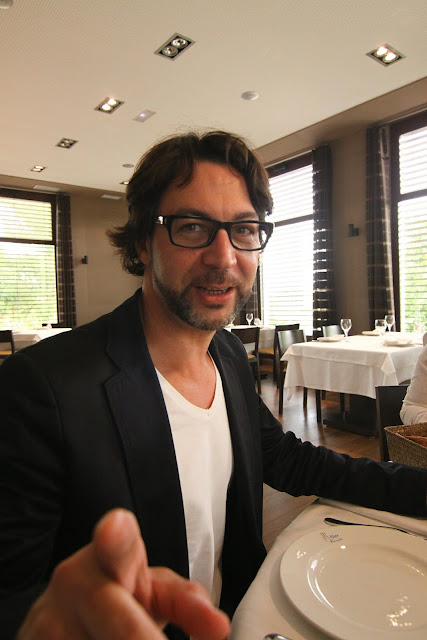
Quique Dacosta. Photo by Gerry Dawes©2008.
 * * * * *
Video of Quique Dacosta's Restaurant in Denia (Alicante).


* * * * *
Quique Dacosta is probably the brightest culinary star of his generation and this year, he and his stunning restaurant and stunning state-of-cocina de vangaurdia food were yet again royally screwed by the Michelin Guide (2010), who failed to give Quique (and others) a deserved third star. 

Let's get it straight, at one point restaurants in France had received around 1,700 Michelin rosettes while Spain, in the same year, had less than 200.  The ratio is roughly the same this year.  Let's be gracious and call it eight to one in favor of France over Spain.

Taking into consideration that Spanish restaurants and Spanish cuisine--vanguardia, modernized traditional and traditional--have been recognized by far more credible judges than the Michelin Guide as among the best restaurants in the world and that France is in mortal competition with Spain for gastro-tourism Euros, why is anyone giving any credence to Michelin's shameful French-centric judgement any more?

In addition to the long-vaunted modern cuisine restaurants like Ferran Adrià's El Bulli, Arzak, Can Fabes, Martín Berasategui, San Pau, Can Roca and many others, Spain has a slew of traditional cuisine restaurants that merit one and two rosettes (usually called "stars") from Michelin, some of them three.  If Elkano and Kaia in Getaria in the Basque Country alone (Not to mention a slew of other Basque restaurants) don't merit two stars for stellar food, stellar service, ambience, wine cellar, etc., who does?  I go on on listing restaurants all over Spain worthy of Michelin's lofty ratings, but it is futile, since even the vociferous protests of Madrid's culinary press corps who have voiced their displeasure to the faces of Michelin representatives who invited them to press luncheons in Madrid to present each year's new Red Guide, apparently have had little effect. 

If I were the Spaniards--and I often feel like I am--I would get Michelin's attention quick. 

"Señores (Monsieurs y Madames), is it not true that the Michelin Guides originated as a way to help your company sell more tires?" 

"In that case, would you prefer to sell rubber or paper?  Because we intend to organize a boycott against your pneumaticos if you don't manage to award Spain at least, at the very least, 1,000 more rosettes by the next time your guidebook to Spain and Portugal is published." 

Yes, we know there are Michelin tire factories in Spain.  Do you know how many people restaurants in Spain employ, how many farmers supply food to Spanish restaurants, how many wineries and winery employees provide them with wine?
_______________________________________________________


About Gerry Dawes

Gerry Dawes's Spain: An Insider's Guide to Spanish Food, Wine, Culture and Travel


Gerry Dawes was awarded Spain's prestigious Premio Nacional de Gastronomía (National Gastronomy Award) in 2003. He writes and speaks frequently on Spanish wine and gastronomy and leads gastronomy, wine and cultural tours to Spain. He was a finalist for the 2001 James Beard Foundation's Journalism Award for Best Magazine Writing on Wine, won The Cava Institute's First Prize for Journalism for his article on cava in 2004, was awarded the CineGourLand “Cinéfilos y Gourmets” (Cinephiles & Gourmets) prize in 2009 in Getxo (Vizcaya) and received the 2009 Association of Food Journalists Second Prize for Best Food Feature in a Magazine for his Food Arts article, a retrospective piece about Catalan star chef, Ferran Adrià.

In December, 2009, Dawes was awarded the Food Arts Silver Spoon Award in a profile written by José Andrés.

". . .That we were the first to introduce American readers to Ferran Adrià in 1997 and have ever since continued to bring you a blow-by-blow narrative of Spain's riveting ferment is chiefly due to our Spanish correspondent, Gerry "Mr. Spain" Dawes, the messianic wine and food journalist raised in Southern Illinois and possessor of a self-accumulated doctorate in the Spanish table. Gerry once again brings us up to the very minute. . ." - - Michael & Ariane Batterberry, Editor-in-Chief/Publisher and Founding Editor/Publisher, Food Arts, October 2009. 


Mr. Dawes is currently working on a reality television series 
on wine, gastronomy, culture and travel in Spain.

Related Posts with Thumbnails