Share This Gerry Dawes's Spain Post


Instagram

In 2026, ranked #7 in the Top 30 Gastronomy Blogs (and Websites for Gastronomists & Gastronomes by Feedspot. (Ranked in the top 50 since 2019). "The Best Gastronomy blogs selected from thousands of Food blogs, Culture blogs and Food Science. We’ve carefully selected these websites because they are actively working to educate, inspire, and empower their readers with . . . high-quality information.

More than 3,640,000 views since inception, 123,000+ views in August 2026.


Ranked #7. Gerry Dawes's Spain: An Insider's Guide to Spanish Food, Wine, Culture and Travel gerrydawesspain.com

"My good friend Gerry Dawes, the unbridled Spanish food and wine enthusiast cum expert whose writing, photography, and countless crisscrossings of the peninsula have done the most to introduce Americans—and especially American food professionals—to my country's culinary life. . .” - - Chef-restaurateur-humanitarian José Andrés, Nobel Peace Prize Nominee and Oscar Presenter 2019; Chef-partner of Mercado Little Spain at Hudson Yards, New York 2019

Showing posts with label Salvador Poveda. Show all posts

1/24/2025

Club Chefs of Connecticut & New York Taste of Spain Tour 2014 with Gerry Dawes, Day 4 Jan. 16 Culinary Adventures in Alicante


* * * * *
On Friday morning, Jan. 17, we visited Valencia’s colorful Mercat Central, located near our hotel, perusing the fish, meat, fruit-and-vegetable, cheese and spice stands, then stopping just outside the Mercat’s entrance to see the often photographed stand selling paella pans and cooking paraphernalia. And at the adjacent market bar, we sampled typical rich, thick, Spanish hot chocolate with churros.


 Paella pan and kitchen utensil stand just outside the main entrance to the Mercat Central, Valencia, Jan. 15, 2014.  Photo by Gerry Dawes©2014 / gerrydawes@aol.com / Facebook / Twitter / Pinterest.  Canon EOS 6D / Canon 24-105mm f/4L IS USM.

By noon, we were on our way to the interior of the province of Alicante, south of Valencia, where Rafael Poveda, Director of Bodegas Salvador Poveda, was waiting for us at his Alicante D.O. (denominación de origen) winery outside the town of Monóver.  We were offered tastes of his Fondillón from the 1947 solera, a rare, sherry-like, aged red wine of a type mentioned by Alexandre Dumas pere in The Count of Monte Cristo.   


 The Connecticut & New York Club Chefs Taste of Spain with Gerry Dawes Tour 2014.  Rafael Poveda pouring Fondillón at Bodegas Salvador Poveda, Monóvar (Alicante), Jan. 15, 2014.  Photo courtesy Gerry Dawes©2014 / gerrydawes@aol.com / Facebook / Twitter / Pinterest.  Canon 5D Mark III / Tokina 17-35mm f/4.

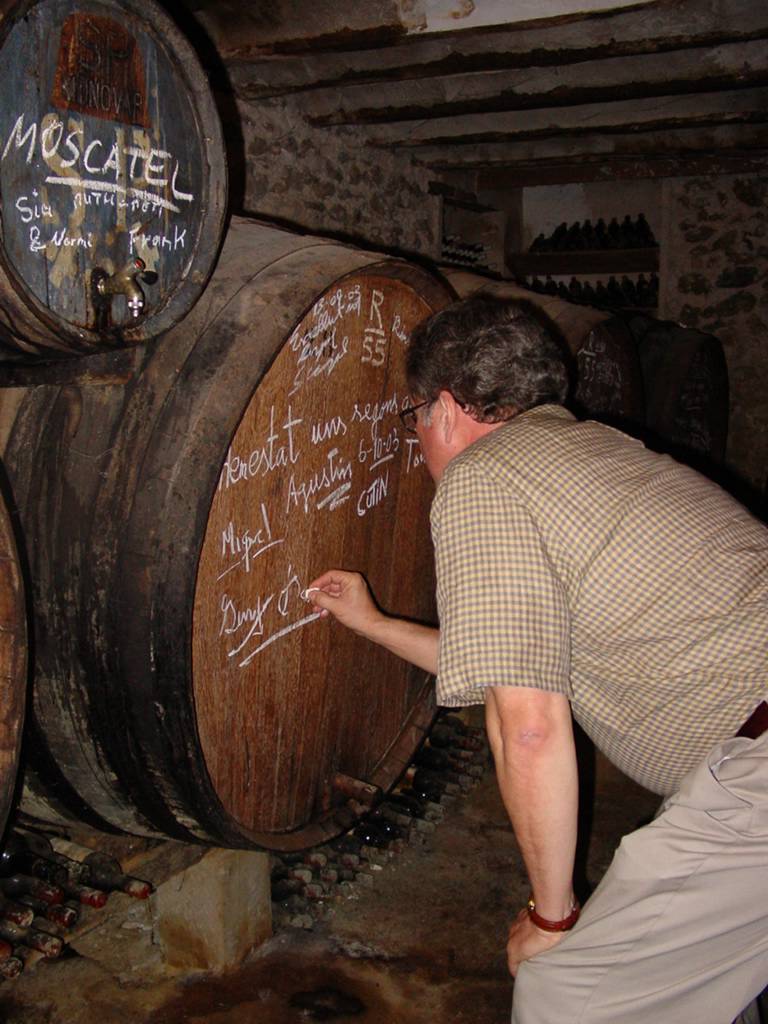
We got to write our names in chalk on the huge 1986 vintage barrel  as did many other visitors over the course of the last 100 years of vintages on the many casks available in this cellar.  In America a bodega refers to a Hispanic convenience store but in Spain a bodega is a winery. 


The Connecticut & New York Club Chefs Taste of Spain with Gerry Dawes Tour 2014.  Chef Victor Honrath, Wykagyl Country Club, New Rochelle, NY signs a Fondillón barrel at Bodegas Salvador Poveda, Monóvar (Alicante), Jan. 15, 2014.  Photo courtesy Gerry Dawes©2014 / gerrydawes@aol.com / Facebook / Twitter / Pinterest.  Canon 5D Mark III / Tokina 17-35mm f/4.

Rafael Poveda and one of his friends-partners in the winery, Pedro Cáceres (who, because of that chance meeting has become one of my partners in The Spanish Artisan Wine Group),
came with us to lunch at Casa Elias, a wonderful family-owned restaurant in the nearby village of Xinorlet (Chinorlet) and brought some of his wines for us to drink.  


 The Connecticut & New York Club Chefs Taste of Spain with Gerry Dawes Tour 2014.  Gerry Dawes with Pedro Caceres (c) and Rafael Poveda (r) at Casa Elias, Xinorlet (Alicante), Jan. 15, 2014.  Photo courtesy Gerry Dawes©2014 / gerrydawes@aol.com / Facebook / Twitter / Pinterest.  Canon 5D Mark III / Tokina 17-35mm f/4.

At Casa Elias, a long table was set for us with little bowls of almonds, sweet, slow-cooked tomato compote, and aioli, which laid the groundwork for the dishes to come:  superb local charcutería (sliced cured sausages), snails grilled with rosemary and the star of the afternoon, paella con conejo y caracoles, rice with wild rabbit and snails cooked in a paella pan over grapevine cuttings.


The Connecticut & New York Club Chefs Taste of Spain with Gerry Dawes Tour 2014.  Lunch at Casa Elias, Xinorlet (Alicante), Jan. 15, 2014.  Photo courtesy Gerry Dawes©2014 / gerrydawes@aol.com / Facebook / Twitter / Pinterest.  Canon 5D Mark III / Tokina 17-35mm f/4.

 
The Connecticut & New York Club Chefs Taste of Spain with Gerry Dawes Tour 2014.  Lunch appetizers:  Pan-roasted almonds, aioli and tomato compote at Casa Elias, Xinorlet (Alicante), Jan. 15, 2014.  Photo courtesy Gerry Dawes©2014 / gerrydawes@aol.com / Facebook / Twitter / Pinterest.  Canon 5D Mark III / Canon 24-105mm f/4.

The Connecticut & New York Club Chefs Taste of Spain with Gerry Dawes Tour 2014.  Lunch cooking, paella con conejo y caracoles (paella with rabbit and snails) cooked over grape vine cuttings, and arroz caldoso (soupy rice), cooked over wood, at Casa Elias, Xinorlet (Alicante), Jan. 15, 2014.  Photo courtesy Gerry Dawes©2014 / gerrydawes@aol.com / Facebook / Twitter / Pinterest.  Canon 5D Mark III / Canon 24-105mm f/4.

 
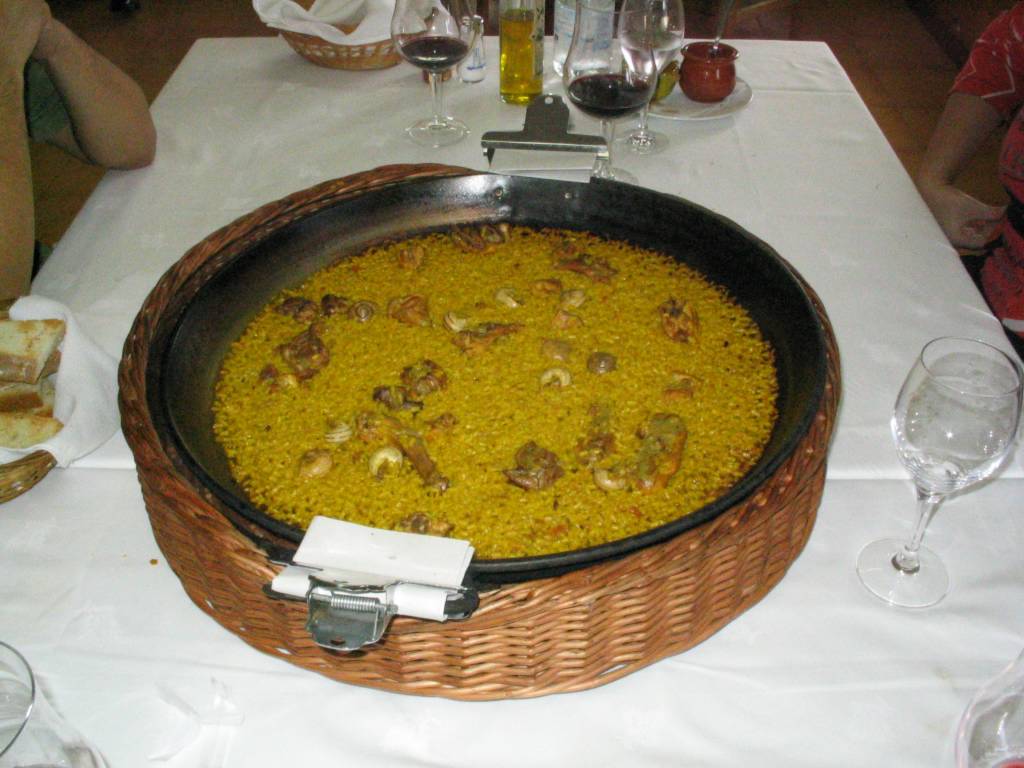
 Arros con conejo y caracoles (paella with rabbit and snails) that was cooked over grape vine cuttings at Casa Elías, Xinorlet (Alicante).   
Photo by Gerry Dawes©2014 / gerrydawes@aol.com / Facebook / Twitter / Pinterest.  Canon 50D / Tokina 11-16mm f/2.8.

After our idyllic lunch, we drove on to beach and port city of Alicante, where we checked in the Hotel Amerigo, whose restaurant is the Michelin one-star Monastrel, owned by Gerry Dawes’s great friend, María José San Román, one of the top women chefs in Spain. 

In the next installment, I will chronicle our adventures in Alicante city and the following day in Alicante province again, on the way to Madrid, where we had our last adventure of the trip with a typical Castilian dinner, excellent flamenco and other highlights.

Chefs participating on this tour were Chefs Brian Limitone, Meadow Ridge Senior Living, Redding, CT;  Gerard Resnick, Century Country Club, Purchase, NY; Robert Rainone, Larchmont Yacht Club, Larchmont, NY; Carey Favreau, Glen Arbor Club, Bedford Hills NY; Wayne Kregling, Brownson Country Club, Huntington, CT; Wayne Klingman, Garden City Country Club, Garden City, NY; Victor Honrath, Wykagyl Country Club, New Rochelle, NY;  Dan Neuroth, Bronxville Field Club, Bronxville, NY;  Austin Simard , Brownson Country Club, Huntington, CT; and James Rosenbauer, Country Club of Farmington, Farmington, CT.
______________________________________________________________________

About Gerry Dawes

Writing, Photography, & Specialized Tours of Spain & Tour Advice

 For custom-designed tours of Spain, organized and lead by Gerry Dawes, and custom-planned Spanish wine, food, cultural and photographic itineraries, send inquiries to gerrydawes@aol.com.  


I have planned and led tours for such culinary stars as Chefs Thomas Keller, Mark Miller, Mark Kiffin, Michael Lomonaco and Michael Chiarello and such personalities as baseball great Keith Hernandez and led on shorter excursions and have given detailed travel advice to many other well-known chefs and personalities such as Drew Nieporent, Norman Van Aken, Karen Page and Andrew Dornenberg, Christopher Gross, Rick Moonen, James Campbell Caruso and many others.

 * * * * * 
“The American writer and town crier for all good Spanish things Gerry Dawes . . . the American connoisseur of all things Spanish . . .” Michael Paterniti, The Telling Room: A Tale of Love, Betrayal, Revenge and The World’s Greatest Piece of Cheese

* * * * *

"Gerry Dawes, I can't thank you enough for opening up Spain to me." -- Michael Chiarello on Twitter. 

"Chiarello embarked on a crash course by traveling to Spain for 10 days in 2011 with Food Arts
contributing authority Gerry Dawes, a noted expert on Spanish food and wine.  Coqueta's (Chiarello's new restaurant at Pier Five, San Francisco) chef de cuisine, Ryan McIlwraith, later joined Dawes for his own two week excursion, as well. Sampling both old and new, they visited wineries and marketplaces, as well as some of Spain's most revered dining establishments, including the Michelin three-star Arzak, Etxebarri, the temple to live fire-grilling; Tickets, the playful Barcelona tapas bar run by Ferran Adrià and his brother, Albert; and ABaC, where Catalan cooking goes avant-garde." - - Carolyn Jung, Food Arts, May 2013.


* * * * *

"In his nearly thirty years of wandering the back roads of Spain," Gerry Dawes has built up a much stronger bank of experiences than I had to rely on when I started writing Iberia...His adventures far exceeded mine in both width and depth..." -- James A. Michener, author of Iberia: Spanish Travels and Reflections
 * * * * *
Gerry Dawes was awarded Spain's prestigious Premio Nacional de Gastronomía (National Gastronomy Award) in 2003. He writes and speaks frequently on Spanish wine and gastronomy and leads gastronomy, wine and cultural tours to Spain. He was a finalist for the 2001 James Beard Foundation's Journalism Award for Best Magazine Writing on Wine, won The Cava Institute's First Prize for Journalism for his article on cava in 2004, was awarded the CineGourLand “Cinéfilos y Gourmets” (Cinephiles & Gourmets) prize in 2009 in Getxo (Vizcaya) and received the 2009 Association of Food Journalists Second Prize for Best Food Feature in a Magazine for his Food Arts article, a retrospective piece about Catalan star chef, Ferran Adrià.

". . .That we were the first to introduce American readers to Ferran Adrià in 1997 and have ever since continued to bring you a blow-by-blow narrative of Spain's riveting ferment is chiefly due to our Spanish correspondent, Gerry "Mr. Spain" Dawes, the messianic wine and food journalist raised in Southern Illinois and possessor of a self-accumulated doctorate in the Spanish table. Gerry once again brings us up to the very minute. . ." - - Michael & Ariane Batterberry, Editor-in-Chief/Publisher and Founding Editor/Publisher, Food Arts, October 2009. 
 
". . .That we were the first to introduce American readers to Ferran Adrià in 1997 and have ever since continued to bring you a blow-by-blow narrative of Spain's riveting ferment is chiefly due to our Spanish correspondent, Gerry "Mr. Spain" Dawes, the messianic wine and food journalist raised in Southern Illinois and possessor of a self-accumulated doctorate in the Spanish table. Gerry once again brings us up to the very minute. . ." - - Michael & Ariane Batterberry, Editor-in-Chief/Publisher and Founding Editor/Publisher, Food Arts, October 2009. 

Pilot for a reality television series with Gerry Dawes  
on wine, gastronomy, culture and travel in Spain.

Experience Spain With Gerry Dawes: Customized Culinary, Wine & Cultural Trips to Spain & Travel Consulting on Spain

Gerry Dawes can be reached at gerrydawes@aol.com

2/10/2014

Alicante: Monastrell, Moscatel, Fondillón, Mushrooms & Paella with Rabbit & Snails


* * * * *

Fondillón & Moscatel, Classic Wines of Alicante (Levante region)
Comunitat Valenciana

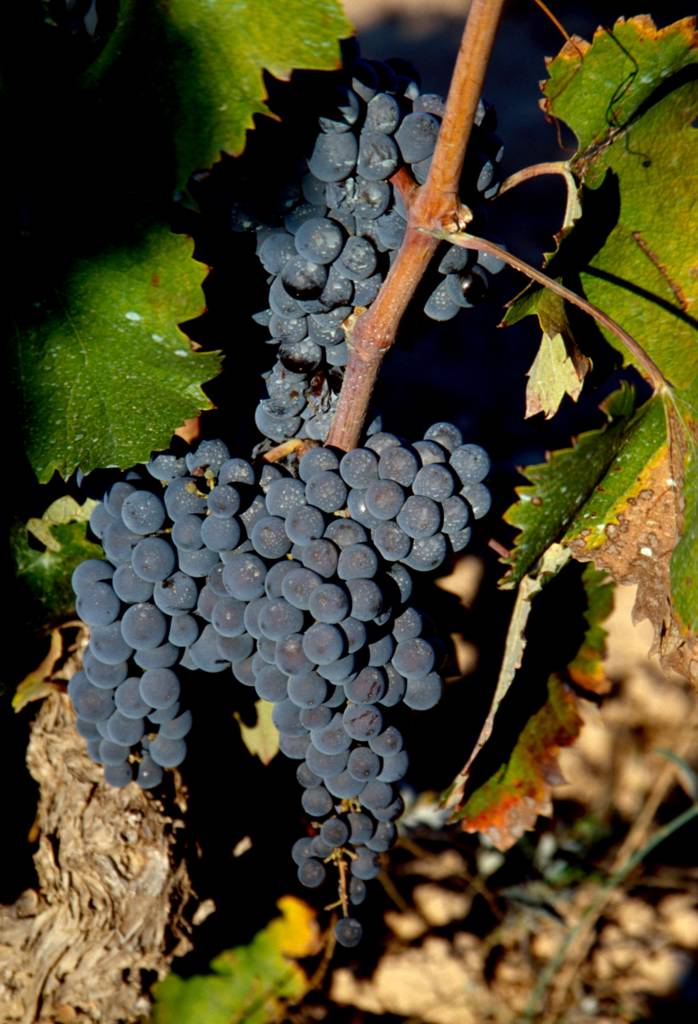
Photographing monastrell grapes in Alicante
Gerry Dawes copyright 2011 /  gerrydawes@aol.com

Located between Cataluña and Andalucía along Spain’s south central coast, the vineyards of the Levante grow on land that rises from the coast to significant elevations inland. Until recently, the region’s wines had a poor reputation, except for Alicante, known for wines made from moscatel and monastrell: its moscatel romano-based sweet white wines and Fondillón, a classic, monastrell-based rancio (a purposely oxidized, slightly sweet wine), a once nearly extinct wine.

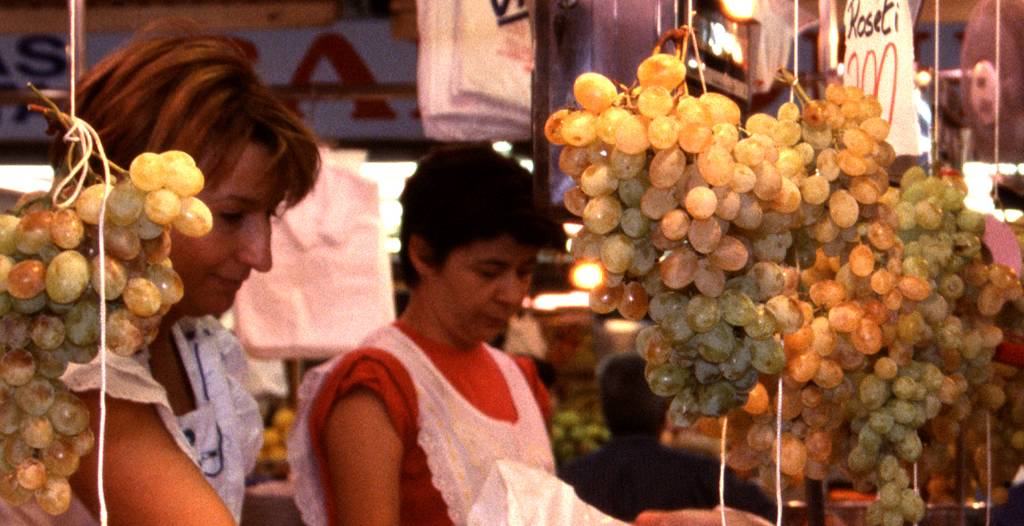
Moscatel grapes in the Alicante market.
Gerry Dawes copyright 2011 /  gerrydawes@aol.com

Grape vines were introduced into Alicante by the Phoenicians, wine was made here by the Romans and the praises of Alicante wines were sung by the Moors. The Alicante DO, encompasses 37,000 acres divided into two sub-regions in Alicante province: La Marina, just inland from the area’s popular beach towns, and the Alicante subzone (northwest of the capital, Alicante), whose main growing area is the Vinalopó valley. The winters are short and the summers are long, hot, nearly rainless.

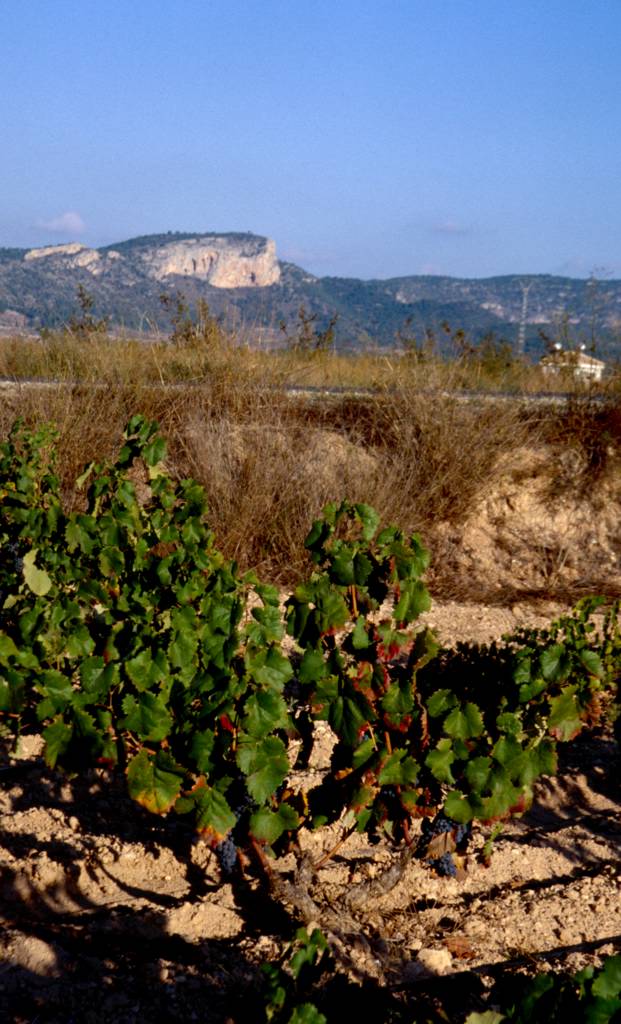
Monastrell in the Vinalopó region of Alicante
Gerry Dawes copyright 2011 /  gerrydawes@aol.com

The Alicante wine type that is a revelation is the classic Fondillón, a favorite of France’s Louis XIV (the Sun King) and of Alexandre Dumas pere’s fictional Count of Monte Cristo. A wine with 500 years of written history (supposedly Fondillón was on Magellan’s ill-fated trip around the world), until recently, this semi-sweet, Monastrell-based rancio wine, which is aged for no less than eight years and often more than twenty before release, was nearly extinct except for a few wines made by small family bodegas.

Signing a Fondillón barrel at Salvador Poveda, Monóvar (Alicante)
Photo courtesy of Bodegas Salvador Poveda

The top producer of Fondillón is the centenarian bodega of Salvador Poveda in Monóvar and the star of Poveda’s stable is the Gran Reserva de Fondillón 1980, a splendid, profound, mahogany-colored jewel that tastes literally like someone mixed a great oloroso sherry with a vintage port.

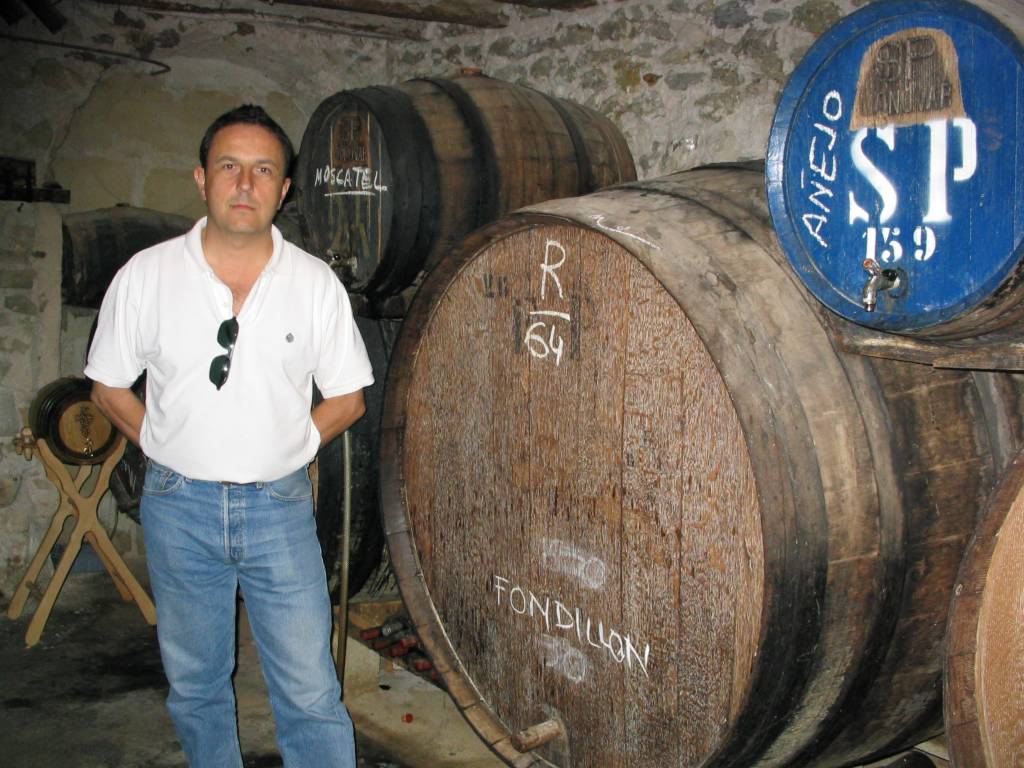
Rafael Poveda in his family's Fondillón bodega in Monóvar.
Gerry Dawes copyright 2011 /  gerrydawes@aol.com


Rafael Poveda told it is made: “We use only 100% Monastrell grapes from the Vinalopó valley selected in the best harvests with a very high concentration of sugar–always higher than 16̊ Baumé, often 18̊.

Monastrell, Vinalopó, Alicante
Gerry Dawes copyright 2011 /  gerrydawes@aol.com

Sometimes we put the grapes out on mats in the sun for several days to increase the sugar concentration. We leave the must in contact with the skins only up until it begins to ferment, so skin contact is very short. The wine is born as soft, fruity and light-colored as a Bordeaux, but without the tannic astringency. When the fermentation is finished, we have a very aromatic wine that is slightly sweet, medium-dry. We age it in old oak barrels, usually in a sherry-like solera, but in an exceptional vintage like 1980, we will age the wine separately, without mixing it in the solera, to make an authentic vintage Fondillón.”

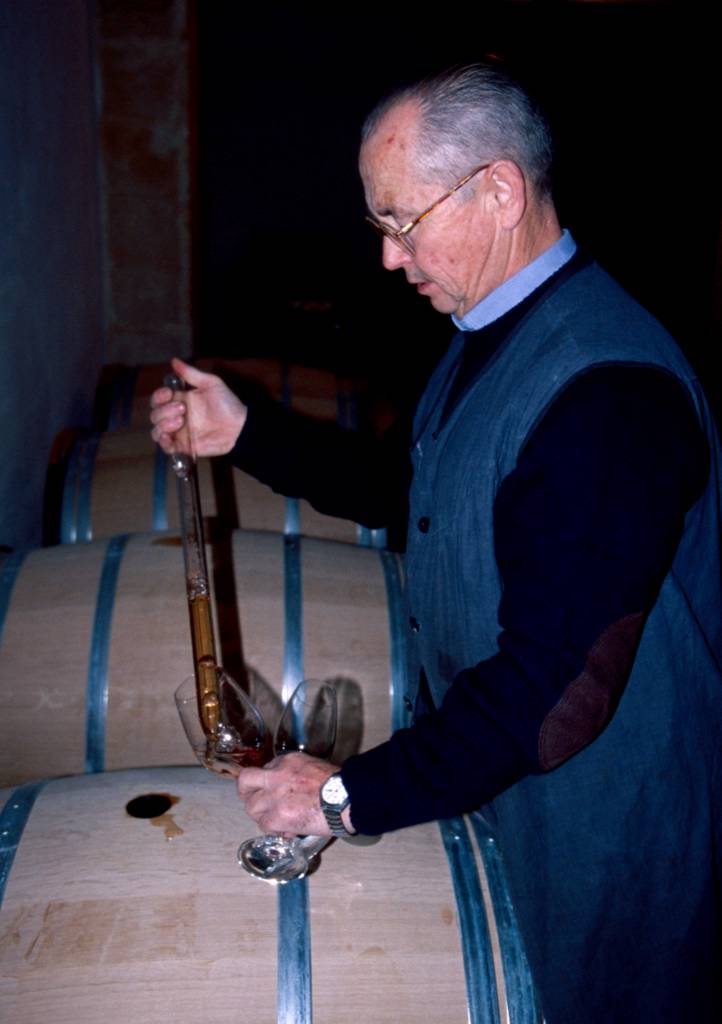
Felipe Gútierrez, producer of Casta Diva
Gerry Dawes copyright 2011 /  gerrydawes@aol.com


Owner-winemaker, Felipe Gútierrez de la Vega makes the excellent Casta Diva Fondillón (dedicated to William Blake), which--unlike Poveda, who does short macerations--he macerates the grapes for 20-30 days and says the wine can ferment up to two months, leaving a wine with 17-18 percent natural alcohol.

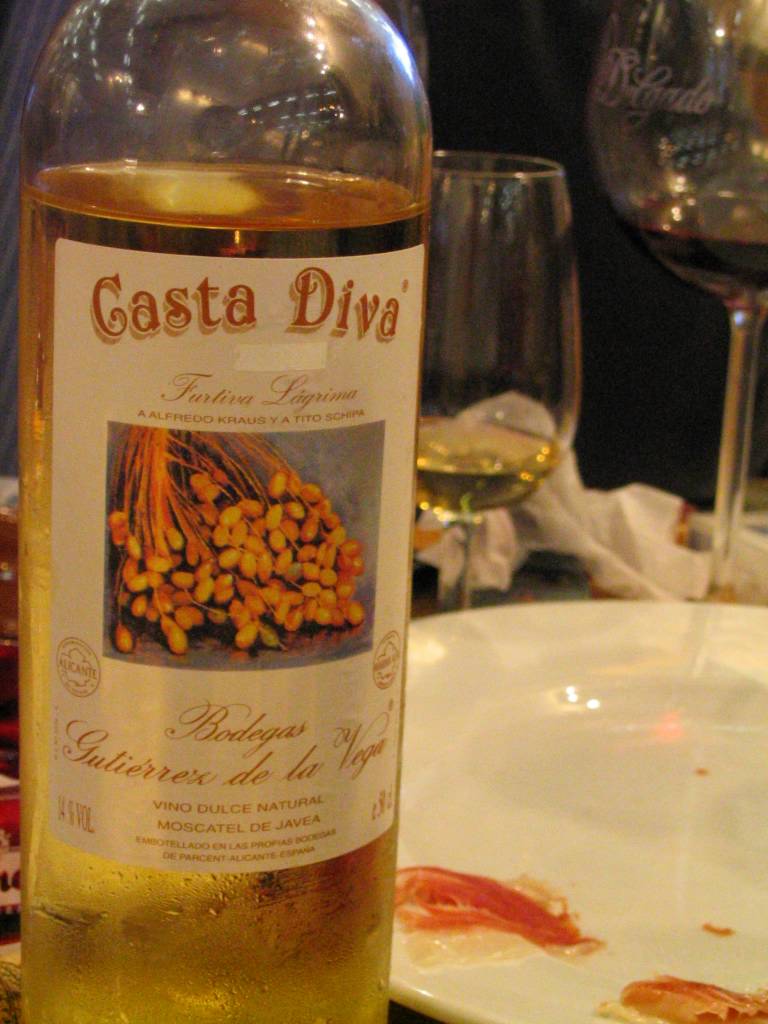
Felipe Gútierrez's Bodegas Gutiérrez de la Vega produces the Casta Diva moscatels, which have also proved that Alicante can make world-class dessert wines.

Casta Diva Cosecha Miel Moscatel de Javea, Alicante
Gerry Dawes copyright 2011 /  gerrydawes@aol.com

Gutiérrez, is an affable, well-read, Renaissance man who works in in a blue lab coat and plays opera (the great Valencian-born Caruso-contemporary, tenor Antonio Cortis, Montserrat Caballé and Maria Callas) as he works in his pristine winery in Parcent.

Felipe Gútierrez de la Vega, Producer of Casta Diva
Gerry Dawes copyright 2011 /  gerrydawes@aol.com

Gútierrez’s Casta Diva Cosecha Miel, made from moscatel de Alejandria (also called moscatel romano) grapes grown in the coastal La Marina subzone, is a sweet, luscious dessert wine that is also a great match to such dishes star Alicante chef Quique Dacosta’s laminas de foie gras (layered foie gras with a fragrant apple compote) at the superb El Poblet in Denia.

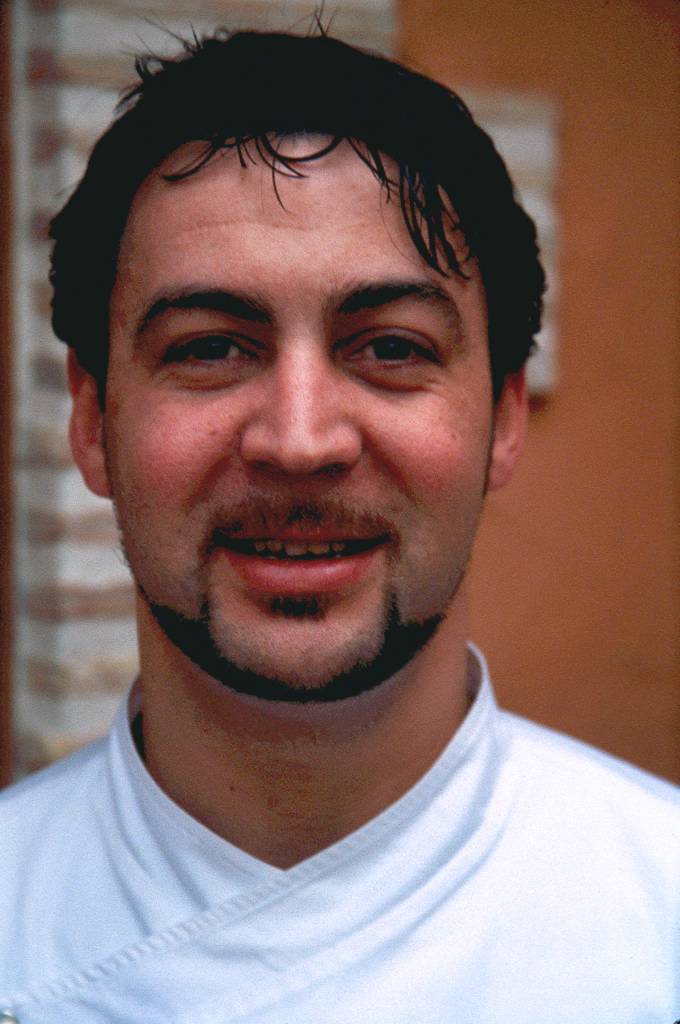
Quique Dacosta, Restaurante Quique Dacosta, Denia (Alicante)
Gerry Dawes copyright 2011 /  gerrydawes@aol.com

Gutiérrez also produces several other highly regarded wines including a dry white moscatel romano, a good bobal rosado, and several interesting reds: Imagine (dedicated to John Lennon), Viña Ulises (James Joyce and Homer), and Rojo y Negro (Nobel prize winner Camilo José Cela), a silky, exotic blend of giró (a garnacha relative), monastrell, cabernet sauvignon, tempranillo, and merlot that spends 18 months in oak, only 20% of which is new (a practice one wishes more winemakers would adopt).

Made from 100% Monastrell grapes that are allowed to hang on the vine until they become raisiny, (unlike the grapes for many other Fondillóns and sherry Pedro Ximénez grapes, which are picked and sun-dried on mats), Gútierrez’s Fondillón is a deep plummy, spicy, very rich, Port-like, but unfortified, wine that is aged for 15 years. Bodegas Bocopa’s Fondillón Alone (ah-lo-nay) is a well-made, solera-aged, red dessert wine that is another recuperation of this legendary Alicante classic that until recently was all but forgotten.

Some of these wines are reminiscent of tawny Port, others such as Bodegas Brotons Gran Fondillón Reserva 1964, Primitivo Quilés Fondillón (Hístorico) ‘El Abuelo’ Gran Reserva and Poveda Añejo Seco (made from Vidueño, an old Monastrell clone), are very much like great palo cortado sherries.

Casa Elias, Xinorlet (Alicante) - Great Regional Cusine

At Casa Elias, we lunched on some wonderful country food, including an excellent plate of assorted cured sausages,

Gerry Dawes copyright 2011 /  gerrydawes@aol.com

snails with rosemary,

Gerry Dawes copyright 2011 /  gerrydawes@aol.com

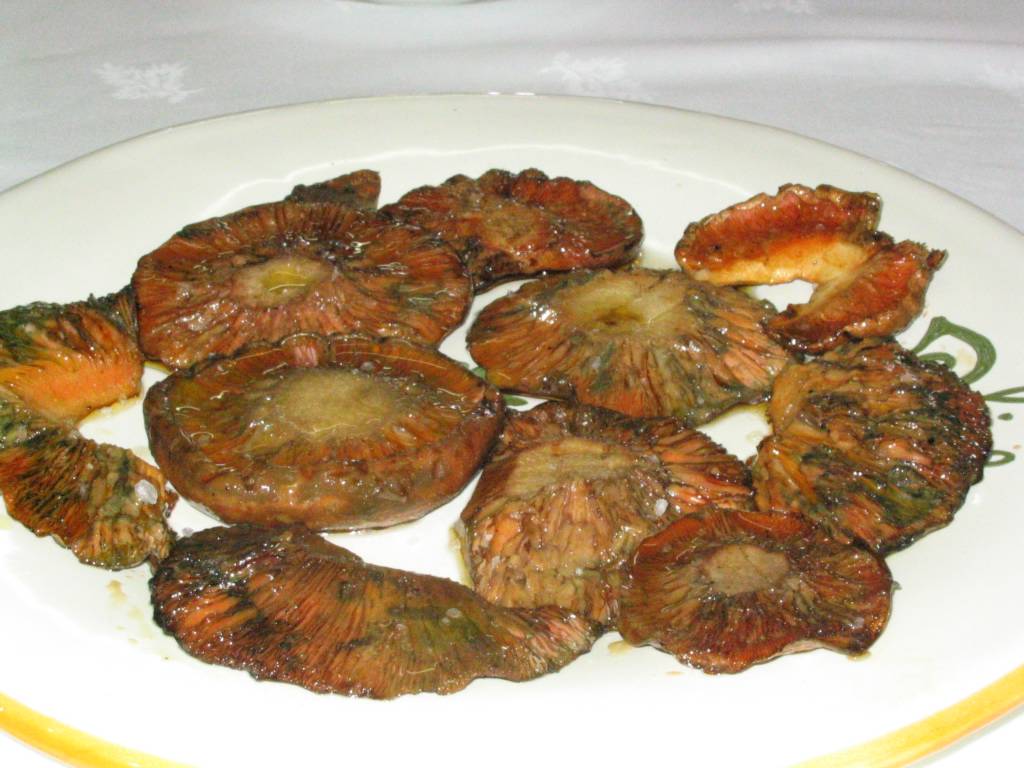
wonderful grilled wild níscalos (rovellones in Catalan; mushrooms),

 
Gerry Dawes copyright 2011 /  gerrydawes@aol.com

gachamigas (a kind of pancake made with flour, water, olive oil and garlic),

 
Gerry Dawes copyright 2011 /  gerrydawes@aol.com

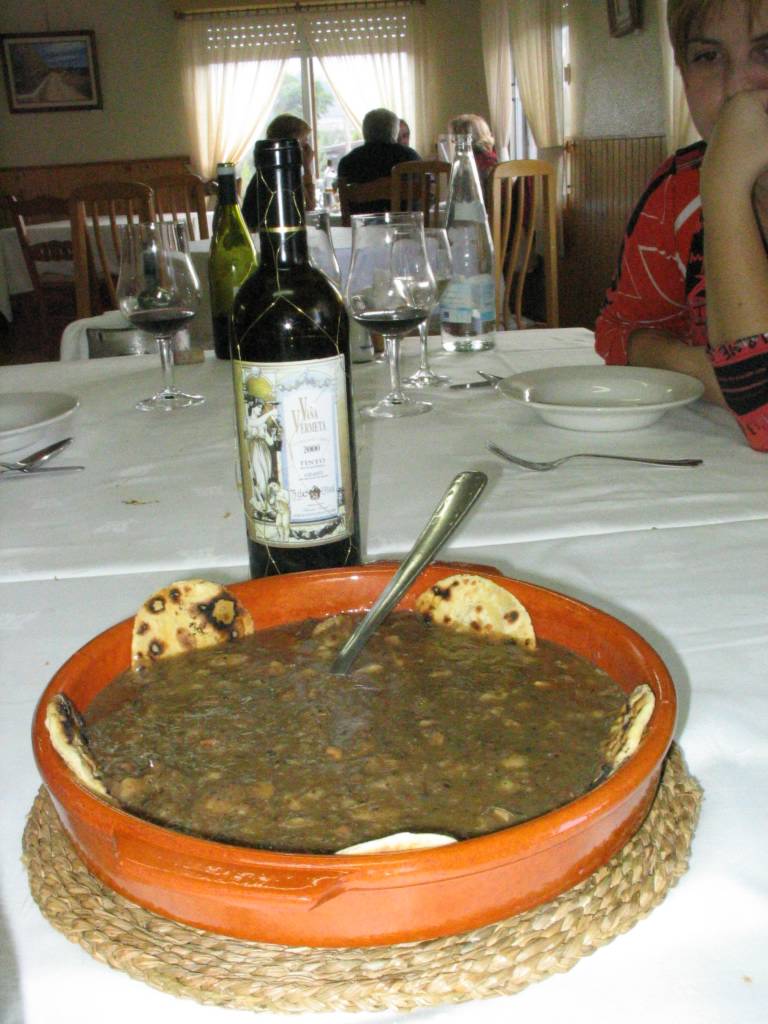
Gazpacho Manchego (has nothing to do with gazpacho Sevillano, also made with rabbit & snails (dumplings, nutmeg, cloves), a great, hearty campesino dish,

 
Gerry Dawes copyright 2011 /  gerrydawes@aol.com

and arroz con caracoles y conejo, a superb rabbit-and-snail thin-layered arroz (rice) cooked over grape vine cuttings and served with authentic all-i-oli.

 
Gerry Dawes copyright 2011 /  gerrydawes@aol.com

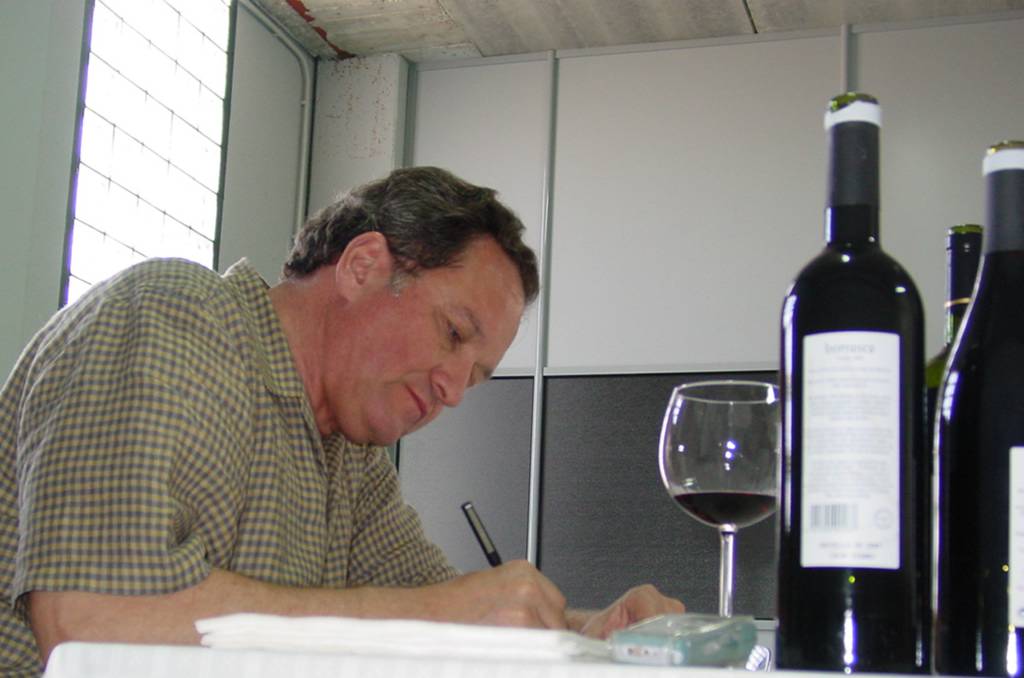
I tasted a lineup of wines with Rafael Poveda at the family bodega that produces Alicante’s most renowned Fondillón. Poveda’s intense red table wines included a good Poveda Tempranillo; a big, complex, cherry-and carob flavored Borrasca Classic Tinto 2000 from their Finca El Pou estate’s 50-year old Monastrell vines; and the massive, oak-dominated, 100% Monastrell, Borrasco Tinto Selección de Barrica (600 bottles made).

Tasting Wine at Salvador Poveda in Monóvar (Alicante).  
Rafael Poveda copyright 2011 /  gerrydawes@aol.com

Poveda’s intense red table wines included a good Poveda Tempranillo; a big, complex, cherry-and carob flavored Borrasca Classic Tinto 2000 from their Finca El Pou estate’s 50-year old Monastrell vines; and the massive, oak-dominated, 100% Monastrell, Borrasco Tinto Selección de Barrica (600 bottles made).

The End: Fondillón & Moscatel, Classic Wines of Alicante (Levante region)
Related Posts with Thumbnails