Share This Gerry Dawes's Spain Post


Instagram

In 2026, ranked #7 in the Top 30 Gastronomy Blogs (and Websites for Gastronomists & Gastronomes by Feedspot. (Ranked in the top 50 since 2019). "The Best Gastronomy blogs selected from thousands of Food blogs, Culture blogs and Food Science. We’ve carefully selected these websites because they are actively working to educate, inspire, and empower their readers with . . . high-quality information.

More than 3,640,000 views since inception, 123,000+ views in August 2026.


Ranked #7. Gerry Dawes's Spain: An Insider's Guide to Spanish Food, Wine, Culture and Travel gerrydawesspain.com

"My good friend Gerry Dawes, the unbridled Spanish food and wine enthusiast cum expert whose writing, photography, and countless crisscrossings of the peninsula have done the most to introduce Americans—and especially American food professionals—to my country's culinary life. . .” - - Chef-restaurateur-humanitarian José Andrés, Nobel Peace Prize Nominee and Oscar Presenter 2019; Chef-partner of Mercado Little Spain at Hudson Yards, New York 2019

Showing posts with label Paco Torreblanca. Show all posts

9/20/2019

Customized Insiders' Gastronomic, Wine and Cultural Trips to Spain With Long-Time Spain Expert Gerry Dawes & Former New York Times Restaurant Reviewer-Author Bryan Miller


* * * * *

Bryan Miller and Gerry Dawes

Gerry Dawes and Bryan Miller have teamed up to offer unique, custom-designed trips to Spain.  Imagine being deep inside the real Spain with two maestros, writer-photographer-lecturer Gerry Dawes, recipient of the Spanish National Gastronomy Prize and an acclaimed expert with an insider’s perspective on Spanish food, wine, culture and history, and the legendary former (and longest tenured) restaurant critic of The New York Times, Bryan Miller, who offers a top food writer’s perspective on Spanish cuisine and has traveled in Spain with Gerry Dawes on several occasions.  


José Andrés, Gerry Dawes and Bryan Miller at Mercado Little Spain, New York

"But, for Gerry Dawes, Spain is more than just the Adriàs and (Juan Mari and Elena) Arzaks. He has connected with all manner of people working at every level and in every corner of Spain. I’m always amazed at this reach. You can step into a restaurant in the smallest town in Spain, and it turns out they know Gerry somehow.” - - Chef-restaurateur-humanitarian José Andrés, Nobel Peace Prize Nominee and Oscar Presenter 2019; Chef-partner of Mercado Little Spain at Hudson Yards, New York 2019

Gerry Dawes with Eugenio Merino in winter in the Merino family vineyards in Corcos del Valle (Valladolid) in the Cigales D.O.  Eugenio and his family produce Viña Catajarros, one of the great rosados from Spain in old vine vineyards that resemble those of France´s Châteauneuf-du-Pape.


Bryan Miller in upstate New York at work on a manuscript.

Bryan Miller reigned as the longest tenured New York Times Restaurant Reviewer for a decade and has also written hundreds of food, wine and travel articles for The New York Times, The Wall Street Journal, The Philadelphia Inquirer and other top publications and is the author of numerous books.  Among many awards, Miller has received The Associated Press and The James Beard Foundation Journalism Awards Best Feature Article Award and the James Beard Foundation Lifetime Achievement Award.  Bryan Miller lived in Spain and studied at the University of Salamanca. 
>
* * * * *

We can custom design and lead trips ranging from couples and small groups of friends to larger groups such as those Gerry Dawes has designed, organized and led for the Commonwealth Club of California (twice, 25 people), graduates of the U. S. Air Force Academy (twice, 16 people each trip), The Club Managers of America Wine Society and Club Chefs of New York & Connecticut.  Dawes has also planned and led more than twenty gastronomy-wine-and-culture focused trips to Spain for star chefs Thomas Keller, Mark Miller, Mark Kiffin, Michael Lomonaco and Michael Chiarello; former U. S. Senator James Abourezk; baseball great Keith Hernandez; and Bob Simon with a Sixty Minutes television crew.  He has also led shorter excursions and/or given detailed Spain advice to such culinary personalities as Drew Nieporent, Norman Van Aken, Charlie Trotter, Danny Meyer and Ruth Reichl.  
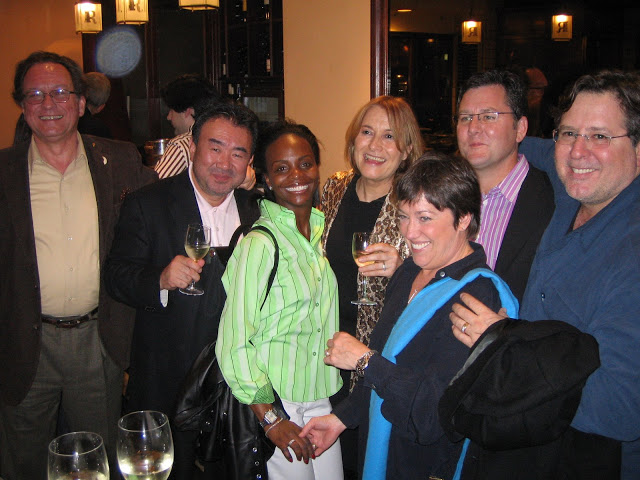
Gerry Dawes (l) leading a tapas night out at Marisquería Rafa in Madrid that included (l to r), Australia chef Tetsuya Wakuda, Charlie Trotter's partner Rochelle Smith, Lidia Iaccarino (Don Alfonso), Janet Van Aken, the late Chef Charlie Trotter and Chef Norman Van Aken.  Photo by Don Alfonso Iaccarino, Chef-owner of Don Alfonso, Sant'Agata sui Due Golfi, Italy.


Depending upon each itinerary, the following are examples of some of the rich, culturally and gastronomically unique experiences our fellow travelers will share with us in Spain:

Join us, as we dine informally in a 19th-Century Galician bodega with half a dozen artisan winemakers and experience the magic of a quiemada, a Galician spirits filled flaming pumpkin that is supposed to ward off evil spirits;

Quiemada at Bodega Rozas, one of the top artisan Albariño producers in Galicia.
 
Go deep into the caves of a southern Rioja hillside and taste terrific artisan wines from underground tanks, then have tortilla española, ensalada and splendid lamb chops and chorizo grilled over grape vine cuttings, all accompanied by the bottled wines;

Luís Alberto Lecea draws wine from a cement tank down in the caves at Bodegas Lecea, a family winery in southern Rioja Alta.  Upstairs in a rustic dining room with a long trestle table, we will eat lamb chops and chorizo cooked over a fire of grapevine cuttings.


Follow us to legendary backstreet tapas bars in Madrid, San Sebastián, Logroño and Sanlúcar de Barrameda, sampling different small plate regional specialties at each spot;

Langostinos and Manzanilla Sherry on the beach outside Bar Bigote in Sanlúcar de Barrameda at sunset.

Learn how to make paella with a maestro in his restaurant at the edge of the rice fields on the Albufera lagoon; 


Chef-owner Rafael Gálvez of La Matandeta, a restaurant at the edge of the rice field around the Albufera lagoon south of Valencia, shows visiting club chefs from New York and Connecticut how to make authentic paella.

Dine with some of the top women chefs in Spain, eat phenomenal rice dishes and visit one of the great chocolatiers/pastry chefs in Europe, all in Alicante province;

Chef María José San Román at her Michelin-starred Monastrell restaurante in Alicante. She and her family also own La Taberna del Gourmet, one of Spain's greatest tapas restaurants.

Gerry Dawes with his great friend, Paco Torreblanca, one of the top pastry chefs and chocolatiers in Europe, at his cooking school outside Alicante.

Visit some of the greatest artisan wineries, cheese producers and Ibérico ham producers and sample their exceptional products;

Long-time friend Marino González, the godfather of artisan farmhouse cheeses in Asturias, at one of his Terra Astur Sidrería (cider house), cheese shop and grill house restaurant in Oviedo.

And have an al fresco lunch with a chef Gerry calls the Emperor of Toledo on a terrace with stunning views overlooking the chef’s family vineyards, olive groves and the city itself.  

Chef Adolfo Muñoz, the Emperor of Toledo, at Adolfo´s home-estate-vineyard-olive grove-event space overlooking the city of Toledo.

The aforementioned are just some of the kinds of experiences we offer. Many of Gerry’s contacts in Spain with chefs, restaurateurs, artisan and star winemakers, cheese makers, food producers and personalities are very intensely personal relationships, which opens doors into unique privileged experiences.  

Chefs Quim Marqués, then chef-owner of El Suquet de L'Almirall restaurant in la Barceloneta and José Andrés's classmate at this Barcelona cooking school, where José was receiving his long-delayed diploma, with Gerry Dawes and José Andrés in Barcelona.


Baseball great Keith Hernandez with a paella made for us at an olive oil producers plant in Jaén, Andalucía.


Two old friends, Manolo Esquivias and his wife Mari Carmen dancing Sevillanas in their caseta at la Feria de Sevilla.

And, yes, we will visit some art museums, great cathedrals, old Jewish quarters, some of the great Moorish monuments of Spain, castles, Roman ruins, fishing villages, stunning white villages, awesome mountain and coastal scenery and more (depending on each itinerary).


Cathedral of Santiago de Compostela and la Alhambra in Granada.

Roman theater at Mérida in Extremadura.

Gerry Dawes has been crisscrossing Spain for decades on extensive food, wine, fiestas and cultural fact-finding trips and knows more about the country than all but a handful of Spaniards.

In addition to our gastronomy, wine and cultural expertise, the chance to spend time with award-winning New York Times writer Bryan Miller, whose knowledge of food, treasure trove of anecdotes and insights on Spanish food, is a priceless opportunity.


Bryan Miller in 1992 at Els Quatre Gats, the legendary café in Barcelona where Picasso had his first exhibition.  Bryan and Gerry Dawes toured Barcelona as Bryan was researching and writing a New York Times article on dining out in Barcelona prior to the 1992 Olympics.  Photo by Gerry Dawes.

Bryan Miller with the famous restaurateur-priest Padre Luis de Lezama at La Taberna de Alabardero in Madrid.

Put together a group of friends, family and/or business colleagues and associates and we will custom design really special tours of Spain for you. We need a minimum of 12 - 16 travellers (will consider less people, but the trip will be priced accordingly) and will consider groups up to 26 people, like those from the Commonwealth Club of California. We offer several itineraries (see below) and the trips usually run 11 days, 10 nights*, but we can also consider slightly longer or slightly shorter duration trips. If you have a particular itinerary that you don't see here, e-mail Gerry Dawes and he will work with you to make it happen. (*Allows our guests two flight travel days and two weekends in Spain.) Contact gerrydawes@gmail.com or gerrydawes@aol.com.

Sample Itineraries
  
#1 Taste of Atlantic Spain Tour:  Galicia, Asturias, The Basque Country, San Sebastián, Navarra, La Rioja & Madrid


San Sebastián at night from Monte Igeldo.

#2 Taste of Atlantic & Mediterranean Spain Tour: Bilbao, San Sebastián, Navarra, Barcelona, Valencia, Alicante & Madrid

 Quim Marquez, Chef-owner Quim de la Boquería, Mercat de la Boquería, Barcelona.

#3 Taste of Madrid, Western Spain Ibérico Ham, Cheese, Roman Ruins; Andalucía Southern Spain & Don Quixote La Mancha Tour: Madrid, Segovia, Ávila, Salamanca, Cáceres, Mérida, Sanlúcar de Barrameda, Cádiz, El Puerto de Santa María, Jerez de la Frontera, Sevilla, Córdoba, Toledo, and Chinchón 

Gerry Dawes in an Ibérico ham-curing facility in Guijuelo (Salamanca).

#4 Taste of Andalucía & La Mancha Tour:  Madrid, Toledo, Castilla-La Mancha, Córdoba, Sevilla, Sanlúcar de Barrameda, Cádiz, Atlantic Tuna Coast & Roman Fish Factories, El Puerto de Santa María, Pueblos Blancos, Ronda, Mijas, Málaga
 
A glass of Manzanilla sherry at sunset overlooking the Guadalquivir River as it meets the Atlantic Ocean.
 
#5 Sephardic Spain (Gerry Dawes* only):  Visiting the Jewish Quarters and Villages of Spain, Former Synagogues and Other Sites Important to the Rich Jewish Historical Presence in Spain.  Depending upon which of several itineraries we chose, we may visit Ribadavia (Galicia) León (Castilla y León), Oviedo (Asturias),  Hervás (Extremadura), Burgos, Estella & Tudela (Navarra), Zaragoza, Barcelona, Girona, Besalú (all in Catalunya), Lorca (Murcia), Córdoba, Lucena, Sevilla and Toledo.  (*Gerry Dawes has been studying, visiting and photographing Sephardic Spain for more than two decades.)

Santa María la Blanca, a stunning 12th-Century Mudejar architecture synagogue that was converted into a Catholic church and is now a museum and one of most important Jewish monuments and perhaps the oldest surviving synagogue in Europe.

* * * * *
  Shall deeds of Caesar or Napoleon ring
More true than Don Quixote's vapouring?
Hath winged Pegasus more nobly trod
Than Rocinante stumbling up to God?
 
Poem by Archer M. Huntington inscribed under the Don Quixote on his horse Rocinante bas-relief sculpture by his wife, Anna Vaughn Hyatt Huntington, in the courtyard of the Hispanic Society of America’s incredible museum at 613 W. 155th Street, New York City.
__________________________________________________________________________________
 Gastronomy Blogs

About Gerry Dawes

My good friend Gerry Dawes, the unbridled Spanish food and wine enthusiast cum expert whose writing, photography, and countless crisscrossings of the peninsula have done the most to introduce Americans—and especially American food professionals—to my country's culinary life." -- Chef-restaurateur-humanitarian José Andrés, Nobel Peace Prize Nominee and Oscar Presenter 2019


Gerry Dawes is the Producer and Program Host of Gerry Dawes & Friends, a weekly radio progam on Pawling Public Radio in Pawling, New York (streaming live and archived at www.pawlingpublicradio.org and at www.beatofthevalley.com.)

Dawes was awarded Spain's prestigious Premio Nacional de Gastronomía (National Gastronomy Award) in 2003. He writes and speaks frequently on Spanish wine and gastronomy and leads gastronomy, wine and cultural tours to Spain. He was a finalist for the 2001 James Beard Foundation's Journalism Award for Best Magazine Writing on Wine, won The Cava Institute's First Prize for Journalism for his article on cava in 2004, was awarded the CineGourLand “Cinéfilos y Gourmets” (Cinephiles & Gourmets) prize in 2009 in Getxo (Vizcaya) and received the 2009 Association of Food Journalists Second Prize for Best Food Feature in a Magazine for his Food Arts article, a retrospective piece about Catalan star chef, Ferran Adrià. 


". . .That we were the first to introduce American readers to Ferran Adrià in 1997 and have ever since continued to bring you a blow-by-blow narrative of Spain's riveting ferment is chiefly due to our Spanish correspondent, Gerry "Mr. Spain" Dawes, the messianic wine and food journalist raised in Southern Illinois and possessor of a self-accumulated doctorate in the Spanish table. Gerry once again brings us up to the very minute. . ." - - Michael & Ariane Batterberry, Editor-in-Chief/Publisher and Founding Editor/Publisher, Food Arts, October 2009. 
 
Pilot for a reality television series on wine, gastronomy, culture and travel in Spain.
 

7/20/2017

Looking Back on Lo Mejor de La Gastronómía 2009: San Sebastian Chefs' Conference Celebrates Spanish Extra Virgen Olive Oil with an Epilogue-Slide Show of the Olive Harvest

* * * * *


Lo Mejor de La Gastronomía*Star Chefs Compete Using Jaén Province’s Picudo Variety Olive Oil

Plus An Epilogue Featuring Slide Shows of the End of the Olive Harvest in Jaén with Bailén de Oro & in Córdoba with Soledad Serrano at Beloyana

With a visit to the fabulous Mesón Juan Peña in Córdoba

* * * * *

By Gerry Dawes

Premio Nacional de Gastronomia 2003


(Click on slide show to amplify and see full screen.)


The Lo Mejor de La Gastronómía chefs’ conference, held each November in the Rafael Moneo-designed Kursaal center in the stunning Basque seaside city of San Sebastián, is among the world’s top five culinary events. But Lo Mejor de La Gastronómía is a culinary conference with a difference, since almost all the attention is on chefs, primarily cocina de vanguardia - avant-garde cuisine chefs from around the world, but with a focus on Spain’s star chefs who come at the end of each year to show their best dishes and techniques from the current year and give glimpses of what is to come the following year.

This year’s Lo Mejor de La Gastronómía 2009 included a standout presentation from Ferran Adrià, the man called “the world’s greatest chef,” and jaw-dropping demonstrations from Can Roca’s Joan Roca, El Poblet’s Quique Dacosta and super-star pastelero (desserts and chocolates) Paco Torreblanca. Torreblanca, one of the greatest pastry chefs in the world, has devised ways of using Spanish olive oil instead of butter in his desserts and chocolates, so now all his lines of supernal Totel and Barry Callebaut desserts and chocolates use no animal fats in their preparation.

One of the highlights of the event was the VI Annual “Jaén, Paraiso Interior” Premio Internacional de Cocina con Aceite de Oliva Virgen Extra (International Cooking Prize for the Best Dish Featuring Spanish Extra Virgen Olive Oil), which carried a an astounding First Prize of 18,000 Euros (about $25,000). Sponsored by the Junta de Andalucía and the Diputación de Jaén, the competition featured 11 chefs from Spain (Madrid, Alicante, Jaén and the Basque Vizcaya province), France, Germany, Italy and Portugal. Each chef, a finalist chosen from a field of 135 contestants from seven countries in preliminary contest, presented a creative cuisine dish that used Spanish extra virgen olive as a prominent taste component.


Felipe López, President of the Diputación Provincial (regional government) de Jaén, said his administration was sponsoring the contest because Lo Mejor de LaGastronómía offers “an extraordinary showcase, since it represents cocina de vanguardia, for showing the excellence of the great olive oils of the province of Jaén.”

Rafael García Santos, Founder & Director of the conference, commenting on the leap in quality that extra virgen olive oils from Jaén have made–in the six years since they have been giving the prize at Lo Mejor de LaGastronómía–said “Jaén extra virgen olive oil producers are doing ever more select olive oils. They have changed their production techniques, harvesting and the final product, which has shown a steady evolution in quality. Before Jaén was known as the biggest producer and now the name is associated with brands of extra virgen olive oil that have become universally recognized for their high quality, which has brought world-class prestige to Jaén and raised the value of the product. This has made the oils of the province of Jaén an ever more important player in top kitchens everywhere.”

This writer came to cover the conference and the “Jaén, Paraiso Interior” Premio Internacional de Cocina con Aceite de Oliva Virgen Extra cooking contest for Foods From Spain News. But, I was soon pressed into service as a member of the jury panel by Lo Mejor de LaGastronómía’s founder and director, Rafael García Santos, whose directive I followed with honor and with gusto, since it entailed tasting all the finalists’ wonderfully creative dishes, accompanied by glasses of Spanish cava. The competing chefs, while making extra virgen olive oil a discernible component, still managed to smoothly integrate the oils into each dish and make most of them visually spectacular.

The very first dish by Vitor Manuel Da Silva from Le Poivron Rouge in Portugal, which was called Mi Conserva de Sardina, featured a olive-oil dressed sardine, a razor clam and a mussel in a shellfish tin, complete with a rolled-up lid. Fernando Pérez Arellano of Zaranda in Madrid presented a seawater-colored, arbequina olive oil-infused “gazpacho en aspic al aceite de arbequina,” which was gelatinous rectangle on which he had perched a clam, a cockle, a bit of sea urchin, a goose barnacle and several tiny mussels, with several pools of olive oil-sea urchin mayonnaise alongside. Another spectacular dish was “Tomate. . .un salmorejo con caviar,” a lovely, re-constructed light orange-red tomato “shell” filled with a delicious salmorejo--made with an extra virgen olive oil with a distinct personality--from Jaén’s own chef Raúl Clemente from Restaurante Paquito Diaz in Baeza.


The winner of the competition was Carlo Cracco’s chef de cuisine, Matteo Baronetto (Cracco, Milan, Italy) , who wowed the judges with his Crema Quemada al Aceite con Cañaillas (Crême Brûlée made with extra virgen olive and winkles, or sea snails) scented with vanilla. This sensational dish was presented in two artistic silver serving vessels, one resembling a tea steeper and holding the Crema Quemada, the other a scalloped silver dish holding butter-like ribbons of a creamy extra virgen olive oil that could have passed for butter except for their distinctive olive oil flavor.

The jury, an international panel that included Rafael García Santos, Cristino Álvarez (Spain), Duarte Calvao (Portugal), Licia Granello (Italy), Jean Paul Perez (Belgium), Bob Noto (Italy), Jacques Trefoir (Brazil) and myself, judged the creations on culinary virtuosity, imagination, originality, and aesthetics, as well as the techniques used in making each dish and on how the presence of extra virgen olive oil was handled by each chef. In all these dishes, there was a lightness and fresh, healthy flavors that would be hard, if not impossible, to achieve with animal fats, so good Spanish extra virgen olive oils have become essential to achieving this healthful effect in kitchens around the western world. Matto Baronetto was awarded the 18,000 Euro prize and a sculpture trophy designed by Jaén artist Antonio Blanca.

Surrounding this intensive star chef conference is a gastronomic fair featuring products from around Spain: Joselito and other hams from Guijuelo (Salamanca), the Dehesa de Extremadura and Jabugo; a daily walk around tasting of more than 100 wines from Navarra; a multitude of stands promoting Spanish foods–cheeses, paprika, olives, tinned seafood, etc.; cookbook publishers’ stands from Montagud, De Re Coquinaría and Everest; and, of course, Spain’s superb extra virgen olive oils. One of the most frequented stands was the “Jaén, Paraiso Interior” (Inland Paradise) pavilion itself, where there were daily guided tastings of the fine extra Virgen olive oils, sponsored by the Junta de Andalucía and the Diputación Provincial de Jaén, a province that is literally one vast picudo variety olive orchard. The olive orchards of Jaén are so vast in fact that the Spanish poet Manuel Machado (brother of Antonio Machado, one of Spain’s best known 20th Century poets), in his famous “Ode to Andalucía” described the province simply as “silvery Jaén” due to the fact that in the slightest breeze the olive trees provide a constant light show of the dark-green leaf tops of the olivares alternating with flashes of silvery grey from their flip sides.

The daily tastings, of some dozen different quality Jaén extra Virgen olive oils were led by Anunciación Carpio Dueñas, a biologist who specializes in olive oil. Sra. Carpio and Jesús Zafra Ocaña from the Tourism, Local Development and Sustainability office of the Diputación Provincial of Jaén set up and led me through a private tasting of ten high quality, mostly Picual variety-based extra virgen olive oils from their province.

Using a map to show me the location in Jaén province of each olive oil producer, they expertly explained each of the different extra virgen olive oils, which included the newly bottled Vadolivo Gran Selección Royal, a deep green-yellow, pungent, grassy, complex, silky oil made from the Royal olive variety in the wild game region of the Sierra de Cazorla; Eolea Zumo de Oliva (olive “juice”), a very pungent, grassy, piquant, almondy, full-bodied blend of Picual, Picudo and Arbequina olives grown around Mengíbar near the famous town of Bailén; Oro Bailén Reserva Familiar, a deep green and intensely aromatic (fresh cut grass, plantains) with pronounced, gutsy flavors of stone fruits, but with a smooth, silky feel on the palate and Ánima Áurea, a much lighter, more neutral flavored Picual and Arbequina blend, both from the immediate area of Bailén; and Tierras de Canena Escencia Milénario, a green-gold, finely aromatic, light, smooth, silky, balanced oil from the higher altitude Picual-based orchards near the monumental towns of Baeza and Úbeda in north-central Jaén.


From Escañuela, northwest of the capital, Jaén, the Cortijo de la Torre 100% Picual extra virgen olive oil was a pretty, deep green, had a pungent nose of fresh grass, green apples and green plantains, and was full of character with grassy, picante, almond and artichoke flavors that reached every corner of the mouth; from Torredonjimeno, just west of Jaén, Carmen Edición Limitada showed a lighter chartreuse color, had a ripe nose of apple and stone fruits and was very suave with only light bitterness and no picante flavors, which makes it ideal for dishes that call for a light olive oil flavor; from Pegalar, east of Jaén, Melgarejo Selección Gourmet was a pretty green-gold color, had a very clean nose with some typically grassy and appley aromas, and showed great structure, personality and balance with very pleasant grassy, bitter almond and olive flavors.

Two of the last oils came from the mountainous areas of northeastern Jaén province near La Puerta de Segura. Oro de Géave, which produces only 25.000 bottles of ecologically cultivated, unfiltered extra virgen olive oil was typically cloudy, had a nose of riper apple and was pungent with appley, bitter almond, picante flavors full of personality. Fuenroble, the Jaén oil with the greatest international distribution, comes from the Sierra de Segura National Park area. It had a deep green-chartreuse color, a nose with some grassiness, but more apple and green tomato and was very smooth and silky with complex, pleasing, apple, bitter almond and green tomato flavors.


I felt privileged to have been personally educated about the extra virgen olive oils of Jaén and the flavors of the Picual olive variety. Later on this same trip, at Adolfo Muñoz Tapas Bar in Toledo, right next to the Cathedral, I would get another impromptu tasting, this time with owner José I. Millán Valderrama, President of Valderrama, producer of extra virgen olive oils from orchards in Castilla La Mancha and Córdoba. And upon returning to New York, I was invited to come to the olive harvest at Beloyana in Córdoba and I still owe a visit to Extremadura to the estate of the Marqués de Valdueza, which produces oils with Arbequina, Picual, Hojiblanca and the rare Morisco olives.

I have a feeling that my education in the great extra virgen olive oils of Spain is just beginning.


–The End–

Epilogue:

The next phase of my olive oil education produced this slide show on the tail-end of the olive harvest (la recogida) and Bailén de Oro olive oil mill (almazara) near Bailén in the Andalucian Jaén province with Anuncia Carpio and José Gálvez as my guides and luncheon hosts at the Resturante del Hotel Bailén (a former Parador de Turismo). Those of you who have ever driven through Jaén know that it is one huge olive orchard. Anuncia Carpio is emphatic in pointing out that "these photos are the last of the harvest, when the olives are too ripe (over-ripeness is something that doesn't stop many winemakers these days!) and most of them have fallen to the ground. The highest quality olive oils are extracted when the olives are green (during the first two weeks of November) and all of the fruit is taken directly from the trees."


Still, if you have never seen the olive harvest, even the end of la recogida is fascinating as I think you can see in the photographs in the following two slide shows.


(Double click on the image above for a large screen view of my slide show on the fascinating harvest & milling process.)


After Jaén, I went on to take in another version of la recogida, this time with my old friend, Javier Hidalgo, owner of La Gitana Manzanilla (see COPA Jerez report and article on Manzanilla). We visited the Beloyana olive oil producing estate of Soledad Serrano near Espejo, a half hour southeast of Córdoba.


(Double click on the image above for a large screen view
of my slide show on the fascinating harvest & milling process.)


We spent the night at the Beloyana estate and my companion, Kay and I got a chance to go into Córdoba and arrived at the gates of La Mezquita just as the 5:30 bells were tolling. La Mezquita closes at six, but the security guards refused to let us in even for a quick look at it and closed the door in our faces, even after we told them that we had come to Córdoba especially for that. They were quite antipático in the bargain. These people live off tourism, but they seem to really dislike tourists, or what they think are tourists.

We strolled around the old quarter until it was time for the taberna/mesón of my old friend, Juan Peña, to open. Juan was not due until 10 p.m., but I had an employee call him and he soon appeared as did a selection of his incredible dishes, including the best salmorejo and berenjenas fritas (fried eggplant sticks) I have ever tasted. Juan makes a number of of salmorejos--his spectacularly good tomato-based one is the benchmark for this wonderful thick gazpacho-like dish that can be used like a sauce with his supernal fried eggplant. He also makes a green-and-white asparagus salmorejo and garnishes both with chopped Pedroches jamón Ibérico (a little-known, but now widely served ham from a mountain valley on the north side of the Sierra Morena mountains.

Stayed tuned for a slide show (coming soon) on la recogida at Soledad Serrano's Beloyana estate and the food at Mesón Juan Peña, one of the greatest tapas bars in Spain.

About the author

Gerry Dawes was awarded Spain's prestigious Premio Nacional de Gastronomía (National Gastronomy Award) in 2003. He writes and speaks frequently on Spanish wine and gastronomy and leads gastronomy, wine and cultural tours to Spain. He was a finalist for the 2001 James Beard Foundation's Journalism Award for Best Magazine Writing on Wine.
Experience Spain With Gerry Dawes: Culinary Trips to Spain & Travel Consulting on Spain

Gerry Dawes can be reached at
gerrydawes@aol.com; Alternate e-mail (use only if your e-mail to AOL is rejected): gerrydawes@hotmail.com


1/26/2017

Asisa Madrid Fusión 2017 in Photographs / Images From The 15th Anniversary Edition of One of the World's Greatest Gastronomic Conferences Day One, January 23, 2017


* * * * * 

 Star chef Juan Mari Arzak (Arzak), Esmeralda Capel (Directora Asisa Madrid Fusión) and Albert Adrià (Tickets, Enigma, Bodega 1900 and more) on stage during the 15th Anniversary Madrid Fusión celebration, Asisa Madrid Fusión 2017. Photo by Gerry Dawes©2017.  #amf17 #arzak #albertadria

 (L to R, faces visible) Star chefs Angel de León (Aponiente), Juan Mari Arzak (Arzak), Pedro Larumbe (Restaurante El 38 de Larumbe), María José San Román Pérez (Monastrell), Joan Roca (Celler de Can Roca), Quique Dacosta (Quique Dacosta), Andoni Aduriz (Mugaritz), Martín Berasategui (Martín Berasategui) and Esmeralda Capel (Directora Asisa Madrid Fusión) on stage during the 15th Anniversary Madrid Fusión celebration, Asisa Madrid Fusión 2017. Photo by Gerry Dawes©2017. #QuiqueDacosta #amf17

 Star chefs Pedro Larumbe (Restaurante El 38 de Larumbe), Ángel León (Aponiente), María José San Román (Monastrell) and Joan Roca (Celler de Can Roca) on stage waiting to be interviewed during the 15th Anniversary Madrid Fusión celebration, Asisa Madrid Fusión 2017.  Photo by Gerry Dawes©2017.

 Star Chef Joan Roca (three-star El Celler de Can Roca) on stage by the Madrid Fusión 15th Anniversary celebration cake made by star pastry chef Paco Torreblanca, at Asisa Madrid Fusión 2017.  Photo by Gerry Dawes©2017 #amf17


 (L to R, faces visible) Star chefs Angel de León (Aponiente), Juan Mari Arzak (Arzak), Pedro Larumbe (Restaurante El 38 de Larumbe), María José San Román Pérez (Monastrell), Joan Roca (Celler de Can Roca), Quique Dacosta (Quique Dacosta), Andoni Aduriz (Mugaritz), Martín Berasategui (Martín Berasategui) and Esmeralda Capel (Directora Asisa Madrid Fusión) on stage during the 15th Anniversary Madrid Fusión celebration, Asisa Madrid Fusión 2017. Photo by Gerry Dawes©2017. #QuiqueDacosta #amf17
 
 Star chefs Andoni Aduriz (Mugaritz) and Andoni Aduriz (Mugaritz), Martín Berasategui (Martín Berasategui) and Esmeralda Capel (Directora Asisa Madrid Fusión) on stage during the 15th Anniversary Madrid Fusión celebration, Asisa Madrid Fusión 2017. Photo by Gerry Dawes©2017. #Mugaritz #martinberasategui #amf17

 
Star chefs Martín Berasategui (Martín Berasategui) and Albert Adrià (Tickets, Enigma, Bodega 1900 and more)  on stage during the 15th Anniversary Madrid Fusión celebration, Asisa Madrid Fusión 2017. Photo by Gerry Dawes©2017.  #amf17 #martinberasategui #albertadria
 
 My dear friend Marco Sabatini, truffles expert, on screen in a video commemorating the 15th Anniversary of Madrid Fusión at Asisa Madrid Fusión 2017, Palacio de Congresos, Madrid, Jan. 23, 2017.  Photo by Gerry Dawes©2017 #amf17

 Legendary elBulli Chef-owner Ferran Adrià (who was noticably absent in person) in a video commemorating the 15th Anniversary of Madrid Fusión at Asisa Madrid Fusión 2017, Palacio de Congresos, Madrid, Jan. 23, 2017.  Photo by Gerry Dawes©2017 #amf17
______________________________________________________________________ 
About Gerry Dawes

 Gerry Dawes was awarded Spain's prestigious Premio Nacional de Gastronomía (National Gastronomy Award) in 2003. He writes and speaks frequently on Spanish wine and gastronomy and leads gastronomy, wine and cultural tours to Spain. He was a finalist for the 2001 James Beard Foundation's Journalism Award for Best Magazine Writing on Wine, won The Cava Institute's First Prize for Journalism for his article on cava in 2004, was awarded the CineGourLand “Cinéfilos y Gourmets” (Cinephiles & Gourmets) prize in 2009 in Getxo (Vizcaya) and received the 2009 Association of Food Journalists Second Prize for Best Food Feature in a Magazine for his Food Arts article, a retrospective piece about Catalan star chef, Ferran Adrià. 

Dawes was awarded the Food Arts Silver Spoon Award in a profile written by José Andrés

". . .That we were the first to introduce American readers to Ferran Adrià in 1997 and have ever since continued to bring you a blow-by-blow narrative of Spain's riveting ferment is chiefly due to our Spanish correspondent, Gerry "Mr. Spain" Dawes, the messianic wine and food journalist raised in Southern Illinois and possessor of a self-accumulated doctorate in the Spanish table. Gerry once again brings us up to the very minute. . ." - - Michael &riane Batterberry, Editor-in-Chief/Publisher and Founding Editor/Publisher, Food Arts, October 2009. 
 
Pilot for a reality television series on wine, gastronomy, culture and travel in Spain.
 

2/09/2016

Gastronomic Adventures in Alicante Province: Quique Dacosta Gets His Well-deserved Third Michelin Star; Plus Personal Adventures with Quique & Casa Elías in Xinorelet


* * * * *

Posted Image
Quique Dacosta at Casa Elías, Xinorlet (Alicante), October 18, 2012.
Photo by Gerry Dawes©2011. gerrydawes@aol.com

Quique Dacosta has long been a friend of mine.  I was very happy to hear that is was announced in November that he had received his third Michelin star, for which he has worked so hard for so many years.  I last ate at Restaurante Quique Dacosta in October 2011, when I was staying in Denia at Hotel La Posada del Mar.  I was traveling with Ryan Mcilwraith, Michael Chiarello's executive sous chef and we were supposed to go to Quique Dacosta that night.  Ryan was sick with a bad stomach, so I decided not to go either, but Quique called me on my cell phone at 10:30 p.m. and demanded that I get my ass over there (it is about 2 kilometers from the hotel), so I ended up going by myself.  I was pretty wiped out from ten days of taking Michael and Ryan around northern Spain (Michael had left the day before from Barcelona), so I told Quique I was only up for an abbreviated menu.  He sent out a dazzling parade of his incredible cocina de vanguardia estilo Quique dishes, then came out and sat with me for half an hour.


Posted Image
Quique Dacosta, Denia (Alicante). Dish with the spooky vapors of the dry ice beneath swirling around your food.
Photo by Gerry Dawes©2011. gerrydawes@aol.com

In October 2012, I was the inaugural speaker at the annual Turismo conference in Benidorm (Alicante) and I met Director General de Turismo de Valencia Sebastian Fernández, who told me he was going for lunch at one of my favorite restaurantes in Spain, Casa Elías, a exceptional family place in the small village of Xinorlet.   Casa Elías specializes in wonderful thin-layered arroses (rice dishes, call them paellas) con conejo y caracoles (rabbit and local snails [with fresh rosemary]) cooked over grape vine cuttings, usually from the local Monastrell vineyards.  Casa Elías also serves a number of other authentic local speciaties (see photos of the luncheon here: Xinorlet (Alicante) Casa Elias Rabbit & Snail Paella Paco Torreblanca - Quique Dacosta Oct 18, 2012).  Sr. Fernández also told me that two great friends--two of my favorite Spanish chefs--Quique Dacosta and Paco Torreblanca were also coming.  I managed to wrangle (not wangle) an invitation to accompany Sr. Fernández to the luncheon.  

We got to Casa Elías first and I hid in a private dining room until Paco, his wife Chelo, Quique and journalist Maria Canabal (http://www.gastronomad.eu) were in the main dining, then came out to surprise them (I took it as a good sign that they didn't flee).  I felt like I had hit the lottery.  Not only did I get to schmooze the Director of Tourism for Valencia on the hour-long ride from Benidorm to Xinorlet and have a chance to eat the terrific food at Casa Elías again, among my dining companions for the next two hours were two of Spain's real culinary super stars:  Paco Torreblanca may be the top chocolatier in Europe and Quique Dacosta could well be the heir apparent to Ferran Adrià's throne, now that elBulli has closed. 

* * * * *

Paco Torreblanca Slideshow, Including the Full Food Arts Article.

I never see Quique without remembering (how could I not?) that on September 11, 2001 I was having lunch with Santa Fe Chef Mark Miller (then owner of Coyote Cafe) at Quique's restaurant in Denia, at the time called El Poblet.  Halfway through a terrific meal--we were having a course of supernal grilled gambas de Denia  (superb rosa-colored shrimp that actually come from deep water off the Balearic island of Ibiza), when my Spanish cell phone rang.  It was chef Teresa Barrenechea, who then owned Marichu restaurant in Manhattan.  She, too, was traveling in Spain.  She told me that a plane had hit The World Trade Center.  I thought, "Wow, someone has had the misfortune to have crashed a private plane into The World Trade Center!"   Soon enough, Quique called us to the bar, where we saw the rest in real time, including the second plane crashing into the second tower.  Mark Miller, Quique, myself and his employees watched dumbfounded as we the events unfolded on television.  Mark Miller's Coyote Cafe restaurant managers from Santa Fe and Las Vegas were still in-flight headed for Valencia, where we were supposed to pick them up after lunch.  


Posted Image
Mark Miller (at the end of the table) and some friends tasting wines with me at Taberna La Boca in Santa Fe 
during the Santa Fe Wine & Chile Fiesta in September 2012

Miller's managers were able to get to Valencia on time, but, as we soon found out, there would be no going back to the U.S. right away, since all flights were grounded, so we continued on our planned intinerary to Barcelona, Navarra, The Basque Country, la Rioja and back to Madrid.   In Navarra, we had lunch in Tudela, and found out the next day that an Al-Qaeda operative who had planned to blow up the U.S. Embassy in Paris had been apprehended in a nearby village, where he had been living for several months.

For several days, I was sure that I had lost friends in The World Trade Center attack, including Michael Lomonaco, one of the original members of my Chefs From Hell Club, who was then Executive Chef of Windows on the World, Cellar in the Sky and The World Trade Center Club; Jules Roinnel, the Managing Director of The World Trade Center Club; and a number of others who had been on a trip to Spain with me that spring.


Posted Image
Chef Michael Lomonaco, now Chef-partner at Porterhouse New York.

Ironically, in May of 2001, I had led a group of 26 people from The World Trade Center Club around Spain for eleven days.  The group include Jules Roinnel, the Club's Director and my old friend, Michael Lomonaco, Executive Chef of Windows on the World, Cellar in the Sky and The World Trade Center Club.  Ironically, on that trip, we had gone for lunch one day in Madrid at a great seafood restaurant, La Trainera, on calle Lagasca.  Since the street was too narrow for our bus, the driver double-parked the bus alongside some parked cars on calle Goya across the street from Bar Goya and in front of a BBVA bank branch and we walked a block or so to the restaurant.  After a terrific lunch, at which on old friend of mine, John Ewing, joined the group, we drove back to our hotel and continuing touring Madrid in the afternoon.  

After dinner, some of us decided to have a drink in the Hemingway Bar at the Hotel Palace. John Ewing, who had also joined us for dinner, decided to call it night and took a cab back to his hotel, which coincidentally was the Hotel Lagasca, on the street where we had had lunch.  Within half an hour, Ewing called me on my cell phone and told me, "You won't believe what just happened!  A bomb just exploded and damned near blew me out of bed."The Basque separatist group ETA had planted a bomb in a car parked in front of that BBVA bank branch where our bus was parked during lunch.  

For all we knew the bomb could have been there while our bus was there.  The bomb injured 14 people, destroyed a number of cars and wrecked a number of business along calle Goya, including the Bar Goya, which got destroyed and was where John Ewing had considered stopping for a nightcap, but opted to return to his hotel, go to bed and read a book, a decision that may have saved his life.

The next morning, our World Trade Center Club group was preparing to leave for Ribera del Duero, Burgos and The Basque Country.  The Deputy Security Inspector for The Bridge and Tunnel Authority (in charge of The World Trade Center), had his offices on the 77th Floor of the tower that was home to the World Trade Center Club, Windows on the World, Cellar in the Sky and City Lights Bar.  He stood outside the cargo compartments of the bus and made sure that each bag belonged to its owner and was verified.  Looking back, I have always considered that Basque bomb on calle Goya as a harbinger of things to come.

As Mark Miller, his Coyote Cafe managers and I continued our trip, I checked newspapers at every stop and listened to Spanish radio in the car, but, in the absence of any direct news about my friends, I was almost sure that they had perished.  Then three days later, my daughter, Elena, who had dined with me at Windows on the World in August, called crying about the attacks, but told me that she had seen my friend, Chef Lomonaco, on television.  Michael had survived because he took 15 minutes to have his glasses repaired and did not catch the elevator that would have taken him 110 stories to his kitchens at Windows on the World and to certain death.  

Later I would find out that Jules Roinnel had switched shifts and planned to work that evening.  Mike Nester, the Deputy Inspector who had checked the bags going on the bus in front of the Hotel Ritz in May had had breakfast at The World Trade Center Club and had just reached the 77th floor when the first plane hit.  He was able to get out in time by walking down all those flights of stairs, helping and injured person to get out as well, injuring his neck in the process.  But, of the some 24 people on that Spain trip with me, not a one perished.  Pardon me if I have digressed in reporting about Quique Dacosta's third Michelin star, but I spent one of the most unforgettable days of my life in his restaurant.  

Subsequent meals at Quique Dacosta have fortunately had a much happier outcome, but we seldom see one another for any length of time without recalling that incredible afternoon that we watched unfold on television together.  

(A video trailer on Valencia and Alicante showing Quique Dacosta, Paco Torreblanca and Casa Elías.)
 ____________________________________________________  

About Gerry Dawes 

Gerry Dawes was awarded Spain's prestigious Premio Nacional de Gastronomía (National Gastronomy Award) in 2003. 

He writes and speaks frequently on Spanish wine and gastronomy and leads gastronomy, wine and cultural tours to Spain. 

He was a finalist for the 2001 James Beard Foundation's Journalism Award for Best Magazine Writing on Wine, won The Cava Institute's First Prize for Journalism for his article on cava in 2004, was awarded the CineGourLand “Cinéfilos y Gourmets” (Cinephiles & Gourmets) prize in 2009 in Getxo (Vizcaya) and received the 2009 Association of Food Journalists Second Prize for Best Food Feature in a Magazine for his Food Arts article, a retrospective piece about Catalan star chef, Ferran Adrià. 

In 2009, Dawes was awarded the Food Arts Silver Spoon Award in a profile written by José Andrés

". . .That we were the first to introduce American readers to Ferran Adrià in 1997 and have ever since continued to bring you a blow-by-blow narrative of Spain's riveting ferment is chiefly due to our Spanish correspondent, Gerry "Mr. Spain" Dawes, the messianic wine and food journalist raised in Southern Illinois and possessor of a self-accumulated doctorate in the Spanish table. Gerry once again brings us up to the very minute. . ." - - Michael & Ariane Batterberry, Editor-in-Chief/Publisher and Founding Editor/Publisher, Food Arts.
 
Gerry Dawes would like to host a reality television series on wine, gastronomy, culture and travel in Spain that features a different star American chef in each episode.  Serious inquiries welcome.

Gerry Dawes can be reached at gerrydawes@aol.com.

 
Related Posts with Thumbnails