Share This Gerry Dawes's Spain Post


Instagram

In 2026, ranked #7 in the Top 30 Gastronomy Blogs (and Websites for Gastronomists & Gastronomes by Feedspot. (Ranked in the top 50 since 2019). "The Best Gastronomy blogs selected from thousands of Food blogs, Culture blogs and Food Science. We’ve carefully selected these websites because they are actively working to educate, inspire, and empower their readers with . . . high-quality information.

More than 3,640,000 views since inception, 123,000+ views in August 2026.


Ranked #7. Gerry Dawes's Spain: An Insider's Guide to Spanish Food, Wine, Culture and Travel gerrydawesspain.com

"My good friend Gerry Dawes, the unbridled Spanish food and wine enthusiast cum expert whose writing, photography, and countless crisscrossings of the peninsula have done the most to introduce Americans—and especially American food professionals—to my country's culinary life. . .” - - Chef-restaurateur-humanitarian José Andrés, Nobel Peace Prize Nominee and Oscar Presenter 2019; Chef-partner of Mercado Little Spain at Hudson Yards, New York 2019

Showing posts with label Iberia:Spanish Travels and Reflections. Show all posts

8/11/2025

Adventures in the Basque Country of Spain: An Overcrowded Coast in July, An Oasis at Espinal and a Bakery From Michener´s Iberia on the Camino de Santiago in the Mountains of Navarra

 
* * * * *
 
  
Camino de Santiago, Espinal Navarra 
 
Kay and I left Bilbao on the morning of Monday, July 22, after the Hemingway Society Conference that took place in San Sebastián and Bilbao from July 14 - 20. My plan was to show her the spectacular fishing ports of the Basque Coast and have lunch in a seaside restaurante in one of them -- Bermeo, Lekeitio, Mundaka and Deba. We even had a reservation at Hotel El Puerto in Mundaka, as it turned out, the wrong date.

Every place we stopped was so packed with people that we would spend up to half hour fruitlessly looked for a place to park the car. At Bermeo, I gave up. Lekeitio, the same. At Mundaka, the situation was so impossible that I was glad that I messed up the reservation. The 100-Euro loss was worth not having to deal with that situation. 
  
 May be an image of text
 Espinal (Navarra).
 
Finally, I gave up and decided to head for the mountains. I booked us in into a hostal in Espinal on the pilgrim's Camino de Santiago. It was a wise move. More on Espinal soon, but one of the places we visited was the bakery, Pandería-Okindegia Erburu, that Jim Michener wrote about in Iberia
 
May be an illustration 

"The success of our picnic was assured by the fine tins Patter had bought and by the rare site I had selected, but insurance was taken out when Bob Daley, fearing that we didn’t have enough food, stopped in the town of Espinal, and while we seven studied the fine modernistic church, quite radical in its architecture, he bought an extra loaf of bread, and in doing so, acquired a culinary masterpiece: it was round and flat, about the size of a large chair cushion and not more than two inches thick, so that it was practically all crust, and better crust was never baked. . .
 
 
Bread at Pandería-Okindegia Erburu, Espinal (Navarra). 

. . . For some hours we wandered along the rivulets and talked of the feria at Pamplona. One group of trees had strange knees that protruded to make fine chairs, and in them we sat as we discussed the bullfighters, the disappointments they had caused and the near-tragedies that had occurred at the running of the bulls. As we ate, and relished the bread from Espinal, John Fulton told of the American military personnel in Spain who had planeloads of American bread, white, gooey, lacking in everything except chemicals, flown across the Atlantic to the PX’s “so that our children can grow up knowing what real bread is.” The idea was so fascinating that no one could think of any comment."--James A.
Michener, Iberia: Spanish Travels and Reflections (p. 624). Random House Publishing Group. Kindle Edition.
 
 
 Flowers on the Camino de Santiago in Espinal (Navarra).
 
* * * * * 
 
 
(Available at Amazon, Despana (NYC), LaTienda.com, La Boca Restaurant (Santa Fe, NM) and at Kitchen Arts & Letters bookstore (NYC). 
 
 
Comments are welcome and encouraged.
 
Text and photographs copyright by Gerry Dawes©2021.  Using photographs without crediting Gerry Dawes©2021 on Facebook.  Publication without my written permission is not authorized.

* * * * *
  Shall deeds of Caesar or Napoleon ring
More true than Don Quixote's vapouring?
Hath winged Pegasus more nobly trod
Than Rocinante stumbling up to God?
 
Poem by Archer M. Huntington inscribed under the Don Quixote on his horse Rocinante bas-relief sculpture by his wife, Anna Vaughn Hyatt Huntington,
in the courtyard of the Hispanic Society of America’s incredible museum at 613 W. 155th Street, New York City.
 _______________________________________________________________________________________________

 Gastronomy Blogs

In 2019, again ranked in the Top 50 Gastronomy Blogs and Websites for Gastronomists & Gastronomes in 2019 by Feedspot. (Last Updated Oct 23, 2019) 

"The Best Gastronomy blogs selected from thousands of Food blogs, Culture blogs and Food Science blogs in our index using search and social metrics. We’ve carefully selected these websites because they are actively working to educate, inspire, and empower their readers with frequent updates and high-quality information."  

36. Gerry Dawes's Spain: An Insider's Guide to Spanish Food, Wine, Culture and Travel


About Gerry Dawes

My good friend Gerry Dawes, the unbridled Spanish food and wine enthusiast cum expert whose writing, photography, and countless crisscrossings of the peninsula have done the most to introduce Americans—and especially American food professionals—to my country's culinary life." -- Chef-restaurateur-humanitarian José Andrés, Nobel Peace Prize Nominee and Oscar Presenter 2019
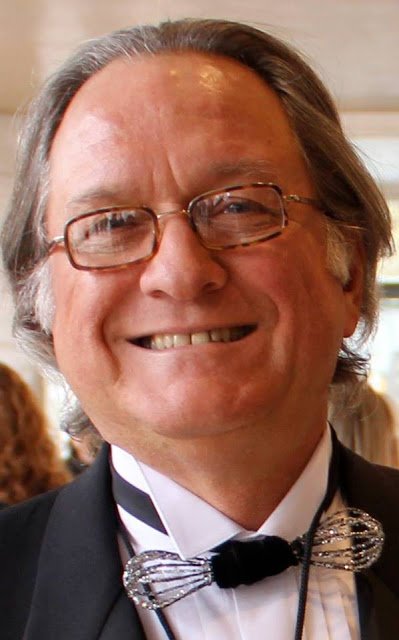

Gerry Dawes is the Producer and Program Host of Gerry Dawes & Friends, a weekly radio progam on Pawling Public Radio in Pawling, New York (streaming live and archived at www.pawlingpublicradio.org and at www.beatofthevalley.com.)

Dawes was awarded Spain's prestigious Premio Nacional de Gastronomía (National Gastronomy Award) in 2003. He writes and speaks frequently on Spanish wine and gastronomy and leads gastronomy, wine and cultural tours to Spain. He was a finalist for the 2001 James Beard Foundation's Journalism Award for Best Magazine Writing on Wine, won The Cava Institute's First Prize for Journalism for his article on cava in 2004, was awarded the CineGourLand “Cinéfilos y Gourmets” (Cinephiles & Gourmets) prize in 2009 in Getxo (Vizcaya) and received the 2009 Association of Food Journalists Second Prize for Best Food Feature in a Magazine for his Food Arts article, a retrospective piece about Catalan star chef, Ferran Adrià. 


". . .That we were the first to introduce American readers to Ferran Adrià in 1997 and have ever since continued to bring you a blow-by-blow narrative of Spain's riveting ferment is chiefly due to our Spanish correspondent, Gerry "Mr. Spain" Dawes, the messianic wine and food journalist raised in Southern Illinois and possessor of a self-accumulated doctorate in the Spanish table. Gerry once again brings us up to the very minute. . ." - - Michael & Ariane Batterberry, Editor-in-Chief/Publisher and Founding Editor/Publisher, Food Arts, October 2009. 
 
Pilot for a reality television series on wine, gastronomy, culture and travel in Spain.
 

1/03/2023

James Michener's Iberia: Spanish Travels and Reflections: Photographs and Recollections from Iberia and from Gerry Dawes's Homage to Iberia

 
* * * * *
Gerry  Dawes giving a derechazo to a vaca brava at a tienta at Concha y Sierra ranch, 1971.  Photographs
of me showing my arte taurino and vino courage by Robert Vavra, photographer for James Michener's Iberia.
 
Although the passage from James Michener's Iberia below my Homage to Iberia excerpt doesn't have an autograph, it has a personal story behind. One day in 1971, I was lucky enough to be invited by Matador John Fulton to a tienta (a testing of the fighting stock) at Concha y Sierra ranch. Joining us was Iberia photographer Robert Vavra, the novillero Curro Camacho (about whom Vavra was writing and photographing a book), another bullfighter aspirant and my friend, the up-and-coming novillero Alonso Morillo, who had already had several triumphs in the La Maestranaza, Sevilla's La Scala of bullrings. 
 
Giving a derechazo to a vaca brava at a tienta at Concha y Sierra ranch, 1971.  Photograph by Robert Vavra, photographer for James Michener's Iberia.
 
The professional toreros gave passes to several of the vacas bravas as I photographed them from a burladero (the protective barrier behind which the toreros stand when the animal first comes into the ring). There was also plenty of Palma del Condado vino, a Sherry-like wine made in Huelva province. I had drunk my share to work up my courage in case they might invite me to try my hand at some passes.
 
Interior patio of our first home at Justino de Neve 3 in

the Barrio de Santa Cruz, the old Jewish quarter of Sevilla.
 
I had been living in a lovely house in the Barrio de Santa Cruz, the old Jewish quarter of Sevilla. Some nights when my pareja Diana Valenti and I came back from a night of in the tapas bars of Sevilla, in the Plaza de los Venerables, right off our street, Justino de Neve, we would encounter a very friendly big black and white hound that I called "Hombre."  Hombre was very playful, so I began pulling out my pocket handkerchief, unfurling it and giving the perro bullfighting passes. I had done this numerous times. Surprisingly, it was not much different from fighting a bull, except a bull is much, much larger and has horns that can kill you. 
 
Fulton and the others did not know that I had been practicing with the big dog plus I had the advantage of several of those glasses of 15% alcohol Condado de Palma wine, which mercifully was a fear inhibitor. So, when they asked me if I wanted to give some passes to that Concha y Sierra vaca brava, I was very pleased to get the chance. 
 
 Gerry  Dawes giving a derechazo to a vaca brava at a tienta at Concha y Sierra ranch, 1971.  Photograph by Robert Vavra, photographer for James Michener's Iberia.

John Fulton gave me his muleta and lighter wooden fake sword that is used to spread the cloth for right-handed passes. I went out into the ring for my date with destiny, a several hundred-pound cow from fighting stock, with horns. Cows, which are tested to see if they are brave enough for breeding fighting bulls, have wounded and killed numerous bullfighters. The most notable was the great Antonio Bienvenida, who was killed when a cow that had been fought and let out, came charging back into the ring, caught him behind, lifted him into the air and dropped him on his head, which broke his neck and caused his death. 

But, with my Condado de Palma-induced bravery and having seen El Cordobés, the most popular bullfighter in those days, advance towards a bull crossing the trajectory as they say, slapping his outer thigh and shouting, "Ey, ey, toro," imitating El Cordobés. I advanced slapping my left thigh.
Fulton shouted, "Don't do that, Gerry, you will call her in on you."


Giving a derechazo to a vaca brava at a tienta at Concha y Sierra ranch, 1971.  Photograph by Robert Vavra, photographer for James Michener's Iberia.


But, when I advanced the muleta (the red cloth), the vaca brava charged like she was "on rails' and was an excellent very brava specimen. She went for the cloth and not for me, for which I will forever be grateful. I got off seven passes, three of them linked, and actually heard "Ole's" from my professional torero friends and Bob Vavra, my photography mentor. Fortunately, Vavra used my cameras to capture my "faena" for posterity. --from Homage to Iberia, a work-in-progress by Gerry Dawes©2020
 
 
Giving a derechazo to a vaca brava at a tienta at Concha y Sierra ranch, 1971.  Photograph by Robert Vavra, photographer for James Michener's Iberia.

 Below:

Part of Jim Michener's description of his outing with John Fulton to visit Concha y Sierra ranch in Las Marismas in the province of Huelva. 
 
Photograph of a page about Concha y Sierra with a photo of a burladero at the ranch. Iberia, p. 213.  Photograph by Robert Vavra.
 
"I was fortunate in visiting Las Marismas for the first time in winter, for this was the rainy season and I was thus able to see the bull ranch in maximum swamp condition; it seemed to me that about seventy percent of its land was either under water or was so water-logged that if I stepped on what appeared to be a solid tussock, it collapsed beneath me with a soft squish, so that my feet were again in water. It was on such land that the Concha y Sierra bulls flourished, but it was not until the matador led me to the dry area on which the ranch buildings stood, and I saw the famous brand of an S inside a C scrawled on the side of a corral, that I was ready to believe that this was the territory of the bulls about which I had read so much. 

The Concha y Sierra bulls had a brave history, and many a noble head had gone from the bullring to the taxidermist’s and from there to the wall of some museum, with a plaque beneath to inform the visitor as to what this bull had accomplished before he died. 

On June 1, 1857, the Concha Bull Barrabás participated in what the books describe as ‘one of the most famous accidents in the history of bullfighting’ in that, with a deft horn, it caught the full Iberia 228 matador Manuel Domínguez under the chin and then in the right eye, gouging it out. It was assumed that Domínguez would die, for his face was laid open, but with a valor that had characterized his performance in the ring he survived, and three months later was fighting again as Spain’s only one-eyed matador, having stipulated that for his return the bulls must again be from Concha y Sierra. For another seventeen years he fought with only one eye and enjoyed some of his best afternoons with Concha bulls. He is known in taurine history as Desperdicios (Cast-off Scraps, from the contemptuous manner in which he tossed aside his gouged-out eyeball)." -- Iberia: Spanish Travels and Reflections, James A. Michener, page 213 in the original copy of the book.
 
______________________________________________________  

 Gastronomy Blogs

 About Gerry Dawes

Dawes was awarded Spain's prestigious Premio Nacional de Gastronomía (National Gastronomy Award) in 2003. He writes and speaks frequently on Spanish wine and gastronomy and leads gastronomy, wine and cultural tours to Spain. He was a finalist for the 2001 James Beard Foundation's Journalism Award for Best Magazine Writing on Wine, won The Cava Institute's First Prize for Journalism for his article on cava in 2004, was awarded the CineGourLand “Cinéfilos y Gourmets” (Cinephiles & Gourmets) prize in 2009 in Getxo (Vizcaya) and received the 2009 Association of Food Journalists Second Prize for Best Food Feature in a Magazine for his Food Arts article, a retrospective piece about Catalan star chef, Ferran Adrià. 

In December, 2009, Dawes was awarded the Food Arts Silver Spoon Award in a profile written by José Andrés

". . .That we were the first to introduce American readers to Ferran Adrià in 1997 and have ever since continued to bring you a blow-by-blow narrative of Spain's riveting ferment is chiefly due to our Spanish correspondent, Gerry "Mr. Spain" Dawes, the messianic wine and food journalist raised in Southern Illinois and possessor of a self-accumulated doctorate in the Spanish table. Gerry once again brings us up to the very minute. . ." - - Michael & Ariane Batterberry, Editor-in-Chief/Publisher and Founding Editor/Publisher, Food Arts, October 2009. 

Gerry Dawes was the Producer and Program Host of Gerry Dawes & Friends, a weekly radio program on WPWL 103.7 FM Pawling Public Radio in Pawling, New York.


Pilot for a reality television series on wine, gastronomy, culture and travel in Spain.
 

1/09/2021

James Michener's Iberia: Spanish Travels and Reflections: More Autographs, Stories & Photos Behind the Signatures in My Copy. The late Queen of American Aficionadas Alice Hall and Her Hero Matador Diego Puerta, Pg. 659

 
 * * * * *

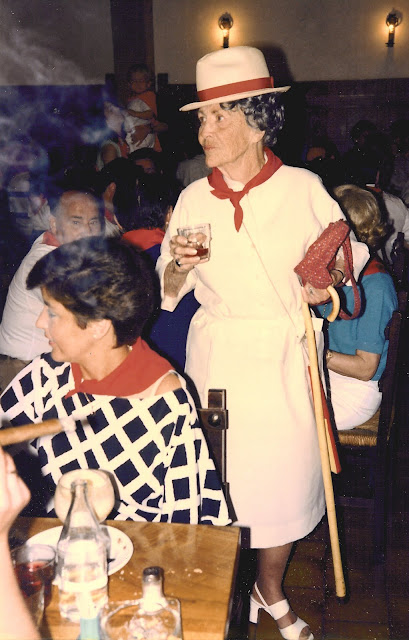
 Alice Hall, Bar Txoko, Pamplona, 1972.  Photograph by Photograph by Gerry Dawes©2021.
 
"After my manuscript was completed, I had the privilege of meeting in person that queen of American bullfight aficionados, Alice Hall of Georgia. Her preferences were so violent and so
persuasive that I modified certain opinions I had previously expressed in the taurine material."--Acknowledgements, Iberia: Spanish Travels and Reflections, James A Michener.
 
 
Signatures of American Aficionada Alice Hall (top) and Matador Diego Puerta (side).
 
Alice Hall with a picador in the Plaza de Toros de Pamplona with her Diego Puerta banner that she always carried.  Photograph by Gerry Dawes
©2021.
  
"It is (Kenneth) Vanderford’s opinion that ‘the best-informed and most dedicated foreign bullfight expert of either sex is Alice Hall.’ This tall, slim gray-haired spinster was, until her recent retirement, a teacher of Spanish in a fancy private school in Atlanta, Georgia.  She came originally to Spain for the laudable purpose of improving her pronunciation, little aware of what was in store.  Like any dutiful tourist she went routinely to a bullfight, had the good fortune of seeing César Girón on one of his great days, and promptly surrendered. Year after year she returned during her vacations and applied to bullfighting the tenacious scholarship which had made her a fine teacher. A friend says, ‘Alice feels intuitively what the bull and the man are going to do next…what they must do…and she is in the ring with them when they do it.’‘Each autumn when I go back to Atlanta and face my first class of girls,’ she says quietly, ‘I feel as if I have been sentenced to exile, that I am in a strange land surrounded by strangers. My heart was left behind in Andalucía.’"--Iberia: Spanish Travels and Reflections, James A Michener, p. 659.


Alicia Hall at Asador Olaverri, Sanfermines, early 1970s.
Photograph by Gerry Dawes©2021.
 
"My late ex-wife Diana Valenti Dawes and I  spent many wonderful sanfermines with Alicia Hall from 1970 through 1975 and in 1977 and 1978. Some years we began in Burguete before fiesta, staying at Hostal Burguete, which was Ernest Hemingway's inspiration for Jake Barnes' hotel during his trout fishing expeditions in The Sun Also Rises.  We would drive Alicia up there and spend a quiet relaxing time - - reading, walking out on the road to Roncesvalles to pick tiny wild strawberries to put on our ice cream after dinner at the Hostal Burguete and having long discussions about Spain over dinner with plenty of vino tinto. . .
 
. . .  One time we were on our way with Alicia to Pamplona (via Rioja and Burguete).  To avoid the maniacs driving southbound Hellbent for the North African-bound ferries in far off Algeciras on NR1, which was then just a two-lane highway, which with homeward bound cars passing in the face of oncoming traffic, causing us to often head for the highway shoulder (or a ditch).  After a few of these close calls, I opted for a back country road in the direction of Burgo de Osma in Soria in northern Castile.  After a few kilometers, Alicia spotted a bar at the entrance to a village. "Stop the car!" she said, "Let's go in there and have some fun." We went in, ordered some vino tinto and had some fun.  
 
Alicia used to have a Pobre de Mí party at Maitena overlooking the Plaza del Castillo on the last night of San Fermín. From there, after dinner, we could watch the fiesta began to wind down with the soulful lament of "Pobre de mí" followed by the joyous, self-renewing "Siete de julio, San Fermín!" One memorable year, over a dozen of us gathered around Alicia for dinner and, as I usually did, I sat next to her.  

But, to set the stage, two things must be kept in mind: 1) When I first met Alicia she did not use blue language, so I claim to have taught her how to cuss and 2) Ever since the Pablo Romero tienta during one memorable Feria de Sevilla, I had been encouraging Alicia to marry some aging bull breeder and do him in with sexual excess, so she could inherit the ranch and invite us to secret tientas. These two items were a running joke between us.

After dinner and plenty of tinto and clarete, Alicia asked me to fetch her some tobaco negro (a black tobacco cigarette), so I bummed a Ducado from Mike Kelly and gave it to her. Alicia was trying to act like a seasoned smoker, so she tried to tamp the cigarette on the table and she broke it.  I had to get her another cigarette, show her how to tamp it, and light it for her. 

"Damn, Alicia," I said, "first I had to teach you how to cuss, now I'm having to teach you how to smoke, and I guess if you marry that bull breeder, I'm going to have to teach you how to do that too."

Holding her cigarette elegantly between her fingers, this retired teacher (from a fashionable young women's school in Atlanta), looked at me with a gleam in her eye and, with total aplomb she said, "Fuck you!"

That same night, we watched from the balcony as the mad chef of Maitena went down to the Plaza and began directing traffic with a meat cleaver in one hand and an enormous raw chuletón steak in the other.

Later, we all drifted down to the Bar Txoko and I encouraged a Navarrese girl with a beautiful voice to sing a jota.  
Looking at Alicia, the young woman sang a wonderful moving jota that had the line, “Madre mia, madre de Navarra."   I looked at Tía Alicia and we both had tears running down our cheeks. It was one of the most magical moments I have ever known in 50 years of running the roads and fiestas of mystical Spain.  But when Alicia was around, magic was never that far away."--Homage to Iberia (a work in progress), Gerry Dawes©2021.
 
 
In 1985, Alicia took her namesake, my daughter, Erica Catherine Alicia, to her first and only bullfight. Photograph by Gerry Dawes©2021.
 
_____________________________________________________________________________________________  

 Gastronomy Blogs
 About Gerry Dawes

Gerry Dawes is the Producer and Program Host of Gerry Dawes & Friends, a weekly radio progam on WPWL 103.7 FM Pawling Public Radio in Pawling, New York.

  Dawes was awarded Spain's prestigious Premio Nacional de Gastronomía (National Gastronomy Award) in 2003. He writes and speaks frequently on Spanish wine and gastronomy and leads gastronomy, wine and cultural tours to Spain. He was a finalist for the 2001 James Beard Foundation's Journalism Award for Best Magazine Writing on Wine, won The Cava Institute's First Prize for Journalism for his article on cava in 2004, was awarded the CineGourLand “Cinéfilos y Gourmets” (Cinephiles & Gourmets) prize in 2009 in Getxo (Vizcaya) and received the 2009 Association of Food Journalists Second Prize for Best Food Feature in a Magazine for his Food Arts article, a retrospective piece about Catalan star chef, Ferran Adrià. 

In December, 2009, Dawes was awarded the Food Arts Silver Spoon Award in a profile written by José Andrés

". . .That we were the first to introduce American readers to Ferran Adrià in 1997 and have ever since continued to bring you a blow-by-blow narrative of Spain's riveting ferment is chiefly due to our Spanish correspondent, Gerry "Mr. Spain" Dawes, the messianic wine and food journalist raised in Southern Illinois and possessor of a self-accumulated doctorate in the Spanish table. Gerry once again brings us up to the very minute. . ." - - Michael & Ariane Batterberry, Editor-in-Chief/Publisher and Founding Editor/Publisher, Food Arts, October 2009. 
 
Pilot for a reality television series on wine, gastronomy, culture and travel in Spain.
 

12/28/2020

James Michener's Iberia: Spanish Travels and Reflections: More Autographs, Stories & Photos Behind the Signatures in My Copy. Author Barnaby Conrad, Pg. 641 Plus Conrad´s Drawing in my Copy of La Fiesta Brava

 
* * * * *
  
James Michener's Iberia: Spanish Travels and Reflections, Barnaby Conrad, pg. 641. Book photograph by Iberia photographer Robert Vavra.
 
In Iberia, James Michener mentioned Barnaby Conrad, artist and author of two English-language taurine classics, Gates of Fear, The Death of Manolete and Fiesta Brava.  I met "Barny," as his friends called him, the first time in Jaén on June 13, 1971, when I went with American Matador John Fulton and his adopted son, Federico, to attend the El Cordobés bullfight that was televised via satellite on closed circuit venues around the world, promoted as "La Corrida del Siglo" (The Bullfight of the Century) and dubbed "the herd shot around the world."  El Cordobés fought two bulls alternating with the serious bullfighters, Santiago Martín  'El Viti' and José Fuentes.  On his last the two borregos (dubbed "sheep" because they were so small) that he fought, he actually mounted it like a horse and rode it! 
 
This picture of Matador John Fulton and me with Manuel Bénitez 'El Cordobés' was taken at the after-party in Ja
én.  Barnaby Conrad comped us tickets and I got 'El Cordobés' to sign mine (below).


Author-Artist-Owner of the bar of legend "Matador" in San Francisco, Barnaby "Barny" Conrad, legendary bullfight aficionado Charles Patrick Scanlan and Mrs. Conrad (Mary Nobles Slater) in Sevilla, Feria de Abril 1998.
 

Many years later during the Feria de Sevilla in 1998, I met up with Barnaby Conrad, his wife Mary and the great aficionada Charles Patrick Scanlan at Scanlan's favorite Irish pub near the Cathedral in Sevilla. .

If you know nothing else at all about Barnaby Conrad, you should know that he wrote one of the greatest ledes in history in his book, The Death of Manolete:

"On August 28, 1947, a multimillionaire and a bull killed each other in Linares, Spain, and plunged an entire nation into deep mourning."

Once I was at a birthday party at The Doubles Club in New York for my friend Alison Price Becker and she sat me at a table with her, George Plimpton and others. He found out from our conversation that I had lived in Spain and knew many matadores.

Plimpton said, "These aficionados are so into bullfighting that they can tell you the name of the bull and that date that a bullfighter like Manolete was killed."

I replied, "The bull's name was Islero from the ranch of Don Eduardo Miura and he killed Manolete in the Plaza de Toros de Linares, Jaén, on August 28, 1947.

"See," Plimpton said, "I told you so."


My copy of La Fiesta Brava by Barnaby Conrad, signed by Conrad and with an original drawing dedicated to me, Jaén, June 13, 1971.
 ______________________________________________________________________________  

 Gastronomy Blogs

 About Gerry Dawes

 Dawes was awarded Spain's prestigious Premio Nacional de Gastronomía (National Gastronomy Award) in 2003. He writes and speaks frequently on Spanish wine and gastronomy and leads gastronomy, wine and cultural tours to Spain. He was a finalist for the 2001 James Beard Foundation's Journalism Award for Best Magazine Writing on Wine, won The Cava Institute's First Prize for Journalism for his article on cava in 2004, was awarded the CineGourLand “Cinéfilos y Gourmets” (Cinephiles & Gourmets) prize in 2009 in Getxo (Vizcaya) and received the 2009 Association of Food Journalists Second Prize for Best Food Feature in a Magazine for his Food Arts article, a retrospective piece about Catalan star chef, Ferran Adrià. 

In December, 2009, Dawes was awarded the Food Arts Silver Spoon Award in a profile written by José Andrés

". . .That we were the first to introduce American readers to Ferran Adrià in 1997 and have ever since continued to bring you a blow-by-blow narrative of Spain's riveting ferment is chiefly due to our Spanish correspondent, Gerry "Mr. Spain" Dawes, the messianic wine and food journalist raised in Southern Illinois and possessor of a self-accumulated doctorate in the Spanish table. Gerry once again brings us up to the very minute. . ." - - Michael & Ariane Batterberry, Editor-in-Chief/Publisher and Founding Editor/Publisher, Food Arts, October 2009. 

In 2018-2019, Gerry Dawes was the Producer and Program Host of Gerry Dawes & Friends, a weekly radio progam on WPWL 103.7 FM Pawling Public Radio in Pawling, New York.


Pilot for a reality television series on wine, gastronomy, culture and travel in Spain.
 
Related Posts with Thumbnails