
Share This Gerry Dawes's Spain Post


Instagram

In 2026, ranked #7 in the Top 30 Gastronomy Blogs (and Websites for Gastronomists & Gastronomes by Feedspot. (Ranked in the top 50 since 2019). "The Best Gastronomy blogs selected from thousands of Food blogs, Culture blogs and Food Science. We’ve carefully selected these websites because they are actively working to educate, inspire, and empower their readers with . . . high-quality information.

More than 3,640,000 views since inception, 123,000+ views in August 2026.


Ranked #7. Gerry Dawes's Spain: An Insider's Guide to Spanish Food, Wine, Culture and Travel gerrydawesspain.com

"My good friend Gerry Dawes, the unbridled Spanish food and wine enthusiast cum expert whose writing, photography, and countless crisscrossings of the peninsula have done the most to introduce Americans—and especially American food professionals—to my country's culinary life. . .” - - Chef-restaurateur-humanitarian José Andrés, Nobel Peace Prize Nominee and Oscar Presenter 2019; Chef-partner of Mercado Little Spain at Hudson Yards, New York 2019

Showing posts with label Don Quixote. Show all posts

9/18/2026

Remembering The Great Donn Pohren: His Passing & His Significance "Embedded in me like a memory chip is the spirit of Donn Pohren and his book Adventures in Taste: The Wines and Folk Food of Spain."


* * * * *

Madrid, Spain - American writer and well-known Flamencologist Donn Pohren died in Las Rozas [a Madrid suburb] on November 5, 2007. His wife, Luisa Maravillas provided a brief statement: "I regret to inform you all that Donn passed away the 5th of November, during the night. Sometime in the near future I intend to organize a gathering of friends and aficionados in Las Rozas."  - - Contributed by: WMC_News_Dept.  11/07/2007 08:35AM

Donn Pohren was regarded as one of the leading experts in Flamenco in the English language and wrote several influential books about the subject. "Donn Pohren's book was the first thing I bought when arriving in Andalucía, before I even knew how much my life would be involved with and changed by flamenco. It helped me understand a lot that was to come," says British expatriate Kate Edbrooke, who runs a recording studio in Granada and has produced several Flamenco recordings by local artistsPohren wrote several books on Flamenco, including The Art of Flamenco, Lives and Legends of Flamenco and A Way of Life.  He and his wife Luisa ran the Society for Spanish Studies, first out of Morón de la Frontera and later from Rozas outside of Madrid.


Que descansa en una juerga de “pura ma're” with a copita in front of him
and Diego del Gastor playing alongside him.

* * * * *
The Significance of Flamencologist Donn Pohren
and His Impact on Spanish Wine & Food
 

Copyright by Gerry Dawes 2017. 

In 1972, Donn Pohren, a Minneapolis-born American who lived in Spain for decades and was the world's greatest foreign expert on flamenco, published his idiosyncratic underground classic, Adventures in Taste: The Wines and Folk Food of Spain. I was living in southern Spain when I first encountered Pohrens's book (privately printed in Spain) soon after it was published and it had a profound effect on me. In the early years, I never traveled without it. At first, I merely wanted to have some of the wine and food experiences that he had described. Soon, I was having new experiences of my own, experiences that would eventually lead to my becoming a widely published writer on Spanish wine and food and a recognized authority in the field.
  
Donn Pohren's Adventures in Taste: The Wines and Folk Food of Spain


Adventures in Taste, self-published by Pohren in 1972.


Pohren wandered around the Iberian Peninsula in the 1960s exploring the nooks and crannies of Spain's 4,000,000 acres of vineyard lands, the largest acreage of any country in the world. He would pop into a village bar, ask for a glass of the local vino, then casually ask who made the best wine in town. On many occasions, Pohren would soon find himself being offered several samples as one vintner after another vied to show this foreigner that his wine was the best in the village. In his book, Pohren described encounter after encounter with artisan winemakers who were making excellent wines, many of which were unknown to the outside world in those days.


Pohren's Map of the Wine Regions of North Central
 (He did not cover Galicia!)


However, many of the wines Pohren described were wines whose charm soon faded if anyone tried to transport them beyond the boundaries of their home region. The winemaking techniques were often primitive. In many places the grapes were still crushed by treading, then fermented in open stone or cement vats, and aged in less than meticulously cared for barrels. The result was a flawed wine, which often tasted good with the local food, but was simply not stable enough to "travel" and was not the stuff to thrill sophisticated wine connoisseurs. Still, Don Pohren swore by the inherent quality of many of these Spanish wines and he was right.

His experiences have always been in the back of my mind and have served me well on numerous occasions, such as an encounter on my first trip to then unknown Priorat in 1988. Firmly in Pohren's shoes, I entered an old-fashioned, untidy cellar, where I was given a flawed wine to taste, but the underlying base wine was clearly very good. I judged the prospects for this region to be so promising that I came back wrote the first major article about the potential of Priorat. Alvaro Palacios and crew arrived the next year and began to make history. Recently, in Ribeira Sacra, I have run into some flawed wines (less so every year), just as a did in Priorat nearly twenty years earlier. Tasting "underneath" the sometimes inexperienced wine making techniques, I found enormous potential. I know Donn would have as well.

What Pohren tasted in those wines while researching his book forty years ago was the materia prima (raw material; grapes, soil and climate), the exceptional juice from grapes which often came from old vines, whose average yield of wine per acre of vines was less than half that allowed by the best appellations of Burgundy and Bordeaux.  Even backward winemaking techniques couldn't keep the underlying quality from showing through; Pohren's Spanish wines were diamonds in the rough.

In the years since Donn Pohren wrote his book, exciting things have happened which promise an incredible future for both Spain's traditional wines and those of emerging wine regions. Spain's nearly four decades-old democracy has been the catalyst for a modern renaissance in fashion, art, literature, cinema, and gastronomy and it has ushered in a technological revolution in wine making as well. A key element in this was Spain's acceptance in 1992 as a member of the European Economic Community, the Common Market (now the European Union), which posed a special challenge to Spanish wine producers: compete on a quality level with the other wines of Europe or enter the over-saturated European wine "lake," and be lost in the crowd.

Fortunately, Spain opted for quality. Many forward looking people in the Spanish wine trade began to see Spain's entry into the European Union as both a new challenge and a new opportunity for their wines. These challenges and opportunities would require a reassessment of their positions in both the domestic and export markets, an upgrading of their winemaking technology, and consistent quality in their wines. Emile Peynaud, Alexis Lichine, and other consultants were brought in from France to advise winemakers in the Rioja, Ribera del Duero, and Rueda. The best enologists from Rioja, Penedes, and Navarra traveled to other regions share their expertise. Young Spanish winemakers trained in Bordeaux, Burgundy, and at the University of California - Davis. Miguel Torres Riera, the maestro of Catalan winemaking, and Jose Peñin, Spain's foremost wine authority, wrote important books about Spain's future in the wine world. New wine books, periodicals, and gourmet journals proliferated. Seminars, international wine symposiums, and wine competitions began to be conducted on a regular basis. And, importantly, wine clubs and societies were formed as an increasingly affluent and growing middle class in Spain began to appreciate the wines of its own country.

During the past several decades, investments in new wine making technology (especially in the area of fermentation control), better barrels (although accompanying by a lot of oak abuse!), experiments with new grape varietals, and the replanting of vineyards in some areas have begun to have a geometric effect on the overall quality level of Spanish wines. This progress in winemaking technique in Spain would not in itself account for such a dramatic effect–in fact, it is now often a detriment to authenticity--if it were not for the fact that Spain is a splendid natural vineyard endowed with many areas whose grape varietals have become perfectly acclimated over centuries to the micro-climate and soil in which they grow. 

All that was needed in many cases were winemakers dedicated to quality and the technology to achieve it. The grapes produced in the best wine areas of Spain–Rioja, Jerez, Cataluna, Ribera del Duero, Navarra, Rueda, and in many up and coming regions–have shown they are capable of producing wines which can stand alongside the best of France, Italy, and California. The Tempranillo of the Rioja and Ribera del Duero, for example, is coming to be recognized as a grape which can produce wines to rival those made from Cabernet Sauvignon, Merlot, or Pinot Noir.

The established, classic wine regions of Spain like Rioja and Jerez, while refining the techniques and polishing the skills which made them famous, also created exciting new areas of interest with small estates like Remelluri and Contino in Rioja and the emergence of such high-quality wines as the almacenista sherries of Emilio Lustau and the late harvest Navarra moscatels from Julián Chivite, Ochoa and Viña Aliaga. Other areas whose wines were once underground legends in Spain, like those described by Donn Pohren, but whose viticulture was based on tiny artisan producers and ill-equipped cooperatives, began to realize their potential for making great wines.

Ribera del Duero, home of Vega Sicilia, Pesquera, Mauro, and Viña Pedrosa; Navarra, the producer of perhaps the world's finest rosés; Priorato (Cataluna) and Toro (Castilla-Leon), whose rich, concentrated, blockbuster red wines have drawn international attention; Rueda, a surprising white wine region; and Rías Baixas, whose Albariños now count the U.S. as its most important export market, are just the most visible of the emerging wine regions capable of making first rate wine from native grapes. There are many more to come. 

Previously unknown regions–not many of which unknown to Donn Pohren–such as Bierzo, Ribeiro, Ribeira Sacra, Valdeorras and Monterrei, along with Jumilla and many others–have either jumped onto the world wine stage or are just in the wings awaiting their call to stardom. Producers like Miguel Torres in Penedes, Julián Chivite in Navarra, Carlos Falcó at Dominio de Valdepusa and Codorniu's Raimat estate, just to name a few examples, have achieved new heights with foreign varietals, though even the best examples often fall short of the intriguing, delicious, uniquely Spanish wines made from indigenous varieties–the kinds of wines that Donn Pohren loved.

Embedded in me like a memory chip is the spirit of Donn Pohren and his
Adventures in Taste.  Following his example, I still ferret out little known producers and drive many kilometers out-of-the-way just to eat a dish in a little-known regional restaurant and, like Don, look beyond rusticity (or fancy trappings in some places) to find the core of something that is undeniably wonderful and unique to Spain. Only adventurers and indefatigable travelers can do what Donn Pohren did. I can attest to how indefatigable and adventurous he was from averaging six trips a year to Spain (eight per year in the past five years).

Without Don Pohren’s book (and to a great degree, James A. Michener’s Iberia) I may have never caught the spirit of the Spanish road that has sustained me now for more than 50 years. For that I owe Donn a now un-redeemable debt of gratitude and so do people such as Steve Metzler, who built a great and exemplary Spanish wine importing company, Classical Wines, based on his Pohren-inspired wine travels. Because of Donn, Metzler was inspired to find not only Pesquera and make Alejandro Fernandez's wine world famous, he even met his wife, Almudena. Neither of us saw Don Pohren as much as we would have liked to over the years, but fortunately several years ago in Madrid, I had an opportunity to let Donn know just how much his work meant to me and to the many who carry Spain in their hearts.


Pohren visited my late former wife Diana and I for lunch at our house in Mijas (Málaga) in 1974.  
Donn autographed Adventures in Taste to us.


I will miss the fact that Donn is no longer with us in body, but he will never die in the spirits and hearts of those who followed his incredible Quixotesque passion for Spain, flamenco, Spanish wine and traditional food and all things Spanish. (Quixote may have been a dreamer, but not a madman; those windmills he was tilting at were brought from the low countries and represented the domination of the foreign House of Austria, a powerful, inquisition wielding force that crushed those who dissented like Don Quixote after his encounter with the windmill sails.)

Donn Pohren was a dreamer and he may have seemed like a madman when he lived his life like a candle in the wind during his awesome flamenco juerga years, but to me Donn Pohren was a profound inspiration and he always will be. 

Vaya con Dios, Don Donn. I will raise a copita to you often in my journeys. I can see the angels lining up now for a juerga--a Spanish wine, food and flamenco party--the likes of which even heaven hasn’t seen.

The End

Gerry Dawes©2026
gerrydawes@aol.com
 
* * * * * 
 
Comments are welcome and encouraged.
 
Text and photographs copyright by Gerry Dawes©2021.  Using photographs without crediting Gerry Dawes©2021 on Facebook.  Publication without my written permission is not authorized.

* * * * *
  Shall deeds of Caesar or Napoleon ring
More true than Don Quixote's vapouring?
Hath winged Pegasus more nobly trod
Than Rocinante stumbling up to God?
 
Poem by Archer M. Huntington inscribed under the Don Quixote on his horse Rocinante bas-relief sculpture by his wife, Anna Vaughn Hyatt Huntington,
in the courtyard of the Hispanic Society of America’s incredible museum at 613 W. 155th Street, New York City.
 _______________________________________________________________________________________________

 Gastronomy Blogs

In 2026, again ranked in the Top 50 Gastronomy Blogs and Websites for Gastronomists & Gastronomes in 2026 by Feedspot, now up to #7 . (Last Updated September 2026.) 

"The Best Gastronomy blogs selected from thousands of Food blogs, Culture blogs and Food Science blogs in our index using search and social metrics. We’ve carefully selected these websites because they are actively working to educate, inspire, and empower their readers with frequent updates and high-quality information."  

#7 Gerry Dawes's Spain: An Insider's Guide to Spanish Food, Wine, Culture and Travel


About Gerry Dawes

My good friend Gerry Dawes, the unbridled Spanish food and wine enthusiast cum expert whose writing, photography, and countless crisscrossings of the peninsula have done the most to introduce Americans—and especially American food professionals—to my country's culinary life." -- Chef-restaurateur-humanitarian José Andrés, Nobel Peace Prize Nominee and Oscar Presenter 2019
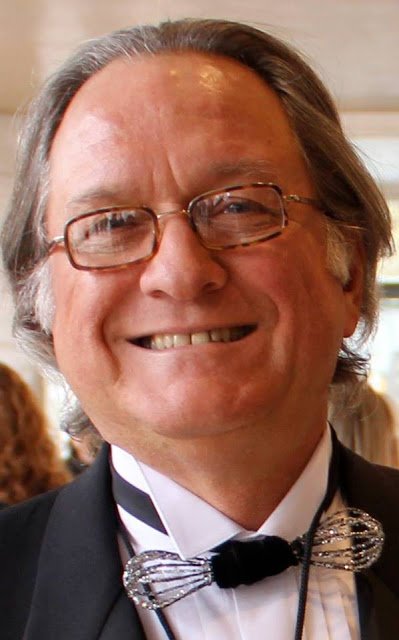

Gerry Dawes is the Producer and Program Host of Gerry Dawes & Friends, a weekly radio progam on Pawling Public Radio in Pawling, New York (streaming live and archived at www.pawlingpublicradio.org and at www.beatofthevalley.com.)

Dawes was awarded Spain's prestigious Premio Nacional de Gastronomía (National Gastronomy Award) in 2003. He writes and speaks frequently on Spanish wine and gastronomy and leads gastronomy, wine and cultural tours to Spain. He was a finalist for the 2001 James Beard Foundation's Journalism Award for Best Magazine Writing on Wine, won The Cava Institute's First Prize for Journalism for his article on cava in 2004, was awarded the CineGourLand “Cinéfilos y Gourmets” (Cinephiles & Gourmets) prize in 2009 in Getxo (Vizcaya) and received the 2009 Association of Food Journalists Second Prize for Best Food Feature in a Magazine for his Food Arts article, a retrospective piece about Catalan star chef, Ferran Adrià. 


". . .That we were the first to introduce American readers to Ferran Adrià in 1997 and have ever since continued to bring you a blow-by-blow narrative of Spain's riveting ferment is chiefly due to our Spanish correspondent, Gerry "Mr. Spain" Dawes, the messianic wine and food journalist raised in Southern Illinois and possessor of a self-accumulated doctorate in the Spanish table. Gerry once again brings us up to the very minute. . ." - - Michael & Ariane Batterberry, Editor-in-Chief/Publisher and Founding Editor/Publisher, Food Arts, October 2009. 
 
Pilot for a reality television series on wine, gastronomy, culture and travel in Spain.


3/11/2024

Don Quixote, Casa de Cervantes, Valladolid (Castilla y León)


* * * * *


Miguel de Cervantes Saavedra
Author of Don Quixote*

* * * * *
Casa de Cervantes, Valladolid


Dostoevsky in The Diary of a Writer on Don Quixote*

"There is nothing in life more powerful than this piece of fiction. It is still the final and the greatest expression of human thought, the most bitter irony that a human is capable of expressing; and if the world came to an end and people were asked somewhere there: ‘Well, did you understand anything about your life on earth and draw any conclusion from it?’ a person could silently hand over Don Quixote. ‘Here is my conclusion about life. Can you condemn me for it?’"

Highly Recommended:  Edith Grossman's translation of Don Quixote:

“The extraordinary significance and influence of this novel were reaffirmed, once again, in 2002, when one hundred major writers from fifty-four countries voted Don Quixote the best work of fiction in the world.”  Translator’s Note to the Reader, Don Quixote: A New Translation by Edith Grossman (Ecco, Harper Collin, New York, 2003.)


"Miguel de Cervantes was born on September 29, 1547, in Alcala de Henares, Spain. At twenty-three he enlisted in the Spanish militia and in 1571 fought against the Turks in the battle of Lepanto, where a gunshot wound permanently crippled his left hand. He spent four more years at sea and then another five as a slave after being captured by Barbary pirates. Ransomed by his family, he returned to Madrid but his disability hampered him; it was in debtor's prison that he began to write Don Quixote. Cervantes wrote many other works, including poems and plays, but he remains best known as the author of Don Quixote. He died on April 23, 1616." -- Harper Collins website.

Valladolid -- See Valladolid: Castilla y León's Capital & Historical Treasure Trove -- was the capital of Spain for five years (1601-1606) under Phillip III after the city bribed the Duque de Lerma, the royal favorite and one of the most corrupt individuals ever to hold power in Spain, 400,000 ducats to move the court from Madrid. 


Miguel de Cervantes Saavedra, spent three years in Valladolid during this period in a house on the calle del Rastro. The Casa de Cervantes is located at calle del Rastro 7, two and a half blocks east of Plaza de Zorilla (just south of the Plaza, don’t miss the Campo Grande park where magnificent semi-tame peacock–with the emphasis on “semi”– fan their feathers and strut about the park doing their mating dance for the peahens and tourists alike).

Cervantes, along with more than 20 of his relatives, friends, and perhaps a down-at-heel servant or two, crowded into 13 rooms above an old tavern that was the hangout for butchers from the nearby slaughterhouse.

My old friend and some-time mentor, the late William Byron, author of the definitive biography of Cervantes (Cervantes: A Biography), describes what the building was like in those days, "one of five new houses jerry built by a small-bore speculator hoping to cash in on an influx of riffraff into the city. It was an instant slum."

Cervantes was arrested in this house, though, after the mysterious death from sword wounds of a nobleman killed in the dangerous streets of this quarter. Cervantes and his family helped the man into their apartments, where he died two days later, and when no one could put a finger on the man's assailant, Cervantes and several members of his family were arrested, albeit briefly, thus adding Valladolid to list of jails–Algiers, Castro del Rio, Argamasilla de Alba and Sevilla–that the great writer graced with his presence–most unjustly in all the instances. 

Don't expect to moved by the spirit of the great writer in today's contrived surroundings, however; the house is more interesting as a refurbished 17th-century dwelling, certainly in better shape now than it was in those days, than as a Cervantes museum. Besides, by the time Cervantes moved here, Volume I of Don Quixote was already finished and in the hands of his publisher, Francisco de Robles, who had moved to Valladolid from Madrid to be close to the real money - - in this epoch certainly - - around the supremely corrupt duke of Lerma and the court of Phillip III. 

More on Cervantes:


3/10/2024

Valladolid: Castilla y León's Capital & Historical Treasure Trove

* * * * *

 (Parts of this chronicle first appeared in the Penguin Guide to Spain & in the Berlitz Travellers Guide to Spain.)

In early May, 2007, I stayed in Valladolid while attending the Premios Zarcillo, an annual judging of wines ostensibly drawn from around the world by an international panel of wine experts, but primarily from the host region of Castilla y León. I had not really had a chance to explore the city since more than fifteen years ago, when I was working on guide books to the region for Penguin and Berlitz.

Valladolid (from the Arabic Belad-Walid, meaning land of the governor), located 193 km (120 miles) northwest of Madrid and 90 km (55 miles) east of Zamora, an eponymous provincial capital with a population of about 330,000, is also the seat of the government of the Comunidad de Castilla y León. The city of Valladolid sits at the confluence of the Pisuegra and Esgueva rivers on a high plain (more than 2,100 feet above sea level) and is surrounded by wheat fields and vineyards. 
 Valladolid is smack in the middle of four Castilla y León wine regions–Rueda (to the south, white wines), Ribera del Duero (to the east, famous for reds, including Vega Sicilia, Pesquera, Mauro, Dominio de Pingus and others, all in Valladolid province), Cigales (to the north, long famous for rosado, now making a name for red wines) and Toro (to the west, shared with Zamora and famous for powerful red wines). The area is in the middle of the famous Castilian plateau, the Meseta Central, which also means that the climate of Valladolid is subject to the same extremes–bitterly cold in winter, blazing hot in summer - - as the rest of Castile.

In addition to being the center of Castile's vital agricultural region - - the breadbasket and wine pitcher of this part of Spain - - and a major university town, in the post-Franco years, Valladolid became industrialized. As new factories such as a giant Renault factory were built, the population of the city expanded rapidly and, for a while, it less than visionary traffic patterns and city planning made it a difficult place to get around and it. But, during the past decade, a new prosperity and a new civic outlook has fostered the creation of a number of zona peatonales, pedestrian-only streets that have become prime shopping, dining and tapas hopping areas, so Valladolid has taken on a fresh new look, which belies its colorful and checkered past.

Compared to many other Spanish, and even old Castilian cities, Valladolid– which was founded by Count Pedro de Ansurez in 1084, one year before Toledo was captured from the Moors–was a latecomer. For centuries this area, including the valley of the Duero, was a no man's land, a buffer between the warring Moorish and Christian forces. But this former capital of Old Castile made up for lost time during the 15th and 16th centuries, Valladolid’s greatest period, during which it proved fertile ground for a number of Spain's most important artists and architects and was the site of a number of significant events in Spanish history, including the wedding of Isabel and Ferdinand; the death of Christopher Columbus; the births of Philip II, Philip IV, and Anne of Austria (mother of Louis XIV of France); and a three-year sojourn by Cervantes, during which Don Quixote was published (1605). Later, in the 19th Century, Valladolid had the unfortunate distinction of having served as Napoleon's headquarters during the Peninsular War.

Historically, Valladolid has suffered from a somewhat unsavory reputation. William Byron, author of a splendid biography, Cervantes, tells of a 16th-century Dutchman, who claimed that the city was full of "picaros, putas, pleytos, polvos, piedras, puercos, perros, piojos, pulgas - - rogues, whores, lawsuits, dust, stones, swine, dogs, lice, and fleas." And 20th-century wayfarers have not upgraded the city's reputation much. Nikos Kanzantzakis wrote that the city, the correct pronunciation of which is a test of proper Castilian (Vye - yah - doh - leeth), "is like a fallen princess whose lovers all have died, and so she has had to take to industry and commerce in order to survive."

Alastair Boyd, who wrote a book detailing the artistic and cultural treasures of Castile, confessed to being "prejudiced against Valladolid for years," but pointed out that there are few places in Spain without some redeeming qualities, Valladolid included. Still, he said, "it is difficult to give a coherent account of a no longer coherent city." In many Spanish cities, the great tourist treasures are set like jewels in a necklace of old and restored buildings that accentuate an overall atmosphere of antiquity. In Valladolid the necklace was broken by modern highrises; incongruity and incoherence reign and the jewels - - many of them less than crown jewels at that - - are scattered about. (This has changed a lot in the past twenty years.  Pedestrian walking areas now link most the major monuments and Valladolid has become a delightful walking city.  The new AVE high-speed train from Madrid now takes only about 50 minutes to reach Valladolid.)

Be aware, too, that the majority of the the sights here are architectural, since Napoleon's troops, headquartered here during the Peninsular War, either stole, burned, or wantonly hacked up a great number of artworks in the interiors of churches and other buildings. But, if you are seriously interested in Spanish history, architecture, art, and culture, many of Valladolid's remaining treasures are well worth searching out.

The old quarter, the core of Valladolid where most of the city's attractions are located, is a warren of narrow streets that twist and turn, and change names every couple of blocks. Consequently, it is best to walk to the many historical and architectural monuments in this town - - the Museo Nacional de Escultura in the remarkable pre-Plateresque Colegio de San Gregorio, the Isabeline Gothic facade of the church of San Pablo, the Romanesque-and-Gothic church of Santa Maria la Antigua, the unfinished Herreran Cathedral, Columbus' house, Cervantes' house, and the multitude of low priority sights considered important enough to be listed by the Valladolid tourist office.

Leave your car at your hotel, or, if you are staying outside the city and driving in for the day, put your car in one of the carparks on the west side (one in the plaza Mayor, and two more north of plaza del Poniente near rio Pisuegra. River). Explore the old quarter on foot, and use taxis, if you are not up for the trek, to get to the Oriental Museum in the southern part of town. Valladolid is well-served by bus service and by train from Madrid, which, by 2008, will be only an hour away by high-speed AVE train (the route via Segovia is currently under construction). Both the stations are located south of the Campo Grande park, which is not to be missed because of its scores of semi-wild peacocks, geese, ducks, other birds and semi-tame red squirrels, who like to perch on the "Please don’t feed the animals signs" and munch on the contraband offerings of both locals and tourists alike, while mugging for cell phone photos. )

To find your way around this city, it is important to choose a proper map. At one point, the tourist office brochure map had the Pisuerga river on the top of the page; a popular commercial Spanish guidebook series put it on the bottom of the page; and the Michelin Guide had it on the left, or western, side of town, where it should be. Beginning in the morning and using the 16th-century arcaded Plaza Mayor with a statue of the Count de Ansurez in the middle and the Ayuntamiento, or City Hall, as a reference point on your map, you can then decide which of the monuments you want to visit, perhaps starting with the Cathedral to the east; then detouring past a number of buildings of primarily architectural interest near the Cathedral; going on to visit the Museo Nacional de Escultura in the Colégio de San Grégorio and nearby San Pablo; and finishing at the church of San Bénito before returning to the Plaza Mayor and the many tapas bars in the area.

From the south side of the Plaza Mayor, walk east for a few blocks until you come to the Cathedral, which was originally intended to be one of the largest churches in the world. Construction started on this still unfinished edifice in the early 16th century, but over fifty years passed before Juan de Herrera, the famous architect of the Escorial and many other outstanding buildings in Spain, got the project going in earnest and put the Herreran stamp on it. However, Herrera's design was only partially completed - - the west front and the tower - - then construction languished again, this time until the 18th century when Alberto de Churriguera, with his unique vision of Baroque, added that portion of the facade above the main portal, a touch that, strangely enough, meshed very well with Herrera's austere style. This church sorely needs at least one more tower (among the four originally planned) for symmetry, and the interior was never finished; for instance, the Latin Cross floor plan never even reached the crossing. The high altar, by Juan de Juni, who is well represented in the Museo Nacional de Ecultura, was originally carved in 1572 for the church of Santa Maria la Antigua.

Because work on the Cathedral was stopped, several sections of the existing collegiate church from early periods still exist. The fine Museo Diocesiano is installed in these remaining sections of the old church; you can see Mudejar designs, Romanesque tombs, and Gothic doors in the Chapel of San Llorente. The sacristy contains one of the Toledan silversmith Juan de Arfe's major pieces, a huge four-tiered silver monstrance from the late 16th century. Southeast from the Cathedral is the Universidad, whose Baroque facade surrounding the main portal was done by Narciso Tomé in 1715. As Alastair Boyd points out, during this period Spanish architects such as Tome, who did the Transparente in Toldeo, and the Churrigueras, with their wildly extravagant altarpieces, were still relatively sober in their decoration of exteriors.

Artists such as Tomé were in transition, still restrained by the power, weight, and conservatism of Herrera's influence, but in the end, just as florid Gothic gave way in Spain to Plateresque, and what was once confined to altarpieces, as Boyd puts it, "moved cheerfully outwards from the retablos to the facades." Spanish decoration would eventually degenerate into Rococo, but not yet.  The facade of the Universidad de Valladolid would like to take off, but it is anchored firmly, by four unadorned columns set on square pedestals, to the no-nonsense conservative building it decorates.


Around the corner to the southeast of the University, the Colegio de Santa Cruz represents the late 15th-century Renaissance style of Enrique de Egas, and just northeast, along calle del Cardenal Mendoza, which becomes calle Colon, is Christopher Columbus's house. In 1506 Columbus died in Valladolid a broken man, "If I had stolen the Indies and given them to the Moors, Spain could not have shown me greater enmity." The house where he died was demolished in the 1960s, then completely rebuilt to house the Casa de Colón, whose most interesting displays are the maps of the great Admiral's three voyages, and some artifacts from his new world discoveries.

Just behind the Cathedral to the north is the early 14th-century Gothic Church of Santa María la Antigua with a Romanesque portico and an exceptional 11th-century Romanesque tower. This conjunto works beautifully; Santa María la Antigua is one of the finest buildings in the city. A block northwest is the early 17th-century Church of Las Angustias (Anguish), which contains Juan de Juni's celebrated Virgen de los Cuchillos (Virgen of the Knives), a polychrome statue of the Virgin Mary clutching her breast, into which enough silver daggers have been plunged to cause anguish indeed.

The Colegio de San Gregorio

Located northeast of the Plaza Mayor are two of Valladolid's main attractions: The Colegio de San Gregorio, the remarkable, incredibly ornate (Jan Morris called it "almost edible"), late 15th-century Isabeline-Gothic building in which the Museo Naciónal de Escultura is housed and, next to it, the equally ornate, Isabeline Iglesia de San Pablo. Both these pre-Renaissance buildings are often called Plateresque, but they are not. 

They preceded Plateresque and obviously contributed to its development, but they were executed by foreign architects and stonemasons inspired–according to Professor Denning of Trinity College in Dublin– by the kind of decoration commonly used in the title-pages of books and by the wood carvings done for the altarpieces of the period. It is to this, not to the silversmiths who inspired Plateresque decoration, that we owe the remarkable style of these two structures. The 15th-century Iglesia de San Pablo, which preceded San Gregorio and is even more detailed (if that is possible), was added to in the early 17th century by the ever-present duke of Lerma, whose coat-of-arms can be seen on the facade. The French looted and destroyed the original interior during the Peninsular War, but a striking pair of Isabeline doorways remains in the since-restored church. 

San Gregorio, commissioned by the prelate of Palencia, Bishop Alonso de Burgos, confessor to Queen Isabella, was built between 1488 and 1496. The facade, like that of San Pablo, looks like a giant florid Gothic altarpiece, except that the figures, including the huge heraldic emblem of Castile and León, are largely secular. The delicacy and intricacy of much of the stonework, obviously an exceptionally laborious accomplishment, is amazing. San Gregorio's architect was Juan Guas, but the decoration of the facade has been attributed variously to Enrique de Egas; Simón de Colonia, who planned the splendid La Cartuja de Miraflores and Capilla de los Condestables in Burgos, and executed the facade on the church of San Pablo; and to the great Gil de Silöe, believed to have been a native of Antwerp, who worked on both Miraflores and the Cathedral of Burgos with Simón, and is believed to have worked on the church at Aranda de Duero with him as well. Opt for a collaboration between these foreign artists, for whom, as Sacheverell Sitwell describes, "It is the 'Espagnolade' of a foreigner, as much so as the drawings of Gustave Doré or the music of Carmen."

The great patio of San Gregorio is exceptionally rich. Beautifully turned barley-sugar columns support a second-floor gallery of archways filled with profusely-decorated, intricately-carved stone balconies, each with three short columns supporting a double-arched, heavily-decorated panel. Running below the gargoyle-studded roofline is a frieze decorated with a repetitive yoke-and-arrows (the symbol of Isabel and Ferdinand) motif that is broken at each corner by the coat-of-arms of the unified kingdoms of Castilla, León, and Aragón. 

Museo Nacional de Escultura

The Museo Nacional de Escultura in San Gregorio is filled with polychrome wood statues (many with meticulously detailed bleeding wounds); complete tableaux representing Biblical scenes; Holy Week processional pasos (floats): entire altarpieces; paintings; and even an entire set of carved wooden choir stalls, done by Gil de Silöe, Alonso Berruguete, Juan de Juni, Gregorio Fernández, Pedro de Mena, and others, is to Valladolid, as one book put it, "what the Prado is to Madrid." 

One of the masterpieces in the Museo Nacional de Escultura 's collection is the early 16th-century altarpiece by Alonso Berruguete, who Alastair Boyd claims, was "the only inspired artist of the Spanish Renaissance." Berruguete spent five years working in Florence and was greatly influenced by Michaelangelo (he was mentioned in the master's letters), Leonardo da Vinci (he was in Florence when Leonardo was painting the Mona Lisa), and Raphael; he returned to Spain to become the greatest Spanish sculptor of the 16th century. Originally built for Valladolid's Iglesio de San Benito, Berruguete's retablo, now dismantled and displayed in three rooms on the ground floor of the museum, measured over 50 feet high. 

The museum also displays another exceptional altarpiece taken from the Convent of La Mejorada in Olmedo, several first-rate pieces including the superb statues of San Sebastián and the Sacrifice of Isaac, and a fine Nativity painting, all by Berruguete, whose talents did not stop here: He also did part of the woodcarving on the upper parts of the magnificent choirstalls in Toledo Cathedral. The Frenchman from Champagne, Juan de Juni, whose work can also be seen in the Cathedral and in Las Angustias church here, is represented in this museum by one of his most highly-regarded works, the Entombment of Christ, and a good John the Baptist. 

Gregorio Fernández, who in the early 17th-century carried Juni's Illusionism even further by using human teeth, glass eyes, and graphically depicted bleeding wounds to get his point across, is very well represented here, but a little bit of Fernández goes a long way. His Cristo Yacente (Christ reclining) here is just one of a number of profusely bleeding Cristos - - shown reclining, in Pieta tableaux, and hanging from the Cross - - done by this prolific artist, and scattered throughout Valladolid.

Other notable works in this museum, where the pieces are beautifully displayed and well lighted, are Pedro de Mena's fine 17th-century statue of Mary Magdalene; the bronce statues of the duke and duchess of Lerma kneeling, whose models were done by Pompeo Leoni and cast by Juan de Arfe; and the richly-detailed, carved wooden choirstalls by Diego de Silöe, son of Gil de Silöe, and creator of the great golden staircase in the Burgos cathedral. 

There are also two fine Hispano-Flemish paintings from the 15th century: one of San Jerónimo, which was in the Convento de La Mejorada in Olmedo, and the other of Santiago, dressed as a pilgrim with his staff and a scallop shell on his hat, and San Andrés, with an X-shaped St. Andrew's cross.

Also facing the plaza de San Pablo, besides the San Pablo church and San Gregorio, is the Palacio de Pimentel, where Phillip II was born. Around the corner, northeast of San Gregorio, is the Casa del Sol, with a 16th-century minor Plateresque facade. Also in this area, but not worth detours unless you are a very serious student, are the Vivero Palace (rebuilt in the 16th century), where Isabel and Ferdinand were married in 1469; the home of the 19th-century poet and playwright Jose Zorilla, author of Don Juan Tenorio; and further west, past the plaza de San Miguel, the massive facade of the 15th-century church of San Bénito. This church is only a couple of blocks from the plaza de Poniente to the west, and the Plaza Mayor to the south.

South of the Plaza Mayor is calle de Santiago, the major shopping street of Valladolid with its own special twist, a place called Las Francesas, which has a number of good shops surrounding the cloister of an old former nunnery. The Iglesia de Santiago on this street contains a fine retable by Alonso Berruguete. At the southern end of Santiago street is the plaza de Zorilla, which forms the northern tip of the triangular-shaped Campo Grande park, an oasis of trees, fountains, flower gardens, and pleasant walks. Located at the southern end of the park, the convent of the Order of the Phillipines houses the interesting Museo Oriental, which has a fine collection of Oreintal art put together by Augustinian missionaries stationed in the Far East. 

Casa de Cervantes

Valladolid was the capital of Spain for five years (1601-1606) under Phillip III after the city bribed the Duke of Lerma, the royal favorite, 400,000 ducats to move the court from Madrid. Miguel de Cervantes Saavedra, spent three years in Valladolid during this period in a house on the calle del Rastro. William Byron, author of the definitive biography of Cervantes, describes what the building was like in those days, "one of five new houses jerry built by a small-bore speculator hoping to cash in on an influx of riffraff into the city. It was an instant slum." Cervantes, along with more than 20 of his relatives, friends, and perhaps a down-at-heel servant or two, crowded into 13 rooms above an old tavern that was the hangout for butchers from the nearby slaughterhouse. 

The Casa de Cervantes is located two and a half blocks southeast of Plaza de Zorilla at calle del Rastro 7. Don't expect to moved by the spirit of the great writer in today's contrived surroundings, however; the house is more interesting as a refurbished 17th-century dwelling, certainly in better shape now than it was in those days, than as a Cervantes museum. Besides, by the time Cervantes moved here, Don Quixote was already finished and in the hands of his publisher, Francisco de Robles, who had moved to Valladolid from Madrid to be close to the real money - - in this epoch certainly - - around the supremely corrupt duke of Lerma and the court of Phillip III. 

Cervantes was arrested in this house, though, after the mysterious death from sword wounds of a nobleman killed in the dangerous streets of this quarter. Cervantes and his family helped the man into their apartments, where he died two days later, and when no one could put a finger on the man's assailant, Cervantes and several members of his family were arrested, albeit briefly, thus adding Valladolid to list of jails - - Algiers, Castro del Rio, and Sevilla - - that the great writer had graced with his presence - - most unjustly. 


________________________________________________________________________________

About Gerry Dawes
 

Gerry Dawes was awarded Spain's prestigious Premio Nacional de Gastronomía (National Gastronomy Award) in 2003. He writes and speaks frequently on Spanish wine and gastronomy and leads gastronomy, wine and cultural tours to Spain. He was a finalist for the 2001 James Beard Foundation's Journalism Award for Best Magazine Writing on Wine, won The Cava Institute's First Prize for Journalism for his article on cava in 2004, was awarded the CineGourLand “Cinéfilos y Gourmets” (Cinephiles & Gourmets) prize in 2009 in Getxo (Vizcaya) and received the 2009 Association of Food Journalists Second Prize for Best Food Feature in a Magazine for his Food Arts article, a retrospective piece about Catalan star chef, Ferran Adrià.

". . .That we were the first to introduce American readers to Ferran Adrià in 1997 and have ever since continued to bring you a blow-by-blow narrative of Spain's riveting ferment is chiefly due to our Spanish correspondent, Gerry "Mr. Spain" Dawes, the messianic wine and food journalist raised in Southern Illinois and possessor of a self-accumulated doctorate in the Spanish table. Gerry once again brings us up to the very minute. . ." - - Michael & Ariane Batterberry, Editor-in-Chief/Publisher and Founding Editor/Publisher, Food Arts, October 2009.


Mr. Dawes is currently working on a reality television

series on wine, gastronomy, culture and travel in Spain.

Experience Spain With Gerry Dawes: Culinary Trips to Spain & Travel Consulting on Spain

Gerry Dawes can be reached at gerrydawes@aol.com; Alternate e-mail (use only if your e-mail to AOL is rejected): gerrydawes@gmail.com

11/11/2020

La Rioja: R. López de Heredia, The Wines of Yesterday


* * * * *
Literary Inspiration for A Traveller in Wines

"Here," cried Don Quixote, "here, brother Sancho Panza, we shall be able to dip our hands up to the elbows, in what is called adventure. . ." – Don Quixote, Miguel de Cervantes

"People talk of the glorious dreams of opium-smokers, the frenzied exhilaration that hashish can give, but I, who have studied both, assure you that neither can for a moment compare with the delirious joy of fifty or sixty Spaniards applauding a dancer in the upper room of a café in Seville!" – From Paris to Cádiz, Alexandre Dumas pere

"Of one thing the reader may be assured, – that dear will be to him, as is now to us, the remembrance of those wild and weary rides through tawny Spain. . ." – Gatherings From Spain, Richard Ford.

"The traveller in wines, finding these topics a little beyond his comprehension, remarked loudly that Sénécal was forgetting a lot of scandals." – Sentimental Education, Gustave Flaubert, whose work was greatly influenced by Cervantes's Don Quixote.


* * * * *
From A Traveller in Wines 
(A work-in-progress.)
by Gerry Dawes

“The 1947 Bosconia is the best red wine I have ever drunk.”)

La Rioja: The Wines of Yesterday, the 19th Century bodega of R. López de Heredia 
in Haro, the wine capital of La Rioja Alta.   

Photo by Gerry Dawes, copyright 2008 / gerrydawes@aol.com

During the 1970s when I lived in southern Spain, the northern wine district of Rioja came to represent an oasis to me during the hot, rainless summers of Andalucia, my spiritual home. By early July, the heat settles in over a large portion of Spain. The sun bears down relentlessly, especially in the Mediterranean portions of the country, driving millions of Spaniards to the beaches and cool mountain resorts. Coinciding with this time of year was our annual, much anticipated trek to Pamplona, where Hemingway's inveterate lost souls come from all over the world to see the sun rise on yet another Fiesta de San Fermín, which he immortalized in The Sun Also Rises. Since my former wife Diana and I counted ourselves among the admirers of the venerable Don Ernesto's fiesta, we too joined the migration each year.

We always set out at least a week before the commencement of festivities at Pamplona, so we could explore the Spanish countryside along the way. On one of these trips, we discovered the Rioja and it became our favorite place to pass some quiet time before surrendering to the wild, week-long festivities at Pamplona, where peace, tranquillity, and sleep are rare commodities and not even particularly desirable ones at that. We looked forward to the Rioja country, where we could taste fine wines in cool bodegas, sample superb country cuisine, and enjoy the scenery, history, and milder climate of this high mountain valley.

These were the days long before modern super highways were built across Spain and before most cars, including our magnificent Volkswagen sedan, Rocinante, had air-conditioning, so to avoid some of the scorching road heat of summertime Spain, in late afternoon we would leave Mijas, our pueblo on a mountain overlooking the Costa del Sol. We would drive into the wee hours of morning to escape the steady daytime flow of North African workers and their families, who once released on their month-long holiday from Northern European factories, maniacally pushed their lumbering, overloaded cars and vans down through Spain, hell-bent on reaching the beaches and homeward-bound ferries of the southern coast. Apart from diminishing our chances of being maimed by a Peugeot or a Mercedes van, the night offered some relief from being stuck behind the long queues of laboring Spanish trucks belching noxious black exhaust.

After stopping for a brief sleep at a Valdepeñas pensión, we would drive on through Madrid in the early morning hours to reach the ancient Castilian capital of Burgos–the city of El Cid–by midday. There we headed East towards the Rioja. In less than an hour, as the road climbed, the vegetation became increasingly verdant, the air fresher and cooler. The greener landscape, now showing some vineyards, soothes the soul as well as the body as the heavy layers of oppressive road heat peel away. The promise of a thundershower bringing the cool, night breezes of the Rioja would soon put the dust of the southern summer behind us.

We had arranged for two old friends, Alice Hall, the dowager empress of American bullfight aficionados of Milledgeville, Georgia and Carolyn Moyer of Davis, California to join us in a tour of the Rioja on our way to Pamplona. On this occasion, in 1973, we had written the firm of R. López de Heredia at Haro, the wine capital of La Rioja Alta, letting them know that we again wished to visit their bodega. The reply had come in the charming, graceful Spanish of a more genteel age. It went something like, "...We cannot tell you what joy the news of your imminent visit has produced in our bodega. It would be our great pleasure to receive you."
By 10:00 on the morning of our visit, after a breakfast of rolls and café con leche, the four of us were down in the bodegas of R. López de Heredia for our "second breakfast" - - a wine tasting. Here, in surroundings as incredible as any I have known in the world of wine, Sr. Anastasio Gútierrez Angulo, the firm's export manager, let us taste some of his twenty-year old reservas–wines made in the style of a different era–wines of yesterday.

The 19th Century bodega of R. López de Heredia 
in Haro, the wine capital of La Rioja Alta.   
Photo by Gerry Dawes, copyright 2008 / gerrydawes@aol.com

The bodega had all the trappings of a nineteenth-century operation patterned on the chais of Bordeaux (and in 2008, still does). The winery workers even wear blue coveralls as many of the staff at French chateaux still do. In time-honored fashion, barrels are still crafted in the winery's own cooperage. We saw workers cracking eggs from the firm's chicken farm to get fresh egg whites for fining the wines. Other employees laboriously filled bottles with reserva wines by hand and corked them with a hand-operated corking device. 

The cooperage at the 19th Century bodega (f. 1877) of R. López de Heredia.
Photo by Gerry Dawes, copyright 2008 / gerrydawes@aol.com

Anastasio led us through a man-made maze of cool, barrel-filled limestone caves to the deepest part of the bodega - the room known at R. Lopez de Heredia as the cementerio - the cemetery. The cementerio is the resting place of the old vintage reservas dating from the founding of the firm in 1877. This cellar gets its name from the storage bins lining its walls, which very much resemble the burial niches in the Roman-plan cemeteries of Spain. Bin after bin is filled with dusty bottles from the greatest vintages of the past. At one end of the room is a large round wooden table whose centerpiece is a huge, gnarled, cobweb-covered old grapevine surrounded by bottles of wine. 

Barrel being rolled to another location at the 19th Century bodega (f. 1877) of R. López de Heredia. 

Our host, Anastasio, had selected two gran reservas from the fine 1954 vintage for us to taste. The first was Viña Tondonia Gran Reserva, a lovely, elegant Bordeaux-style wine of breed and complexity. The second wine was a more intense, dark ruby wine in a burgundy bottle, Viña Bosconia Gran Reserva, which was showing signs of evolving into a big, warm, rich wine - aterciopelado (velvety), as the Spaniards call it. The Viña Bosconia had a particularly beautiful nose, one which reminded me of a wonderful phrase that Michael Wigram, a wealthy Englishman who lives in Madrid and is and one of the world’s foremost bullfight aficionados, had used to describe another 1954 reserva at a luncheon during the Feria de Sevilla in 1973, "Gets a nice bloom on it after nineteen years, don't you think?"

These wines did indeed have "a nice bloom" on them. They were wines to be enjoyed, not merely tasted and spit on the floor of the bodega, so we sipped them while Anastasio gave us the most charming description of Rioja winemaking I have ever heard. First he described the normal processes of vinification, barrel aging, bottling, and so forth for the bodega's "bread and butter" - the table wines made to sell in the fourth, fifth, and sixth years after the vintage. Then, when he came to the subject of gran reservas, the classic Rioja reservas from exceptional vintages, he began to speak of the wine as a living thing. In this place called the cemetery, he brought his wines to life. Speaking softly, but with passion in his beautifully enunciated Castilian Spanish, he described the wine's "education."

"You see," he began, "in the beginning, a gran reserva is like a young man. Here in the bodega, he gets a proper `education,' then is bottled and becomes a young caballero. At about 25 years he reaches the peak of his youth, then he mellows out to about the age of, say, 35-40, when he gradually begins to tail off. However, some of these fellows do well even after fifty. A few years ago the owners allowed three bottles of the 1914s to be opened for a celebration. The second bottle was in fine condition."

It would be a day to remember - Anastasio's wonderful analogy and his beautiful wines were just the beginning. We were four good friends glowing with wine and in the mood for fiesta. At Merendero Toni in San Vicente de la Sonsierra, we lingered over one of those wonderful Spanish lunches: a simple salad of garden-ripened tomatoes, lettuce, and onions at the peak of their flavor, succulent baby lamb chops al sarmiento (grilled over grapevine prunings), crisp fried potatoes, and lots of vino tinto de la Rioja.

After lunch, with a tape playing jotas, the folk songs of Navarra, La Rioja and Aragón, we took the breathtaking drive up to the Balcon de la Rioja for splendid views of the entire Rioja valley. Diana and Alice, euphoric from the wine, the food, and the splendor of the day, danced the jota on the mountain as a Spanish family stared incredulously at two foreigners–Alice a septuagenarian at that–performing the lively regional dance of northern Spain in their own private fiesta.

Over the years, I drank many bottles of López de Heredia’s wines including the 1942 Viña Bosconia and 1947 Viña Bosconia, which at the time I thought were two of the greatest red wine I had ever drunk. I also visited López de Heredia several times and became friends with Anastasio Gútierrez and Pepe Osses, who succeeded him. 

One day Anastasio and I were touring the bodega. We had just come out of the firm’s picturesque cooper’s shop, which has always reminded me of Diego Velasquez’s Vulcan’s Forge in the Prado. Suddenly, there in front of us was an old man in a wheelchair. He wore a black beret, wore a sweater and had a terribly swollen, bare foot that looked like a encrusted stump.

“¿Ya sabes quien es (you know who this is)?” Anastasio asked me. It was Don Rafael López de Heredia–the son and namesake of the bodega’s founder of the bodega–who, from the looks of his foot, was in the twilight of his life. He still made the rounds of the bodega every day though, coming down from his office in the winery‘s marvelous red-trimmed, landmark arte nouveau tower via the elevator that had been built especially for him. 

 
Rafael López de Heredia, founder of the bodega. 
Photo by Gerry Dawes, copyright 2008 / gerrydawes@aol.com


Anastasio introduced me to him and we shook hands. I was excited to finally meet a family member after half a dozen visits to the winery. I asked him if he minded if I photographed him. He didn’t and I took several color slides. When I put the camera aside, he asked me, “Well, if you took my photograph, you surely won’t mind if I take yours.” He pulled out a camera that he always carried with him and took my picture. I was astounded that this bright, but dying, old man loved photography as much as I did.

Before the encounter with Don Rafael, Anastasio and I had been tasting several of López de Heredia’s wonderful wines in the cementerio and, as I described on my first visit, they were not wines to spit on the floor, nor did I. Perhaps that led to my confusing the two cameras that I was carrying. Don Rafael left and, since the roll in one camera was finished, I rewound it. As I was talking to Anastasio, I started to reload the camera. To my horror, I opened the camera in which the roll was not finished, the one with the photographs of Don Rafael on it. I soon as I saw what I had done, I snapped the back shut and rewound the film. When I returned to New York, I had the film developed. There was the image of Don Rafael, clear and bright, but with rays from the light flashing on the film all around. They were strange pictures, ruined for publication, but I kept them, perhaps to use if I ever needed to describe him in detail. Later I would discover that those photographs were the last ones ever taken of Don Rafael. Shortly after my visit, he died.

Years later, I visited Anastasio at the bodega again and took several photographs of him. It was clear that he was near retirement. In the late 1980s, I was visiting López de Heredia in the company of Pepe Osses and I asked him about Anastasio. Pepe told me that Anastasio had retired and had been ill, but he had told him I was coming and that I wanted to see him. I telephoned Anastasio from the bodega to let him know that I had arrived and he said he would come down. “I have something for you.”

Pepe and I were tasting a fine old vintage of Viña Tondonia when Anastasio arrived. We embraced and I felt how frail he was. I had know him almost fifteen years by then. He had a folder with him and he pulled a photograph from it. “I thought you might want this,” he said, and handed me a photograph of myself, taken by Don Rafael López de Heredia during that chance encounter several years earlier. Tears came to my eyes. I was overwhelmed. I hugged Anastasio again and thanked him, then raised my glass of Tondonia and toasted him, “Mil gracias, mí viejo amigo, mil gracias.” It was a fabulous and thoughtful present from an old friend.

It was the last time I ever saw Anastasio. He died shortly after my visit, but I still visit , because it is one of the world’s most wonderful, picturesque, and traditional bodegas. Now I stop in to see my old friend, Pepe Osses; the current director, Pedro López de Heredia; Pedro’s thirty-something daughters Maria Jésus and Mercedes; and son-in-law, Carlos, all of whom help carry on the tradition.


María Jésus López de Heredia in El Cementerio
Photo by Gerry Dawes, copyright 2008 / gerrydawes@aol.com

During a visit in 2002, just a year short of the 20th anniversary of my first visit to López de Heredia, I was invited to dinner at the winery with some thirty other Spanish and foreign wine writers who were attending a three-day tasting session of Rioja wines called Los Grandes de la Rioja. Formal dining tables were set up inside one of the most spectacular naves of the bodega. We were surrounded by huge 50,000-liter wooden vats that have been used to ferment and store wines here for more than a century. The subdued lighting, from old style, low-wattage and flickering candles created a fantastic ambience. I was seated next to María Jésus López de Heredia, with whom I had become friends in recent years. As we were chatting during dinner, I told her about my experiences with the 1947 Viña Bosconia in the mid-1870s and told her that I still believed after more than 30 years of drinking Spanish wines and 20 years selling the best wines of France, Italia and the United States to the top restaurants in New York, the 1947 Bosconia was still the best red wine I had ever drunk.

“Have you tasted it recently?” I asked.

“No, but, if you think it is that good, there we are going to taste it now. Just don’t tell anyone else,” she answered.

Maria Jésus called a bodega worker over and had a brief discreet discussion. The man left the room and ten minutes later returned with two bottles from the cementerio, one of which he opened on an empty station table between two of the wine vats, the other was a backup bottle in case the first bottle was flawed. It was the 1947 Bosconia, now 57 years old. It had been one of Anastasio’s young lads of 27 when I last drank it in 1974. Now, even with another 29 years tacked on, the wine was still magnificent. I was gratified to find that it every bit as stupendous as had I imagined it to be all these years. It was easily a 100-point wine, even coming on the heels of the great 1964 Viña Tondonia and 1964 Viña Bosconia–itself a 98-point maravilla– that we had drunk earlier at the dinner. No fading rose, the 1947 Bosconia still had a deep black ruby color and fabulous deep, ripe nose. The great acidity was in perfect balance with delicious fruit and still firm tannins, which needed food to soften them up. 


R. López de Heredia, Barro de la Estacion, Haro (La Rioja). 
Photo by Gerry Dawes, copyright 2008 / gerrydawes@aol.com

Even though Maria Jésus had sworn us the secrecy, the wine caused quite a stir at our table. We attracted the attention of her sister, Mercedes, who upon quizzing Maria Jésus, demanded that the other bottle of 1947 Bosconia be opened for her table. I called Paul White, an American wine writer who lives in New Zealand, aside and shared some of my glass with him. He, too, was astounded by the quality of this nearly 60-year old perfectly preserved museum piece that has stood the test of time and represents the pinnacle of quality that La Rioja is capable of obtaining–wines that do indeed still have a beautiful “bloom” to them even decades after the wines were made.

During the early part of the millenium, denigrating the traditional wine houses of La Rioja became a significant national pastime among Spanish wine writers, many of whom would have us believe that truly great wines must be dark as ink, overripe, above 14% alcohol and infused with enough new oak flavor to evoke visions of a sawmill.  The time-honored house of R. López de Heredia, who has been making fine wines for more than 125 years came under attack as colorless, flavorless wines made by antiquated methods. I feared that they would have to dramatically change their philosophy and the style of their wines to survive. It has been heartening in the past few years to see young sommeliers from the United States and other countries embrace these wines for what they are, the unique, finely crafted, wonderfully drinkable wines of another era.  I call them the wines of yesterday.

* * * * *
  Shall deeds of Caesar or Napoleon ring
More true than Don Quixote's vapouring?
Hath winged Pegasus more nobly trod
Than Rocinante stumbling up to God?
 
Poem by Archer M. Huntington inscribed under the Don Quixote on his horse Rocinante bas-relief sculpture by his wife, Anna Vaughn Hyatt Huntington,
in the courtyard of the Hispanic Society of America’s incredible museum at 613 W. 155th Street, New York City.
 ________________________________________________________________________
 Gastronomy Blogs


About Gerry Dawes

My good friend Gerry Dawes, the unbridled Spanish food and wine enthusiast cum expert whose writing, photography, and countless crisscrossings of the peninsula have done the most to introduce Americans—and especially American food professionals—to my country's culinary life." -- Chef-restaurateur-humanitarian José Andrés, Nobel Peace Prize Nominee and Oscar Presenter 2019


Gerry Dawes's Spain selected as 
#38/50 Top Gastronomy Blogs


Gerry Dawes is the Producer and Program Host of Gerry Dawes & Friends, a weekly radio progam on Pawling Public Radio in Pawling, New York (streaming live and archived at www.pawlingpublicradio.org and at www.beatofthevalley.com.)

Dawes was awarded Spain's prestigious Premio Nacional de Gastronomía (National Gastronomy Award) in 2003. He writes and speaks frequently on Spanish wine and gastronomy and leads gastronomy, wine and cultural tours to Spain. He was a finalist for the 2001 James Beard Foundation's Journalism Award for Best Magazine Writing on Wine, won The Cava Institute's First Prize for Journalism for his article on cava in 2004, was awarded the CineGourLand “Cinéfilos y Gourmets” (Cinephiles & Gourmets) prize in 2009 in Getxo (Vizcaya) and received the 2009 Association of Food Journalists Second Prize for Best Food Feature in a Magazine for his Food Arts article, a retrospective piece about Catalan star chef, Ferran Adrià. 

Photo by Hernan Ronnie Rodriguez, JBF Awards 2014.


". . .That we were the first to introduce American readers to Ferran Adrià in 1997 and have ever since continued to bring you a blow-by-blow narrative of Spain's riveting ferment is chiefly due to our Spanish correspondent, Gerry "Mr. Spain" Dawes, the messianic wine and food journalist raised in Southern Illinois and possessor of a self-accumulated doctorate in the Spanish table. Gerry once again brings us up to the very minute. . ." - - Michael & Ariane Batterberry, Editor-in-Chief/Publisher and Founding Editor/Publisher, Food Arts, October 2009. 
 
Pilot for a reality television series on wine, gastronomy, culture and travel in Spain.
 
Related Posts with Thumbnails