Share This Gerry Dawes's Spain Post


Instagram

In 2026, ranked #7 in the Top 30 Gastronomy Blogs (and Websites for Gastronomists & Gastronomes by Feedspot. (Ranked in the top 50 since 2019). "The Best Gastronomy blogs selected from thousands of Food blogs, Culture blogs and Food Science. We’ve carefully selected these websites because they are actively working to educate, inspire, and empower their readers with . . . high-quality information.

More than 3,640,000 views since inception, 123,000+ views in August 2026.


Ranked #7. Gerry Dawes's Spain: An Insider's Guide to Spanish Food, Wine, Culture and Travel gerrydawesspain.com

"My good friend Gerry Dawes, the unbridled Spanish food and wine enthusiast cum expert whose writing, photography, and countless crisscrossings of the peninsula have done the most to introduce Americans—and especially American food professionals—to my country's culinary life. . .” - - Chef-restaurateur-humanitarian José Andrés, Nobel Peace Prize Nominee and Oscar Presenter 2019; Chef-partner of Mercado Little Spain at Hudson Yards, New York 2019

Showing posts with label Burguete. Show all posts

9/08/2026

The whole Pamplona Diaiio de Navarra; Hemingway in Burguete article with Gerry Dawes, Tim Pinks and Miguel Izu in English, July 10, 2026

* * * * * 
May be an image of newsstand and text 
 
Article by Laura Puy Miguiro Photo by Jose Carlos Cordovilla
 
  
May be an image of text that says 'VER LEYENDA FOTO Desde la izquierda, Gerry Dawes, Tim Pinks y Miguel Izu, junto a la fotografía en cartón de Hemingway, colocada en la fuente donde el escritor dejaba a enfriar las botellas de vino, en la Fábrica de armas de Orbaizeta J.C.CORDOVILLA'
 
Tim Pinks and Gerry Dawes embrace. It has been two years since the two writers last saw each other—since the Sanfermines of 2024—though today’s setting is very different from what it was then. They are in Burguete, which they have chosen as the meeting point with fellow writer Miguel Izu. The three of them decided to visit the place wherethe characters in *Fiesta*, Ernest Hemingway’s novel celebrating its 100th anniversary, spend a day fishing “on el Río de la Fábrica ' the factory river,” as described in the novel in reference to the Fábrica de Orbaizeta Arms Factory. And so, a man from Pamplona (Izu), an American (Dawes), and an Englishman (Pinks) drive to their first stop, Aribe. It is the morning of July 3.
 
It wasn’t just *The Sun Also Rises* that brought Pinks and Dawes to experience the San Fermines; the American has already enjoyed the festival twenty times, and the Englishman has attended several times since 1984. It was also the book ‘Iberia,’ published in 1968 by the American James Michener, who traveled throughout Spain for decades and who dedicated a chapter to Pamplona and its festival. “When I read that chapter back in the ’80s,” recalls Pinks, who is very grateful to his parents for having bought "Iberia,"I told myself that a place like this couldn’t exist in the modern world. Because I knew there were bulls, but the revelry seemed medieval to me! Four years later, I came on a motorcycle with a friend to see for myself.” He arrived in Pamplona at three or four in the afternoon on July 6, heading straight to the Plaza del Castillo. “There was an atmosphere…I fell in love with what I saw, and it changed my life. And I knew I was going to learn the language and come back again and again—and that’s exactly what’s happened,” he says from his spot in the back of the car. Up front sits Dawes, for whom "Iberia*"“had a lot to do with many people from another generation.”
 
“For me, that chapter on Pamplona—which is fantastic—had a huge influence on me. So did *Fiesta*,” says Dawes, who read both books in 1968 and has followed in Hemingway’s footsteps through the Pamplona festival and through Burguete and Roncesvalles, enjoying picnics in the countryside over the course of five years—just like the ones described in *Fiesta*—for “a day of rest, escaping the Sanfermines” in the 1970s.
 
The fact is, Dawes arrived in Spain for military service, which he completed in Rota (Cádiz), in 1968. He knew nothing about Spain when he was assigned to the security school he was attending in Texas. He recalls that his company commander called him a “lucky bastard” and that he searched the library for books on Spain to learn about the country. “I fell in love with Spain the moment I stepped off the plane (actually before we landed, circling over Sanlúcar de Barrameda, Jerez and Cádiz)” After two years in the military (U. S. Navy at Rota) and with $500 in his pocket, he decided to stay in Spain. He traveled around the country for six years (living in el Barrio de Santa Cruz in Sevilla and in the artists village of Mijas near Málaga) and ended up in Pamplona “because of Hemingway and Michener,” but also because of his afición for bullfighting, through which “you learn about festivals all over Spain and traditional cuisine.”
Why this trip?
 
-[Miguel Izu] To mark the 100th anniversary of *Fiesta*, Tim wanted to come to Burguete for a couple of days before the Sanfermines, and he asked us to join him.
 
-[Tim Pinks] I wanted to do something sentimental: to thank Hemingway and Michener because their books completely changed my life.
 
And why the trip to Burguete, Aribe, and Orbaizeta?
 
-[T.P.] Hemingway first came to Burguete in 1924—after the Sanfermines and before publishing *Fiesta*—with friends to go fishing, and I thought, why not do the same? “I have a motorcycle, so I can ride to Burguete and then on to Pamplona.”
 
And what about the idea of going to the exact spot mentioned in the novel about the fishing trip?
-[Gerry Dawes] That’s something Miguel and I have in common. I’ve been looking for the spot for four years, ever since asking my friend Allen Josephs, who was president of the Ernest Hemingway Foundation and Society and a lifelong San Fermin festival-goer since the 1960s.
In addition to his visit to the area after the San Fermin festivities in 1924, Hemingway returned the following year, which is what he recounts in *The Sun Also Rises*. In the novel, to go fishing, the group of friends (GD: Jake Barnes and Bill Gorton only) leaves Burguete and starts walking east toward the Orbaiceta factory (GS: where they thought they would find the Irati). They walk six or seven kilometers GD: Actually 12.7 kms., between three and three and a half hours each way; Hemingway was an avid hiker)—between two and three hours—for their fishing trip.
-[G.D.] Some dams supplied water to the Orbaiceta arms factory, and Hemingway fished from one of them. Because in the novel *The Sun Also Rises*, they didn’t fish in the Irati.
 
-[M.I.] Exactly. In these stories people tell about him, you’ll often hear that Hemingway went to Burguete to fish on the Irati, but the Irati doesn’t flow through Burguete. And in *The Sun Also Rises*, it’s not the Irati either, because what he says in the novel is that they fish in “the river by the factory.” That’s why we go to the Orbaiceta Arms Factory. The Irati doesn’t flow past the factory either: one of the Irati’s tributaries does, called the Legartza.
 
A local woman in Orbaizeta would tell them that the Legartza River gets its name from the confluence of the Itolatz and Txangoa streams—a name also shared by one of the dams (the other one is in Itolatz). But before we get there, we’ll make a stop at the medieval Aribe Bridge, next to the NA-410 highway heading toward Garaioa. Made of stone, it is about 50 meters long and 3.20 meters wide.
 
Why are we stopping in Aribe? Did he fish here?
 
-[M.I.] Probably yes. He spent a few days in the area both times he stayed in Burguete, so he would have fished in several places, although the legendary spot is the one he describes in *Fiesta*.
 
-[G.D.] Which is the one we’ve come to see.
 
-[M.I.] No one knows exactly where he fished in Aribe. There’s no information, no photos, nothing. Oral tradition says he fished near the baths, and that might be under the bridge. But there’s really no confirmation of the exact spot. And it’s pure legend that he was seen fishing here in 1959, that he’d brought a bunch of beers which he drank, and that he left them all under a tree when he left: by 1959 he was already elderly and didn’t come here to fish.
 
Izu, author of several books in which he debunks myths about the Sanfermines—including those surrounding *Fiesta* and Hemingway—knows there’s little one can do about legends, but any opportunity is a good one to try to debunk them. This excursion is no exception.
 
-[M.I.] It’s often said that Hemingway came to Irati. But he didn’t come here—he went to Aoiz: he’d attend the running of the bulls, have breakfast at Marceliano’s, and at noon he’d go on a picnic to Irati, next to Aoiz, which allowed him to return in the afternoon for the bullfights. 
 
There’s a famous photo on the cover of the *Gaceta Ilustrada* [from 1958, showing Hemingway next to a tree, with the blue surface of a reservoir or river visible in the background]. It’s said to be at the Yesa reservoir, and there’s even a tourist sign there. But he was never there in his life: the photo was taken at the tiny Usoz reservoir in Irati, where they used to swim.
 
-[G.D.] We do know he fished at the factory because he mentions it in the novel.
 
-[M.I.] And throughout his work, Hemingway is very detail-oriented. When he describes places, situations, people… it’s because he’s been there, seen it, and spent time with those people. So, if he says “the river by the factory,” it means he went to the factory and was by that river.
 
-[G.D.] As a journalist, the non-fiction part of the novel is written as if it were a news (travel) article. And we’re going to tell you something that isn’t widely known.
 
Let’s see…
 
-[G.D.] Hemingway fished with worms, not with flies like his friend, and he caught (dug) the worms by the river in Burguete.
 
-[M.I.] He’d dig around in the mud and put them in a jar (tobacco tin).
 
-[G.D.] My new book, which is coming out in October, is about Hemingway in Spain and the 100th anniversary of *The Sun Also Rises* (will have a chapter featuring the section about Hemingway's characters fishing on the Legartza river, where we are today).
 
And just as in Aribe it’s not known exactly if he fished or where, is the location of the arms factory known for sure?
 
-[G.D.] We know it more precisely, and I’ll explain why: besides the fact that it’s written in the book, Hemingway—as Miguel can tell you—was a great lover of wine. Since they had to walk three hours to where they fished, carrying a backpack with (two) bottles inside, he wanted to chill them (GD: as suggested by the Bill Gorton character, back up the hill on the trail in a spring that poured into a large rectangular stone watering trough that could be used by animals), so he put them in the spring-fed trough that we’re going to go see. But he was afraid someone might come by and take the wines, so he didn’t want to fish where he couldn’t see the fountain. (GD: Did we mention that Hemingway/Jake Barnes loved his wine). In the novel, he walks back up the trail to the fountain, which he could see from a dam where he was going to fish—a dam that no longer exists. Now there are some trees blocking the view, but they weren’t there a hundred years ago.
-[M.I.] For a few years now, the spring has even been marked on maps as the “Hemingway Spring,” and it’s included on hiking trails.
 
-[G.D., looking at Izu] You haven’t been there since they put up a life-sized Hemingway photo cutout next to the spring, have you?
 
-[M.I.] No, but I’ve seen photos.
 
-[G.D.] In the photo, Hemingway looks to be 40 or 50 years old, and they’ve even put a jacket on him! [laughs].
 
Tim, are there still many things or places associated with Hemingway that you haven’t seen yet?
-[T.P.] No, but I’m not a big Hemingway fan. Most of the characters in his books aren’t people I’d want to meet. I’ve read almost all his books, but I don’t feel the need to go where Hemingway went, although I did consider it for the 100th anniversary of *The Sun Also Rises*.
 
-[M.I.] It’s a nice outing, a good plan—going to Burguete, seeing the spring and then having lunch. I wouldn’t have come alone either. I’m not a Hemingway fanatic, even though I spend a lot of time talking about him. They say tourists come to the Sanfermines because they’ve read Hemingway, but most have read Michener or another lesser-known author, Robert Daley, who wrote a book in the 1960s, *The Swords of Spain*, traveling across the country and describing what the festival and the bullfighting festival are all about, with a section dedicated to Pamplona.
-[T.P.] The San Fermín festival is now famous among young people even without the books, but they never travel here [for this trip], and my favorite pages in *Fiesta* are the ones where they go fishing, are relaxing in the countryside, and having a good time. Those pages set between Paris and Pamplona are the best.
 
 
Gerry, Tim, and Izu say they aren’t big fans of Hemingway. What about you?
-[G.D.] No [they laugh]. No, I’m more interested in Hemingway’s connection to Spain. That’s what interests me. I’m proud to say I’ve met about forty people who knew Hemingway, like Juanito Quintana, Antonio Ordóñez, many Americans...
 
[Arrival at the Orbaizeta Arms Factory]. Tim, have you been here before?
 
-[T.P.] Once.
 
-[G.D.] Me, three or four times.
 
And why?
 
-[G.D.] Because I’m chasing the truth about the novel. It’s a bit of a passion, and I’m writing about it. Miguel has uncovered many myths, and I’m the only American who knows that.
 
[At the point where the river takes the name Legartza].
 
-[M.I.] Look how beautiful this place is.
 
 
So, where did Hemingway fish?
 
-[G.D.] The dam must have been around here. We don’t know how high it was, but it says in *The Sun Also Rises* that he could see the spring with its wines.
 
-[M.I.] Let’s go up to the spring to see if anyone has left any bottles of wine [they laugh]. Hemingway loved coming here.
 
[Arrival at the spring].
 
-[G.D.] The first time I came, that wasn’t there [referring to the photo of Hemingway], so I have a more authentic one—just of the spring.
 
[They pose for the photo].
 
-[G.D.] If you look down from here—where the trees are now, but weren’t a hundred years ago—that’s the last spot where Hemingway could keep an eye on the fountain and see if anyone was approaching.
 
What do you think of the place, Tim?
 
-[T.P.] I like this. It’s the photo. And with the photo of him, it’s fun. I didn’t know it was here. And I think it’s a good idea, but we need to find a photo of a younger Hemingway, from the 1920s, when he was fit and handsome and used to come here. Because, as I told you before, I’m not a big fan of Hemingway, and I’m not really into his books, but I am interested in his life—he was a man of his time, a bit of a macho guy, but with a super-interesting life. His life was incredible. He faced dangers, had adventures... And the books I like best are his journalistic pieces. For me, those are the best—that was real life.
 
Right after that, the three friends take a photo at that spot. And from there, it’s on to the rest of the day’s great plan: grabbing a bite to eat in the area.
 
Comments are welcome and encouraged.
 
Text and photographs copyright by Gerry Dawes©2021.  Using photographs without crediting Gerry Dawes©2021 on Facebook.  Publication without my written permission is not authorized.

* * * * *
  Shall deeds of Caesar or Napoleon ring
More true than Don Quixote's vapouring?
Hath winged Pegasus more nobly trod
Than Rocinante stumbling up to God?
 
Poem by Archer M. Huntington inscribed under the Don Quixote on his horse Rocinante bas-relief sculpture by his wife, Anna Vaughn Hyatt Huntington,
in the courtyard of the Hispanic Society of America’s incredible museum at 613 W. 155th Street, New York City.
 _______________________________________________________________________________________________
 Gastronomy Blogs

In 2019, again ranked in the Top 50 Gastronomy Blogs and Websites for Gastronomists & Gastronomes in 2019 by Feedspot. (Last Updated Oct 23, 2019) 

"The Best Gastronomy blogs selected from thousands of Food blogs, Culture blogs and Food Science blogs in our index using search and social metrics. We’ve carefully selected these websites because they are actively working to educate, inspire, and empower their readers with frequent updates and high-quality information."  

36. Gerry Dawes's Spain: An Insider's Guide to Spanish Food, Wine, Culture and Travel


About Gerry Dawes

My good friend Gerry Dawes, the unbridled Spanish food and wine enthusiast cum expert whose writing, photography, and countless crisscrossings of the peninsula have done the most to introduce Americans—and especially American food professionals—to my country's culinary life." -- Chef-restaurateur-humanitarian José Andrés, Nobel Peace Prize Nominee and Oscar Presenter 2019
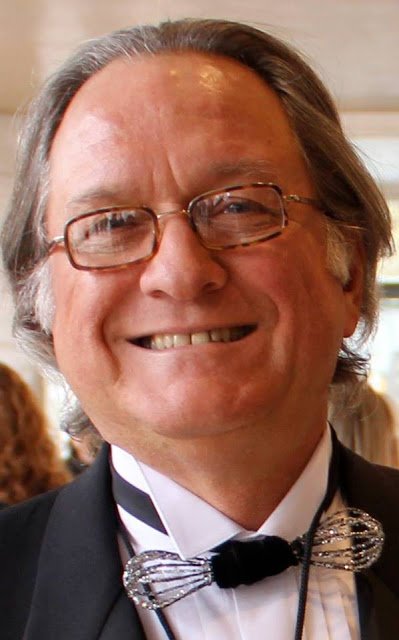

Gerry Dawes is the Producer and Program Host of Gerry Dawes & Friends, a weekly radio progam on Pawling Public Radio in Pawling, New York (streaming live and archived at www.pawlingpublicradio.org and at www.beatofthevalley.com.)

Dawes was awarded Spain's prestigious Premio Nacional de Gastronomía (National Gastronomy Award) in 2003. He writes and speaks frequently on Spanish wine and gastronomy and leads gastronomy, wine and cultural tours to Spain. He was a finalist for the 2001 James Beard Foundation's Journalism Award for Best Magazine Writing on Wine, won The Cava Institute's First Prize for Journalism for his article on cava in 2004, was awarded the CineGourLand “Cinéfilos y Gourmets” (Cinephiles & Gourmets) prize in 2009 in Getxo (Vizcaya) and received the 2009 Association of Food Journalists Second Prize for Best Food Feature in a Magazine for his Food Arts article, a retrospective piece about Catalan star chef, Ferran Adrià. 


". . .That we were the first to introduce American readers to Ferran Adrià in 1997 and have ever since continued to bring you a blow-by-blow narrative of Spain's riveting ferment is chiefly due to our Spanish correspondent, Gerry "Mr. Spain" Dawes, the messianic wine and food journalist raised in Southern Illinois and possessor of a self-accumulated doctorate in the Spanish table. Gerry once again brings us up to the very minute. . ." - - Michael & Ariane Batterberry, Editor-in-Chief/Publisher and Founding Editor/Publisher, Food Arts, October 2009. 
 
Pilot for a reality television series on wine, gastronomy, culture and travel in Spain.
 

3/29/2025

A Taste of Hemingway’s Spain: A Memory Lane Gastronomic and Wine Tour of Don Ernesto's Favorite Places Including Madrid, Pamplona, Burguete, Málaga, Ronda and Valencia Thursday, July 17 - Monday, July 28, 2025


* * * * *

Ernest Hemingway’s Spain

A Customized Adventure Designed, Organized & Led
by Spanish Gastronomy, Wine & Culture Expert / Ernest Hemingway Aficionado and Writer-Photographer Gerry Dawes, 

Premio Nacional de Gastronómía 
(Spanish National Gastronomy Award)
 
Speaker, The Hemingway Society Conference, San Sebastián 2024
 
* * * * *

Thursday, July 17  - Monday, July 28, 2025

 $5,995 per person; $6,995 single supplement
(without airfare) 

Contact Gerry Dawes at gerrydawes@aol.com for Terms and Conditions for the trip.
 
My good friend Gerry Dawes, the unbridled Spanish food and wine enthusiast cum expert whose writing, photography, and countless crisscrossings of the peninsula have done the most to introduce Americans—and especially American food professionals—to my country's culinary life." -- Chef-restaurateur-humanitarian José Andrés, Nobel Peace Prize Nominee.


A window commemorating Ernest Hemingway at Casa Sobrino de Botín, an EH favorite in Madrid which figured prominently in the final pages of The Sun Also Rises.

Day 00 Thursday, July 17, Flights from city of origin to Málaga

Each traveler arranged their flight schedule to arrive in Málaga by early afternoon on Friday.

Day 01 Friday, July 18 Málaga

We will rendezvous at our centrally located Málaga Palacio hotel and, for those who arrive in time, have a casual tapas luncheon in the old quarter of Málaga, then stroll around the old quarter.

View of Málaga harbor from the Hotel Málaga Palacio.

In the evening, we will have drinks at the Gran Hotel Miramar, where EH, Ava Gardner, Elizabeth Taylor and others stayed.  The Dangerous Summer p. 167 has descriptions of the people at the Marimar after a Málaga bullfight.
 
Dinner will be at a seaside restaurant that Ernest Hemingway knew when he visited Málaga to see  bullfights and stayed with his friend Bill Davies at Finca La Consula in nearby Churriana.  

Hotel Málaga Palacio.

Day 02 Saturday, July 19 Málaga - Ronda

In the morning, we will see some more of the old quarter, the Picasso Museum and the home where Picasso was born, the bullfight museum in the Málaga bullring, visit some other notable sites in the city, then have lunch in one of Málaga’s great seaside chiringuitos, like the ones that Hemingway would have frequented in Málaga for Mediterranean fish dishes such as the famous sardinas de espeto, fresh sardines skewered on cane or metal spits and roasted over live coals. 

 Sardinas de espeto, fresh sardines skewered on cane or metal spits and roasted over live coals. 
 
After lunch, we will stop outside Málaga to visit Finca La Consula, the magnificent country home of Hemingway’s great friend Bill Davies, where Hemingway stayed during the bullfights in Málaga and shot cigarettes from Matador Antonio Ordoñez’s mouth.  La Consula has now been renovated and turned into the Escuela de Hostelería de Málaga, a hotel and restaurant school.

La Consula, Hemingway's friend Bill Davis's home a few kilometers outside Málaga. (Photo courtesy of laconsula.com)

After visiting la Consula, we will drive through rugged mountains to Ronda, a former bandolero (bandit-and-smuggler), the hometown of Antonio Ordoñez and a mountain town much frequented by Hemingway.  Ronda has statues of Antonio Ordoñez and his father Cayetano, who fought bulls under the name Niño de la Palma and was the prototype for Pedro Romero in The Sun Also Rises and a central character in Death of Afternoon.  There is also a monument to Ernest Hemingway and to Orson Welles, who was a great friend of Antonio Ordoñez and had his ashes scattered in an old well on Antonio’s ranch near Ronda.   Antonio Ordoñez was also a friend of tour leader Gerry Dawes, who has great remembrances of the maestro.
 
Gerry Dawes in front of the Ronda bullring at the statue of his friend the late Matador Antonio Ordoñez, Ernest Hemingway's great friend and subject of The Dangerous Summer.
 
 
Statue of
Cayetano Ordoñez, Antonio's father who fought bulls under the name Niño de la Palma and was the prototype for Pedro Romero in The Sun Also Rises and a central character in Death of Afternoon.
 

We will visit this exceptionally picturesque city, then relax in our wonderful hotel, which overlooks the mountains surrounding Ronda.  We will visit Ronda's famous historic Plaza de Toros and the museum, then we will have drinks on a rooftop terrace overlooking the bullring.  In the evening, we will have dinner in a restaurant that is a virtual bullfight photo-and-poster museum that also has photos of Hemingway in Ronda. 
 
(l) Father of Antonio Ordoñez, Cayetano Ordoñez, who fought bulls under the name Niño de la Palma and was the prototype for Pedro Romero in The Sun Also Rises and a central character in Death of Afternoon, Ernest Hemingway and Antonio Ordoñez at the bullring in Ronda before a corrida goyesca.  Photo by Ronda photographer Martín, 1954 (?).
 

 Ronda.

Flamenco dancer, Andalucía.

After dinner, we will offer the option of attending a Flamenco performance.

Hotel Reina Victoria (or comparable), Ronda.

Day 03 Sunday, July 20 Ronda – Córdoba AVE – Madrid

This morning we will visit a bit more of Ronda, then ride two hours north to Córdoba, where we will visit the famous Mezquita mosque, Median Azahara and the  Monasterio de San Jerónimo de Valparaíso, where Hemingway stayed as guest of the Marqués del Mérito, when he went to a corrida in Córdoba during The Dangerous Summer of 1959, then have lunch at an emblematic Córdoban restaurant in the old quarter.

We will send our bus ahead to Madrid with our luggage and our driver will handle delivering it to our hotel.

 
The Mezquita mosque in Córdoba.

In the afternoon, we will take the AVE high-speed train to Madrid, less than 2 hours away, arriving in late afternoon, and check into the Hotel Suecia, where Hemingway often stayed. We will also visit the Palace Hotel, which was one of the settings in the final pages of The Sun Also Rises.

AVE high-speed train. 

We will have dinner at Sobrino de Botín, supposedly an EH favorite which also figured prominently in the final pages of The Sun Also Rises. Gerry Dawes has long been a customer of Botín.  Gerry will read the passages in The Sun Also Rises that are supposed to be set in this world famous restaurant*, which is claimed in the Guiness Book of Records to be the oldest continually operating restaurant in the world.  (*There was another Botín, which closed in 1961, and was most likely the actual setting for that famous wine-soaked roast pig luncheon in The Sun Also Rises.  As the author of the expose, I will tell all.)

Hotel Suecia (or comparable), Madrid.

Gerry reading about the scenes set in Botín from Hemingway's The Sun Also Rises.


Cochinillo asado, roast suckling pig, one of Don Ernesto's favorites, at Botín.

Day 04 Monday, July 21 Madrid

In the morning, we will have breakfast tapas at the Cervecería Alemana, a favorite Hemingway and taurine aficionado hangout that it still much as it was during EH’s lifetime.  There is even a "Hemingway table" with photos of Don Ernesto and article reproductions on the wall above the table.

 Cervecería Alemana, Madrid. 

Photo of Ernest Hemingway and Matador Antonio Ordoñez, Ernest Hemingway's great friend and subject of The Dangerous Summer.

We will take a guided tour of the great Prado Museum and see some of the paintings that Ernest Hemingway so admired.   

After the Prado Museum visit, we will have lunch at a restaurant next to el Matadero, where Madrid's main slaughterhouse used to be, a place where a prominent scene in For Whom The Bell Tolls is set.  The restaurant is owned by Spain’s greatest cortador deto carve these exquisite expensive hams should be properly carved).  We will sample the best jamón, personally selected by this superstar personality.  This great professional ham cutter, a great friend of Gerry Dawes, is a consummate showman.  (If he is not off traveling to some far away place to cut hams, he may join us and show us his unique style.   This will be our first introduction to jamón Ibérico, the world's best hams from acorn-fed, pata negra (black foot breed) pigs.  The woman chef, mother of the cortador’s restaurant partner, is a great traditional cuisine cook, so jamón will just be the intro to our meal.

Florencio Sanchidrián, Spain's top professional ham carver.

We will briefly visit the Plaza de Callao, where the Hotel Florida, where Hemingway stayed during the Spanish Civil War, was located and other sites that figured prominently in Hemingway's stays in Madrid.  

In the evening, we will gather in our hotel and walk into a less visited section of Madrid, where we will have dinner at a taurine world restaurant, Casa Salvador (open since 1941), that EH likely visited, since Ava Gardner used to dine there.  The ambience of this restaurant takes us back to the days of The Dangerous Summer.


This photo at Restaurante Casa Salvador is courtesy of Casa Salvador.
 
Hotel Suecia (or comparable), Madrid. 

Day 05 Tuesday, July 22  Madrid – Burgos – La Rioja
  
In late morning, we will be picked up by our bus and driven through the Guadarrama mountains, the setting for For Whom The Bell Tolls, to Burgos, a town that EH visited several times and wrote about bringing the queso de Burgos back to Paris on the train and giving to Gertrude Stein. 
 
We will have lunch on roast suckling lamb and other Burgos specialties, then ride about an hour through picturesque Camino de Santiago scenery to La Rioja, where we will check into the Parador de Santo Domingo de la Calzada on the Camino de Santiago, then visit a Rioja family winery, where some really wonderful artisan wines are made in manmade underground caves.  We will have dinner at the winery, lamb chops and chorizo cooked in a fireplace over grapevine cuttings, salad, Spanish tortilla de patatas and plenty of the bodega’s vino.  
 
We will also visit a nearby winery that Hemingway once visited to taste wines with Matador Antonio Ordoñez. 
 
Parador de Santo Domingo de la Calzada (Santo Domingo, La Rioja)
 

Rioja family winery where we will have dinner.

Day 06 Wednesday, July 23 La Rioja – Pamplona – Burguete

In the morning, we will leave Rioja and in about an hour arrive in Pamplona,   see the memorial bust of EH in front of the bullring and walk along the route of the annual running of the bulls and visit the sites that EH wrote about in The Sun Also Rises.  We will visit the Hotel La Perla, where Hemingway stayed once in the later years; see the site on the Plaza del Castillo where Hotel Quintana (Hotel Montoya in The Sun Also Rises), owned by his great friend Juanito Quintana (also a friend of Gerry Dawes), was located; and the Hotel Yoldi, where the matadors stay and dress and where EH visited them before and after bullfights.  If we can arrange a typical meal at what is now Restaurante El Torreón del Castillo, we will dine in what used to be the basement level dining room of the former Hotel Quintana.  Hemingway wrote about dining there.

A Morning's Pleasure: Running the Bulls at Pamplona (An Excerpt from Homage to Iberia: More Spanish Travels & Reflections by Gerry Dawes)
 
 
Restaurante Aralar, Pamplona, one of the places Ernest Hemingway frequented for lunch or dinner.  Photograph by legendary  photographer Jim Hollander.

Many of the establishments where EH ate and drank no longer exist, but others are still operating and we will have a drink at the Rincón de Hemingway bar of Cafe Iruña, which has a life-size statue of EH hanging out at the end of the bar.  And we will have lunch in an EH favorite down on Calle San Nicolas serving the great typical Navarra food that EH would have eaten such as menestra (a panache of local vegetables) and trucha a la Navarra (whole local trout cooked with a slice of serrano ham in the belly) and we will drink the great Navarra rosados that EH always drank here.
 

Hostal Burguete, where EH stayed when he went trout fishing in the 1920s, featured prominently in The Sun Also Rises.

After lunch, we will ride an hour into the Navarran Pyrenees to the mountain town of Burguete, where we will check into Hostal Burguete, where EH stayed when he went trout fishing on a tributary of the Irati River via an overland trail.  Hemingway immortalized the hostal in The Sun Also Rises.  Tour leader Gerry Dawes has stayed there half a dozen times.  The Hostal Burguete still has the piano that the Bill Gorton character (based on Donald Ogden Smith) played in The Sun Also Rises.
 
We will ride 20 minutes east of Burguete to visit Orbaitzeta, where Jake Barners/Hemingway actually fished and we will see the spring where he cooled the two bottles of wine he brought from Burguete to have with lunch.  We will also visit the nearby Monastery of Roncesvalles, then relax in Burguete, stroll and have dinner on similar fare, including trout, that EH would have known when he stayed here in 1924 and 1925.  For those interested, if we can obtain fishing licenses, we may offer a trout fishing expedition 15 minutes from Burguete on the Irati River, where EH fished during visit after The Sun Also Rises was published.  

Hostal Burguete, Burguete (Navarra). 
 
Trout fishing in the Navarra Pyrenees.

Day 07 Thursday, July 24 Burguete – Roncal – Olite - Tudela 

In the morning,  we will drive through awesome spectacular Pyrenees Mountains scenery (Gerry wrote an article on this route that appeared in The New York Times Travel section) to the great cheese producing town of Roncal, where we will have lunch, sample Roncal cheese and drink the wonderful Navarra rosados that EH loved so much that he carried them with him on his travels around Spain following the bullfights.  

 Roncal.

Castle, Olite.

After lunch, we will continue south to Tudela, stopping for a brief visit to the charming castle village of Olite.  
 
Tudela will be having their annual fiesta, which will be as close as any fiesta in Spain to resembling the Fiestas de San Fermín in Pamplona during Hemingway’s time.   Except for the mobs of foreign tourists, which you won´t find here, Tudela has everything that Pamplona has—the running of the bulls, bullfights, processions, fireworks and great jotas, the wonderful typical folk singing of Navarra and neighboring Aragón, which is scant kilometers from Tudela.   In fact, many of the jota singers heard during the Fiestas de San Fermín in Pamplona come from Tudela.  We will check into our hotel and have a drink in the Plaza Mayor, which should be in full fiesta. 

Tudela monument to the Jota & Jota singer Raimundo Lanas (photo Bernardo Estornés Lasa).

 
Jota singer José Antonio Pérez Caro, Navarra, homage to the great jota singer Raimundo Lanas, a legend in the first half of the 20th Century.

For dinner, we will ride 15 minutes to the small town of Corella and have dinner with a Navarra winemaker at El Crucero, a  great unsung restaurant that specializes in the vegetable-based dishes for which this region is famous, including alcachofas con foie (artichokes with with a seared piece of foie gras on top), the great pochas (beans with chorizo) and cardos con granada (cardoon stalks with pomegranate seeds dressed with local arbequina extra virgen olive oil) plus cabrito asado (roasted youing goat).  To accompany our meal, we will have plenty of the great Navarra garnacha rosados (made from free-run juice), that Don Ernesto loved to drink.  After dinner, we will return to Tudela and, for those still game, immerse ourselves in the sprit of a great Navarra fiesta. 
 
We will also hear jota singers and the brave of us may participate in the midnight revoltoso, where Tudelanos young and old circle the bandstand in la Plaza de los Fueros  in a great wave of people as a band plays, increasing and lowering the tempo, which causes the whole revolution of people in the plaza to speed up or slow down at the whims of the director of the band.  The Revolotoso has to be seen to be believed.

  Hotel Cuidad de Tudela, Tudela (Navarra).

 
 Don Ernesto loved to drink great Navarra garnacha rosados, made from free-run juice.

Day 07 Friday, July 25 Tudela 

Today, we will live the Fiestas de Santa Ana de Tudela with the encierro (running of the bulls a la Pamplona) in the morning and in the afternoon there will be a novillada (for apprentice toreros), for those so inclined to attend.  The whole town will be in fiesta a la Pamplona in Hemingway's time, i. e., before all the tourists invaded.  In fact, when my partner Kay Balun and I went in 2024, we were the only Americans at the Fiesta.

 Hotel Cuidad de Tudela, Tudela (Navarra) or Parador de Olite (Navarra).
 
 Plaza de los Fueros in Tudela during the opening of la Fiesta de Santa Ana.

Day 08 Saturday, July 26 Tudela – Valencia

We will leave Tudela in morning and take the long drive to Valencia, a la Hemingway following the fiestas around Spain, to arrive in Valencia during their July Fiestas.  

We will check into our hotel, visit the Mercat Central, then have a paella lunch at La Pepica, overlooking the Playa de la Malvarrosa where Hemingway ate when he was in Valencia. 

In the afternoon, we will have the option of attending the bullfight and / or visiting parts of Valencia's amazing futuristic City of Arts & Sciences, then in the evening, dinner will be at the exceptional tapas restaurant Casa Montaña (established in 1839), followed by optional fiesta and fireworks.

Hotel Valencia Palace (or similar), Valencia.

 Paellas at La Pepica,Valencia.

Photos at La Pepica of EH, Antonio Ordoñez and friends having dinner there during The Dangerous Summer.


 Owner Emiliano García and Gerry Dawes at Casa Montaña, Valencia.

 Casa Montaña, founded in 1836 in the working class/fishermens barrio of
El Cabanyal-El Canyamelar in Valencia.
 
Day 09 Sunday, July 27 Valencia – Chinchón 

In the morning, we will we will ride across La Mancha, stopping to see some of the windmills made famous in Don Quixote and arrive in the magical town of Chinchón in time for lunch in a great Castilian restaurant overlooking the Plaza.

Quixotesque windmills in La Mancha.

It is probable that there may be one of the famous bullfights in Chinchón's Plaza Mayor, which our tour participants will have the option to attend. 

We will spend the evening exploring this lovely town with its iconic Plaza Mayor and have our farewell dinner at another very special restaurant on the Plaza that has a dining room that is a taurine photo museum dedicated to the former owner’s friend, Matador Nicanor Villalta, for whom John Hemingway’s uncle John Hadley Nicanor Hemingway was named.  

Hotel Condesa de Chinchón.

 Chinchón's Plaza Mayor.

 Patio of the Condesa de Chinchón.


 Chinchón's Plaza Mayor.
 
La Balconada Restaurante, which overlooks Chinchón's iconic Plaza Mayor.
 
Day 10 Monday, July 28  Chinchón – Madrid - USA

Our bus will take our group to Madrid airport, just under an hour from Chinchón,  to catch our flights back to the U. S.  Anyone who books a very early flight will need ask us to help line up a taxi to the airport. 

'
 Madrid Airport, Terminal IV.

Text and photographs copyright by Gerry Dawes©2022.  Using photographs without crediting Gerry Dawes©2021 on Facebook.  Publication without my written permission is not authorized.

   * * * * * 

 
(Available at Amazon, Despana (NYC), LaTienda.com, La Boca Restaurant (Santa Fe, NM) and at Kitchen Arts & Letters bookstore (NYC). 
 
Comments are welcome and encouraged.
 
Help Support Gerry Dawes's Spain & Its Content

If you enjoy these blog posts, please consider a contribution to help me continue the work of gathering all this great information and these photographs for Gerry Dawes's Insider's Guide to Spanish Food, Wine, Culture and Travel. Contributions of $5 and up will be greatly appreciated. Contributions of $100 or more will be acknowledged on the blog.

Please click on this secure link to Paypal to make your contribution.
 

* * * * *
  Shall deeds of Caesar or Napoleon ring
More true than Don Quixote's vapouring?
Hath winged Pegasus more nobly trod
Than Rocinante stumbling up to God?
 
Poem by Archer M. Huntington inscribed under the Don Quixote on his horse Rocinante bas-relief sculpture by his wife, Anna Vaughn Hyatt Huntington,
in the courtyard of the Hispanic Society of America’s incredible museum at 613 W. 155th Street, New York City.
 ______________________________________________________________________________________
 Gastronomy Blogs

Again ranked in the Top 50 Gastronomy Blogs and Websites for Gastronomists & Gastronomes by Feedspot. (Last Updated October, 2019)

"The Best Gastronomy blogs selected from thousands of Food blogs, Culture blogs and Food Science blogs in our index using search and social metrics. We’ve carefully selected these websites because they are actively working to educate, inspire, and empower their readers with frequent updates and high-quality information."  

36. Gerry Dawes's Spain: An Insider's Guide to Spanish Food, Wine, Culture and Travel


About Gerry Dawes

My good friend Gerry Dawes, the unbridled Spanish food and wine enthusiast cum expert whose writing, photography, and countless crisscrossings of the peninsula have done the most to introduce Americans—and especially American food professionals—to my country's culinary life." -- Chef-restaurateur-humanitarian José Andrés, Nobel Peace Prize Nominee and Oscar Presenter 2019


Gerry Dawes is the Producer and Program Host of Gerry Dawes & Friends, a weekly radio progam on Pawling Public Radio in Pawling, New York (streaming live and archived at www.pawlingpublicradio.org and at www.beatofthevalley.com.)

Dawes was awarded Spain's prestigious Premio Nacional de Gastronomía (National Gastronomy Award) in 2003. He writes and speaks frequently on Spanish wine and gastronomy and leads gastronomy, wine and cultural tours to Spain. He was a finalist for the 2001 James Beard Foundation's Journalism Award for Best Magazine Writing on Wine, won The Cava Institute's First Prize for Journalism for his article on cava in 2004, was awarded the CineGourLand “Cinéfilos y Gourmets” (Cinephiles & Gourmets) prize in 2009 in Getxo (Vizcaya) and received the 2009 Association of Food Journalists Second Prize for Best Food Feature in a Magazine for his Food Arts article, a retrospective piece about Catalan star chef, Ferran Adrià. 


". . .That we were the first to introduce American readers to Ferran Adrià in 1997 and have ever since continued to bring you a blow-by-blow narrative of Spain's riveting ferment is chiefly due to our Spanish correspondent, Gerry "Mr. Spain" Dawes, the messianic wine and food journalist raised in Southern Illinois and possessor of a self-accumulated doctorate in the Spanish table. Gerry once again brings us up to the very minute. . ." - - Michael & Ariane Batterberry, Editor-in-Chief/Publisher and Founding Editor/Publisher, Food Arts, October 2009. 
 
 
Pilot for a reality television series on wine, gastronomy, culture and travel in Spain.
 
Related Posts with Thumbnails