Share This Gerry Dawes's Spain Post


Instagram

In 2026, ranked #7 in the Top 30 Gastronomy Blogs (and Websites for Gastronomists & Gastronomes by Feedspot. (Ranked in the top 50 since 2019). "The Best Gastronomy blogs selected from thousands of Food blogs, Culture blogs and Food Science. We’ve carefully selected these websites because they are actively working to educate, inspire, and empower their readers with . . . high-quality information.

More than 3,640,000 views since inception, 123,000+ views in August 2026.


Ranked #7. Gerry Dawes's Spain: An Insider's Guide to Spanish Food, Wine, Culture and Travel gerrydawesspain.com

"My good friend Gerry Dawes, the unbridled Spanish food and wine enthusiast cum expert whose writing, photography, and countless crisscrossings of the peninsula have done the most to introduce Americans—and especially American food professionals—to my country's culinary life. . .” - - Chef-restaurateur-humanitarian José Andrés, Nobel Peace Prize Nominee and Oscar Presenter 2019; Chef-partner of Mercado Little Spain at Hudson Yards, New York 2019

Showing posts with label Rioja. Show all posts

6/02/2021

Great Seafood in the Local Bar Restaurante Labu in Cantabria, June 2, 2021. Sunset in a Glass: Adventures of a Food and Wine Road Warrior in Spain The Pre-Post COVID 3500 Kms. Road Warrior Adventure.

 
* * * * * 
Text and photographs by Gerry Dawes©2021.
 Premio Nacional de Gastronomía (National Gastronomy Award)
 
Dinner at Bar Restaurante Labu in Bareyo-Ajo (Cantabria), my first meal in Cantabria in several years.  With Tom Perry and his wife Toñica, June 2, 2021.
 
Zamburiña, a small scallop (not so small here), with its coral (roe) intact, at Bar Restaurante Labu, Bareyo-Ajo (Cantabria).  In the United States, the coral is removed, which is a shame.
 
Click on the title to see the whole post.
 

4/15/2021

A Wonderful Lunch with Emiliano Garcia Domene at Casa Montaña in Valencia

 
  * * * * * 
 
Emiliano Garcia Domene and Gerry Dawes having lunch in the back room at Casa Montaña
 
I had a wonderful visit in April 2019, pre-COVID, with my old friend Emiliano García, owner of Casa Montaña (founded in 1835). He was in the middle of an election campaign, in which he was running for the second highest post, after Mayor, in Valencia.  The Mayoral candidate he was running with won and so did Emiliano, who is now in charge of tourism for the city of Valencia, where tourism is a very important facet of the economy.   Even in the middle of a political campaign, Emiliano made time for me and we had an exceptional lunch at Casa Montaña in the former fishermens' barrio of Cabanyal-Canyameral.
 
 
Emiliano García Domene and his son and GM of Casa Montaña Alejandro García. 
 
Mural on an outside wall at Casa Montaña.  
 
Tomatoes with Spanish Extra Virgen Olive Oil and sea salt.
 
Sardinas en esccabeche.
 
Puerros (leeks).
 
Patatas bravas con alioli.
 
Typical Valencian Quaresma dish with salt cod and chick peas.
 
 
Dessert made with Valencia oranges, macarapone and a galleta cookie.
 
Selección Jesús Madrazo Rioja red wine from our mutual friend Jesús 'Chus' De Madrazo Mateo, one of Spain's greatest winemakers.

 
* * * * *
  Shall deeds of Caesar or Napoleon ring
More true than Don Quixote's vapouring?
Hath winged Pegasus more nobly trod
Than Rocinante stumbling up to God?
 
Poem by Archer M. Huntington inscribed under the Don Quixote on his horse Rocinante bas-relief sculpture by his wife, Anna Vaughn Hyatt Huntington,
in the courtyard of the Hispanic Society of America’s incredible museum at 613 W. 155th Street, New York City.
  ______________________________________________________________________
 Gastronomy Blogs

In 2019, again ranked in the Top 50 Gastronomy Blogs and Websites for Gastronomists & Gastronomes in 2019 by Feedspot. (Last Updated Oct 23, 2019) 

"The Best Gastronomy blogs selected from thousands of Food blogs, Culture blogs and Food Science blogs in our index using search and social metrics. We’ve carefully selected these websites because they are actively working to educate, inspire, and empower their readers with frequent updates and high-quality information."  

36. Gerry Dawes's Spain: An Insider's Guide to Spanish Food, Wine, Culture and Travel


About Gerry Dawes

My good friend Gerry Dawes, the unbridled Spanish food and wine enthusiast cum expert whose writing, photography, and countless crisscrossings of the peninsula have done the most to introduce Americans—and especially American food professionals—to my country's culinary life." -- Chef-restaurateur-humanitarian José Andrés, Nobel Peace Prize Nominee and Oscar Presenter 2019


Gerry Dawes is the Producer and Program Host of Gerry Dawes & Friends, a weekly radio progam on Pawling Public Radio in Pawling, New York (streaming live and archived at www.pawlingpublicradio.org and at www.beatofthevalley.com.)

Dawes was awarded Spain's prestigious Premio Nacional de Gastronomía (National Gastronomy Award) in 2003. He writes and speaks frequently on Spanish wine and gastronomy and leads gastronomy, wine and cultural tours to Spain. He was a finalist for the 2001 James Beard Foundation's Journalism Award for Best Magazine Writing on Wine, won The Cava Institute's First Prize for Journalism for his article on cava in 2004, was awarded the CineGourLand “Cinéfilos y Gourmets” (Cinephiles & Gourmets) prize in 2009 in Getxo (Vizcaya) and received the 2009 Association of Food Journalists Second Prize for Best Food Feature in a Magazine for his Food Arts article, a retrospective piece about Catalan star chef, Ferran Adrià. 


". . .That we were the first to introduce American readers to Ferran Adrià in 1997 and have ever since continued to bring you a blow-by-blow narrative of Spain's riveting ferment is chiefly due to our Spanish correspondent, Gerry "Mr. Spain" Dawes, the messianic wine and food journalist raised in Southern Illinois and possessor of a self-accumulated doctorate in the Spanish table. Gerry once again brings us up to the very minute. . ." - - Michael & Ariane Batterberry, Editor-in-Chief/Publisher and Founding Editor/Publisher, Food Arts, October 2009. 
 
Pilot for a reality television series on wine, gastronomy, culture and travel in Spain.
 

9/13/2017

CVNE Viña Real Gran Reserva 1962, A Stunning Bottle of Classic Rioja Wine


* * * * *

 
Birthday bottle, October 2016. The bottle I chose for my birthday dinner at Ibiza Tapas Danbury by Ignacio Blanco. I had been saving for at least thirty years this bottle of CVNE Viña Real Gran Reserva 1962, which turned out to be in incredible shape. It was almost young, vibrant and kept gaining, instead of fading, with air. Early on, we pegged it at 96-97 points, settling at 98 points by the end of the bottle.
 ___________________________________________________________________________  

 Gastronomy Blogs
 About Gerry Dawes

 Gerry Dawes was awarded Spain's prestigious Premio Nacional de Gastronomía (National Gastronomy Award) in 2003. He writes and speaks frequently on Spanish wine and gastronomy and leads gastronomy, wine and cultural tours to Spain. He was a finalist for the 2001 James Beard Foundation's Journalism Award for Best Magazine Writing on Wine, won The Cava Institute's First Prize for Journalism for his article on cava in 2004, was awarded the CineGourLand “Cinéfilos y Gourmets” (Cinephiles & Gourmets) prize in 2009 in Getxo (Vizcaya) and received the 2009 Association of Food Journalists Second Prize for Best Food Feature in a Magazine for his Food Arts article, a retrospective piece about Catalan star chef, Ferran Adrià. 

In December, 2009, Dawes was awarded the Food Arts Silver Spoon Award in a profile written by José Andrés

". . .That we were the first to introduce American readers to Ferran Adrià in 1997 and have ever since continued to bring you a blow-by-blow narrative of Spain's riveting ferment is chiefly due to our Spanish correspondent, Gerry "Mr. Spain" Dawes, the messianic wine and food journalist raised in Southern Illinois and possessor of a self-accumulated doctorate in the Spanish table. Gerry once again brings us up to the very minute. . ." - - Michael & Ariane Batterberry, Editor-in-Chief/Publisher and Founding Editor/Publisher, Food Arts, October 2009. 
  

3/13/2017

A Scandalous Interview with Gerry Dawes by Rioja Journalist Casimiro Somalo (in Spanish)


* * * * * 
This interview on lomejordelvinoderioja.com, published in 2007 is still drawing attention from a post on verema.com

Entrevista con Gerry Dawes en Lo Mejor de la Rioja
"El Rioja no es un elefante, es un león, pero no ha sabido defender adecuadamente su posición de líder." -- Gerry Dawes

Por Casimiro Somalo, lomejordelvinoderioja.com (2007)

Casimiro Somalo, gran pescador de truchas en la Rioja

Genuino e irónico, comedido aunque parezca provocador, el americano Gerry Dawes forma parte del paisaje vitivinícola español desde hace más de tres décadas. Como escritor de vinos (¿qué es eso?) conoce España mejor que muchos de nosotros. Amante de los clásicos de siempre, y de los vinos honestos de todos los tiempos, Dawes ha paseado su figura y el paladar en junio por La Rioja. De Rioja y de La Rioja conoce casi todo. Aquí hay algunos retazos de una charla sobre vinos, modas, tendencias, gustos y colores. 


 Casimiro Somalo and Gerry Dawes en la Rioja.

– Usted tiene cosas más europeas que de su propio país.

A pesar de mi afición a las botas de 'cowboy' americanas, de vez en cuando pongo una corbata bolo de Santa Fe (Nuevo México), es que me siento más español-europeo que americano y me gustan más las costumbres de aquí. Ya sabes que la inspiración de las botas de cowboy venía de las botas vaqueras españoles… Me acusan a veces, como el amigo Andoni Aduriz, de tener la pinta de ‘millonario tejano’ pero no soy ni rico, ni tejano, y ,en absoluto, partidario de Bush.

– ¿Cuánto tiempo hace que se ha vinculado a nuestro país?

Más de 35 añitos, que ha sido muy poco tiempo para conocer este país tan complejo.

– En todos estos años ha tenido ocasión de comprobar cómo va evolucionando el mundo del vino español.

En mi humilde opinión, el vino español ha tenido una evolución (una revolución) enorme en cuanto a la técnica, pero lamento que a esta evolución/revolución le falte mucho en cuanto a sabores de buen vino. Se habla sobre todo de la técnica de las bodegas y poco de cómo sabe el vino y el gusto para beberlo en una mesa.

– ¿Qué le atraía del Rioja en sus primeros años?
Me encantaron los vinos del barrio de La Estación de Haro, los paisajes, los pueblos, la cocina tradicional, la batalla del vino, algunas fiestas y la gente de La Rioja.

– Analice la evolución del Rioja en este periodo de casi cuatro décadas.
Estoy un poco triste en algunos sentidos. Creo que La Rioja es todavía la zona de vinos tintos más importante del país, pero no ha defendido adecuadamente su posición de líder y no ha hecho, a veces, apologías de sus vinos tradicionales, algunos de ellos entre los mejores de mundo. CVNE Imperial y Viña Real Oro, por ejemplo, han sido vinos al nivel de Burdeos o de cualquier otra zona de vinos de gran calidad y por encima de muchos. En mi opinión habría que venderlos con confianza y no buscar que sean vinos 'más modernos' porque han estado evolucionando paso a paso y han figurado entre los vinos más modernos del país a lo largo de las últimas décadas, a pesar de ser tan agradables de beber en la mesa. También en la mesa, comiendo con ellos, algunos vinos como Monte Real Reserva y Gran Reserva pueden dar un baño a algunos de Borgoña mucho más caros en cualquier cata a ciegas. Y el 'clásico' Riscal, que ha sido desde hace tiempo uno de los vinos más modernos del país, lo que ha logrado sin pasar a ser vino de fruta sobremadurada, ni grado alto, bajo en acidez y cargado con más roble que fruta.

– Dicen o decían algunos hasta no hace mucho que el Rioja era un elefante que se mueve lentamente…

Sí, pero no es un elefante, es un león, y porque tiene unas bodegas muy grandes, y cuando despierten, a ver si es verdad que pasa… El problema, a veces, es que hay muchas bodegas de accionistas, mucha fe en el márketing y demasiada tendencia a copiar a otras regiones del mundo (y hasta a regiones españolas), cuando, en mi opinión, deben defender sus mejores vinos y promocionar fuera la idea de que deben de copiar a la Rioja y no al revés.

– Algunos clásicos que fueron vanguardia y siguen ahí…Marqués de Riscal, Contino, algo de Muga…

– Las mejores cosechas de Rioja.1942 (Bosconia), 1945 (Riscal) y 1947 (algunos vinos), 1954, 1962, 1964, 1973, 1981 (buenísimo), 1982, (veremos con tiempo los mejores del 94 y 95) y 2001. Pero hay que calificar las cosechas. No es que las añadas sean buenas, es que son grandes vinos los de grandes añadas hechos por las mejores bodegas. No me fío nada de una cosecha excelente en manos de una bodega mediocre.

– Los mejores vinos y añadas.
Sin lugar de dudas, Bosconia 1947 y 1942, Tondonia 54, 64, 73, 81 (y estoy todavía intentando de juzgar los jovencitos desde 81 para delante), CVNE Imperial de 1954, 64, 81 y muchos más (no tengo mis notas aquí en Tarragona) y Viña Real de 1954, 1962, 1964, 1981, Monte Real 1952, 1964, 1973, 1981 y Viña Albina de varios años, incluso 1982; Riscal 1945 (y de muchas más cosechas); Muga, Prado Enea 1981 (100 puntos). Contino de varias cosechas, incluso el magnífico El Olivo 2001, uno de mejores vinos 'modernos' de todo el país y de todos los tiempos.

– Describa el que tenga grabado en su memoria.

Bosconia 1947, que he tenido la suerte de beber cenando 3 o 4 veces, y, para mi, el mejor tinto de mi vida; 1981 Imperial en mágnum, que llevé a una cena en Nueva York y dejó a todos los vinos boca abajo; después decía un experto en vinos de Borgoña, John Gilman, quien fue la noche siguiente a una cata de La Tache, que si hubiera estado allí el Imperial habría ganado también aquella cata.

– El mundo del vino está cargado de intereses comerciales…Sí. El que crea que el vino es romanticismo o una manifestación de la cultura del país es un Quijote perdido; como yo. Pienso que el vino debe de ser así, cultural, romántico, bebible y que te recuerde la tierra de la que viene (en este caso de mi querida España y no de Australia). Lo que sucede es que, al final, en nuestros días, es un producto mas para hacer márketing porque muchos tratan a los vinos como si fueran zapatos de Nike o Adidas.

– ¿Cómo se explica que muchos de los prescriptores quieran participar del pastel directa o indirectamente?
Lamentable, ni aquí, ni en EEUU existe la verdadera crítica de vinos. Para mí la mayoría de las publicaciones están al servicio de la industria. Si uno critica de verdad un vino, la bodega no le facilita muestras. Con los sueldos de los escritores es imposible comprar vinos que cuestan hasta 100 euros o más la botella y catarlos para escribir un artículo por el que le van a pagar 500 euros, con mucha suerte. El secreto de Parker, Wine Spectator, Internacional Wine Cellar, etc. es que las bodegas les envían muestras gratis a todos y ellos no dan puntuaciones por debajo de los 85. Y, además, cuando sacan notas de 90 puntos para arriba las bodegas y las tiendas hacen ‘shelf talkers’, que se convierten en anuncios gratis para el periódico y las altas puntuaciones hacen buena propaganda para ambos, bodegas y revistas. Cuando Pepe Peñín vino a Nueva York a presentar su guía de vinos en la primavera 2007, un escritor levantó la mano y le dijo, «Señor Peñín, si quiere usted vender sus libros aquí hay que dar puntuaciones más altas, como Parker. Sus puntuaciones son demasiado bajas». Y yo creo que las puntuaciones de la Guía Peñín son más realistas que las de su competencia americana.

- Algunos no han tenido ningún empacho en la vieja práctica del me das en especie o en publicidad o te doy leña en mi medio. Tal vez es que a muchos productores nuevos les resulta más fácil ponerse en manos de personajes mediáticos que ganarse el prestigio con el trabajo de años…
La vieja práctica nunca ha sido una práctica ética a pesar de que hay una multitud de fieles que practican una cosa y la otra. El vino es un producto cualquiera y hay que venderlo, especialmente, en esta época en la que hay un montón de gente que nunca han sido gente de vino y a pesar de que han entrado en el ‘negocio’ muy recientemente. El lago de vino ya es un mar de vino y hay que luchar como se pueda para venderlo o utilizarlo para montar un 'spa'. Así se cumple el pronóstico que decíamos hace años: acabaremos bañándonos en vino.

– Otros han derivado su crítica o su portal informativo directamente al negocio puro y duro de 'asesores', intermediarios o vendedores…
Ah! Ya me gustaría que me explicaran cómo algunos vinos imbebibles llegan a ser estrellas antes de salir al mercado… ¡Pufff…! Todos los días se aprende algo nuevo. Pero no creo que eso se deba al pasteleo publicitario, no señor, esto se debe al cambio climático (y la técnica en bodega) que ha convertido unas zonas no aptas para vinos en nuevos milagros. Ya pueden bajar el grado de vinos de doble pasta a 15 grados… Y como a todo el mundo le gustan vinos que sabe más a roble que a vino, es posible que pronto veamos un vino importante en el DO Utrera de los Mostachones. El gran problema en Utrera sería cómo vender bastantes mostachones para convertir el dinero en el roble de nuestros amigos galos (del gran Michelín que nos muestra todos los años y en los que se repinten muchísimo lo de Pepe Botellas y nos regalan una o dos estrellas más a nuestros restaurantes). Y para seguir vendiendo unas barricas al precio descontado de 600 a 2.000 euros para ayudarnos en vender vinos raros a precios justos…

– Algunas de esas regiones están atravesando malos momentos y se avecinan otros peores.¿Cuántas revelaciones puedo entender en un solo día? Tendría que ser un genio para saber de antemano cuando se reúnen una serie de condiciones totalmente mal pensadas para aventurar como posible el desastre que viene un poco más tarde…

– Mucha ironía gasta usted, señor Dawes, ahora que al vino ha llegado gente de todo pelaje buscando dinero o prestigio social.
Bueno, prestigio social, sí, porque los clientes de su negocio verdadero pueden sentirse como reyes comiendo chuletillas al sarmiento sentados en una sala de mármol (subvencionado por la comunidad), con muchas hectáreas de viñedos jóvenes bien regados (de agua y ayudas oficiales) alrededor. Lo que me sorprende un montón es que no utilizan las nuevas barricas caras francesas para asar las chuletillas. Esto último, como bien saben vuestros lectores, es totalmente una broma, porque todos saben que con el roble nuevo joderían por completo el sabor de las chuletillas. Para asar las chuletillas es mejor utilizar los sarmientos de los viñedos autóctonos recién arrancados (para poder plantar mas tempranillo, cabernet, merlot… en zonas y tierras no aptas). Pero no estoy de acuerdo que están buscando dinero en el negocio, porque de ganar tanto para montar una bodega y contribuir a la extinción de los bosques europeos (francés, italiano, búlgaro, ruso, etc.) comprando roble nuevo, seguro que son bastante listos para haber aprendido la lección que sabe todo el mundo en California: «Si quieres ganar una pequeña fortuna en el negocio de vinos, hay que empezar con una gran fortuna».

– Muchos piensan que el mundo del vino tiene los mismos parámetros económicos que la banca o una fábrica de tornillos…

Bueno, en cuanto a la banca vea el párrafo sobre las fortunas… Por lo que se refiere a tornilllos, hay muchos que han entrado en este mundo supersaturado de vino que van a acabar pensando que les han sometido al tornillo de la tortura medieval.

– ¿Por qué muchos construyen primero una gran bodega y luego hacen un vino, por cierto, casi siempre, horroroso…?
¡Imposible! Dice la prensa que casi cada uno de estos vinos es un nuevo milagro. Como sabe todo el mundo, cada bodega que quiere hacer un gran vino puede hacerlo el primer año. No importa si la bodega es totalmente nueva y desconocida, que nadie en la bodega haya hecho una cosecha con todo el mecanismo nuevo (toldo, maquinaria, planta de fermentación, laboratorio, etc…), lo que presenta un reto enorme. Tampoco importa que la bodega esté llena de barricas nuevas --a veces no bien envinadas-- y que dan sabores asquerosos al vino. Lo más importante en este caso no es el vino, es el enchufe con la prensa especializada. Luego, los que compran este tipo de vino y beben tragos largos muy sugestionados, a veces se hartan de beberlos porque son horrorosos y se enteran tarde que han estado bebiendo tinta y papel en vez de un auténtico gran vino. A partir de ahí se plantean los problemas porque después del primer golpe de prensa tienen que subir o hundirse por mérito propio, lo que muchos no tienen.

– ¿No sería mejor hacerlo al revés y olvidarse de que tienen que crecer cada año por encima de unas posibilidades que no tienen o que deben adulterar…?
No señor. Hay que tener una bodega grande primero, porque las chuletillas van a saber mejor y esto ayuda mucho al vino. Y con el resto de las subvenciones uno puede ofrecer algo de foie-gras de primer plato, lo que ayuda un montón a los vinos heroicos y horrorosos.

– La crítica conduce a la globalización o a descubrir lo raro por lo extraño como elemento diferenciador…
Hay algunos que no reconocen que Franco ha muerto hace más de 30 años y ya está permitido no tener vergüenza en ser ciudadano de la parte de la Península que no incluye Portugal, por lo cual tienen que mostrar a todo el mundo que son capaces de hacer vinos tan malos como en California o en Australia.

– Parker y otros muchos en nuestro país son fruto de la globalización…No es sólo la globalización, es el mismo gusto que nos induce a valorar Paris Hilton, Britney Spears y los héroes de la prensa roja. Hay un gran mercado para vinos de mal gusto, que se venden mucho más que todos los de buen gusto. El Cordobés (padre) en su día fue mucho más popular y cotizado que Antonio Ordóñez.

– Da miedo pensar que algunos prescriptores australianos, neozelandeses o americanos recorran Europa tratando de vendernos que hay que hacer vinos a la carta y nadie les diga hasta aquí hemos llegado….
Hombre, si hacemos vinos tipo australiano, americano, neozelandés, no tenemos que enviar dinero fuera para comprarlos porque elaboramos toda la gama aquí. Somos capaces de hacer muy buenas imitaciones de estos vinos en todos las partes de la Península (que no incluye Portugal). Perdemos identidad, pero no importa mucho…

– Está claro que el vino no es un producto típico para aplicar la mercadotecnia habitual de otros productos.
¡Claro! El buen vino es un producto muy moderno y se hace en la bodega con la buena técnica. Es fácil. Solo tienes que comprar una calculadora y una pila de revistas de la prensa especializada -escritas mayoritariamente por gente que viven en pisos en grandes ciudades- y después identificar las técnicas más mencionadas y contarlas. A saber. Fermentación en barrica: 1,239 menciones en las primeras 20 páginas de cualquiera; Battonage: 888 veces en ediciones mensuales, un poco menos si es solo dominical; roble nuevo francés: depende en el número de paginas de la revista, pero puedes calcular un promedio de 16 veces por página… Pero hay que ser listo y buscar los verdaderos secretos como maceraciones largas, como enterrar caca en cuernos, battonage en noches de la luna llena, etc.

– Claro que tiene que haber de todo en el mercado pero sin engañar al consumidor ni pretender ser auténticos con una imagen que no se corresponde a la realidad.
Muchos tienen que inventar su propia realidad para vender sus vinos.

– En España el dinero fácil tiene muchas tentaciones para negocios rápidos…En cuanto al vino, les recomiendo en vez de hacer una inversión gorda en una bodega que busquen un manantial de buena (o regularcita) agua, meterlo en barrica nueva francesa algunos meses y venderlo como agua mineral con roble Radoux, Taransaud, Francois Freres, etc. Hacer un márketing fuerte el primer año y, como parece que ya la gente está acostumbrada al sabor de roble crudo, ellos acabarán probándolo. Después del primer año, hay que hacer un poco de inflación de las cifras de venta y vender el negocio a Nestlé o a Coca-Cola para millones y jubilarse de puta madre.

– Burdeos no es ni lo que fue en otros tiempos. Australia tiembla después de una gran expansión inicial y en España nacen, crecen y se venden proyectos como setas cambiando de mano en mano…
– ¿No te parece más entretenido que jugar a la ruleta en un casino?

– ¿Cómo percibe el mundo del vino de España desde Estados Unidos?Ha crecido el interés por los vinos españoles a causa de las puntuaciones de Parker, pero creo que en los últimos años ha tenido bastante que ver con la fama de la cocina española de vanguardia, que ya tiene sus propios problemas. En las cifras de venta de los vinos españoles, que han crecido mucho, entran muchos vinos blancos (Rueda, Albariño, Penedés), mucho cava y muchos vinos baratos hechos con garnacha. Siguen ganado los vinos de Torres, por ejemplo, y algunos vinos de los grandes de La Rioja. Y después los vinos parkeristas caros. Creo que tiene más que ver con la nueva imagen positiva de España. A pesar de que Parker, The Wine Spectator, Internacional Wine Cellar y otros han dado altas puntuaciones a unos vinos que, en mi opinión, no son los mejores ejemplares del buen vino español, creo el presunto éxito de este tipo de vino al final de la carrera nos puede llevar a la situación de Australia y lo que temo que va a pasar en California. No creo que el paladar de aficionado de buen vino pueda aguantar el tipo de vino llamado 'moderno', igual que la mayoría de la gente no van a soportar a mucha cocina súper-vanguardista. Ambos conceptos van a tener una vida limitada. En cuanto al vino, la revolución ya está en marcha en USA. La gente normal (y hasta algunos nuevos ‘enorricos’ que ya van aprendiendo) está harta de vinos negros, pesados, con alto grado, bajos en acidez y horriblemente mal marcados por maderas nuevas.

– ¿Y el vino de Rioja?
Creo que, en general, todavía tiene una buena reputación, pero hay muchos que consideran –sin razón pienso yo– que los vinos de a Ribera del Duero, Toro y Priorato son más 'sexys'.

– ¿Por qué se han despreciado en España los claretes y los blancos cuando hay un mercado que lo va pidiendo cada año… y sigue creciendo…?
Hay blancos –sin barrica y sin battonage– que están entre los vinos más interesantes, deliciosos, auténticos y bien hechos del país; y encima tienen muy buena relación calidad-precio. Hay muchos que están por encima de muchos tintos. España tiene algunos de los mejores claretes, claros y rosados del mundo. Y cada año, hay cavas más interesantes y más deliciosos. La mayoría de los vinos mencionados no tienen el asqueroso sabor de madera nueva cruda que caracteriza a muchos tintos de ahora. Tampoco tienen el grado alto, ni sobremadurez, falta de acidez, etc… Si no estoy catando para una revista, casi no bebo tintos con madera ya. Y no estoy solo; hay muchos profesionales que piensan igual, incluso algún director de una revista de vinos importante en EEUU.

– Autenticidad, honestidad…
Lo que aconsejo a bodegueros familiares es hagan el vino que a ti te gusta en tu mesa familiar y no para un hombre de Maryland que no ha estado nunca en una bodega en España, que sea fiel a si mismo, haga vino honesto, auténtico y deje que su vino refleje su personalidad, sus viñedos y su tierra. Si lo haces bien, va a ser un vino único.

– El vino para catar como hacen unos o para beber como acompañante de la gastronomía…Para mí, el vino de cata no sirve para acompañar la buena comida. No disfruto, porque me encanta buen vino en la comida y el vino hecho para el trago de cata no me invita a más tragos.

– Pues resulta que uno se encuentra vinos viejos de bodegas históricas que rompen todos los tópicos de los nuevos gurús y vinos jóvenes y desconocidos en su mayoría que sorprenderían a muchos por su gran valor…
Porque llegan a conocer que un gran vino es un gran vino. No tiene un molde específico. Ese tipo de vinos te deja con buen sabor en la boca y lo echas de menos cuando se acaba la botella. Hay vinos modernos honestos que, también, son así.

– Madera y alcohol han marcado las tendencias de los últimos años…
Muchos quieren echar la culpa al cambio climático, pero la verdad es que están tratando de convencernos de que han hecho grandes vinos en sitios de gran calor y donde nunca en la historia han hecho verdaderos grandes vinos. Algún día vamos a llegar a considerar el abuso de madera nueva un sabor tan despreciado como el vino de pellejo o el resina griega. La barrica era un recipiente para criar y envejecer el vino; ahora ya se ha convertido en un agente que aporta sabores. Lo de las virutas es lamentable. Prefiero que dejaran adulterar el vino que la esencia de frambuesa o mora, que es mucho más agradable. Para mí, el abuso de madera nueva ha arruinado más vinos en los últimos 20 años que la TCA y los malos corchos juntos.

– Y la fruta, ¿dónde queda la fruta original y natural, sin técnicas de laboratorio por medio?¡Hombre! Mientras se vendan los vinos como cargados de ‘¡fruta!’. La verdad es que están cargados, punto final, de fruta sobremadurada, alcohol y roble, y muchos no tiene la acidez para soportarlo ni tres años. Son como los toros gordos que no embisten. Entran bonitos y impresionantes y después caen como una piedra y son flojos de remos.

– ¿Qué importancia tiene el color?
El color es lo que tiene más importancia en el vino. Si puedes ver el fondo de la copa es defectuoso… Tiene que ser negro el vino, como el ‘arrós negre’. Por eso en las catas a ciegas no se cata en copas donde no pueden ver el color, porque al más negro hay que dar la máxima puntuación. Si puedes ver el fondo de la copa y el vino tiene tonos rubí-rojo-amarillo es que han echado agua y azafrán, así como esencia de frambuesa, y esto es fraude….

– Tiene usted muy mala uva… En Rioja siempre lo tuvieron mucho más abierto que lo que han dejado entrever las nuevas tendencias.

– En La Rioja han hecho vinos fatales durante siglo y medio, pero ya están aprendiendo que el vino bueno debe de ser negro. ¿Lo tenemos claro? Hablando de claros, los claros (ojo de gallo) del Sur de La Rioja son una maravilla, pero como no son negros, los bebo con los ojos cerrados. También los doy a mi amiga ciega y le digo que no son negros y no haga caso.

– Por cierto, qué efímeras son las modas…
No, señor. Está usted equivocado. En los últimos 2000 años los que hacen vino han ido buscando el vino verdadero. Esta generación lo ha encontrado. Y es negro… y tiene que tener bastante madera nueva para construir un chalet de puta madre en las afueras, en las Guadarramas… y tener bastante alcohol para poder llegar en coche, por los túneles de peaje, por supuesto.

– Modas que no aguantan tantos años como algunos vinos. Ya veremos cómo evolucionan en la crianza…
Joder… Vamos a ser pesados y pensar que viviremos una vida larga bebiendo este tipo de vino. Es mejor pensar que este tipo de vino triunfa en el mundo donde mandan Cheney y Bush. Son aptos para la época.

– ¿Qué es un vino honesto?
El vino que no te harta de beber, que te invita a otro trago y que no te emborracha de una sola copa. De verdad, yo prefiero este tipo de vino, hecho con uvas autóctonas, que refleja la tierra, el clima, el sitio de donde viene y la gente honesta que lo hace. Y que no sea marcado con madera nueva de ningún tipo. Si quiero que mi vino sepa a madera chupo un palillo antes de cada trago.

– No tiene miedo que alguno le llame talibán…
Lo más importante es que me llamen; aunque –parece mentira– me han llamado cosas peores. Pero saben que amo a los países de esta Península, a veces incluyendo Portugal, con todo corazón. ¡Que viva er vino güeno, manque pierda puntos parkeristas!___________________________________________________ About Gerry Dawes

 Gerry Dawes was awarded Spain's prestigious Premio Nacional de Gastronomía (National Gastronomy Award) in 2003. He writes and speaks frequently on Spanish wine and gastronomy and leads gastronomy, wine and cultural tours to Spain. He was a finalist for the 2001 James Beard Foundation's Journalism Award for Best Magazine Writing on Wine, won The Cava Institute's First Prize for Journalism for his article on cava in 2004, was awarded the CineGourLand “Cinéfilos y Gourmets” (Cinephiles & Gourmets) prize in 2009 in Getxo (Vizcaya) and received the 2009 Association of Food Journalists Second Prize for Best Food Feature in a Magazine for his Food Arts article, a retrospective piece about Catalan star chef, Ferran Adrià. 

In December, 2009, Dawes was awarded the Food Arts Silver Spoon Award in a profile written by José Andrés

". . .That we were the first to introduce American readers to Ferran Adrià in 1997 and have ever since continued to bring you a blow-by-blow narrative of Spain's riveting ferment is chiefly due to our Spanish correspondent, Gerry "Mr. Spain" Dawes, the messianic wine and food journalist raised in Southern Illinois and possessor of a self-accumulated doctorate in the Spanish table. Gerry once again brings us up to the very minute. . ." - - Michael & Ariane Batterberry, Editor-in-Chief/Publisher and Founding Editor/Publisher, Food Arts, October 2009. 
 
Pilot for a reality television series on wine, gastronomy, culture and travel in Spain.
 

11/08/2012

Roda & Contino: Mano a Mano (A 2006 Article Revisited)


* * * * *
Text & Photographs by Gerry Dawes©2006
 
http://photos1.blogger.com/x/blogger2/8188/946/1600/911334/IMG_3027%20Santolaya%20&%20Madrazo%20pouring%20each%20others%20wine%20sm.jpg 
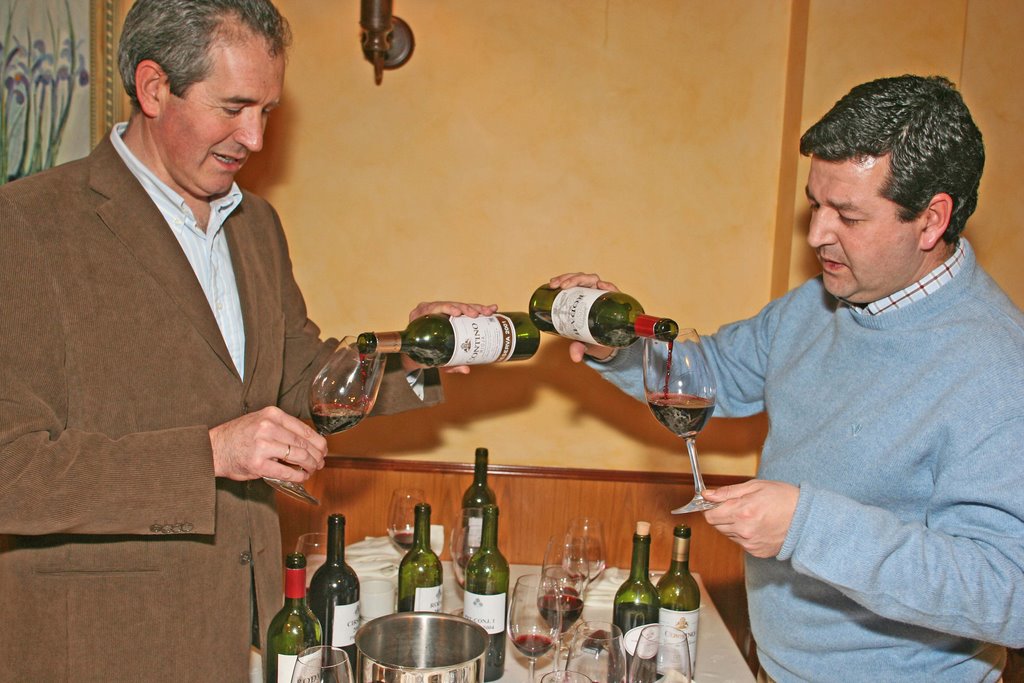
Friendly rivals Agustín Santolaya, Managing Director of Roda & Jesús Madrazo, winemaker, Contino pour each other's wines at Hector Oribe Restaurant in La Rioja.

For at least a decade or more, I have had a love-hate relationship with the wines of Rioja - a region responsible for some of my life's most memorable tasting experiences. I prized the best of the old guard wines (R. López de Heredia, CVNE, La Rioja Alta, Marqués de Riscal and others) - yet recognized the mediocrity of many - and grated against the brashness of a gush of new wave Riojas that left palate-scalding new oak and high alcohol in their wake. Not surprisingly, the passage of time has seen most of the stalwarts evolving toward a more modern style and many of the newcomers toning down their brash styles to a degree that moves them closer to the classic wines that made Rioja famous in the first place.

Among the most captivating of these maverick makers, Viñedos del Contino has emerged as Spain's most important "château" and Bodegas Roda as one of its most significant and innovative wineries founded in the past 25 years. Both are now at or near the top of almost everyone's list of the greatest wines of the modern Spanish era, including mine. And because each has accrued substantial a track record -- Contino with more than 30 vintages, Roda with more than 15 -- the time was ripe to reassess their evolutions.

Located in La Rioja Alavesa district, a few miles northwest of Logroño, La Rioja's provincial capital, Contino is a single-vineyard pago that produces a reserva and gran reserva, the unusual varietal Graciano and the stunning single-parcel wine, El Olivo.
  
Roda, a state-of-the-art winery that also embraces some notable, time-honored influences, is located next door to R. López de Heredia's centenarian bodegas in the celebrated Barrio de la Estación in Haro. Roda makes the entry-level Roda (formerly Roda II), Roda I (the bodega's flagship 100 percent Tempranillo) and the super-luxury cuvée, Cirsion (named for the thistle blossom that is the winery's logo).
  
The genesis for this article actually came about three springs ago at the Salón Internacional de Gourmets in Madrid when Agustín Santolaya, the tall, handsome, affable general manager of Roda, made me an offer I couldn't refuse: "Come up to the winery in La Rioja after the Salón closes and I will open every wine we have made since 1992 and prove to you how great Roda wines really are."

 Agustin Santolaya pouring some of the 21 wines at a midnight tasting that 
he organized for me at Roda in April 2003.  Photo by Gerry Dawes©2003.

Two years prior, I had questioned his approach to winemaking in print and he was eager to gently but firmly defend Roda's prominently proclaimed scientific approach to viticultural techniques and winemaking, and prove me wrong in the process. At least in my first encounters with Roda - and many other so-called alta expresión new wave offerings being fawned over as nuevos milagros, new miracle wines - I was not impressed. Nor was I convinced by the public relations claim that Roda wines were the "new kings" of the Barrio de la Estación in Haro, especially because its neighbors included a row of classic wineries that had always ranked among Spain's best bodegas: CVNE, La Rioja Alta, R. López de Heredia and Muga.

I had come away from a tasting at Roda several years earlier with the impression that too much emphasis was placed on big, powerful, inky, concentrated wines overdosed on new oak. Its blockbuster alta expresión Cirsion offering was then pegged at around $150 (it's now $250). Santolaya's bent for winemaking by the numbers (i.e., the reliance on scientific criteria) also left me skeptical. His agro-scientist's approach to extracting the best, "phenologically" ripe - quite ripe - old vine tempranillo grapes, then making them into intense, voluptuous wines with liberal lashings of new oak, was simply unconvincing.

And I kept wondering about the "communal palate" behind the Roda wines, which seemed formulaic rather than inspired. Nevertheless, I was not going to miss a chance to taste mano a mano with the individual responsible for overseeing the wines at one of Rioja's most highly touted modern wineries, so I rented a car in Madrid on the last day of the Salón and headed for Rioja, a four-hour drive northeast. Passing through snow flurries on the way up, it was 10:30 at night by the time I arrived. Santolaya had laid out tapas and opened 21 wines - every Roda wine made since the winery's founding in 1987, except for the 1991, which was bottled but never released (the first commercial release in 1996 was from the 1992 vintage).

In addition to his role since 1998 as managing director, my host is also the de facto technical director, the man who has the last word on winemaking. He was first hired as a consultant in 1992 by founders Mario Rotllan, a wealthy Barcelona businessman-wine importer (Pol Roger Champagne, Taylor Fladgate, Château Mouton-Rothschild), and his wife, Carmen Daurella (thus, Ro-Da).

Santolaya recalled that, "Mario Rotllan had a clear idea of what he wanted to do from the beginning: He didn't want to make the same wine as the great classic wineries. Rather, the idea was to look for the maximum possible expression of tempranillo in our area of La Rioja. Finding the best grapes is fundamental, then we try to get everything the grape has to give, while trying to make a wine that is elegant and not aggressive. We want wines that are fun to drink, that give pleasure with food."

With that as the goal, Santolaya assembled and led a team whose first task was to painstakingly identify 100 high-quality vineyards in La Rioja Alta and La Rioja Alavesa near Haro and select 22 separate parcels from which Roda's grapes would be sourced. Through his endeavors then and later, Roda now owns 150 acres of vines and controls another 250 ranging in age from 30 to 50-plus years old and situated 1,475 to 1,870 feet above sea level. Some, like the best vineyards in Burgundy, for example, are at the limits of cultivation, which can be problematic in challenging vintages, but can produce sublime wines in favorable years. Roda also has a 60-year-old garnacha vineyard (at 2,100 feet) in La Rioja Baja used for only the basic Roda bottling.

It is Santolaya's habit to select grapes from the 17 best lots of low-yield vines (minimum age 30 years, average age 45) and vinify them separately in large, upright tinos, or wood vats. Because "it is a communal palate here," he explained, the team then blind tastes the wines to classify them. Before we settled down to taste, Santolaya took me on a quick refresher tour of the facility, where I was reminded that all wine transfers are done by gravity and I learned a maximum of 25,000 cases per year are made.

First in the evening lineup was the 1992 Roda II (the lesser of the three wines made here), followed by 1992 Roda I and 1993 Roda II (no Roda I was made that year) - wines that still had some fresh acidity, but were from poor to mediocre vintages and were overwhelmed by new oak. Roda I, Santolaya said, is 100 percent tempranillo, while Roda II is usually 90 percent or more tempranillo, the rest garnacha and graciano. The 1994 Roda I (no Roda II made), from a great vintage, was riper and smoother, but still marred by oak, as was the 1995 Roda II and 1996 Roda II.

The wines began to improve dramatically with the 1995 Roda I and 1996 Roda I, which, though they were still somewhat hamstrung by new oak, also showed exceptional promise with smooth, ripe black fruit and minerals. Santolaya noted that after 1996, they began to tone down the new oak (all French, from eight different producers) a bit; they now use just 50 percent new oak for Roda and Roda I, and 100 percent new oak for Cirsion.

"In the earlier years, we used to put the wines in new oak for 24 months, but we have cut it to 12 to 14 months," Santolaya explained. "The first month in new oak, when the wine is going through malolactic fermentation, gives as much oak to the wine as the next six to eight months does." Wines undergo malolactic fermentation at Roda in November (early for La Rioja) in a special room warmed by radiant heat floors. (Because the winters are cold here, if something is not done to warm the wines, malolactic fermentation will not be completed naturally until spring.)

The team didn't succeed with 1997, an off vintage; the Roda II was sold off in bulk and Roda I was thin and showed more oak than fruit. In 1998, however, both bottlings began to live up to the winery's top-quality claims; the Roda II showed rich berry fruit and round, plummy, chocolaty, ripe flavors that carried the 13.9 percent alcohol well, and the Roda I was a big, silky, but well-structured wine with loads of black plum and Graves-like mineral qualities.
  
In 1999, another poor vintage, the wines were not successful, but in 2000, Roda hit its stride, turning out big (14 percent alcohol), voluptuous, silky, black wines with lots of rich, ripe fruit. And in the stellar 2001 vintage, which some observers believe produced the best tempranillo grapes in history, the perfect embodiment of the house philosophy was realized with big, sweet, silky, flavor-packed wines that display distinct, minerally terroir and elegance, despite the hefty - for Rioja - 14-plus percent alcohol content.

By midnight, we had tasted through 17 wines with four vintages of Roda's superstar Cirsion still on deck. Santolaya noted that Cirsion is not from a single vineyard, rather it's from the best tempranillo grapes in the best years hand-selected by a specially trained team of ten people who inspect the fruit by tasting it.

"We want a wine with the highest concentration of fruit and structure," so they look for bunches that, according to Santolaya, "are already nearly wine inside the grape and bursting with ripeness with long polymerized tannin strings, not the shorter ones that can make wines harsh and brittle."

Fermentation takes place in upright Seguin Moreau oak foudres and then the wine is moved into new French oak where it undergoes malolactic fermentation. It remains there for only about eight months, because Santolaya doesn't want oak to dominate. He explained that Cirsion is the result of research into the polymerization of grape tannins and anthocyans, and the judicious use of new oak is needed to "fix" them, or in Santolaya lay speak, "make a sandwich with the wood."

Such a recipe yielded big, exotic wines in 1998, 1999, 2000 and 2001 that showed rich, sweet black fruit, and were very silky and deceptively smooth in spite of the 14.5 percent alcohol levels. The 2001, of which only 7,000 bottles were made, was already on the market when this tasting took place in 2003. Santolaya said that it followed Roda's philosophy that a wine should be ready to drink upon release and should still live for 20 years.

The jury is still out on Cirsion's longevity, but, as Santolaya intended, the wine sure grabs the taster's attention. "When you analyze the time a wine critic has to judge your wine, then divide that into the thousands of wines the critic has to taste every year, each wine gets about one minute, so your wine has to sock him in the jaw and deliver a knockout punch. You have to make him say, 'Wow!'"

In this instance, however, I had spent more than three hours tasting Roda's wines and tasted them again with the tapas later. I concluded that the wines had evolved steadily since those early efforts that I disdained. They were still more alcoholic and extracted than I prefer - big by traditional Rioja standards - but there was no denying the quality standards that went into their making. I even thought that, in some ways, they were moving closer to the more elegant style of wines like CVNE Imperial, an evolved classic from one of Roda's neighbors.

Ironically, much like Roda, the wines of CVNE's offspring, Contino, despite their power, have grown increasingly more elegant - though still richly flavored - with each passing vintage under winemaker Jésus Madrazo's hand. Established in 1973 by family members and investors from CVNE (pronounced koo-neh, an acronym for Compañía Vínicola del Norte de España), the Contino property dates to a 15th-century grant from Queen Isabella and King Ferdinand. It comprises 153 acres of vineyards set on a gently sweeping slope that angles down to the Ebro River, a natural boundary that nearly encircles the property in a broad loop. 


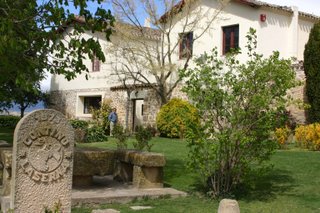
Contino Estate, La Rioja Alavesa.

On the other side of the Ebro from the Contino estate, a high, curving, ochre-colored sandstone cliff forms a vertical barrier that, in effect, defines the bowl that Contino property occupies, creating a unique microclimate. The cliff traps the heat and reflects sunlight back into the alluvial, rock-strewn property, parts of which are mindful of Châteauneuf-du-Pape. Because of the topography, Contino is often rewarded with riper grapes than many other vineyards in this area, and much riper fruit than vineyards in the cooler, higher elevations around Haro.

In cool years, this warm bowl effect can be an advantage, but in very hot years, it presents its own set of problems. During an early vintage, a hot spell caused the sugars to spike to a level that produced wines that nudged 18 percent alcohol, hence no Contino was made that year. Ever since, a keen weather eye is trained on the vineyards during warm spells so that this costly experience is not repeated. Taken altogether, the vineyard's terroir normally results in wines of substantial concentration that carry between 13.5 to 14.2 percent alcohol.

Contino's first director and driving force was the now-retired José Madrazo Real de Asua, also a director of CVNE (founded by his great-grandfather in 1879), and the father of the current winemaker, Jésus Madrazo, whose mentor was the legendary CVNE enologist Basilio Izuierdo. "Contino is a warm microclimate property," Madrazo noted in a recent conversation. "

Over the past decade, Contino has begun the harvest between September 15 and 21, which makes us among the earliest grape harvesters in La Rioja. Historically, our alcohol levels range just under 14 percent. The trick is to achieve balance in the wines. If I were not a classic enologist, the wines would probably rise to 15 percent or more." The 40-year-old Madrazo, unlike most modern winemakers in Spain, grew up drinking the great, old library vintages of CVNE Imperial and Viña Real Gran Reservas from the 1940s, '50s and '60s, which set the tone for his winemaking style.

With only a few Contino vintages under his belt (his first vintage was 1999), Madrazo made the stunning 2001 El Olivo from 90 percent tempranillo (harvested from a single parcel over which a 1,000-year-old olive tree presides) and 10 percent graciano from a nearby Finca San Gregorio plot. This 2,000-case gem is undoubtedly the greatest red wine I have tasted in the so-called modern era of Spanish winemaking, which roughly dates stylistically to the early 1990s when concentration, high alcohol and lavish new French oak began to dominate. 


http://photos1.blogger.com/x/blogger2/8188/946/1600/427676/IMG_0140%20Contino%20El%20Olivo%20sm.jpg
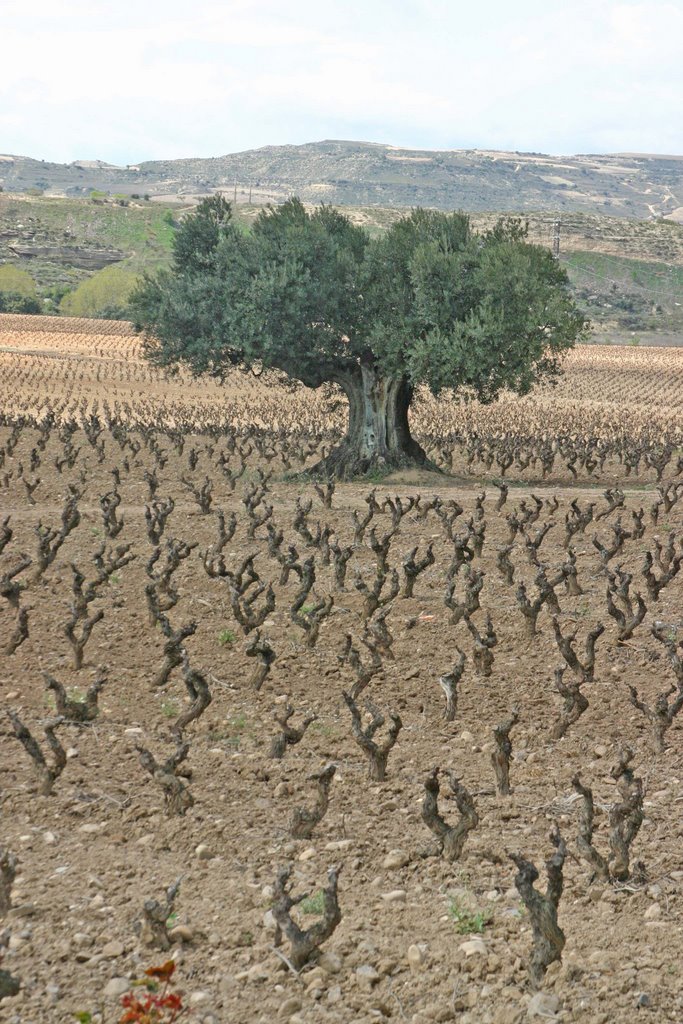
Contino's now famous El Olivo vineyard.

Although Madrazo espouses the virtues of new oak, he approaches it with caution: "You have to buy good oak that is not green and has been air-dried so it is properly cured," he explained. "Oak should not import any negative attributes to your wines and it must do justice to your own fruit. What works for another winery might not be good for your wines. For instance, I liked Marqués de Vargas's 1998 and 1999 wines, which were aged in Russian oak made by a Rioja cooper. I admired the balsamic flavors and the toast, so I ordered some barrels to do an experiment. The Russian oak was a disaster at Contino for the flavors I like to extract from tempranillo and my way of making wine."

New oak has its place here, just as it does at Roda. "Agustín Santolaya and I agree that when you use new oak, the quality of the fruit is paramount," he stressed. "You can't use new oak on poor grapes. We use the highest quality of grapes, which can stand up to new oak. Contino's El Olivo and Graciano both have almost 100 percent new oak, but I don't age them more than 12 to 14 months in it." For the majority of his wines, Madrazo uses a combination of French and American oak (with one percent Hungarian) with plenty of carefully main-tained used oak in the mix. Because barrels are kept a maximum of eight to nine years, no more than 10 or 15 percent new oak is usually purchased each year.

At a milestone tasting I attended last April at the Contino estate, Madrazo opened almost every Contino Reserva and Gran Reserva made since 1974 - 28 wines in all (missing were six off years when no wine was released) - for a small audience composed largely of Spanish wine critics. Also in attendance was his aforementioned predecessor, Basilio Izquierdo, who made Contino's wines from 1974 to 1998. (For the first few years, until the vinification facility was built at the estate, Contino wines were made by Izquierdo at CVNE.)


http://photos1.blogger.com/x/blogger2/8188/946/1600/587041/IMG_0789%20Contino%20J%20Madrazo%20tasting%20with%20Spanish%20wine%20writers%20sm.jpg
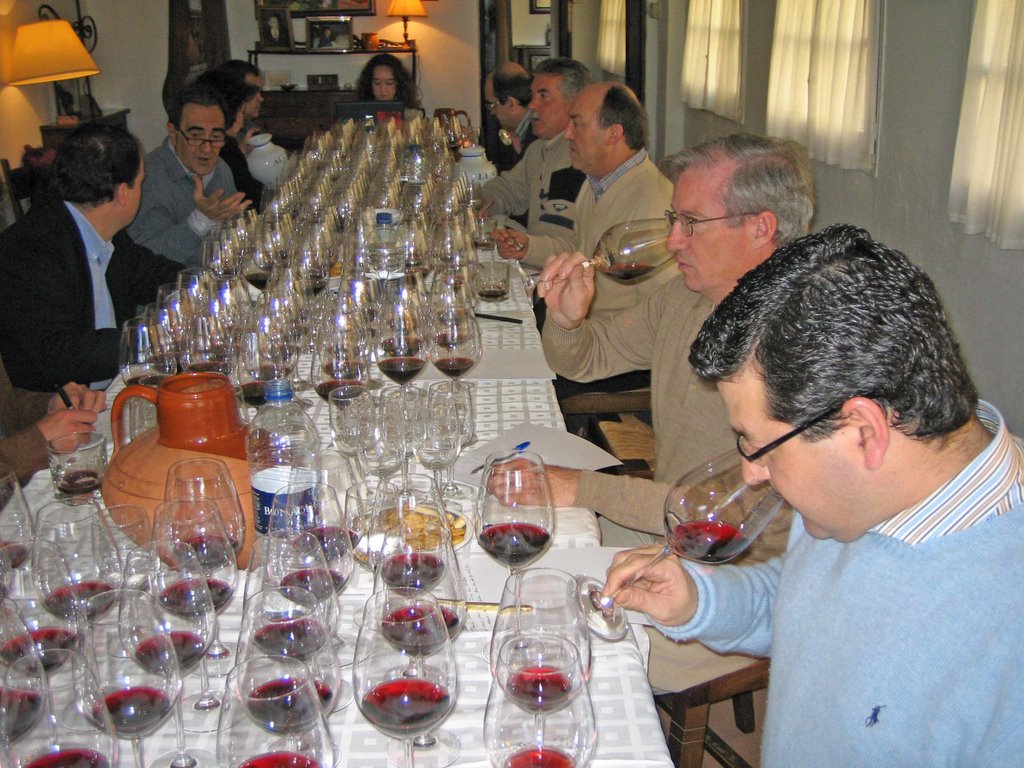
Historic Tasting at Contino.

We began the modern phase of the tasting with the 1994 through the 2004 Contino barrel sample. (Because the winery became infected with TCA in the late 1980s, no wine was made in 1992 and 1993. After a four-year closure and $6 million sanitization program, a crianza was made in 1994 and 1995 that marked the return to reservas.) "Contino Reserva has to be good every year," Madrazo said, "since it has the best price-to-quality ratio, it is our bread-and-butter volume wine (8,500 to 17,500 cases per year, depending on the vintage) - the one that reaches more customers, so it has to carry the quality image of Contino always."

Even in off years, such as 1997, 2002 and 2003, Contino Reservas rate consistently well. Because new oak had to be purchased after the TCA episode, the 1994 and 1995 wines, while still lively, fruity and spicy, had still not shaken off the taste of new wood. In 1996, Izquierdo made an excellent wine, one in which sweet, ripe blackberry and blueberry fruit, toast and carob were well integrated with still detectable, but not overly obtrusive new oak. The 1998 Contino Reserva was sweet, silky and elegant. In 1999, Madrazo took over the winemaking duties and was promptly rewarded with a mid-April ice storm that was one of the worst in recent history. As a result of the deep freeze, one-third of the normal crop was lost.

Madrazo increased the French oak content to 70 percent (plus 29 percent American, one percent Hungarian) and made a very elegant wine. In 2000 and 2001 - the former vintage, good; the latter, great - the direction in which Madrazo intended to take Contino was clearly evident. Both wines showed plenty of sweet, ripe red currant and blueberry fruit, spices and reasonably restrained oak. With just 13 percent alcohol, the 2000 Reserva was very elegant and stylish; the 2001 more powerful (13.7 percent) and packed with sweet fruit, chocolate and minerally terroir. In the poor 2002 vintage, Madrazo actually made a delicious, spicy, easy-drinking wine, and he seemed to do quite well with the super-hot 2003, which was still aging in barrel.

After a break, wines from Contino's "classic" period - 1974 to 1988 (when TCA began to be detectable) - were poured. Because I have high regard for traditional, well-aged wines, I was generally more enamored of their qualities than were my modern-palate-tuned Spanish counterparts, with the exception of critic Andrés Proensa, whose scores more closely paralleled mine. Many of these wines showed typical sweet red cherry fruit with the hints of orange peel, dried rose and tea that come from aging. Because of poor vintages and the TCA hiatus, between 1983 and 1988 only the 1985 and '86 still showed reasonably well.

Although Madrazo is making some of Spain's great modern wines, he also turns out a throwback to the long-aging, traditional Riojas on which he cut his teeth. In very good to excellent years, he bottles (in magnum only) a sublime Contino Gran Reserva. He opened the 1996, an incredible wine with deep, rich, deliciously sweet currant and cherry fruit, great balance and marvelous complexity, for his guests. The 2000 was nearly as good, while the 2001 promises to be even better with age. He observed, "I wanted to make a wine that would recall the great classic grandes reservas that I grew up drinking - the 1964 CVNE Viña Real, R. López de Heredia Viña Bosconia 1942, for example - wines that will live for 30 years or more. I want some wine lover in the future to be able to duplicate the same experience by savoring a superb wine that is several decades old."

But Madrazo was not yet done. As a fare-thee-well gesture, the budding Rioja maestro pulled the cork on his dream wine, the 2000 El Olivo. This intensely flavored, complex, beautifully structured red finishes with a Graves-like minerality, the stamp of Contino's terroir. His 2001, from a spectacular tempranillo vintage, could well become the model for others in Spain to emulate. 


A January tasting at Hector Oribe Restaurant in Páganos (La Roja Alavesa) brought me up to date on the latest releases and validated what I already suspected: Contino and Roda are two of the best new-wave wineries in Spain whose recent vintages demonstrate that big doesn't necessarily mean brawny. These wines are not Arnold Schwarznegger dancing the tango in True Lies; rather, they are substantial Riojas with balance, style and even grace. More important, they are delicious to drink.

It is poetic justice that both bodegas are based in La Rioja, a region that has taken heavy flack from a few prominent Spanish wine writers who seem to favor just about any new property from the hot-country Mediterranean wine regions over almost anything produced in Spain's time-honored red wine area. The wines of Contino and Roda are living proof that tempranillo grown in the unique micro-climates and soils of Rioja's Atlantic-influenced, mountainous wine region is still hard to top when put into the hands of talented winemakers like Jésus Madrazo and Agustín Santolaya.

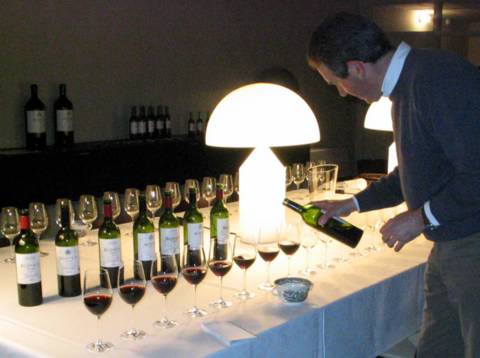
Tasting Bar

Through a series of events over a span of two years, the verticals that follow were tasted at both wineries, respectively, with a January 20 follow up review of the latest releases over lunch with both Jésus Madrazo and Agustín Santolaya at the wonderful Hector Oribe Restaurant in the village of Páganos in La Rioja Alavesa (also in attendance was Gónzalo Lainez, Roda's export manager, who is also a member of Peña Bilbao, one of northern Spain's most influential private tasting groups). None of the wines were tasted blind.

Bodegas Roda Roda II 2000, La Rioja Alta - $38: Pleasant nose of fruit, minerals and oak. Very smooth and balanced with integrated fruit and oak; rich black plum and chocolate flavors; smooth, silky tannins and a mineral finish. Score: 89

Roda I 2000, La Rioja Alta - $59: Fresh nose of black plum, pleasant oak and minerals. Plummy fruit flavors and silky texture with a mineral finish, this time shored up with noticeable tannins. Should improve with a few years of cellaring. Score: 91

Roda II 2001, La Rioja Alta - $38: Somewhat closed, but clean nose shows some lead pencil. Sweet, delicious and balanced, with a nice complex finish showing ripe fruit, graphite minerality and oak. Excellent. (17% garnacha) Score: 92

Roda I 2001, La Rioja Alta - $59: A gorgeous, elegant, balanced black fruit nose. Delicious, well-knit balance of ripe fruit, chocolate and minerals that fill the mouth and finish silky and seamless. Very impressive. Score: 94

Cirsion 2001, La Rioja Alta - $250: Deep, ripe black fruit nose. Very rich and exotic flavors with intense, sweet blackberry fruit laced with chocolate and minerals. So silky it glides over the palate in a smooth, voluptuous rush of fruit, so you may not notice the 14.3 percent alcohol until you have finished a glass of it. Score: 92

Cirsion 2000, La Rioja Alta - $250: Exotic, spicy nose of violets and minerals. A very concentrated "Mediterranean" Cirsion, with delicious, silky black fruit flavors and enough tannins to hold it together. For lovers of big, concentrated wines. Very nice for its weight. Score: 92
Contino Reserva 2001, La Rioja Alavesa - $42: Pleasantly oaky nose with sweet, ripe fruit and toast aromas. A tannic, oaky finish buttresses lots of delicious sweet blueberry and red currant with chocolate and mineral flavors. A great vintage that needs several years of cellaring. Score: 94

Viñedos del Contino Contino Reserva 2000, La Rioja Alavesa - $42: Integrated oak and sweet black fruit nose. Elegant, stylish and balanced with delicious, concentrated sweet red fruit, cocoa and mineral flavors, and noticeable, but harmonious oak. Opens steadily with airing. Score: 93

The four gran reserva wines listed below all need several years in bottle, but, with aging, they promise to be delicious, profound wines that show the best of the Contino estate - in fact, the best that La Rioja and Spain can produce.

Contino Gran Reserva 1996, La Rioja Alavesa - $65: Nice oak and sweet fruit jump out of the glass. Wonderfully complex and delicious with sweet ripe cherry and currant flavors along with licorice, cocoa and mineral notes; lovely finish. A modern wine that is a throwback to the great Rioja wines of yesteryear, many of which are among the greatest red wines ever produced. (Magnum only) Score: 96

Contino Gran Reserva 1999, La Rioja Alavesa - $65: Closed nose shows whiffs of ripe fruit. Rich and sweet, with cola, licorice and chocolate flavors still bound up in firm tannins that bode well for the long term. Still needs plenty of time. (Magnum only; not yet in the U.S.) Score: 91

Contino Gran Reserva 2000, La Rioja Alavesa - $135: Intense black and red fruit aromas with mineral and oak notes. Very rich, sweet, ripe, deep, delicious black raspberry fruit with carob, minerals and oak in the finish. (Magnum only; not yet released) Score: 95

Contino Gran Reserva 2001, La Rioja Alavesa - $145: Deep, ripe black fruit, black olive and oak scents. A big, sweet, rich delicious wine with good grip to hold it for the long haul. Needs several more years to develop fully, especially since it is in magnum. Score: 96

Contino Graciano 2000, La Rioja Alavesa - $95: Exotic nose of anise, white chocolate and herbs. Tart by nature, this Graciano, which is reminiscent of a Petit Verdot, needs bottle age, air and, certainly, food. The aromas in the nose carry through on the palate with more herb and balsamic flavors. Score: 88

Contino Viña del Olivo 2000, La Rioja Alavesa - $120: Ripe black fruit and black olive nose with oak integrated. Rich and very complex with stunning black fruit flavors, good acidity and great structure. Reminiscent of a great Graves, like Haut-Brion, with a long, gravelly finish. Score: 94

Contino Viña del Olivo 2001, La Rioja Alavesa - $120: Beautiful nose of ripe black fruit, minerals and toasty oak. Entry is smooth, with delicious, sweet, fresh black raspberry, toast and mineral flavors. Elegant for its 14 percent alcohol with a good acid balance and everything in harmony. Needs five to ten years; this great wine is a keeper. Score: 97 - GD


This article originally appeared in The Wine News. (First published in 2006.)


About the author 


Gerry Dawes was awarded Spain's prestigious Premio Nacional de Gastronomía (National Gastronomy Award) in 2003. He writes and speaks frequently on Spanish wine and gastronomy and leads gastronomy, wine and cultural tours to Spain. He was a finalist for the 2001 James Beard Foundation's Journalism Award for Best Magazine Writing on Wine.


Mr. Dawes is currently working on a reality television
series on wine, gastronomy, culture and travel in Spain.

11/19/2009

Rioja Resident and Ex-Pat Americano Tom Perry on WineFuture-Rioja 2009 & Spanish Wine Crisis Observations (Nine)

* * * * *


Tom Perry, American-born, long-time Rioja resident, wine industry veteran and expert on wine marketing.
Photo by Gerry Dawes©2009.

Don Geraldo,

Yes, I was able to attend, thanks to a complimentary invitation from Marqués de Riscal, whose finace director Fernando Salamero was my boss for 15 years while I was the director of the Rioja Exporters' Association.

I'd be glad to answer your questions, but first my views on the conference.

I especially enjoyed the presentations about social media (Ryan Opaz, Gary Vaynerchuck and Jeremy Benson), Miguel Torres' talk about climate change and what Torres is doing about it, Tim Hanni's presentation about taste perceptions and Nicola Jenkin's talk about packaging.

However, as I mentioned in a comment to Catavino, a lot was left unsaid.
I personally feel that an important issue for the future of wine is overcoming the major hurdles small and many medium-sized wineries have to overcome just to find a route to market.  We can talk about empowering consumers all day but if consumers can't buy certain products because of
  • the increasing concentration of distributors (USA)
  • the increased power of supermarkets and the demise of traditional retailers (UK)
  • the impossibility to sell wine through the internet between countries in the European Union
  • the difficulties small US wineries face to sell directly to consumers in different states (although this is improving)
these brands are handicapped.

In Europe, traditional wine producing countries face decreasing per capita consumption of wine and a lack of interest on the part of young consumers. There was a lot of talk about being able to connect with consumers but nothing was said about strategies to interest young consumers from Spain, France and Italy to wine.

I think there should have been more emphasis on these real issues facing our industry.

Parker tasting:

I attended it and also helped Alberto Gil with his interview with RP on the 13th.  There were 20 wines in the tasting (18 garnachas and two Riojas) as you know, and I was very pleasantly surprised by the 7 Châteauneuf-du-Papes.  All of them were really elegant, not overoaked and overripe and showed both the place they were from and the characteristics of the variety.(BTW, the châteauneufs in the RP tasting were all unoaked.)

The 1945 Riscal was superb.  I also liked the Clos Erasmus from Priorat (not at all inky and inscrutable), Espectacle from Montsant,the Clarendon Hills Old Vines and the Killakanoon from Australia.  I thought the Contador wasn't ready to drink yet and the Aquilón and Atteca Armas (both from Jorge Ordóñez) were too "fruit-bomby" for my taste.

In the interview (I'll try to send you a link from LA RIOJA), RP defended himself from his detractors by saying that he had an eclectic palate and that he was displeased with two of the wines in the tasting because they were overoaked!

He said that his strategy up to now was to invite the most representative importers of Spanish wines for lunch.  RP paid for the lunch and the importers did a tasting of their products.  He mentioned that Jay Miller would be visiting Spain frequently in the future.

He came across as a passionate, sincere guy.


Spanish Wine Crisis observations:

With regard to the wine crisis in Spain, most of the problem has to do with young people's lack of interest in wine.  I think the trade has made it too complicated for most people.  

We have to educate young people about wine in an easy, non-technical way; get them to appreciate it for its taste and accompaniment to a good meal with friends, and if they're interested in learning more, they can (once the trade makes it possible to learn about it - in Logroño there's only one serious tasting a month - and there's only room for 50 people!)

One of the great failings of the Spanish wine trade is allowing lambrusco to be the wine of choice of young people.  It's cheap, uncomplicated and women love it (it's an easy choice for a guy to make when he invites his girlfriend out to dinner).  Why haven't we come up with a Spanish product?  Kalimotxo and tinto de verano are fine, but hard to brand. It shows you what poor marketers we are!

The second problem, at least for Rioja, is the economic crisis in general, which is hurting restaurants, Rioja's main sales channel here.

Un abrazo,

Tom


About Gerry Dawes

Gerry Dawes was awarded Spain's prestigious Premio Nacional de Gastronomía (National Gastronomy Award) in 2003. He writes and speaks frequently on Spanish wine and gastronomy and leads gastronomy, wine and cultural tours to Spain. He was a finalist for the 2001 James Beard Foundation's Journalism Award for Best Magazine Writing on Wine, won The Cava Institute's First Prize for Journalism for his article on cava in 2004, was awarded the CineGourLand “Cinéfilos y Gourmets” (Cinephiles & Gourmets) prize in 2009 in Getxo (Vizcaya) and received the 2009 Association of Food Journalists Second Prize for Best Food Feature in a Magazine for his Food Arts article, a retrospective piece about Catalan star chef, Ferran Adrià.

". . .That we were the first to introduce American readers to Ferran Adrià in 1997 and have ever since continued to bring you a blow-by-blow narrative of Spain's riveting ferment is chiefly due to our Spanish correspondent, Gerry "Mr. Spain" Dawes, the messianic wine and food journalist raised in Southern Illinois and possessor of a self-accumulated doctorate in the Spanish table. Gerry once again brings us up to the very minute. . ." - - Michael & Ariane Batterberry, Editor-in-Chief/Publisher and Founding Editor/Publisher, Food Arts, October 2009.


Mr. Dawes is currently working on a reality television
series on wine, gastronomy, culture and travel in Spain.

Experience Spain With Gerry Dawes: Culinary Trips to Spain & Travel Consulting on Spain

Gerry Dawes can be reached at gerrydawes@aol.com; Alternate e-mail (use only if your e-mail to AOL is rejected): gerrydawes@hotmail.com


Related Posts with Thumbnails