



* * * * *

Article by Laura Puy Miguiro Photo by Jose Carlos Cordovilla

Tim Pinks and Gerry Dawes embrace. It has been two years since the two writers last saw each other—since the Sanfermines of 2024—though today’s setting is very different from what it was then. They are in Burguete, which they have chosen as the meeting point with fellow writer Miguel Izu. The three of them decided to visit the place wherethe characters in *Fiesta*, Ernest Hemingway’s novel celebrating its 100th anniversary, spend a day fishing “on el Río de la Fábrica ' the factory river,” as described in the novel in reference to the Fábrica de Orbaizeta Arms Factory. And so, a man from Pamplona (Izu), an American (Dawes), and an Englishman (Pinks) drive to their first stop, Aribe. It is the morning of July 3.
It wasn’t just *The Sun Also Rises* that brought Pinks and Dawes to experience the San Fermines; the American has already enjoyed the festival twenty times, and the Englishman has attended several times since 1984. It was also the book ‘Iberia,’ published in 1968 by the American James Michener, who traveled throughout Spain for decades and who dedicated a chapter to Pamplona and its festival. “When I read that chapter back in the ’80s,” recalls Pinks, who is very grateful to his parents for having bought "Iberia,"I told myself that a place like this couldn’t exist in the modern world. Because I knew there were bulls, but the revelry seemed medieval to me! Four years later, I came on a motorcycle with a friend to see for myself.” He arrived in Pamplona at three or four in the afternoon on July 6, heading straight to the Plaza del Castillo. “There was an atmosphere…I fell in love with what I saw, and it changed my life. And I knew I was going to learn the language and come back again and again—and that’s exactly what’s happened,” he says from his spot in the back of the car. Up front sits Dawes, for whom "Iberia*"“had a lot to do with many people from another generation.”
“For me, that chapter on Pamplona—which is fantastic—had a huge influence on me. So did *Fiesta*,” says Dawes, who read both books in 1968 and has followed in Hemingway’s footsteps through the Pamplona festival and through Burguete and Roncesvalles, enjoying picnics in the countryside over the course of five years—just like the ones described in *Fiesta*—for “a day of rest, escaping the Sanfermines” in the 1970s.
The fact is, Dawes arrived in Spain for military service, which he completed in Rota (Cádiz), in 1968. He knew nothing about Spain when he was assigned to the security school he was attending in Texas. He recalls that his company commander called him a “lucky bastard” and that he searched the library for books on Spain to learn about the country. “I fell in love with Spain the moment I stepped off the plane (actually before we landed, circling over Sanlúcar de Barrameda, Jerez and Cádiz)” After two years in the military (U. S. Navy at Rota) and with $500 in his pocket, he decided to stay in Spain. He traveled around the country for six years (living in el Barrio de Santa Cruz in Sevilla and in the artists village of Mijas near Málaga) and ended up in Pamplona “because of Hemingway and Michener,” but also because of his afición for bullfighting, through which “you learn about festivals all over Spain and traditional cuisine.”
Why this trip?
-[Miguel Izu] To mark the 100th anniversary of *Fiesta*, Tim wanted to come to Burguete for a couple of days before the Sanfermines, and he asked us to join him.
-[Tim Pinks] I wanted to do something sentimental: to thank Hemingway and Michener because their books completely changed my life.
And why the trip to Burguete, Aribe, and Orbaizeta?
-[T.P.] Hemingway first came to Burguete in 1924—after the Sanfermines and before publishing *Fiesta*—with friends to go fishing, and I thought, why not do the same? “I have a motorcycle, so I can ride to Burguete and then on to Pamplona.”
And what about the idea of going to the exact spot mentioned in the novel about the fishing trip?
-[Gerry Dawes] That’s something Miguel and I have in common. I’ve been looking for the spot for four years, ever since asking my friend Allen Josephs, who was president of the Ernest Hemingway Foundation and Society and a lifelong San Fermin festival-goer since the 1960s.
In addition to his visit to the area after the San Fermin festivities in 1924, Hemingway returned the following year, which is what he recounts in *The Sun Also Rises*. In the novel, to go fishing, the group of friends (GD: Jake Barnes and Bill Gorton only) leaves Burguete and starts walking east toward the Orbaiceta factory (GS: where they thought they would find the Irati). They walk six or seven kilometers GD: Actually 12.7 kms., between three and three and a half hours each way; Hemingway was an avid hiker)—between two and three hours—for their fishing trip.
-[G.D.] Some dams supplied water to the Orbaiceta arms factory, and Hemingway fished from one of them. Because in the novel *The Sun Also Rises*, they didn’t fish in the Irati.
-[M.I.] Exactly. In these stories people tell about him, you’ll often hear that Hemingway went to Burguete to fish on the Irati, but the Irati doesn’t flow through Burguete. And in *The Sun Also Rises*, it’s not the Irati either, because what he says in the novel is that they fish in “the river by the factory.” That’s why we go to the Orbaiceta Arms Factory. The Irati doesn’t flow past the factory either: one of the Irati’s tributaries does, called the Legartza.
A local woman in Orbaizeta would tell them that the Legartza River gets its name from the confluence of the Itolatz and Txangoa streams—a name also shared by one of the dams (the other one is in Itolatz). But before we get there, we’ll make a stop at the medieval Aribe Bridge, next to the NA-410 highway heading toward Garaioa. Made of stone, it is about 50 meters long and 3.20 meters wide.
Why are we stopping in Aribe? Did he fish here?
-[M.I.] Probably yes. He spent a few days in the area both times he stayed in Burguete, so he would have fished in several places, although the legendary spot is the one he describes in *Fiesta*.
-[G.D.] Which is the one we’ve come to see.
-[M.I.] No one knows exactly where he fished in Aribe. There’s no information, no photos, nothing. Oral tradition says he fished near the baths, and that might be under the bridge. But there’s really no confirmation of the exact spot. And it’s pure legend that he was seen fishing here in 1959, that he’d brought a bunch of beers which he drank, and that he left them all under a tree when he left: by 1959 he was already elderly and didn’t come here to fish.
Izu, author of several books in which he debunks myths about the Sanfermines—including those surrounding *Fiesta* and Hemingway—knows there’s little one can do about legends, but any opportunity is a good one to try to debunk them. This excursion is no exception.
-[M.I.] It’s often said that Hemingway came to Irati. But he didn’t come here—he went to Aoiz: he’d attend the running of the bulls, have breakfast at Marceliano’s, and at noon he’d go on a picnic to Irati, next to Aoiz, which allowed him to return in the afternoon for the bullfights.
There’s a famous photo on the cover of the *Gaceta Ilustrada* [from 1958, showing Hemingway next to a tree, with the blue surface of a reservoir or river visible in the background]. It’s said to be at the Yesa reservoir, and there’s even a tourist sign there. But he was never there in his life: the photo was taken at the tiny Usoz reservoir in Irati, where they used to swim.
-[G.D.] We do know he fished at the factory because he mentions it in the novel.
-[M.I.] And throughout his work, Hemingway is very detail-oriented. When he describes places, situations, people… it’s because he’s been there, seen it, and spent time with those people. So, if he says “the river by the factory,” it means he went to the factory and was by that river.
-[G.D.] As a journalist, the non-fiction part of the novel is written as if it were a news (travel) article. And we’re going to tell you something that isn’t widely known.
Let’s see…
-[G.D.] Hemingway fished with worms, not with flies like his friend, and he caught (dug) the worms by the river in Burguete.
-[M.I.] He’d dig around in the mud and put them in a jar (tobacco tin).
-[G.D.] My new book, which is coming out in October, is about Hemingway in Spain and the 100th anniversary of *The Sun Also Rises* (will have a chapter featuring the section about Hemingway's characters fishing on the Legartza river, where we are today).
And just as in Aribe it’s not known exactly if he fished or where, is the location of the arms factory known for sure?
-[G.D.] We know it more precisely, and I’ll explain why: besides the fact that it’s written in the book, Hemingway—as Miguel can tell you—was a great lover of wine. Since they had to walk three hours to where they fished, carrying a backpack with (two) bottles inside, he wanted to chill them (GD: as suggested by the Bill Gorton character, back up the hill on the trail in a spring that poured into a large rectangular stone watering trough that could be used by animals), so he put them in the spring-fed trough that we’re going to go see. But he was afraid someone might come by and take the wines, so he didn’t want to fish where he couldn’t see the fountain. (GD: Did we mention that Hemingway/Jake Barnes loved his wine). In the novel, he walks back up the trail to the fountain, which he could see from a dam where he was going to fish—a dam that no longer exists. Now there are some trees blocking the view, but they weren’t there a hundred years ago.
-[M.I.] For a few years now, the spring has even been marked on maps as the “Hemingway Spring,” and it’s included on hiking trails.
-[G.D., looking at Izu] You haven’t been there since they put up a life-sized Hemingway photo cutout next to the spring, have you?
-[M.I.] No, but I’ve seen photos.
-[G.D.] In the photo, Hemingway looks to be 40 or 50 years old, and they’ve even put a jacket on him! [laughs].
Tim, are there still many things or places associated with Hemingway that you haven’t seen yet?
-[T.P.] No, but I’m not a big Hemingway fan. Most of the characters in his books aren’t people I’d want to meet. I’ve read almost all his books, but I don’t feel the need to go where Hemingway went, although I did consider it for the 100th anniversary of *The Sun Also Rises*.
-[M.I.] It’s a nice outing, a good plan—going to Burguete, seeing the spring and then having lunch. I wouldn’t have come alone either. I’m not a Hemingway fanatic, even though I spend a lot of time talking about him. They say tourists come to the Sanfermines because they’ve read Hemingway, but most have read Michener or another lesser-known author, Robert Daley, who wrote a book in the 1960s, *The Swords of Spain*, traveling across the country and describing what the festival and the bullfighting festival are all about, with a section dedicated to Pamplona.
-[T.P.] The San Fermín festival is now famous among young people even without the books, but they never travel here [for this trip], and my favorite pages in *Fiesta* are the ones where they go fishing, are relaxing in the countryside, and having a good time. Those pages set between Paris and Pamplona are the best.
Gerry, Tim, and Izu say they aren’t big fans of Hemingway. What about you?
-[G.D.] No [they laugh]. No, I’m more interested in Hemingway’s connection to Spain. That’s what interests me. I’m proud to say I’ve met about forty people who knew Hemingway, like Juanito Quintana, Antonio Ordóñez, many Americans...
[Arrival at the Orbaizeta Arms Factory]. Tim, have you been here before?
-[T.P.] Once.
-[G.D.] Me, three or four times.
And why?
-[G.D.] Because I’m chasing the truth about the novel. It’s a bit of a passion, and I’m writing about it. Miguel has uncovered many myths, and I’m the only American who knows that.
[At the point where the river takes the name Legartza].
-[M.I.] Look how beautiful this place is.
So, where did Hemingway fish?
-[G.D.] The dam must have been around here. We don’t know how high it was, but it says in *The Sun Also Rises* that he could see the spring with its wines.
-[M.I.] Let’s go up to the spring to see if anyone has left any bottles of wine [they laugh]. Hemingway loved coming here.
[Arrival at the spring].
-[G.D.] The first time I came, that wasn’t there [referring to the photo of Hemingway], so I have a more authentic one—just of the spring.
[They pose for the photo].
-[G.D.] If you look down from here—where the trees are now, but weren’t a hundred years ago—that’s the last spot where Hemingway could keep an eye on the fountain and see if anyone was approaching.
What do you think of the place, Tim?
-[T.P.] I like this. It’s the photo. And with the photo of him, it’s fun. I didn’t know it was here. And I think it’s a good idea, but we need to find a photo of a younger Hemingway, from the 1920s, when he was fit and handsome and used to come here. Because, as I told you before, I’m not a big fan of Hemingway, and I’m not really into his books, but I am interested in his life—he was a man of his time, a bit of a macho guy, but with a super-interesting life. His life was incredible. He faced dangers, had adventures... And the books I like best are his journalistic pieces. For me, those are the best—that was real life.
Right after that, the three friends take a photo at that spot. And from there, it’s on to the rest of the day’s great plan: grabbing a bite to eat in the area.
Comments are welcome and encouraged.
Text and photographs
copyright by Gerry Dawes©2021. Using photographs without crediting Gerry Dawes©2021 on
Facebook. Publication without my written permission is not authorized.
* * * * *
Shall deeds of Caesar or Napoleon ring
More true than Don Quixote's vapouring?
Hath winged Pegasus more nobly trod
Than Rocinante stumbling up to God?
More true than Don Quixote's vapouring?
Hath winged Pegasus more nobly trod
Than Rocinante stumbling up to God?

Poem
by Archer M. Huntington inscribed under the Don Quixote on his horse
Rocinante bas-relief sculpture by his wife, Anna Vaughn Hyatt
Huntington,
in the courtyard of the Hispanic
Society of America’s incredible museum at 613 W. 155th Street, New York
City.
_______________________________________________________________________________________________

In 2019, again ranked in the Top 50
Gastronomy Blogs and Websites for Gastronomists & Gastronomes in
2019 by Feedspot. (Last Updated Oct 23, 2019)
"The Best Gastronomy blogs selected from thousands of Food blogs, Culture blogs and Food Science blogs in our index using search and social metrics. We’ve carefully selected these websites because they are actively working to educate, inspire, and empower their readers with frequent updates and high-quality information."
36. Gerry Dawes's Spain: An Insider's Guide to Spanish Food, Wine, Culture and Travel
About Gerry Dawes
"The Best Gastronomy blogs selected from thousands of Food blogs, Culture blogs and Food Science blogs in our index using search and social metrics. We’ve carefully selected these websites because they are actively working to educate, inspire, and empower their readers with frequent updates and high-quality information."
36. Gerry Dawes's Spain: An Insider's Guide to Spanish Food, Wine, Culture and Travel
About Gerry Dawes
My good friend Gerry Dawes, the unbridled Spanish food and wine
enthusiast cum expert whose writing, photography, and countless
crisscrossings of the peninsula have done the most to introduce
Americans—and especially American food professionals—to my country's
culinary life." -- Chef-restaurateur-humanitarian José Andrés, Nobel
Peace Prize Nominee and Oscar Presenter 2019
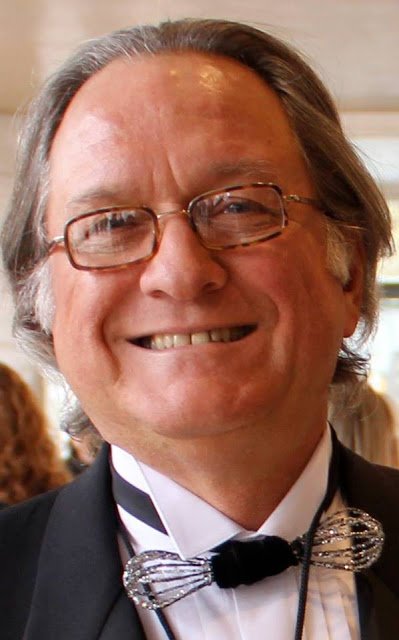
Gerry Dawes is the Producer and Program Host of Gerry Dawes & Friends, a weekly radio progam on Pawling Public Radio in Pawling, New York (streaming live and archived at www.pawlingpublicradio.org and at www.beatofthevalley.com.)
Dawes
was awarded Spain's prestigious Premio Nacional de Gastronomía
(National Gastronomy Award) in 2003. He writes and speaks frequently on
Spanish wine and gastronomy and leads gastronomy, wine and cultural
tours to Spain. He was a finalist for the 2001 James Beard Foundation's
Journalism Award for Best Magazine Writing on Wine, won The Cava
Institute's First Prize for Journalism for his article on cava in 2004,
was awarded the CineGourLand “Cinéfilos y Gourmets” (Cinephiles
& Gourmets) prize in 2009 in Getxo (Vizcaya) and received the
2009 Association of Food Journalists Second Prize for Best Food Feature
in a Magazine for his Food Arts article, a retrospective piece about
Catalan star chef, Ferran Adrià.
In December, 2009, Dawes was awarded the Food Arts Silver Spoon Award in a profile written by José Andrés.
".
. .That we were the first to introduce American readers to Ferran Adrià
in 1997 and have ever since continued to bring you a blow-by-blow
narrative of Spain's riveting ferment is chiefly due to our Spanish
correspondent, Gerry "Mr. Spain" Dawes, the messianic wine and food
journalist raised in Southern Illinois and possessor of a
self-accumulated doctorate in the Spanish table. Gerry once again
brings us up to the very minute. . ." - - Michael & Ariane
Batterberry, Editor-in-Chief/Publisher and Founding Editor/Publisher,
Food Arts, October 2009.
Pilot for a reality television series
on wine, gastronomy, culture and travel in Spain.
Experience
Spain With Gerry Dawes: Customized Culinary, Wine & Cultural
Trips to Spain & Travel Consulting on Spain
Gerry Dawes can be reached at gerrydawes@aol.com; Alternate e-mail (use only if your e-mail to AOL is rejected): gerrydawes@gmail.com
Gerry Dawes can be reached at gerrydawes@aol.com; Alternate e-mail (use only if your e-mail to AOL is rejected): gerrydawes@gmail.com










 Posts
Posts


