


* * * * *
Madrid,
Spain - American writer and well-known Flamencologist Donn Pohren died
in Las Rozas [a Madrid suburb] on November 5, 2007. His wife, Luisa
Maravillas provided a brief statement: "I regret to inform you all that
Donn passed away the 5th of November, during the night. Sometime in the
near future I intend to organize a gathering of friends and aficionados
in Las Rozas." - - Contributed by: WMC_News_Dept. 11/07/2007 08:35AM
Donn
Pohren was regarded as one of the leading experts in Flamenco in the
English language and wrote several influential books about the subject.
"Donn Pohren's book was the first thing I bought when arriving in
Andalucía, before I even knew how much my life would be involved with
and changed by flamenco. It helped me understand a lot that was to
come," says British expatriate Kate Edbrooke, who runs a recording
studio in Granada and has produced several Flamenco recordings by local
artists. Pohren wrote several books on Flamenco, including The Art of Flamenco, Lives and Legends of Flamenco and A Way of Life. He and his wife Luisa ran the Society for Spanish Studies, first out of Morón de la Frontera and later from Rozas outside of Madrid.

Que descansa en una juerga de “pura ma're” with a copita in front of him
and Diego del Gastor playing alongside him.
* * * * *
The Significance of Flamencologist Donn Pohren
and Diego del Gastor playing alongside him.
* * * * *
The Significance of Flamencologist Donn Pohren
and His Impact on Spanish Wine & Food
Copyright by Gerry Dawes 2017.
Copyright by Gerry Dawes 2017.
In
1972, Donn Pohren, a Minneapolis-born American who lived in Spain for
decades and was the world's greatest foreign expert on flamenco,
published his idiosyncratic underground classic, Adventures in Taste: The Wines and Folk Food of Spain. I
was living in southern Spain when I first encountered Pohrens's book
(privately printed in Spain) soon after it was published and it had a
profound effect on me. In the early years, I never traveled without it.
At first, I merely wanted to have some of the wine and food experiences
that he had described. Soon, I was having new experiences of my own,
experiences that would eventually lead to my becoming a widely
published writer on Spanish wine and food and a recognized authority in
the field.

Donn Pohren's Adventures in Taste: The Wines and Folk Food of Spain

Adventures in Taste, self-published by Pohren in 1972.
Pohren
wandered around the Iberian Peninsula in the 1960s exploring the nooks
and crannies of Spain's 4,000,000 acres of vineyard lands, the largest
acreage of any country in the world. He would pop into a village bar,
ask for a glass of the local vino, then casually ask who made the best
wine in town. On many occasions, Pohren would soon find himself being
offered several samples as one vintner after another vied to show this
foreigner that his wine was the best in the village. In his book,
Pohren described encounter after encounter with artisan winemakers who
were making excellent wines, many of which were unknown to the outside
world in those days.

Pohren's Map of the Wine Regions of North Central
(He did not cover Galicia!)
However, many of the wines Pohren described were wines whose charm soon faded if anyone tried to transport them beyond the boundaries of their home region. The winemaking techniques were often primitive. In many places the grapes were still crushed by treading, then fermented in open stone or cement vats, and aged in less than meticulously cared for barrels. The result was a flawed wine, which often tasted good with the local food, but was simply not stable enough to "travel" and was not the stuff to thrill sophisticated wine connoisseurs. Still, Don Pohren swore by the inherent quality of many of these Spanish wines and he was right.
His experiences have always been in the back of my mind and have served me well on numerous occasions, such as an encounter on my first trip to then unknown Priorat in 1988. Firmly in Pohren's shoes, I entered an old-fashioned, untidy cellar, where I was given a flawed wine to taste, but the underlying base wine was clearly very good. I judged the prospects for this region to be so promising that I came back wrote the first major article about the potential of Priorat. Alvaro Palacios and crew arrived the next year and began to make history. Recently, in Ribeira Sacra, I have run into some flawed wines (less so every year), just as a did in Priorat nearly twenty years earlier. Tasting "underneath" the sometimes inexperienced wine making techniques, I found enormous potential. I know Donn would have as well.
What Pohren tasted in those wines while researching his book forty years ago was the materia prima (raw material; grapes, soil and climate), the exceptional juice from grapes which often came from old vines, whose average yield of wine per acre of vines was less than half that allowed by the best appellations of Burgundy and Bordeaux. Even backward winemaking techniques couldn't keep the underlying quality from showing through; Pohren's Spanish wines were diamonds in the rough.
In the years since Donn Pohren wrote his book, exciting things have happened which promise an incredible future for both Spain's traditional wines and those of emerging wine regions. Spain's nearly four decades-old democracy has been the catalyst for a modern renaissance in fashion, art, literature, cinema, and gastronomy and it has ushered in a technological revolution in wine making as well. A key element in this was Spain's acceptance in 1992 as a member of the European Economic Community, the Common Market (now the European Union), which posed a special challenge to Spanish wine producers: compete on a quality level with the other wines of Europe or enter the over-saturated European wine "lake," and be lost in the crowd.
Fortunately, Spain opted for quality. Many forward looking people in the Spanish wine trade began to see Spain's entry into the European Union as both a new challenge and a new opportunity for their wines. These challenges and opportunities would require a reassessment of their positions in both the domestic and export markets, an upgrading of their winemaking technology, and consistent quality in their wines. Emile Peynaud, Alexis Lichine, and other consultants were brought in from France to advise winemakers in the Rioja, Ribera del Duero, and Rueda. The best enologists from Rioja, Penedes, and Navarra traveled to other regions share their expertise. Young Spanish winemakers trained in Bordeaux, Burgundy, and at the University of California - Davis. Miguel Torres Riera, the maestro of Catalan winemaking, and Jose Peñin, Spain's foremost wine authority, wrote important books about Spain's future in the wine world. New wine books, periodicals, and gourmet journals proliferated. Seminars, international wine symposiums, and wine competitions began to be conducted on a regular basis. And, importantly, wine clubs and societies were formed as an increasingly affluent and growing middle class in Spain began to appreciate the wines of its own country.
During the past several decades, investments in new wine making technology (especially in the area of fermentation control), better barrels (although accompanying by a lot of oak abuse!), experiments with new grape varietals, and the replanting of vineyards in some areas have begun to have a geometric effect on the overall quality level of Spanish wines. This progress in winemaking technique in Spain would not in itself account for such a dramatic effect–in fact, it is now often a detriment to authenticity--if it were not for the fact that Spain is a splendid natural vineyard endowed with many areas whose grape varietals have become perfectly acclimated over centuries to the micro-climate and soil in which they grow.
All
that was needed in many cases were winemakers dedicated to quality and
the technology to achieve it. The grapes produced in the best wine areas
of Spain–Rioja, Jerez, Cataluna, Ribera del Duero, Navarra, Rueda, and
in many up and coming regions–have shown they are capable of producing
wines which can stand alongside the best of France, Italy, and
California. The Tempranillo of the Rioja and Ribera del Duero, for
example, is coming to be recognized as a grape which can produce wines
to rival those made from Cabernet Sauvignon, Merlot, or Pinot Noir.
The established, classic wine regions of Spain like Rioja and Jerez, while refining the techniques and polishing the skills which made them famous, also created exciting new areas of interest with small estates like Remelluri and Contino in Rioja and the emergence of such high-quality wines as the almacenista sherries of Emilio Lustau and the late harvest Navarra moscatels from Julián Chivite, Ochoa and Viña Aliaga. Other areas whose wines were once underground legends in Spain, like those described by Donn Pohren, but whose viticulture was based on tiny artisan producers and ill-equipped cooperatives, began to realize their potential for making great wines.
Ribera del Duero, home of Vega Sicilia, Pesquera, Mauro, and Viña Pedrosa; Navarra, the producer of perhaps the world's finest rosés; Priorato (Cataluna) and Toro (Castilla-Leon), whose rich, concentrated, blockbuster red wines have drawn international attention; Rueda, a surprising white wine region; and Rías Baixas, whose Albariños now count the U.S. as its most important export market, are just the most visible of the emerging wine regions capable of making first rate wine from native grapes. There are many more to come.
The established, classic wine regions of Spain like Rioja and Jerez, while refining the techniques and polishing the skills which made them famous, also created exciting new areas of interest with small estates like Remelluri and Contino in Rioja and the emergence of such high-quality wines as the almacenista sherries of Emilio Lustau and the late harvest Navarra moscatels from Julián Chivite, Ochoa and Viña Aliaga. Other areas whose wines were once underground legends in Spain, like those described by Donn Pohren, but whose viticulture was based on tiny artisan producers and ill-equipped cooperatives, began to realize their potential for making great wines.
Ribera del Duero, home of Vega Sicilia, Pesquera, Mauro, and Viña Pedrosa; Navarra, the producer of perhaps the world's finest rosés; Priorato (Cataluna) and Toro (Castilla-Leon), whose rich, concentrated, blockbuster red wines have drawn international attention; Rueda, a surprising white wine region; and Rías Baixas, whose Albariños now count the U.S. as its most important export market, are just the most visible of the emerging wine regions capable of making first rate wine from native grapes. There are many more to come.
Previously
unknown regions–not many of which unknown to Donn Pohren–such as
Bierzo, Ribeiro, Ribeira Sacra, Valdeorras and Monterrei, along with
Jumilla and many others–have either jumped onto the world wine stage or
are just in the wings awaiting their call to stardom. Producers like
Miguel Torres in Penedes, Julián Chivite in Navarra, Carlos Falcó at
Dominio de Valdepusa and Codorniu's Raimat estate, just to name a few
examples, have achieved new heights with foreign varietals, though even
the best examples often fall short of the intriguing, delicious,
uniquely Spanish wines made from indigenous varieties–the kinds of wines
that Donn Pohren loved.
Embedded in me like a memory chip is the spirit of Donn Pohren and his Adventures in Taste. Following his example, I still ferret out little known producers and drive many kilometers out-of-the-way just to eat a dish in a little-known regional restaurant and, like Don, look beyond rusticity (or fancy trappings in some places) to find the core of something that is undeniably wonderful and unique to Spain. Only adventurers and indefatigable travelers can do what Donn Pohren did. I can attest to how indefatigable and adventurous he was from averaging six trips a year to Spain (eight per year in the past five years).
Without Don Pohren’s book (and to a great degree, James A. Michener’s Iberia) I may have never caught the spirit of the Spanish road that has sustained me now for more than 50 years. For that I owe Donn a now un-redeemable debt of gratitude and so do people such as Steve Metzler, who built a great and exemplary Spanish wine importing company, Classical Wines, based on his Pohren-inspired wine travels. Because of Donn, Metzler was inspired to find not only Pesquera and make Alejandro Fernandez's wine world famous, he even met his wife, Almudena. Neither of us saw Don Pohren as much as we would have liked to over the years, but fortunately several years ago in Madrid, I had an opportunity to let Donn know just how much his work meant to me and to the many who carry Spain in their hearts.
Embedded in me like a memory chip is the spirit of Donn Pohren and his Adventures in Taste. Following his example, I still ferret out little known producers and drive many kilometers out-of-the-way just to eat a dish in a little-known regional restaurant and, like Don, look beyond rusticity (or fancy trappings in some places) to find the core of something that is undeniably wonderful and unique to Spain. Only adventurers and indefatigable travelers can do what Donn Pohren did. I can attest to how indefatigable and adventurous he was from averaging six trips a year to Spain (eight per year in the past five years).
Without Don Pohren’s book (and to a great degree, James A. Michener’s Iberia) I may have never caught the spirit of the Spanish road that has sustained me now for more than 50 years. For that I owe Donn a now un-redeemable debt of gratitude and so do people such as Steve Metzler, who built a great and exemplary Spanish wine importing company, Classical Wines, based on his Pohren-inspired wine travels. Because of Donn, Metzler was inspired to find not only Pesquera and make Alejandro Fernandez's wine world famous, he even met his wife, Almudena. Neither of us saw Don Pohren as much as we would have liked to over the years, but fortunately several years ago in Madrid, I had an opportunity to let Donn know just how much his work meant to me and to the many who carry Spain in their hearts.

Pohren visited my late former wife Diana and I for lunch at our house in Mijas (Málaga) in 1974.
Donn autographed Adventures in Taste to us.
I
will miss the fact that Donn is no longer with us in body, but he will
never die in the spirits and hearts of those who followed his incredible
Quixotesque passion for Spain, flamenco, Spanish wine and traditional
food and all things Spanish. (Quixote may have been a dreamer,
but not a madman; those windmills he was tilting at were brought from
the low countries and represented the domination of the foreign House of
Austria, a powerful, inquisition wielding force that crushed those who
dissented like Don Quixote after his encounter with the windmill sails.)
Donn Pohren was a dreamer and he may have seemed like a madman when he lived his life like a candle in the wind during his awesome flamenco juerga years, but to me Donn Pohren was a profound inspiration and he always will be.
Vaya con Dios, Don Donn. I will raise a copita to you often in my journeys. I can see the angels lining up now for a juerga--a Spanish wine, food and flamenco party--the likes of which even heaven hasn’t seen.
Donn Pohren was a dreamer and he may have seemed like a madman when he lived his life like a candle in the wind during his awesome flamenco juerga years, but to me Donn Pohren was a profound inspiration and he always will be.
Vaya con Dios, Don Donn. I will raise a copita to you often in my journeys. I can see the angels lining up now for a juerga--a Spanish wine, food and flamenco party--the likes of which even heaven hasn’t seen.
The End
Gerry Dawes©2026
gerrydawes@aol.com
* * * * *
Comments are welcome and encouraged.
Text and photographs
copyright by Gerry Dawes©2021. Using photographs without crediting Gerry Dawes©2021 on
Facebook. Publication without my written permission is not authorized.
* * * * *
Shall deeds of Caesar or Napoleon ring
More true than Don Quixote's vapouring?
Hath winged Pegasus more nobly trod
Than Rocinante stumbling up to God?
More true than Don Quixote's vapouring?
Hath winged Pegasus more nobly trod
Than Rocinante stumbling up to God?

Poem
by Archer M. Huntington inscribed under the Don Quixote on his horse
Rocinante bas-relief sculpture by his wife, Anna Vaughn Hyatt
Huntington,
in the courtyard of the Hispanic
Society of America’s incredible museum at 613 W. 155th Street, New York
City.
_______________________________________________________________________________________________
In 2026, again ranked in the Top 50
Gastronomy Blogs and Websites for Gastronomists & Gastronomes in
2026 by Feedspot, now up to #7 . (Last Updated September 2026.)
"The Best Gastronomy blogs selected from thousands of Food blogs, Culture blogs and Food Science blogs in our index using search and social metrics. We’ve carefully selected these websites because they are actively working to educate, inspire, and empower their readers with frequent updates and high-quality information."
#7 Gerry Dawes's Spain: An Insider's Guide to Spanish Food, Wine, Culture and Travel
About Gerry Dawes
"The Best Gastronomy blogs selected from thousands of Food blogs, Culture blogs and Food Science blogs in our index using search and social metrics. We’ve carefully selected these websites because they are actively working to educate, inspire, and empower their readers with frequent updates and high-quality information."
#7 Gerry Dawes's Spain: An Insider's Guide to Spanish Food, Wine, Culture and Travel
About Gerry Dawes
My good friend Gerry Dawes, the unbridled Spanish food and wine
enthusiast cum expert whose writing, photography, and countless
crisscrossings of the peninsula have done the most to introduce
Americans—and especially American food professionals—to my country's
culinary life." -- Chef-restaurateur-humanitarian José Andrés, Nobel
Peace Prize Nominee and Oscar Presenter 2019
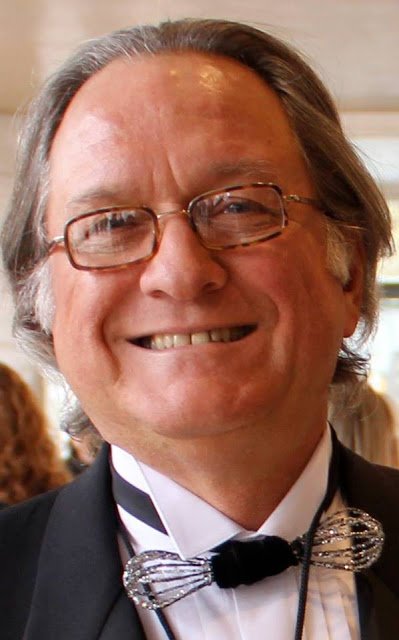
Gerry Dawes is the Producer and Program Host of Gerry Dawes & Friends, a weekly radio progam on Pawling Public Radio in Pawling, New York (streaming live and archived at www.pawlingpublicradio.org and at www.beatofthevalley.com.)
Dawes
was awarded Spain's prestigious Premio Nacional de Gastronomía
(National Gastronomy Award) in 2003. He writes and speaks frequently on
Spanish wine and gastronomy and leads gastronomy, wine and cultural
tours to Spain. He was a finalist for the 2001 James Beard Foundation's
Journalism Award for Best Magazine Writing on Wine, won The Cava
Institute's First Prize for Journalism for his article on cava in 2004,
was awarded the CineGourLand “Cinéfilos y Gourmets” (Cinephiles
& Gourmets) prize in 2009 in Getxo (Vizcaya) and received the
2009 Association of Food Journalists Second Prize for Best Food Feature
in a Magazine for his Food Arts article, a retrospective piece about
Catalan star chef, Ferran Adrià.
In December, 2009, Dawes was awarded the Food Arts Silver Spoon Award in a profile written by José Andrés.
".
. .That we were the first to introduce American readers to Ferran Adrià
in 1997 and have ever since continued to bring you a blow-by-blow
narrative of Spain's riveting ferment is chiefly due to our Spanish
correspondent, Gerry "Mr. Spain" Dawes, the messianic wine and food
journalist raised in Southern Illinois and possessor of a
self-accumulated doctorate in the Spanish table. Gerry once again
brings us up to the very minute. . ." - - Michael & Ariane
Batterberry, Editor-in-Chief/Publisher and Founding Editor/Publisher,
Food Arts, October 2009.
Pilot for a reality television series
on wine, gastronomy, culture and travel in Spain.
Experience
Spain With Gerry Dawes: Customized Culinary, Wine & Cultural
Trips to Spain & Travel Consulting on Spain
Gerry Dawes can be reached at gerrydawes@aol.com; Alternate e-mail (use only if your e-mail to AOL is rejected): gerrydawes@gmail.com
Gerry Dawes can be reached at gerrydawes@aol.com; Alternate e-mail (use only if your e-mail to AOL is rejected): gerrydawes@gmail.com


 Posts
Posts


