



* * * * *
"Here," cried Don Quixote, "here, brother Sancho Panza, we shall be able to dip our hands up to the elbows, in what is called adventure. . ." – Don Quixote, Miguel de Cervantes
"People talk of the glorious dreams of opium-smokers, the frenzied exhilaration that hashish can give, but I, who have studied both, assure you that neither can for a moment compare with the delirious joy of fifty or sixty Spaniards applauding a dancer in the upper room of a café in Seville!" – From Paris to Cádiz, Alexandre Dumas pere
"Of one thing the reader may be assured, – that dear will be to him, as is now to us, the remembrance of those wild and weary rides through tawny Spain. . ." – Gatherings From Spain, Richard Ford.
"The traveller in wines, finding these topics a little beyond his comprehension, remarked loudly that Sénécal was forgetting a lot of scandals." – Sentimental Education, Gustave Flaubert, whose work was greatly influenced by Cervantes's Don Quixote.
* * * * *
From A Traveller in Wines
(A work-in-progress.)
by Gerry Dawes
(A work-in-progress.)
by Gerry Dawes
“The 1947 Bosconia is the best red wine I have ever drunk.”)
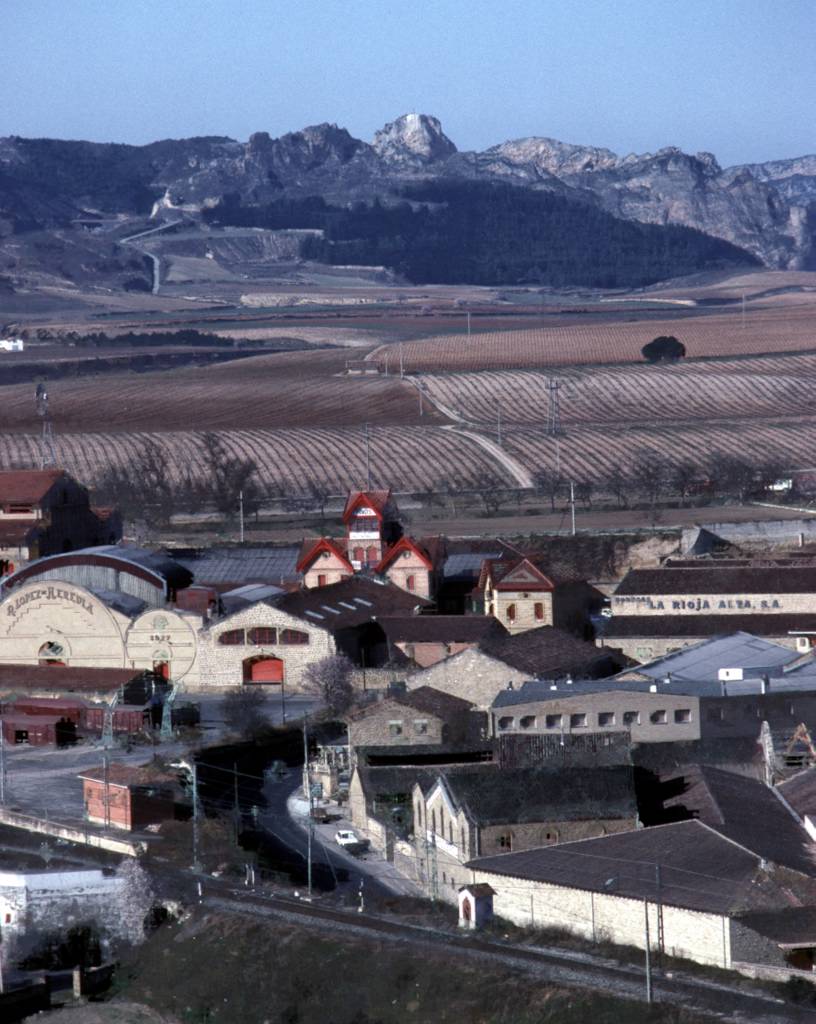
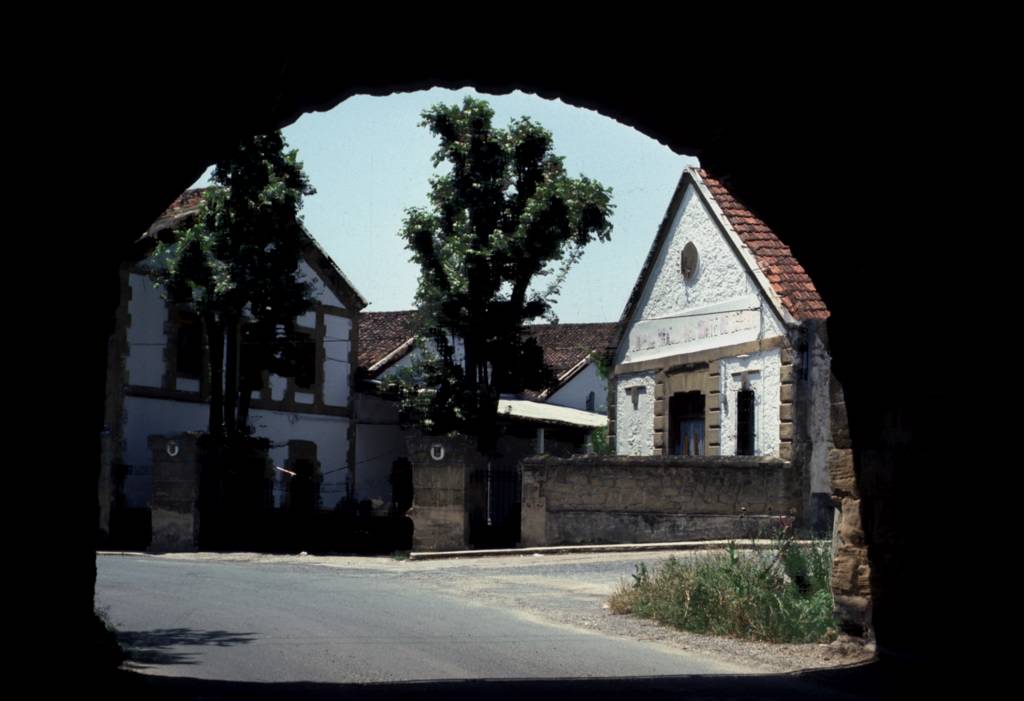
 La Rioja: The Wines of Yesterday, the 19th Century bodega of R. López de Heredia
 in Haro, the wine capital of La Rioja Alta.
Photo by Gerry Dawes, copyright 2008 / gerrydawes
During the 1970s when I lived in southern Spain, the northern wine district of Rioja came to represent an oasis to me during the hot, rainless summers of Andalucia, my spiritual home. By early July, the heat settles in over a large portion of Spain. The sun bears down relentlessly, especially in the Mediterranean portions of the country, driving millions of Spaniards to the beaches and cool mountain resorts. Coinciding with this time of year was our annual, much anticipated trek to Pamplona, where Hemingway's inveterate lost souls come from all over the world to see the sun rise on yet another Fiesta de San Fermín, which he immortalized in The Sun Also Rises. Since my former wife Diana and I counted ourselves among the admirers of the venerable Don Ernesto's fiesta, we too joined the migration each year.
We always set out at least a week before the commencement of festivities at Pamplona, so we could explore the Spanish countryside along the way. On one of these trips, we discovered the Rioja and it became our favorite place to pass some quiet time before surrendering to the wild, week-long festivities at Pamplona, where peace, tranquillity, and sleep are rare commodities and not even particularly desirable ones at that. We looked forward to the Rioja country, where we could taste fine wines in cool bodegas, sample superb country cuisine, and enjoy the scenery, history, and milder climate of this high mountain valley.
These were the days long before modern super highways were built across Spain and before most cars, including our magnificent Volkswagen sedan, Rocinante, had air-conditioning, so to avoid some of the scorching road heat of summertime Spain, in late afternoon we would leave Mijas, our pueblo on a mountain overlooking the Costa del Sol. We would drive into the wee hours of morning to escape the steady daytime flow of North African workers and their families, who once released on their month-long holiday from Northern European factories, maniacally pushed their lumbering, overloaded cars and vans down through Spain, hell-bent on reaching the beaches and homeward-bound ferries of the southern coast. Apart from diminishing our chances of being maimed by a Peugeot or a Mercedes van, the night offered some relief from being stuck behind the long queues of laboring Spanish trucks belching noxious black exhaust.
After stopping for a brief sleep at a Valdepeñas pensión, we would drive on through Madrid in the early morning hours to reach the ancient Castilian capital of Burgos–the city of El Cid–by midday. There we headed East towards the Rioja. In less than an hour, as the road climbed, the vegetation became increasingly verdant, the air fresher and cooler. The greener landscape, now showing some vineyards, soothes the soul as well as the body as the heavy layers of oppressive road heat peel away. The promise of a thundershower bringing the cool, night breezes of the Rioja would soon put the dust of the southern summer behind us.
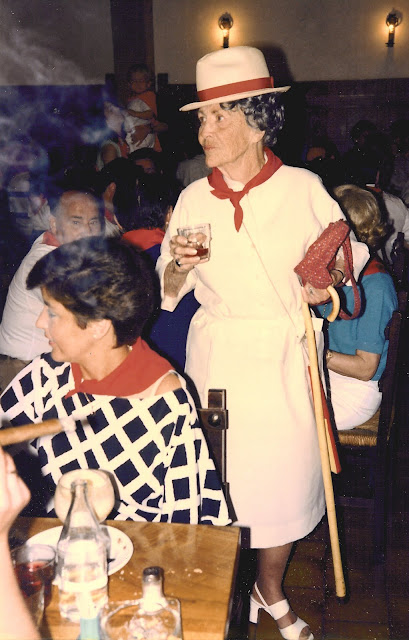
We had arranged for two old friends, Alice Hall, the dowager empress of American bullfight aficionados of Milledgeville, Georgia and Carolyn Moyer of Davis, California to join us in a tour of the Rioja on our way to Pamplona. On this occasion, in 1973, we had written the firm of R. López de Heredia at Haro, the wine capital of La Rioja Alta, letting them know that we again wished to visit their bodega. The reply had come in the charming, graceful Spanish of a more genteel age. It went something like, "...We cannot tell you what joy the news of your imminent visit has produced in our bodega. It would be our great pleasure to receive you."
By 10:00 on the morning of our visit, after a breakfast of rolls and café con leche, the four of us were down in the bodegas of R. López de Heredia for our "second breakfast" - - a wine tasting. Here, in surroundings as incredible as any I have known in the world of wine, Sr. Anastasio Gútierrez Angulo, the firm's export manager, let us taste some of his twenty-year old reservas–wines made in the style of a different era–wines of yesterday.
We always set out at least a week before the commencement of festivities at Pamplona, so we could explore the Spanish countryside along the way. On one of these trips, we discovered the Rioja and it became our favorite place to pass some quiet time before surrendering to the wild, week-long festivities at Pamplona, where peace, tranquillity, and sleep are rare commodities and not even particularly desirable ones at that. We looked forward to the Rioja country, where we could taste fine wines in cool bodegas, sample superb country cuisine, and enjoy the scenery, history, and milder climate of this high mountain valley.
These were the days long before modern super highways were built across Spain and before most cars, including our magnificent Volkswagen sedan, Rocinante, had air-conditioning, so to avoid some of the scorching road heat of summertime Spain, in late afternoon we would leave Mijas, our pueblo on a mountain overlooking the Costa del Sol. We would drive into the wee hours of morning to escape the steady daytime flow of North African workers and their families, who once released on their month-long holiday from Northern European factories, maniacally pushed their lumbering, overloaded cars and vans down through Spain, hell-bent on reaching the beaches and homeward-bound ferries of the southern coast. Apart from diminishing our chances of being maimed by a Peugeot or a Mercedes van, the night offered some relief from being stuck behind the long queues of laboring Spanish trucks belching noxious black exhaust.
After stopping for a brief sleep at a Valdepeñas pensión, we would drive on through Madrid in the early morning hours to reach the ancient Castilian capital of Burgos–the city of El Cid–by midday. There we headed East towards the Rioja. In less than an hour, as the road climbed, the vegetation became increasingly verdant, the air fresher and cooler. The greener landscape, now showing some vineyards, soothes the soul as well as the body as the heavy layers of oppressive road heat peel away. The promise of a thundershower bringing the cool, night breezes of the Rioja would soon put the dust of the southern summer behind us.
We had arranged for two old friends, Alice Hall, the dowager empress of American bullfight aficionados of Milledgeville, Georgia and Carolyn Moyer of Davis, California to join us in a tour of the Rioja on our way to Pamplona. On this occasion, in 1973, we had written the firm of R. López de Heredia at Haro, the wine capital of La Rioja Alta, letting them know that we again wished to visit their bodega. The reply had come in the charming, graceful Spanish of a more genteel age. It went something like, "...We cannot tell you what joy the news of your imminent visit has produced in our bodega. It would be our great pleasure to receive you."
By 10:00 on the morning of our visit, after a breakfast of rolls and café con leche, the four of us were down in the bodegas of R. López de Heredia for our "second breakfast" - - a wine tasting. Here, in surroundings as incredible as any I have known in the world of wine, Sr. Anastasio Gútierrez Angulo, the firm's export manager, let us taste some of his twenty-year old reservas–wines made in the style of a different era–wines of yesterday.
 The 19th Century bodega of R. López de Heredia
in Haro, the wine capital of La Rioja Alta.
Photo by Gerry Dawes, copyright 2008 / gerrydawes
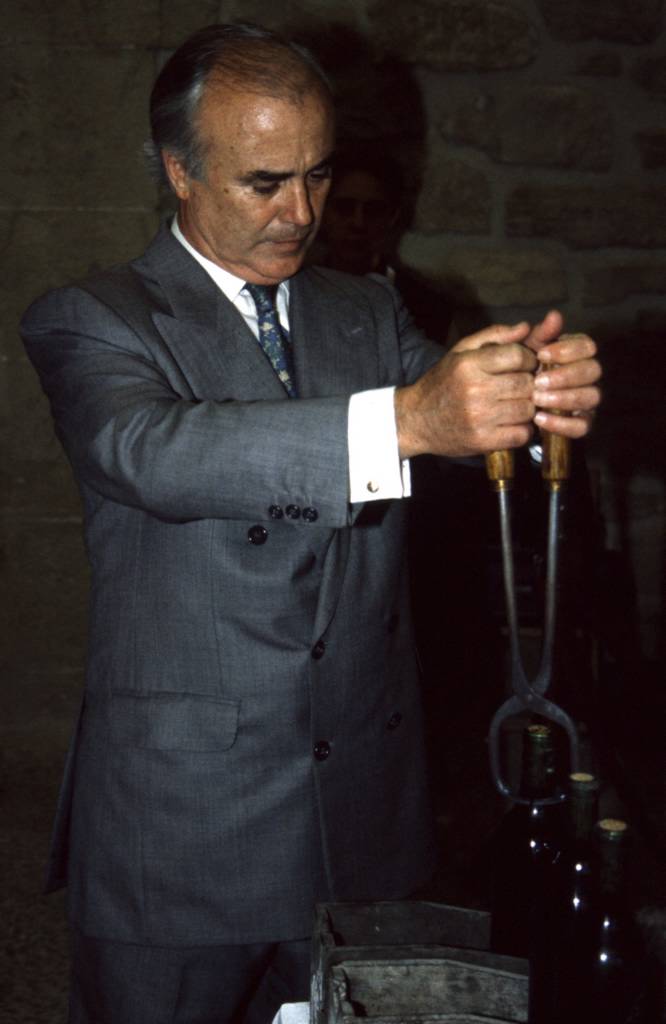
The bodega had all the trappings of a nineteenth-century operation patterned on the chais of Bordeaux (and in 2008, still does). The winery workers even wear blue coveralls as many of the staff at French chateaux still do. In time-honored fashion, barrels are still crafted in the winery's own cooperage. We saw workers cracking eggs from the firm's chicken farm to get fresh egg whites for fining the wines. Other employees laboriously filled bottles with reserva wines by hand and corked them with a hand-operated corking device.
 The cooperage at the 19th Century bodega (f. 1877) of R. López de Heredia.
 Photo by Gerry Dawes, copyright 2008 / gerrydawes
Anastasio led us through a man-made maze of cool, barrel-filled limestone caves to the deepest part of the bodega - the room known at R. Lopez de Heredia as the cementerio - the cemetery. The cementerio is the resting place of the old vintage reservas dating from the founding of the firm in 1877. This cellar gets its name from the storage bins lining its walls, which very much resemble the burial niches in the Roman-plan cemeteries of Spain. Bin after bin is filled with dusty bottles from the greatest vintages of the past. At one end of the room is a large round wooden table whose centerpiece is a huge, gnarled, cobweb-covered old grapevine surrounded by bottles of wine.

Barrel being rolled to another location at the 19th Century bodega (f. 1877) of R. López de Heredia.
Our host, Anastasio, had selected two gran reservas from the fine 1954 vintage for us to taste. The first was Viña Tondonia Gran Reserva, a lovely, elegant Bordeaux-style wine of breed and complexity. The second wine was a more intense, dark ruby wine in a burgundy bottle, Viña Bosconia Gran Reserva, which was showing signs of evolving into a big, warm, rich wine - aterciopelado (velvety), as the Spaniards call it. The Viña Bosconia had a particularly beautiful nose, one which reminded me of a wonderful phrase that Michael Wigram, a wealthy Englishman who lives in Madrid and is and one of the world’s foremost bullfight aficionados, had used to describe another 1954 reserva at a luncheon during the Feria de Sevilla in 1973, "Gets a nice bloom on it after nineteen years, don't you think?"
These wines did indeed have "a nice bloom" on them. They were wines to be enjoyed, not merely tasted and spit on the floor of the bodega, so we sipped them while Anastasio gave us the most charming description of Rioja winemaking I have ever heard. First he described the normal processes of vinification, barrel aging, bottling, and so forth for the bodega's "bread and butter" - the table wines made to sell in the fourth, fifth, and sixth years after the vintage. Then, when he came to the subject of gran reservas, the classic Rioja reservas from exceptional vintages, he began to speak of the wine as a living thing. In this place called the cemetery, he brought his wines to life. Speaking softly, but with passion in his beautifully enunciated Castilian Spanish, he described the wine's "education."
"You see," he began, "in the beginning, a gran reserva is like a young man. Here in the bodega, he gets a proper `education,' then is bottled and becomes a young caballero. At about 25 years he reaches the peak of his youth, then he mellows out to about the age of, say, 35-40, when he gradually begins to tail off. However, some of these fellows do well even after fifty. A few years ago the owners allowed three bottles of the 1914s to be opened for a celebration. The second bottle was in fine condition."
It would be a day to remember - Anastasio's wonderful analogy and his beautiful wines were just the beginning. We were four good friends glowing with wine and in the mood for fiesta. At Merendero Toni in San Vicente de la Sonsierra, we lingered over one of those wonderful Spanish lunches: a simple salad of garden-ripened tomatoes, lettuce, and onions at the peak of their flavor, succulent baby lamb chops al sarmiento (grilled over grapevine prunings), crisp fried potatoes, and lots of vino tinto de la Rioja.
After lunch, with a tape playing jotas, the folk songs of Navarra, La Rioja and Aragón, we took the breathtaking drive up to the Balcon de la Rioja for splendid views of the entire Rioja valley. Diana and Alice, euphoric from the wine, the food, and the splendor of the day, danced the jota on the mountain as a Spanish family stared incredulously at two foreigners–Alice a septuagenarian at that–performing the lively regional dance of northern Spain in their own private fiesta.
Over the years, I drank many bottles of López de Heredia’s wines including the 1942 Viña Bosconia and 1947 Viña Bosconia, which at the time I thought were two of the greatest red wine I had ever drunk. I also visited López de Heredia several times and became friends with Anastasio Gútierrez and Pepe Osses, who succeeded him.
One day Anastasio and I were touring the bodega. We had just come out of the firm’s picturesque cooper’s shop, which has always reminded me of Diego Velasquez’s Vulcan’s Forge in the Prado. Suddenly, there in front of us was an old man in a wheelchair. He wore a black beret, wore a sweater and had a terribly swollen, bare foot that looked like a encrusted stump.
“¿Ya sabes quien es (you know who this is)?” Anastasio asked me. It was Don Rafael López de Heredia–the son and namesake of the bodega’s founder of the bodega–who, from the looks of his foot, was in the twilight of his life. He still made the rounds of the bodega every day though, coming down from his office in the winery‘s marvelous red-trimmed, landmark arte nouveau tower via the elevator that had been built especially for him.
These wines did indeed have "a nice bloom" on them. They were wines to be enjoyed, not merely tasted and spit on the floor of the bodega, so we sipped them while Anastasio gave us the most charming description of Rioja winemaking I have ever heard. First he described the normal processes of vinification, barrel aging, bottling, and so forth for the bodega's "bread and butter" - the table wines made to sell in the fourth, fifth, and sixth years after the vintage. Then, when he came to the subject of gran reservas, the classic Rioja reservas from exceptional vintages, he began to speak of the wine as a living thing. In this place called the cemetery, he brought his wines to life. Speaking softly, but with passion in his beautifully enunciated Castilian Spanish, he described the wine's "education."
"You see," he began, "in the beginning, a gran reserva is like a young man. Here in the bodega, he gets a proper `education,' then is bottled and becomes a young caballero. At about 25 years he reaches the peak of his youth, then he mellows out to about the age of, say, 35-40, when he gradually begins to tail off. However, some of these fellows do well even after fifty. A few years ago the owners allowed three bottles of the 1914s to be opened for a celebration. The second bottle was in fine condition."
It would be a day to remember - Anastasio's wonderful analogy and his beautiful wines were just the beginning. We were four good friends glowing with wine and in the mood for fiesta. At Merendero Toni in San Vicente de la Sonsierra, we lingered over one of those wonderful Spanish lunches: a simple salad of garden-ripened tomatoes, lettuce, and onions at the peak of their flavor, succulent baby lamb chops al sarmiento (grilled over grapevine prunings), crisp fried potatoes, and lots of vino tinto de la Rioja.
After lunch, with a tape playing jotas, the folk songs of Navarra, La Rioja and Aragón, we took the breathtaking drive up to the Balcon de la Rioja for splendid views of the entire Rioja valley. Diana and Alice, euphoric from the wine, the food, and the splendor of the day, danced the jota on the mountain as a Spanish family stared incredulously at two foreigners–Alice a septuagenarian at that–performing the lively regional dance of northern Spain in their own private fiesta.
Over the years, I drank many bottles of López de Heredia’s wines including the 1942 Viña Bosconia and 1947 Viña Bosconia, which at the time I thought were two of the greatest red wine I had ever drunk. I also visited López de Heredia several times and became friends with Anastasio Gútierrez and Pepe Osses, who succeeded him.
One day Anastasio and I were touring the bodega. We had just come out of the firm’s picturesque cooper’s shop, which has always reminded me of Diego Velasquez’s Vulcan’s Forge in the Prado. Suddenly, there in front of us was an old man in a wheelchair. He wore a black beret, wore a sweater and had a terribly swollen, bare foot that looked like a encrusted stump.
“¿Ya sabes quien es (you know who this is)?” Anastasio asked me. It was Don Rafael López de Heredia–the son and namesake of the bodega’s founder of the bodega–who, from the looks of his foot, was in the twilight of his life. He still made the rounds of the bodega every day though, coming down from his office in the winery‘s marvelous red-trimmed, landmark arte nouveau tower via the elevator that had been built especially for him.

Rafael López de Heredia, founder of the bodega.
Photo by Gerry Dawes, copyright 2008 / gerrydawes
Anastasio introduced me to him and we shook hands. I was excited to finally meet a family member after half a dozen visits to the winery. I asked him if he minded if I photographed him. He didn’t and I took several color slides. When I put the camera aside, he asked me, “Well, if you took my photograph, you surely won’t mind if I take yours.” He pulled out a camera that he always carried with him and took my picture. I was astounded that this bright, but dying, old man loved photography as much as I did.
Before the encounter with Don Rafael, Anastasio and I had been tasting several of López de Heredia’s wonderful wines in the cementerio and, as I described on my first visit, they were not wines to spit on the floor, nor did I. Perhaps that led to my confusing the two cameras that I was carrying. Don Rafael left and, since the roll in one camera was finished, I rewound it. As I was talking to Anastasio, I started to reload the camera. To my horror, I opened the camera in which the roll was not finished, the one with the photographs of Don Rafael on it. I soon as I saw what I had done, I snapped the back shut and rewound the film. When I returned to New York, I had the film developed. There was the image of Don Rafael, clear and bright, but with rays from the light flashing on the film all around. They were strange pictures, ruined for publication, but I kept them, perhaps to use if I ever needed to describe him in detail. Later I would discover that those photographs were the last ones ever taken of Don Rafael. Shortly after my visit, he died.
Years later, I visited Anastasio at the bodega again and took several photographs of him. It was clear that he was near retirement. In the late 1980s, I was visiting López de Heredia in the company of Pepe Osses and I asked him about Anastasio. Pepe told me that Anastasio had retired and had been ill, but he had told him I was coming and that I wanted to see him. I telephoned Anastasio from the bodega to let him know that I had arrived and he said he would come down. “I have something for you.”
Pepe and I were tasting a fine old vintage of Viña Tondonia when Anastasio arrived. We embraced and I felt how frail he was. I had know him almost fifteen years by then. He had a folder with him and he pulled a photograph from it. “I thought you might want this,” he said, and handed me a photograph of myself, taken by Don Rafael López de Heredia during that chance encounter several years earlier. Tears came to my eyes. I was overwhelmed. I hugged Anastasio again and thanked him, then raised my glass of Tondonia and toasted him, “Mil gracias, mí viejo amigo, mil gracias.” It was a fabulous and thoughtful present from an old friend.
It was the last time I ever saw Anastasio. He died shortly after my visit, but I still visit , because it is one of the world’s most wonderful, picturesque, and traditional bodegas. Now I stop in to see my old friend, Pepe Osses; the current director, Pedro López de Heredia; Pedro’s thirty-something daughters Maria Jésus and Mercedes; and son-in-law, Carlos, all of whom help carry on the tradition.

María Jésus López de Heredia in El Cementerio.
Photo by Gerry Dawes, copyright 2008 / gerrydawes
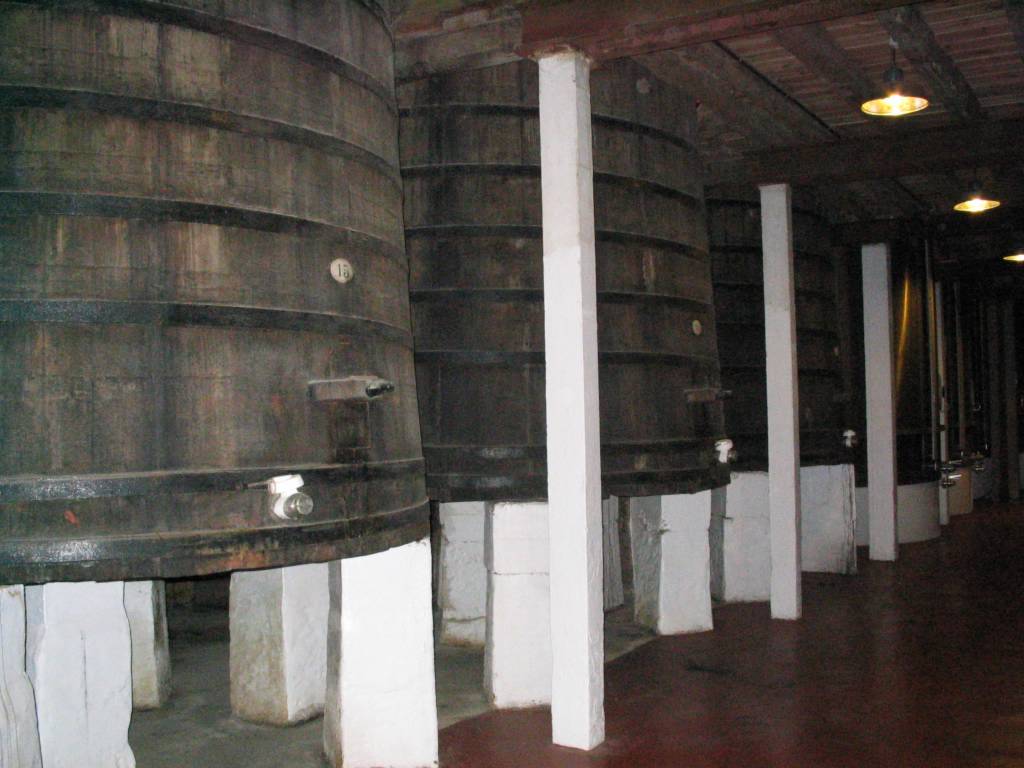
During a visit in 2002, just a year short of the 20th anniversary of my first visit to López de Heredia, I was invited to dinner at the winery with some thirty other Spanish and foreign wine writers who were attending a three-day tasting session of Rioja wines called Los Grandes de la Rioja. Formal dining tables were set up inside one of the most spectacular naves of the bodega. We were surrounded by huge 50,000-liter wooden vats that have been used to ferment and store wines here for more than a century. The subdued lighting, from old style, low-wattage and flickering candles created a fantastic ambience. I was seated next to María Jésus López de Heredia, with whom I had become friends in recent years. As we were chatting during dinner, I told her about my experiences with the 1947 Viña Bosconia in the mid-1870s and told her that I still believed after more than 30 years of drinking Spanish wines and 20 years selling the best wines of France, Italia and the United States to the top restaurants in New York, the 1947 Bosconia was still the best red wine I had ever drunk.
“Have you tasted it recently?” I asked.
“No, but, if you think it is that good, there we are going to taste it now. Just don’t tell anyone else,” she answered.
Maria Jésus called a bodega worker over and had a brief discreet discussion. The man left the room and ten minutes later returned with two bottles from the cementerio, one of which he opened on an empty station table between two of the wine vats, the other was a backup bottle in case the first bottle was flawed. It was the 1947 Bosconia, now 57 years old. It had been one of Anastasio’s young lads of 27 when I last drank it in 1974. Now, even with another 29 years tacked on, the wine was still magnificent. I was gratified to find that it every bit as stupendous as had I imagined it to be all these years. It was easily a 100-point wine, even coming on the heels of the great 1964 Viña Tondonia and 1964 Viña Bosconia–itself a 98-point maravilla– that we had drunk earlier at the dinner. No fading rose, the 1947 Bosconia still had a deep black ruby color and fabulous deep, ripe nose. The great acidity was in perfect balance with delicious fruit and still firm tannins, which needed food to soften them up.
“Have you tasted it recently?” I asked.
“No, but, if you think it is that good, there we are going to taste it now. Just don’t tell anyone else,” she answered.
Maria Jésus called a bodega worker over and had a brief discreet discussion. The man left the room and ten minutes later returned with two bottles from the cementerio, one of which he opened on an empty station table between two of the wine vats, the other was a backup bottle in case the first bottle was flawed. It was the 1947 Bosconia, now 57 years old. It had been one of Anastasio’s young lads of 27 when I last drank it in 1974. Now, even with another 29 years tacked on, the wine was still magnificent. I was gratified to find that it every bit as stupendous as had I imagined it to be all these years. It was easily a 100-point wine, even coming on the heels of the great 1964 Viña Tondonia and 1964 Viña Bosconia–itself a 98-point maravilla– that we had drunk earlier at the dinner. No fading rose, the 1947 Bosconia still had a deep black ruby color and fabulous deep, ripe nose. The great acidity was in perfect balance with delicious fruit and still firm tannins, which needed food to soften them up.

R. López de Heredia, Barro de la Estacion, Haro (La Rioja).
Photo by Gerry Dawes, copyright 2008 / gerrydawes
Photo by Gerry Dawes, copyright 2008 / gerrydawes
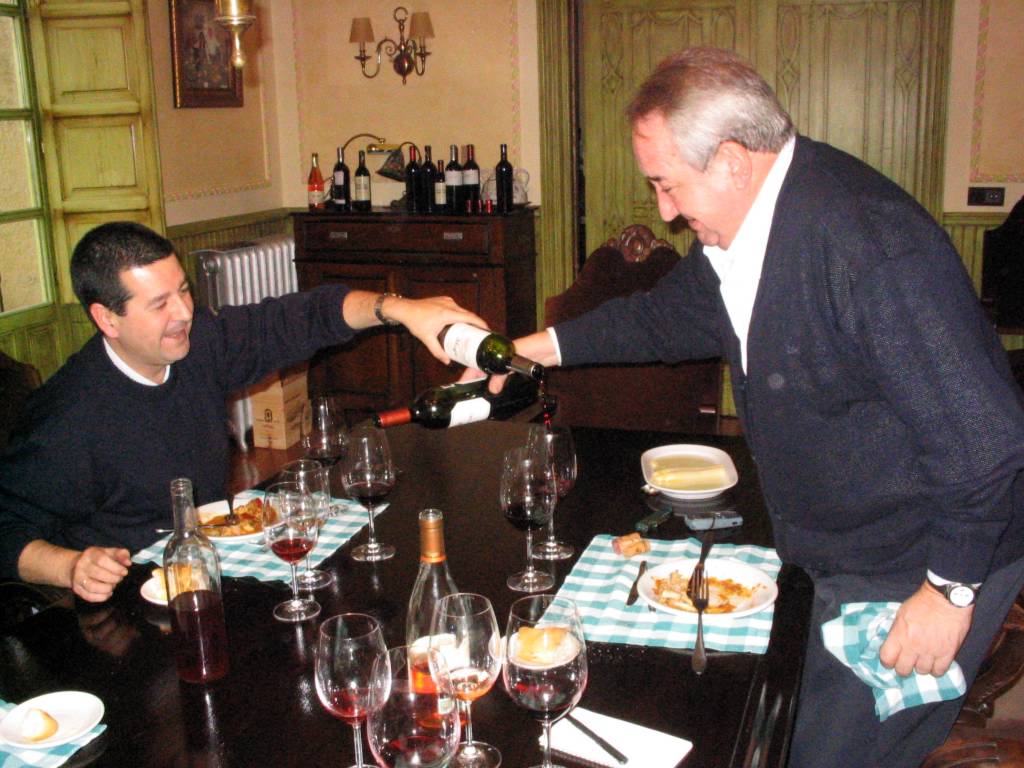
Even though Maria Jésus had sworn us the secrecy, the wine caused quite a stir at our table. We attracted the attention of her sister, Mercedes, who upon quizzing Maria Jésus, demanded that the other bottle of 1947 Bosconia be opened for her table. I called Paul White, an American wine writer who lives in New Zealand, aside and shared some of my glass with him. He, too, was astounded by the quality of this nearly 60-year old perfectly preserved museum piece that has stood the test of time and represents the pinnacle of quality that La Rioja is capable of obtaining–wines that do indeed still have a beautiful “bloom” to them even decades after the wines were made.
During the early part of the millenium, denigrating the traditional wine houses of La Rioja became a significant national pastime among Spanish wine writers, many of whom would have us believe that truly great wines must be dark as ink, overripe, above 14% alcohol and infused with enough new oak flavor to evoke visions of a sawmill. The time-honored house of R. López de Heredia, who has been making fine wines for more than 125 years came under attack as colorless, flavorless wines made by antiquated methods. I feared that they would have to dramatically change their philosophy and the style of their wines to survive. It has been heartening in the past few years to see young sommeliers from the United States and other countries embrace these wines for what they are, the unique, finely crafted, wonderfully drinkable wines of another era. I call them the wines of yesterday.
During the early part of the millenium, denigrating the traditional wine houses of La Rioja became a significant national pastime among Spanish wine writers, many of whom would have us believe that truly great wines must be dark as ink, overripe, above 14% alcohol and infused with enough new oak flavor to evoke visions of a sawmill. The time-honored house of R. López de Heredia, who has been making fine wines for more than 125 years came under attack as colorless, flavorless wines made by antiquated methods. I feared that they would have to dramatically change their philosophy and the style of their wines to survive. It has been heartening in the past few years to see young sommeliers from the United States and other countries embrace these wines for what they are, the unique, finely crafted, wonderfully drinkable wines of another era. I call them the wines of yesterday.
* * * * *
Shall deeds of Caesar or Napoleon ring
More true than Don Quixote's vapouring?
Hath winged Pegasus more nobly trod
Than Rocinante stumbling up to God?
More true than Don Quixote's vapouring?
Hath winged Pegasus more nobly trod
Than Rocinante stumbling up to God?

Poem
by Archer M. Huntington inscribed under the Don Quixote on his horse
Rocinante bas-relief sculpture by his wife, Anna Vaughn Hyatt
Huntington,
in the courtyard of the Hispanic
Society of America’s incredible museum at 613 W. 155th Street, New York
City.
________________________________________________________________________

About Gerry Dawes
My good friend Gerry Dawes, the unbridled Spanish food and wine
enthusiast cum expert whose writing, photography, and countless
crisscrossings of the peninsula have done the most to introduce
Americans—and especially American food professionals—to my country's
culinary life." -- Chef-restaurateur-humanitarian José Andrés, Nobel
Peace Prize Nominee and Oscar Presenter 2019
Gerry Dawes's Spain selected as
#38/50 Top Gastronomy Blogs

Gerry Dawes is the Producer and Program Host of Gerry Dawes & Friends, a weekly radio progam on Pawling Public Radio in Pawling, New York (streaming live and archived at www.pawlingpublicradio.org and at www.beatofthevalley.com.)
Dawes
was awarded Spain's prestigious Premio Nacional de Gastronomía
(National Gastronomy Award) in 2003. He writes and speaks frequently on
Spanish wine and gastronomy and leads gastronomy, wine and cultural
tours to Spain. He was a finalist for the 2001 James Beard Foundation's
Journalism Award for Best Magazine Writing on Wine, won The Cava
Institute's First Prize for Journalism for his article on cava in 2004,
was awarded the CineGourLand “Cinéfilos y Gourmets” (Cinephiles
& Gourmets) prize in 2009 in Getxo (Vizcaya) and received the
2009 Association of Food Journalists Second Prize for Best Food Feature
in a Magazine for his Food Arts article, a retrospective piece about
Catalan star chef, Ferran Adrià.
Photo by Hernan Ronnie Rodriguez, JBF Awards 2014.
Photo by Hernan Ronnie Rodriguez, JBF Awards 2014.
In December, 2009, Dawes was awarded the Food Arts Silver Spoon Award in a profile written by José Andrés.
".
. .That we were the first to introduce American readers to Ferran Adrià
in 1997 and have ever since continued to bring you a blow-by-blow
narrative of Spain's riveting ferment is chiefly due to our Spanish
correspondent, Gerry "Mr. Spain" Dawes, the messianic wine and food
journalist raised in Southern Illinois and possessor of a
self-accumulated doctorate in the Spanish table. Gerry once again
brings us up to the very minute. . ." - - Michael & Ariane
Batterberry, Editor-in-Chief/Publisher and Founding Editor/Publisher,
Food Arts, October 2009.
Pilot for a reality television series
on wine, gastronomy, culture and travel in Spain.
Experience
Spain With Gerry Dawes: Customized Culinary, Wine & Cultural
Trips to Spain & Travel Consulting on Spain
Gerry Dawes can be reached at gerrydawes@aol.com; Alternate e-mail (use only if your e-mail to AOL is rejected): gerrydawes@gmail.com
Gerry Dawes can be reached at gerrydawes@aol.com; Alternate e-mail (use only if your e-mail to AOL is rejected): gerrydawes@gmail.com







 Posts
Posts


