Share This Gerry Dawes's Spain Post


Instagram

In 2026, ranked #7 in the Top 30 Gastronomy Blogs (and Websites for Gastronomists & Gastronomes by Feedspot. (Ranked in the top 50 since 2019). "The Best Gastronomy blogs selected from thousands of Food blogs, Culture blogs and Food Science. We’ve carefully selected these websites because they are actively working to educate, inspire, and empower their readers with . . . high-quality information.

More than 3,640,000 views since inception, 123,000+ views in August 2026.


Ranked #7. Gerry Dawes's Spain: An Insider's Guide to Spanish Food, Wine, Culture and Travel gerrydawesspain.com

"My good friend Gerry Dawes, the unbridled Spanish food and wine enthusiast cum expert whose writing, photography, and countless crisscrossings of the peninsula have done the most to introduce Americans—and especially American food professionals—to my country's culinary life. . .” - - Chef-restaurateur-humanitarian José Andrés, Nobel Peace Prize Nominee and Oscar Presenter 2019; Chef-partner of Mercado Little Spain at Hudson Yards, New York 2019

Showing posts with label Jesús Madrazo. Show all posts

4/15/2021

A Wonderful Lunch with Emiliano Garcia Domene at Casa Montaña in Valencia

 
  * * * * * 
 
Emiliano Garcia Domene and Gerry Dawes having lunch in the back room at Casa Montaña
 
I had a wonderful visit in April 2019, pre-COVID, with my old friend Emiliano García, owner of Casa Montaña (founded in 1835). He was in the middle of an election campaign, in which he was running for the second highest post, after Mayor, in Valencia.  The Mayoral candidate he was running with won and so did Emiliano, who is now in charge of tourism for the city of Valencia, where tourism is a very important facet of the economy.   Even in the middle of a political campaign, Emiliano made time for me and we had an exceptional lunch at Casa Montaña in the former fishermens' barrio of Cabanyal-Canyameral.
 
 
Emiliano García Domene and his son and GM of Casa Montaña Alejandro García. 
 
Mural on an outside wall at Casa Montaña.  
 
Tomatoes with Spanish Extra Virgen Olive Oil and sea salt.
 
Sardinas en esccabeche.
 
Puerros (leeks).
 
Patatas bravas con alioli.
 
Typical Valencian Quaresma dish with salt cod and chick peas.
 
 
Dessert made with Valencia oranges, macarapone and a galleta cookie.
 
Selección Jesús Madrazo Rioja red wine from our mutual friend Jesús 'Chus' De Madrazo Mateo, one of Spain's greatest winemakers.

 
* * * * *
  Shall deeds of Caesar or Napoleon ring
More true than Don Quixote's vapouring?
Hath winged Pegasus more nobly trod
Than Rocinante stumbling up to God?
 
Poem by Archer M. Huntington inscribed under the Don Quixote on his horse Rocinante bas-relief sculpture by his wife, Anna Vaughn Hyatt Huntington,
in the courtyard of the Hispanic Society of America’s incredible museum at 613 W. 155th Street, New York City.
  ______________________________________________________________________
 Gastronomy Blogs

In 2019, again ranked in the Top 50 Gastronomy Blogs and Websites for Gastronomists & Gastronomes in 2019 by Feedspot. (Last Updated Oct 23, 2019) 

"The Best Gastronomy blogs selected from thousands of Food blogs, Culture blogs and Food Science blogs in our index using search and social metrics. We’ve carefully selected these websites because they are actively working to educate, inspire, and empower their readers with frequent updates and high-quality information."  

36. Gerry Dawes's Spain: An Insider's Guide to Spanish Food, Wine, Culture and Travel


About Gerry Dawes

My good friend Gerry Dawes, the unbridled Spanish food and wine enthusiast cum expert whose writing, photography, and countless crisscrossings of the peninsula have done the most to introduce Americans—and especially American food professionals—to my country's culinary life." -- Chef-restaurateur-humanitarian José Andrés, Nobel Peace Prize Nominee and Oscar Presenter 2019


Gerry Dawes is the Producer and Program Host of Gerry Dawes & Friends, a weekly radio progam on Pawling Public Radio in Pawling, New York (streaming live and archived at www.pawlingpublicradio.org and at www.beatofthevalley.com.)

Dawes was awarded Spain's prestigious Premio Nacional de Gastronomía (National Gastronomy Award) in 2003. He writes and speaks frequently on Spanish wine and gastronomy and leads gastronomy, wine and cultural tours to Spain. He was a finalist for the 2001 James Beard Foundation's Journalism Award for Best Magazine Writing on Wine, won The Cava Institute's First Prize for Journalism for his article on cava in 2004, was awarded the CineGourLand “Cinéfilos y Gourmets” (Cinephiles & Gourmets) prize in 2009 in Getxo (Vizcaya) and received the 2009 Association of Food Journalists Second Prize for Best Food Feature in a Magazine for his Food Arts article, a retrospective piece about Catalan star chef, Ferran Adrià. 


". . .That we were the first to introduce American readers to Ferran Adrià in 1997 and have ever since continued to bring you a blow-by-blow narrative of Spain's riveting ferment is chiefly due to our Spanish correspondent, Gerry "Mr. Spain" Dawes, the messianic wine and food journalist raised in Southern Illinois and possessor of a self-accumulated doctorate in the Spanish table. Gerry once again brings us up to the very minute. . ." - - Michael & Ariane Batterberry, Editor-in-Chief/Publisher and Founding Editor/Publisher, Food Arts, October 2009. 
 
Pilot for a reality television series on wine, gastronomy, culture and travel in Spain.
 

11/08/2012

Roda & Contino: Mano a Mano (A 2006 Article Revisited)


* * * * *
Text & Photographs by Gerry Dawes©2006
 
http://photos1.blogger.com/x/blogger2/8188/946/1600/911334/IMG_3027%20Santolaya%20&%20Madrazo%20pouring%20each%20others%20wine%20sm.jpg 
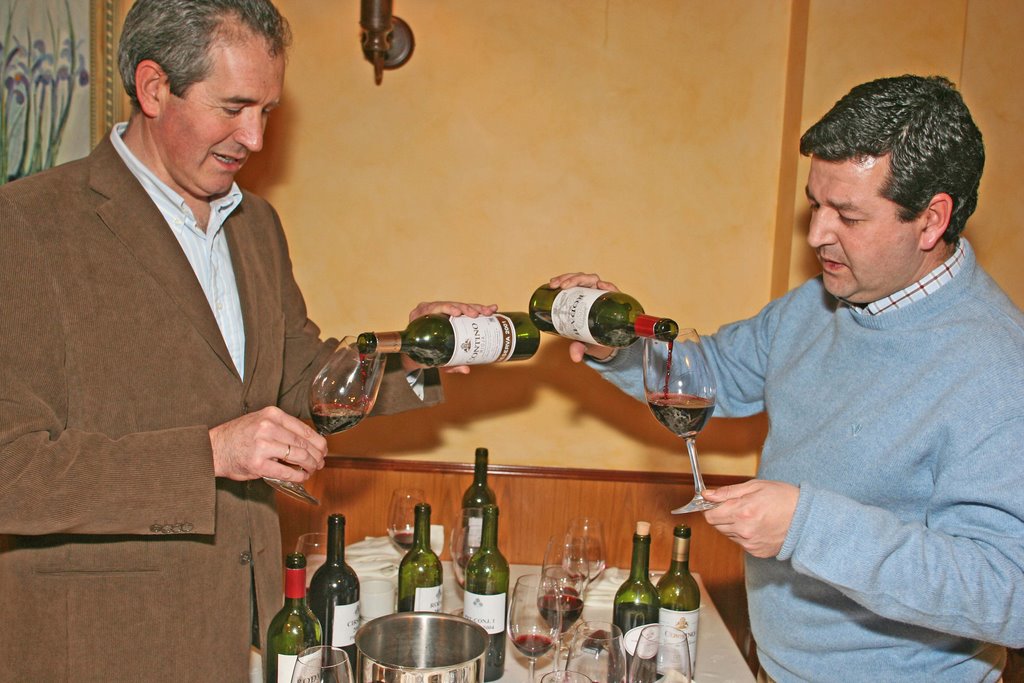
Friendly rivals Agustín Santolaya, Managing Director of Roda & Jesús Madrazo, winemaker, Contino pour each other's wines at Hector Oribe Restaurant in La Rioja.

For at least a decade or more, I have had a love-hate relationship with the wines of Rioja - a region responsible for some of my life's most memorable tasting experiences. I prized the best of the old guard wines (R. López de Heredia, CVNE, La Rioja Alta, Marqués de Riscal and others) - yet recognized the mediocrity of many - and grated against the brashness of a gush of new wave Riojas that left palate-scalding new oak and high alcohol in their wake. Not surprisingly, the passage of time has seen most of the stalwarts evolving toward a more modern style and many of the newcomers toning down their brash styles to a degree that moves them closer to the classic wines that made Rioja famous in the first place.

Among the most captivating of these maverick makers, Viñedos del Contino has emerged as Spain's most important "château" and Bodegas Roda as one of its most significant and innovative wineries founded in the past 25 years. Both are now at or near the top of almost everyone's list of the greatest wines of the modern Spanish era, including mine. And because each has accrued substantial a track record -- Contino with more than 30 vintages, Roda with more than 15 -- the time was ripe to reassess their evolutions.

Located in La Rioja Alavesa district, a few miles northwest of Logroño, La Rioja's provincial capital, Contino is a single-vineyard pago that produces a reserva and gran reserva, the unusual varietal Graciano and the stunning single-parcel wine, El Olivo.
  
Roda, a state-of-the-art winery that also embraces some notable, time-honored influences, is located next door to R. López de Heredia's centenarian bodegas in the celebrated Barrio de la Estación in Haro. Roda makes the entry-level Roda (formerly Roda II), Roda I (the bodega's flagship 100 percent Tempranillo) and the super-luxury cuvée, Cirsion (named for the thistle blossom that is the winery's logo).
  
The genesis for this article actually came about three springs ago at the Salón Internacional de Gourmets in Madrid when Agustín Santolaya, the tall, handsome, affable general manager of Roda, made me an offer I couldn't refuse: "Come up to the winery in La Rioja after the Salón closes and I will open every wine we have made since 1992 and prove to you how great Roda wines really are."

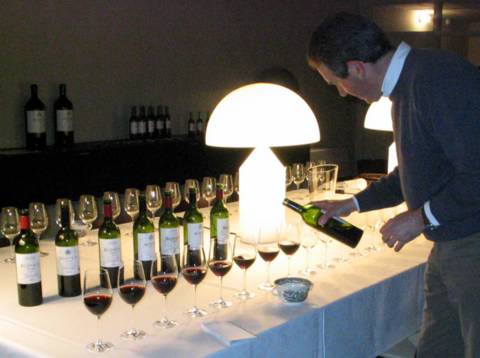
 Agustin Santolaya pouring some of the 21 wines at a midnight tasting that 
he organized for me at Roda in April 2003.  Photo by Gerry Dawes©2003.

Two years prior, I had questioned his approach to winemaking in print and he was eager to gently but firmly defend Roda's prominently proclaimed scientific approach to viticultural techniques and winemaking, and prove me wrong in the process. At least in my first encounters with Roda - and many other so-called alta expresión new wave offerings being fawned over as nuevos milagros, new miracle wines - I was not impressed. Nor was I convinced by the public relations claim that Roda wines were the "new kings" of the Barrio de la Estación in Haro, especially because its neighbors included a row of classic wineries that had always ranked among Spain's best bodegas: CVNE, La Rioja Alta, R. López de Heredia and Muga.

I had come away from a tasting at Roda several years earlier with the impression that too much emphasis was placed on big, powerful, inky, concentrated wines overdosed on new oak. Its blockbuster alta expresión Cirsion offering was then pegged at around $150 (it's now $250). Santolaya's bent for winemaking by the numbers (i.e., the reliance on scientific criteria) also left me skeptical. His agro-scientist's approach to extracting the best, "phenologically" ripe - quite ripe - old vine tempranillo grapes, then making them into intense, voluptuous wines with liberal lashings of new oak, was simply unconvincing.

And I kept wondering about the "communal palate" behind the Roda wines, which seemed formulaic rather than inspired. Nevertheless, I was not going to miss a chance to taste mano a mano with the individual responsible for overseeing the wines at one of Rioja's most highly touted modern wineries, so I rented a car in Madrid on the last day of the Salón and headed for Rioja, a four-hour drive northeast. Passing through snow flurries on the way up, it was 10:30 at night by the time I arrived. Santolaya had laid out tapas and opened 21 wines - every Roda wine made since the winery's founding in 1987, except for the 1991, which was bottled but never released (the first commercial release in 1996 was from the 1992 vintage).

In addition to his role since 1998 as managing director, my host is also the de facto technical director, the man who has the last word on winemaking. He was first hired as a consultant in 1992 by founders Mario Rotllan, a wealthy Barcelona businessman-wine importer (Pol Roger Champagne, Taylor Fladgate, Château Mouton-Rothschild), and his wife, Carmen Daurella (thus, Ro-Da).

Santolaya recalled that, "Mario Rotllan had a clear idea of what he wanted to do from the beginning: He didn't want to make the same wine as the great classic wineries. Rather, the idea was to look for the maximum possible expression of tempranillo in our area of La Rioja. Finding the best grapes is fundamental, then we try to get everything the grape has to give, while trying to make a wine that is elegant and not aggressive. We want wines that are fun to drink, that give pleasure with food."

With that as the goal, Santolaya assembled and led a team whose first task was to painstakingly identify 100 high-quality vineyards in La Rioja Alta and La Rioja Alavesa near Haro and select 22 separate parcels from which Roda's grapes would be sourced. Through his endeavors then and later, Roda now owns 150 acres of vines and controls another 250 ranging in age from 30 to 50-plus years old and situated 1,475 to 1,870 feet above sea level. Some, like the best vineyards in Burgundy, for example, are at the limits of cultivation, which can be problematic in challenging vintages, but can produce sublime wines in favorable years. Roda also has a 60-year-old garnacha vineyard (at 2,100 feet) in La Rioja Baja used for only the basic Roda bottling.

It is Santolaya's habit to select grapes from the 17 best lots of low-yield vines (minimum age 30 years, average age 45) and vinify them separately in large, upright tinos, or wood vats. Because "it is a communal palate here," he explained, the team then blind tastes the wines to classify them. Before we settled down to taste, Santolaya took me on a quick refresher tour of the facility, where I was reminded that all wine transfers are done by gravity and I learned a maximum of 25,000 cases per year are made.

First in the evening lineup was the 1992 Roda II (the lesser of the three wines made here), followed by 1992 Roda I and 1993 Roda II (no Roda I was made that year) - wines that still had some fresh acidity, but were from poor to mediocre vintages and were overwhelmed by new oak. Roda I, Santolaya said, is 100 percent tempranillo, while Roda II is usually 90 percent or more tempranillo, the rest garnacha and graciano. The 1994 Roda I (no Roda II made), from a great vintage, was riper and smoother, but still marred by oak, as was the 1995 Roda II and 1996 Roda II.

The wines began to improve dramatically with the 1995 Roda I and 1996 Roda I, which, though they were still somewhat hamstrung by new oak, also showed exceptional promise with smooth, ripe black fruit and minerals. Santolaya noted that after 1996, they began to tone down the new oak (all French, from eight different producers) a bit; they now use just 50 percent new oak for Roda and Roda I, and 100 percent new oak for Cirsion.

"In the earlier years, we used to put the wines in new oak for 24 months, but we have cut it to 12 to 14 months," Santolaya explained. "The first month in new oak, when the wine is going through malolactic fermentation, gives as much oak to the wine as the next six to eight months does." Wines undergo malolactic fermentation at Roda in November (early for La Rioja) in a special room warmed by radiant heat floors. (Because the winters are cold here, if something is not done to warm the wines, malolactic fermentation will not be completed naturally until spring.)

The team didn't succeed with 1997, an off vintage; the Roda II was sold off in bulk and Roda I was thin and showed more oak than fruit. In 1998, however, both bottlings began to live up to the winery's top-quality claims; the Roda II showed rich berry fruit and round, plummy, chocolaty, ripe flavors that carried the 13.9 percent alcohol well, and the Roda I was a big, silky, but well-structured wine with loads of black plum and Graves-like mineral qualities.
  
In 1999, another poor vintage, the wines were not successful, but in 2000, Roda hit its stride, turning out big (14 percent alcohol), voluptuous, silky, black wines with lots of rich, ripe fruit. And in the stellar 2001 vintage, which some observers believe produced the best tempranillo grapes in history, the perfect embodiment of the house philosophy was realized with big, sweet, silky, flavor-packed wines that display distinct, minerally terroir and elegance, despite the hefty - for Rioja - 14-plus percent alcohol content.

By midnight, we had tasted through 17 wines with four vintages of Roda's superstar Cirsion still on deck. Santolaya noted that Cirsion is not from a single vineyard, rather it's from the best tempranillo grapes in the best years hand-selected by a specially trained team of ten people who inspect the fruit by tasting it.

"We want a wine with the highest concentration of fruit and structure," so they look for bunches that, according to Santolaya, "are already nearly wine inside the grape and bursting with ripeness with long polymerized tannin strings, not the shorter ones that can make wines harsh and brittle."

Fermentation takes place in upright Seguin Moreau oak foudres and then the wine is moved into new French oak where it undergoes malolactic fermentation. It remains there for only about eight months, because Santolaya doesn't want oak to dominate. He explained that Cirsion is the result of research into the polymerization of grape tannins and anthocyans, and the judicious use of new oak is needed to "fix" them, or in Santolaya lay speak, "make a sandwich with the wood."

Such a recipe yielded big, exotic wines in 1998, 1999, 2000 and 2001 that showed rich, sweet black fruit, and were very silky and deceptively smooth in spite of the 14.5 percent alcohol levels. The 2001, of which only 7,000 bottles were made, was already on the market when this tasting took place in 2003. Santolaya said that it followed Roda's philosophy that a wine should be ready to drink upon release and should still live for 20 years.

The jury is still out on Cirsion's longevity, but, as Santolaya intended, the wine sure grabs the taster's attention. "When you analyze the time a wine critic has to judge your wine, then divide that into the thousands of wines the critic has to taste every year, each wine gets about one minute, so your wine has to sock him in the jaw and deliver a knockout punch. You have to make him say, 'Wow!'"

In this instance, however, I had spent more than three hours tasting Roda's wines and tasted them again with the tapas later. I concluded that the wines had evolved steadily since those early efforts that I disdained. They were still more alcoholic and extracted than I prefer - big by traditional Rioja standards - but there was no denying the quality standards that went into their making. I even thought that, in some ways, they were moving closer to the more elegant style of wines like CVNE Imperial, an evolved classic from one of Roda's neighbors.

Ironically, much like Roda, the wines of CVNE's offspring, Contino, despite their power, have grown increasingly more elegant - though still richly flavored - with each passing vintage under winemaker Jésus Madrazo's hand. Established in 1973 by family members and investors from CVNE (pronounced koo-neh, an acronym for Compañía Vínicola del Norte de España), the Contino property dates to a 15th-century grant from Queen Isabella and King Ferdinand. It comprises 153 acres of vineyards set on a gently sweeping slope that angles down to the Ebro River, a natural boundary that nearly encircles the property in a broad loop. 


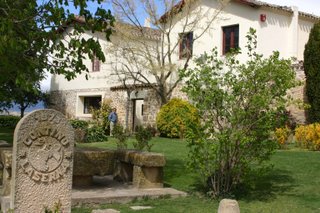
Contino Estate, La Rioja Alavesa.

On the other side of the Ebro from the Contino estate, a high, curving, ochre-colored sandstone cliff forms a vertical barrier that, in effect, defines the bowl that Contino property occupies, creating a unique microclimate. The cliff traps the heat and reflects sunlight back into the alluvial, rock-strewn property, parts of which are mindful of Châteauneuf-du-Pape. Because of the topography, Contino is often rewarded with riper grapes than many other vineyards in this area, and much riper fruit than vineyards in the cooler, higher elevations around Haro.

In cool years, this warm bowl effect can be an advantage, but in very hot years, it presents its own set of problems. During an early vintage, a hot spell caused the sugars to spike to a level that produced wines that nudged 18 percent alcohol, hence no Contino was made that year. Ever since, a keen weather eye is trained on the vineyards during warm spells so that this costly experience is not repeated. Taken altogether, the vineyard's terroir normally results in wines of substantial concentration that carry between 13.5 to 14.2 percent alcohol.

Contino's first director and driving force was the now-retired José Madrazo Real de Asua, also a director of CVNE (founded by his great-grandfather in 1879), and the father of the current winemaker, Jésus Madrazo, whose mentor was the legendary CVNE enologist Basilio Izuierdo. "Contino is a warm microclimate property," Madrazo noted in a recent conversation. "

Over the past decade, Contino has begun the harvest between September 15 and 21, which makes us among the earliest grape harvesters in La Rioja. Historically, our alcohol levels range just under 14 percent. The trick is to achieve balance in the wines. If I were not a classic enologist, the wines would probably rise to 15 percent or more." The 40-year-old Madrazo, unlike most modern winemakers in Spain, grew up drinking the great, old library vintages of CVNE Imperial and Viña Real Gran Reservas from the 1940s, '50s and '60s, which set the tone for his winemaking style.

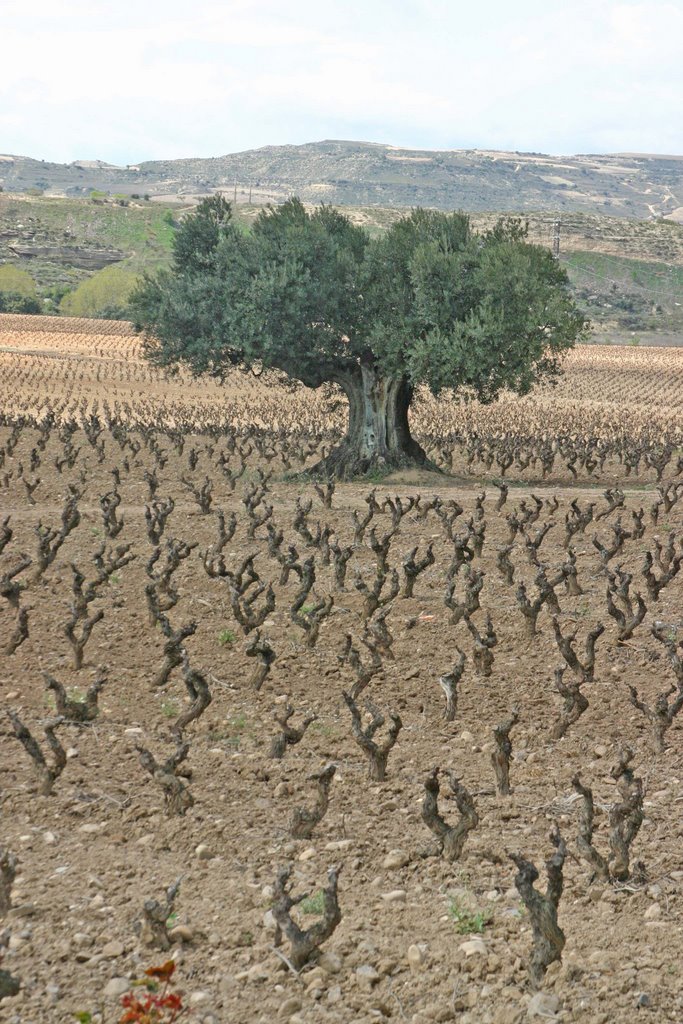
With only a few Contino vintages under his belt (his first vintage was 1999), Madrazo made the stunning 2001 El Olivo from 90 percent tempranillo (harvested from a single parcel over which a 1,000-year-old olive tree presides) and 10 percent graciano from a nearby Finca San Gregorio plot. This 2,000-case gem is undoubtedly the greatest red wine I have tasted in the so-called modern era of Spanish winemaking, which roughly dates stylistically to the early 1990s when concentration, high alcohol and lavish new French oak began to dominate. 


http://photos1.blogger.com/x/blogger2/8188/946/1600/427676/IMG_0140%20Contino%20El%20Olivo%20sm.jpg
Contino's now famous El Olivo vineyard.

Although Madrazo espouses the virtues of new oak, he approaches it with caution: "You have to buy good oak that is not green and has been air-dried so it is properly cured," he explained. "Oak should not import any negative attributes to your wines and it must do justice to your own fruit. What works for another winery might not be good for your wines. For instance, I liked Marqués de Vargas's 1998 and 1999 wines, which were aged in Russian oak made by a Rioja cooper. I admired the balsamic flavors and the toast, so I ordered some barrels to do an experiment. The Russian oak was a disaster at Contino for the flavors I like to extract from tempranillo and my way of making wine."

New oak has its place here, just as it does at Roda. "Agustín Santolaya and I agree that when you use new oak, the quality of the fruit is paramount," he stressed. "You can't use new oak on poor grapes. We use the highest quality of grapes, which can stand up to new oak. Contino's El Olivo and Graciano both have almost 100 percent new oak, but I don't age them more than 12 to 14 months in it." For the majority of his wines, Madrazo uses a combination of French and American oak (with one percent Hungarian) with plenty of carefully main-tained used oak in the mix. Because barrels are kept a maximum of eight to nine years, no more than 10 or 15 percent new oak is usually purchased each year.

At a milestone tasting I attended last April at the Contino estate, Madrazo opened almost every Contino Reserva and Gran Reserva made since 1974 - 28 wines in all (missing were six off years when no wine was released) - for a small audience composed largely of Spanish wine critics. Also in attendance was his aforementioned predecessor, Basilio Izquierdo, who made Contino's wines from 1974 to 1998. (For the first few years, until the vinification facility was built at the estate, Contino wines were made by Izquierdo at CVNE.)


http://photos1.blogger.com/x/blogger2/8188/946/1600/587041/IMG_0789%20Contino%20J%20Madrazo%20tasting%20with%20Spanish%20wine%20writers%20sm.jpg
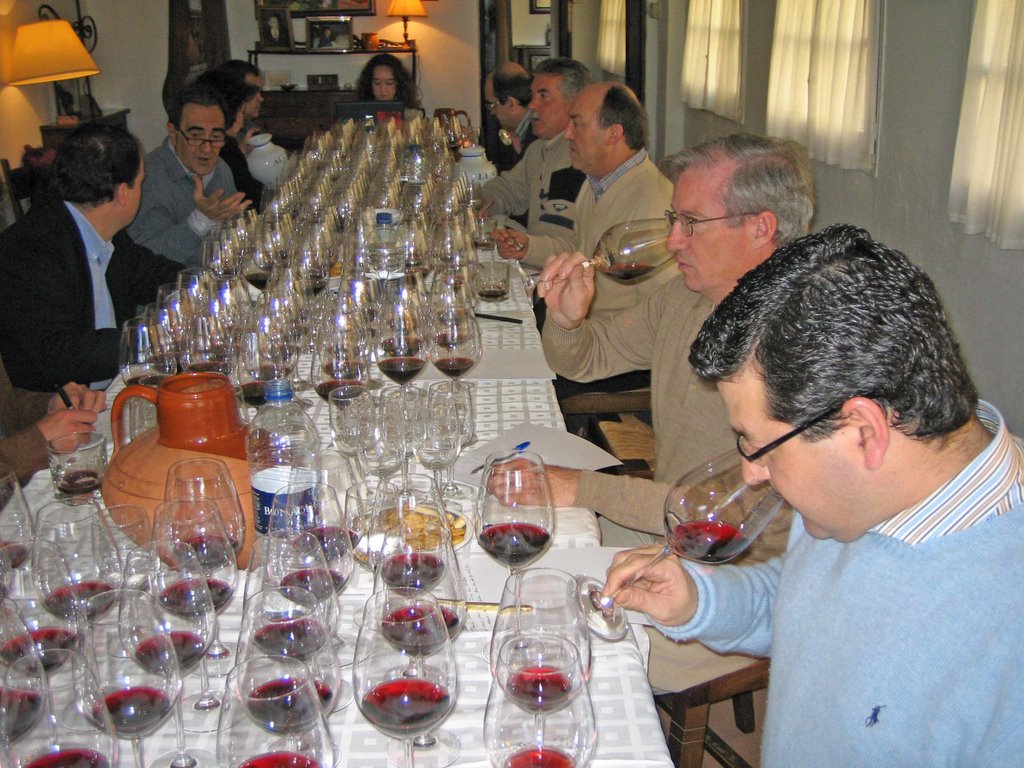
Historic Tasting at Contino.

We began the modern phase of the tasting with the 1994 through the 2004 Contino barrel sample. (Because the winery became infected with TCA in the late 1980s, no wine was made in 1992 and 1993. After a four-year closure and $6 million sanitization program, a crianza was made in 1994 and 1995 that marked the return to reservas.) "Contino Reserva has to be good every year," Madrazo said, "since it has the best price-to-quality ratio, it is our bread-and-butter volume wine (8,500 to 17,500 cases per year, depending on the vintage) - the one that reaches more customers, so it has to carry the quality image of Contino always."

Even in off years, such as 1997, 2002 and 2003, Contino Reservas rate consistently well. Because new oak had to be purchased after the TCA episode, the 1994 and 1995 wines, while still lively, fruity and spicy, had still not shaken off the taste of new wood. In 1996, Izquierdo made an excellent wine, one in which sweet, ripe blackberry and blueberry fruit, toast and carob were well integrated with still detectable, but not overly obtrusive new oak. The 1998 Contino Reserva was sweet, silky and elegant. In 1999, Madrazo took over the winemaking duties and was promptly rewarded with a mid-April ice storm that was one of the worst in recent history. As a result of the deep freeze, one-third of the normal crop was lost.

Madrazo increased the French oak content to 70 percent (plus 29 percent American, one percent Hungarian) and made a very elegant wine. In 2000 and 2001 - the former vintage, good; the latter, great - the direction in which Madrazo intended to take Contino was clearly evident. Both wines showed plenty of sweet, ripe red currant and blueberry fruit, spices and reasonably restrained oak. With just 13 percent alcohol, the 2000 Reserva was very elegant and stylish; the 2001 more powerful (13.7 percent) and packed with sweet fruit, chocolate and minerally terroir. In the poor 2002 vintage, Madrazo actually made a delicious, spicy, easy-drinking wine, and he seemed to do quite well with the super-hot 2003, which was still aging in barrel.

After a break, wines from Contino's "classic" period - 1974 to 1988 (when TCA began to be detectable) - were poured. Because I have high regard for traditional, well-aged wines, I was generally more enamored of their qualities than were my modern-palate-tuned Spanish counterparts, with the exception of critic Andrés Proensa, whose scores more closely paralleled mine. Many of these wines showed typical sweet red cherry fruit with the hints of orange peel, dried rose and tea that come from aging. Because of poor vintages and the TCA hiatus, between 1983 and 1988 only the 1985 and '86 still showed reasonably well.

Although Madrazo is making some of Spain's great modern wines, he also turns out a throwback to the long-aging, traditional Riojas on which he cut his teeth. In very good to excellent years, he bottles (in magnum only) a sublime Contino Gran Reserva. He opened the 1996, an incredible wine with deep, rich, deliciously sweet currant and cherry fruit, great balance and marvelous complexity, for his guests. The 2000 was nearly as good, while the 2001 promises to be even better with age. He observed, "I wanted to make a wine that would recall the great classic grandes reservas that I grew up drinking - the 1964 CVNE Viña Real, R. López de Heredia Viña Bosconia 1942, for example - wines that will live for 30 years or more. I want some wine lover in the future to be able to duplicate the same experience by savoring a superb wine that is several decades old."

But Madrazo was not yet done. As a fare-thee-well gesture, the budding Rioja maestro pulled the cork on his dream wine, the 2000 El Olivo. This intensely flavored, complex, beautifully structured red finishes with a Graves-like minerality, the stamp of Contino's terroir. His 2001, from a spectacular tempranillo vintage, could well become the model for others in Spain to emulate. 


A January tasting at Hector Oribe Restaurant in Páganos (La Roja Alavesa) brought me up to date on the latest releases and validated what I already suspected: Contino and Roda are two of the best new-wave wineries in Spain whose recent vintages demonstrate that big doesn't necessarily mean brawny. These wines are not Arnold Schwarznegger dancing the tango in True Lies; rather, they are substantial Riojas with balance, style and even grace. More important, they are delicious to drink.

It is poetic justice that both bodegas are based in La Rioja, a region that has taken heavy flack from a few prominent Spanish wine writers who seem to favor just about any new property from the hot-country Mediterranean wine regions over almost anything produced in Spain's time-honored red wine area. The wines of Contino and Roda are living proof that tempranillo grown in the unique micro-climates and soils of Rioja's Atlantic-influenced, mountainous wine region is still hard to top when put into the hands of talented winemakers like Jésus Madrazo and Agustín Santolaya.

Tasting Bar

Through a series of events over a span of two years, the verticals that follow were tasted at both wineries, respectively, with a January 20 follow up review of the latest releases over lunch with both Jésus Madrazo and Agustín Santolaya at the wonderful Hector Oribe Restaurant in the village of Páganos in La Rioja Alavesa (also in attendance was Gónzalo Lainez, Roda's export manager, who is also a member of Peña Bilbao, one of northern Spain's most influential private tasting groups). None of the wines were tasted blind.

Bodegas Roda Roda II 2000, La Rioja Alta - $38: Pleasant nose of fruit, minerals and oak. Very smooth and balanced with integrated fruit and oak; rich black plum and chocolate flavors; smooth, silky tannins and a mineral finish. Score: 89

Roda I 2000, La Rioja Alta - $59: Fresh nose of black plum, pleasant oak and minerals. Plummy fruit flavors and silky texture with a mineral finish, this time shored up with noticeable tannins. Should improve with a few years of cellaring. Score: 91

Roda II 2001, La Rioja Alta - $38: Somewhat closed, but clean nose shows some lead pencil. Sweet, delicious and balanced, with a nice complex finish showing ripe fruit, graphite minerality and oak. Excellent. (17% garnacha) Score: 92

Roda I 2001, La Rioja Alta - $59: A gorgeous, elegant, balanced black fruit nose. Delicious, well-knit balance of ripe fruit, chocolate and minerals that fill the mouth and finish silky and seamless. Very impressive. Score: 94

Cirsion 2001, La Rioja Alta - $250: Deep, ripe black fruit nose. Very rich and exotic flavors with intense, sweet blackberry fruit laced with chocolate and minerals. So silky it glides over the palate in a smooth, voluptuous rush of fruit, so you may not notice the 14.3 percent alcohol until you have finished a glass of it. Score: 92

Cirsion 2000, La Rioja Alta - $250: Exotic, spicy nose of violets and minerals. A very concentrated "Mediterranean" Cirsion, with delicious, silky black fruit flavors and enough tannins to hold it together. For lovers of big, concentrated wines. Very nice for its weight. Score: 92
Contino Reserva 2001, La Rioja Alavesa - $42: Pleasantly oaky nose with sweet, ripe fruit and toast aromas. A tannic, oaky finish buttresses lots of delicious sweet blueberry and red currant with chocolate and mineral flavors. A great vintage that needs several years of cellaring. Score: 94

Viñedos del Contino Contino Reserva 2000, La Rioja Alavesa - $42: Integrated oak and sweet black fruit nose. Elegant, stylish and balanced with delicious, concentrated sweet red fruit, cocoa and mineral flavors, and noticeable, but harmonious oak. Opens steadily with airing. Score: 93

The four gran reserva wines listed below all need several years in bottle, but, with aging, they promise to be delicious, profound wines that show the best of the Contino estate - in fact, the best that La Rioja and Spain can produce.

Contino Gran Reserva 1996, La Rioja Alavesa - $65: Nice oak and sweet fruit jump out of the glass. Wonderfully complex and delicious with sweet ripe cherry and currant flavors along with licorice, cocoa and mineral notes; lovely finish. A modern wine that is a throwback to the great Rioja wines of yesteryear, many of which are among the greatest red wines ever produced. (Magnum only) Score: 96

Contino Gran Reserva 1999, La Rioja Alavesa - $65: Closed nose shows whiffs of ripe fruit. Rich and sweet, with cola, licorice and chocolate flavors still bound up in firm tannins that bode well for the long term. Still needs plenty of time. (Magnum only; not yet in the U.S.) Score: 91

Contino Gran Reserva 2000, La Rioja Alavesa - $135: Intense black and red fruit aromas with mineral and oak notes. Very rich, sweet, ripe, deep, delicious black raspberry fruit with carob, minerals and oak in the finish. (Magnum only; not yet released) Score: 95

Contino Gran Reserva 2001, La Rioja Alavesa - $145: Deep, ripe black fruit, black olive and oak scents. A big, sweet, rich delicious wine with good grip to hold it for the long haul. Needs several more years to develop fully, especially since it is in magnum. Score: 96

Contino Graciano 2000, La Rioja Alavesa - $95: Exotic nose of anise, white chocolate and herbs. Tart by nature, this Graciano, which is reminiscent of a Petit Verdot, needs bottle age, air and, certainly, food. The aromas in the nose carry through on the palate with more herb and balsamic flavors. Score: 88

Contino Viña del Olivo 2000, La Rioja Alavesa - $120: Ripe black fruit and black olive nose with oak integrated. Rich and very complex with stunning black fruit flavors, good acidity and great structure. Reminiscent of a great Graves, like Haut-Brion, with a long, gravelly finish. Score: 94

Contino Viña del Olivo 2001, La Rioja Alavesa - $120: Beautiful nose of ripe black fruit, minerals and toasty oak. Entry is smooth, with delicious, sweet, fresh black raspberry, toast and mineral flavors. Elegant for its 14 percent alcohol with a good acid balance and everything in harmony. Needs five to ten years; this great wine is a keeper. Score: 97 - GD


This article originally appeared in The Wine News. (First published in 2006.)


About the author 


Gerry Dawes was awarded Spain's prestigious Premio Nacional de Gastronomía (National Gastronomy Award) in 2003. He writes and speaks frequently on Spanish wine and gastronomy and leads gastronomy, wine and cultural tours to Spain. He was a finalist for the 2001 James Beard Foundation's Journalism Award for Best Magazine Writing on Wine.


Mr. Dawes is currently working on a reality television
series on wine, gastronomy, culture and travel in Spain.

7/27/2004

Back to The Future - Wine Enthusiast, Sept. 2002

Spain: Looking Back To The Future By GERRY DAWES

First Appeared in The Wine Enthusiast, Sept. 2002

Three-star restaurants, cultish boutique wines and appreciative, affluent consumers: europe’s gastronomic epicenter just may be shifting to España.

When I first began traveling the wine roads of Spain in the early 1970s, the state of Spanish wine and food was dramatically different than it is today. Most wineries were rustic and used time-honored, often ancient, techniques to vinify grapes and age their wines. They were imbued with the romance of Old Spain and were aged in old barrels, often in moldy, cobweb-laced, ancient caves. I loved tasting them. However, while some of the wines were excellent on the spot when served with down-to-earth Spanish food like milk-fed baby lamb chops grilled over vine cuttings, air-cured hams and artisan cheeses, many of the wines were not built to travel.

Back then, there were wonderful down-home restaurants with legendary regional dishes that were often the object of gastronomic pilgrimages by Spanish aficionados. The meals included roast suckling pig and lamb, black rice paellas, fat pochas beans cooked with country chorizo and quail, and shellfish hot off a flat grill. But many ordinary restaurants were plagued with poorly trained cooks using substandard cooking oils instead of the quality Spanish olive oil that gourmands so appreciate today.

In fact, many upscale restaurants often offered so-called “continental” cuisine that seemed designed to protect foreign tourists from the horrors of olive oil, garlic and other ingredients that are now highly regarded elements of the Mediterranean diet.

In those days I often wished that the Spaniards would figure out how to get those deeply flavored, ruby-colored Duero Valley wines—in Aranda de Duero, served in earthenware pitchers—in shape to sell in foreign markets. And those wonderful Manzanilla Sherries that I drank on Sanlúcar de Barrameda’s Bajo de Guía beach at sunset with exquisite grilled langostinos (giant prawns): Would we ever be able to get fresh Manzanilla in America? And what about those deeply flawed, but incredibly promising backcountry Priorato wines I drank with grilled rabbit and allioli in the 1980s?

Up until the early 1990s, the main players in the export markets remained the well-aged red wines from Rioja, Sherries from Jerez, cheap sparkling wines from Cataluña, the wines of Miguel Torres, Sr. and the near-mythical Vega Sicilia, then Spain’s most expensive and mysterious wine. For most Americans, Spanish wines conjured up visions of a hot Mediterranean country that produced robust oak-aged reds, mediocre whites, cheap bubbly and Sherries that usually sat on restaurant and retail shelves until they were shot. Since then, there has been an explosion in the quality and breadth of Spanish wines comparable to that of California in the 1970s and 1980s. And many experts are now beginning to believe that the food in Spain these days is better than it is in any other country in Europe.

Poised on the Edge

Until the mid-1970s, the octogenarian dictator Francisco Franco was ostensibly still running the country; to outsiders, Spain seemed mired inextricably in the past. At that time, Spaniards were poised on the edge, precariously balanced between that backward post-Civil War period—an era they desperately wanted to shake—and an uncertain future, one that the many brighter lights in Spain thought was filled with promise.

During that unstable political climate, a few were willing to take a chance on the future of Spanish wine. Years earlier, Jean León, a Spanish expatriate and Los Angeles restaurateur, had already shown what could be done in Spain with estate-grown wines, producing several acclaimed Cabernet Sauvignon-based reds and Chardonnays in Penedès. In Rioja, in 1970, Henri Forner, a Bordeaux producer (Château Larose-Trintadon and Château Camensac) whose Valencian family was exiled to France during the Spanish Civil War, took the plunge and founded the Unión Viti-Vinícola, whose brand Marqués de Cáceres became a legendary success. Sherry producers such as Domecq (Marqués de Arienzo), González Byass (Beronia) and Osborne (Montecillo) either founded or purchased new bodegas in Rioja and, in 1973, Bilbao industrialist Luís Olarra founded the state-of-the-art Bodegas Olarra, one of the greatest Rioja wineries of the period.

Sherry country itself experienced something on the order of a coup d’etat as more than 50 percent of the production was gobbled up by Rumasa, a giant company with Sherry-family roots. Soon Cava country bubbled over as Rumasa moved in and took over 40 percent of the production. Building Spain’s first truly international brand of oak-aged table wines, the Torres family continued to invest profits back into their company in Vilafranca del Penedès, and year by year young Miguel Torres, Jr. made his presence increasingly felt on the style and quality of the wines. Codorníu, the Cava giant, planted a sizeable estate vineyard with Tempranillo, Cabernet Sauvignon, Merlot and Chardonnay in Lerida province in the foothills of the Catalan Pyrenees. It then became its own denominación de origen, Costers del Segre. And, in a little-known area of the Duero Valley, Alejandro Fernández, a producer of agricultural equipment with a taste for rich, silky, but balanced and ageworthy wines, began making Pesquera, which became Spain’s first great overnight international star in the 1980s. By the mid 1990s, Álvaro Palacios (Clos Dofi and L’Ermita), Carles Pastrana (Clos de L’Obac), René Barbier (Clos Mogador) and Daphne Glorian (Clos Erasmus) had begun to put the dark, powerful wines of Priorato on the map.

Gastronomy and Winemaking Flourish

Following the death of Franco in 1975 and several more years of political turmoil, Spaniards began to excel in business, the arts, cinema, architecture, fashion and even golf. Fueled by a newly affluent and steadily expanding middle class armed with credit cards and buoyed by a surprising jump in the number of English speakers, Spain experienced an unprecedented wine and food boom that hasn’t let up. The country’s gregarious citizens who always loved to wine and dine suddenly began to take a serious interest; wine and gastronomic publications, wine clubs, wine-tasting groups and wine courses proliferated. Spaniards, like their American and European counterparts, began to see wine and food as desirable career choices; enology courses and cooking schools cropped up around the country.

Jesús Madrazo is an exemplar of the new wave in the Spanish wine world. He is a thirty-something member of one of the regal families of classic Rioja wine—CUNE (Compañía Vínicola del Norte de España)—and is one of Spain’s brightest new wine stars. Madrazo is currently the general manager of Contino, a CUNE-affiliated winery and one of the first to embrace the Bordeaux-style single-estate concept in the early 1970s. His three wines, Contino Reserva (which becomes more elegant and stylish each year), the single-plot El Olivo and the 100 percent Graciano (probably the best example of that classic Rioja varietal made) have earned serious national and international attention.

“In 1985, when I was working on my engineer in agronomy degree,” Madrazo remembers, “it was difficult to find any wine-tasting courses; now there are hundreds around the country. There were just a few magazines specializing in wine and food, now there are at least 10. Specialty wine shops hardly existed, now there are hundreds.”

It took a couple of decades, but to longtime observers, Spain’s quantum leap happened with surprising speed. In the March 2002 issue of Sobremesa (one of Spain’s top food and wine magazines), Editor-in-Chief Ernesto Portuondo reflected on how the Rioja-Jerez-Cava trio dominated the early articles of the magazine and how much things have changed. In just over 15 years, he wrote, “Spanish customs, polemics, language, understanding, the national panorama and, above all, wines have changed so much that it is difficult to believe that we are talking about the same country.”

These days the whole world is talking about Spain’s latest wine-and-food miracle. A Basque restaurant was recently awarded Michelin’s highest rating—three rosettes. That makes four Spanish restaurants with three each (the newest, Martín Berasategui, joins Arzak in San Sebastián; El Racó de Can Fabes, just outside Barcelona; and the famous El Bullí, two hours north of Barcelona). The indispensable dining guide in Spain, the Madrid-based Gourmetour, rates restaurants on a 10-point scale and lists a dozen establishments with nine or more points, which is their equivalent of Michelin’s three rosettes. Some wineries, such as Marqués de Murrieta, stillbottle their gran reservas by hand.

“The most innovative cooking in Europe is being done in Spain nowadays,” says Mark Miller, chef at Coyote Café, which has locations in Santa Fe and Las Vegas. Miller has been to Spain a dozen times in the past few years. “Not only are the cooking techniques and presentations as creative as at other top restaurants in the world, but the whimsical and creative design and casual atmosphere make dining a true pleasure for the mind and the senses, and not just an exercise in status. The Spanish passion for living and expression makes eating in Spain a true delight.”

According to Michael Lomonaco, former executive chef at Windows on the World and now a consulting chef at Manhattan’s new Latino restaurant, Noche, “Spain is a must for everyone serious about food and wine. I am impressed with how Spain’s distinctive regional cuisines seem so naturally suited to the wide spectrum of Spanish wines.”

A Trend in Pagos and Estates

That wide spectrum is reached, in part, because of the thousands of old-vine vineyards in very special, if previously underdeveloped, microclimates such as Rías Baixas, Priorato, Bierzo and Ribeira Sacra. These are places in the Texas-sized country where long-acclimatized grape varieties are rooted in the kinds of soils that rival the terroirs of France.

Some of the recently released wines from these microclimates have been so impressive on a world-class scale that they are making real headway in the American market. In addition to the traditional favorites from Rioja and brands established in the late 20th century, reds from the Ribera del Duero, Priorato, Navarra and Penedés and white wines from Rías Baixas, Rueda and Penedés have made significant inroads lately. And there is a steady buzz about the new-wave wines coming out of these areas, especially those from single vineyards or pagos.

Andrés Proensa, one of Spain’s top wine writers, calls the single-vineyard movement one of the most dominant trends in modern Spanish wines. Historically, Spanish wine producers paid little attention to single-vineyard estates. In the early 1970s, Rioja had only the fledgling Remelluri and Contino estates; Cataluña had only Jean León and Miguel Torres’s Mas La Plana Cabernet Sauvignon vineyards. Today, there are too many to count.“This is the most important change in Spanish wine,” Proensa says, “producers at the vanguard are looking more towards vineyard quality now and are relying less on using technology to manipulate the wine in their cellars.”

Even in Rioja, where wines are still largely made by a modified négociant system in which some grapes and wine are purchased, the process is undergoing dramatic changes. Many of the larger bodegas have augmented their grape sources by purchasing existing quality vineyards, planting new ones and cementing relationships with quality cosecheros—those who have not yet founded their own small estate-based wineries. These are the same viticulturalists who have been growing grapes for the larger wineries to increasingly demanding specifications.

Proensa, who authored the annual Guía de Oro de Los Vinos de España for several years and will begin publishing the Guía Proensa (de Los Mejores Vinos de España) next year, says that for the past decade there has also been a distinct trend toward what he calls “Parkerian fever” as many Spanish winemakers have been making styles seemingly preferred by Robert M. Parker, Jr. But Proensa acknowledges that many top producers are beginning to let up on the big, ripe, blockbuster wines—wines he describes as having a “bruising character”—in favor of those with “a more finely drawn style that is more subtle, but still rich in color, flavor and aromas.”

While backward winemaking technology ceased to be an issue in Spain several years ago, Proensa believes that technical progress has reached its ceiling. The latest advances have been rapidly assimilated in Spain as well as elsewhere, even at traditional Rioja wineries such as Marqués de Riscal (founded 1860), CUNE (1879) and La Rioja Alta (1896). While having state-of-the-art facilities has obvious benefits, Proensa explains this development has had its downside.

“The reliance on modern winemaking technology has a tendency to make wines that are too uniform,” Proensa says. (Much the same can be said for the widespread, heavy-handed use of new French oak in Spain.) “The smartest Spanish enologists are looking to combine many elements—soil, grape varieties, climate, proper vineyard cultivation, production methods and different types of oak—in order to make more harmonious wines with distinct personalities.”

Yet Spain’s steady stream of new wines could become an embarrassment of riches. A bewildering array of new wines from diverse and little-known regions around Spain are constantly entering the market. No longer confined to specialty shops, wines from La Mancha, Toro, Somontano, Jumilla and other even more obscure regions are becoming widely distributed and many top restaurants feature them on their wine lists.

Three Steps Forward and Two Back?

It is difficult to keep up with the hundreds of wines that are being produced in Spain. And while a vast number are very good, there are a few unfortunate characteristics common in many emerging Spanish wines. Often their color is so dark that you can’t see the bottom of the glass, they have the smell and taste of overripe fruit, have too much alcohol and are brutally lashed with new French oak.

In my darker moments after a full day of tasting too many of these oak-whipped wines, I sometimes feel that my tongue has been trampled by the late shift at a sawmill. I wake up in a sweat, sure that one day new oak will be discovered to be a carcinogen, which would be curtains for any journeyman wine taster of this epoch.

I also get wary when I hear the claim so common with regard to Spanish wines (and others) that a special wine is exclusively from old vines. Old-vine grapes often produce superconcentrated wines that are overly rich and too much of a good thing to my palate—I have never been of the school that more is better. And I wonder, if those grapes are that good, why are they being taken out of the winery’s main blend?

Likewise, another pet peeve is the claim, also in vogue in Spain, that a wine should be unfined and unfiltered, as if those features alone guarantee wine quality. Pardon me, but I like the idea that the makers of classic Spanish wines fine their wines with fresh egg whites (as Muga, CUNE, López de Heredia, and others still do). I don’t think consumers should be straining dead lees (amply stirred by battonage these days), grape skins and other bits of debris through their teeth just so some winemaker can avoid proper racking and light filtering, if even needed after proper racking. And I am not convinced that many unfiltered wines are even stable. However, winery owners should erect a statue to whoever came up with this brilliant bit about not filtering wines. It actually allows some wineries to sell the sediment in the bottoms of their vats and barrels, thus augmenting their revenues without having to increase the amount of actual liquid they produce. But none of these trends are uniquely Spanish. To many wine lovers, it is the curse of modern wines, a curse that many of us are praying will pass.

—G.D.In the past five years in Rioja alone, scores of new wineries and new expensive modern international-style alta expresión wines have surfaced—partly in answer to a profusion of domestic challenges from international-style wines that have become media stars and partly to compete with the new generation of French “garage” wines, the boutique wine stars of California and Italy’s super Tuscans.

Back in the 1980s, when I first began visiting the Ribera del Duero, I would regularly visit several wineries—Vega Sicilia, Pesquera, Valduero, Pérez Pascuas, Balbás and Torremilanos. Now there are 140 registered wineries in the region with more on the way. It would take more than a month of nonstop work to visit them all. In Rioja, after a three-day marathon tasting called Los Grandes de La Rioja where I felt I was catching up, I still fell short. I needed at least another week just to visit the rest of the worthwhile wineries. Not to mention all of the new wines emerging from the vast wine lake of Mediterranean Spain—Alicante, Valencia, Utiel-Requena, Jumilla, Murcia, Tarragona—and the even more expansive wine region that is La Mancha and its related denominaciones de origen.

As a 30-year observer of the Spanish wine scene, nothing that the talented, industrious wine people of this vibrant country accomplish surprises me anymore. With more acreage under vine than any wine-producing country in the world, many special microclimates, some splendid terroir-driven sites that are rapidly coming to the forefront, great grapes and more accomplished winemakers, there’s no question of a remarkable future ahead for Spanish wines—and limitless enjoyment to be reached in drinking them.
Related Posts with Thumbnails