Share This Gerry Dawes's Spain Post


Instagram

In 2026, ranked #7 in the Top 30 Gastronomy Blogs (and Websites for Gastronomists & Gastronomes by Feedspot. (Ranked in the top 50 since 2019). "The Best Gastronomy blogs selected from thousands of Food blogs, Culture blogs and Food Science. We’ve carefully selected these websites because they are actively working to educate, inspire, and empower their readers with . . . high-quality information.

More than 3,640,000 views since inception, 123,000+ views in August 2026.


36. Gerry Dawes's Spain: An Insider's Guide to Spanish Food, Wine, Culture and Travel gerrydawesspain.com

"My good friend Gerry Dawes, the unbridled Spanish food and wine enthusiast cum expert whose writing, photography, and countless crisscrossings of the peninsula have done the most to introduce Americans—and especially American food professionals—to my country's culinary life. . .” - - Chef-restaurateur-humanitarian José Andrés, Nobel Peace Prize Nominee and Oscar Presenter 2019; Chef-partner of Mercado Little Spain at Hudson Yards, New York 2019

Showing posts with label Anthony Bourdain. Show all posts

5/05/2021

San Sebastián Gastronomika, A Basque Trilogy: Kaia-Kaipe, Elkano and Etxebarri


* * * * *
 
Persistence of Memory* (Salvador Dalí) Five-Watch Rating

* * * * *
A Basque Trilogy
by Gerry Dawes
 
(First published in Food Arts, March 2010)
I was on another multi-tasking mission to Spain last November, and high on my list was attending the San Sebastián Gastronomika 2010 chefs conference, where several New York City food folk—Thomas Keller, Daniel Boulud, David Bouley, Drew Nieporent, Anthony Bourdain, Colman Andrews, David Chang, and Wylie Dufresne—would be appearing. Especially appealing was the prospect of seeing what the conference organizer, Grup GSR, run by the Catalan dynamo Roser Torras, had up its sleeves for the annual event.

   
Roser Torras and Drew Nieporent at Elkano Restaurant, San Sebastián Gastronomika 2010. Photograph by Gerry Dawes©2010. Contact gerrydawes@aol.com.

Nieporent and I planned to meet in Bilbao Saturday evening, November 20, the night before we were due at San Sebastián Gastronomika. I was to get us a dinner reservation at the legendary Asador (grill-house) Etxebarri, southeast of Bilbao. I called Victor Arguinzoniz, the now-renowned owner/grillmeister of Etxebarri, called by some the best restaurant in northern Spain, and heard, “Sorry, but I don’t have a single seat”—not even for Nieporent, the famoso restaurateur. My fallback was Elkano, which has been called the best fish restaurant in the world, located in the magical fishing village of Getaria, near San Sebastián. “Elkano is closed for vacation,” a voice message said. Fallback position numero dos was Kaia-Kaipe, also in Getaria and also famous for whole wild grilled turbot.

   
Whole rodaballo (turbot) grilling at Kaia-Kaipe, Getaria.
Photograph by Gerry Dawes©2010. Contact gerrydawes@aol.com.

At Kaia-Kaipe, we had house-cured anchoas (anchovies) and excellent txangurro (a classic Basque dish of centollo, or spider crabmeat, sautéed with leeks and garlic, spiked with brandy, put back in the shell and browned under a broiler). Our main course was whole wild rodaballo (turbot) grilled over wood coals and filleted at the table, a glorious dish for which Getaria is justly famous. We accompanied the anchoas and txangurro with Getariako Txakolina, Getaria’s slightly pétillant “green wine,” and with the rodaballo we had a still impeccable Monte Real Reserva 1970 at a laughably reasonable price. After dinner, Nieporent’s driver appeared and whisked him off to San Sebastián. Because my conference lodgings were unavailable until the next day, I had booked a room in Getaria at the charming Pension Getariano, just across the street from Elkano restaurant.

Sunday evening, after a press conference featuring a panel of Basque star chefs—Juan Mari Arzak, Pedro Subijana, Martín Berasategui, Andoni Aduriz, and Hilario Arbelaitz—16 emerging Basque country talents prepared some wonderful degustaciòn plates for a reception. I saw Boulud and Brazilian journalist Alexandra Forbes watching as chef Ramón Piñeiro from the Frank Gehry–designed Marqués de Riscal hotel restaurant in La Rioja Alavesa put the finishing touches on his soufflé of Idiazabal cheese with organic olive oil, herbs, and citrus. Huevo frito con patatas, a still liquid egg yolk wrapped in thin strips of potato, then flash-fried, from chef Beñat Ormaetxea of Jauregibarria was perhaps the evening’s top mouthful.

 
 Daniel Boulud and Alexandra Forbes watch Ramón Piñiero of Marques de Riscal 
restaurant put the finishing touches on his Souffle of Idiazabal cheese. 
Photograph by Gerry Dawes©2010. Contact gerrydawes@aol.com.

San Sebastián Gastronomika took place during Thanksgiving week, with the contingent from New York appearing for their big day on Tuesday, November 23. Bouley, Boulud, Bourdain, Chang, Dufresne, and Nieporent all played to large appreciative audiences. Andrews was there for the presentation of his book, Ferran: The Inside Story of El Bulli and the Man Who Reinvented Food. Also drawing large followings were the contingent of Spanish superstar chefs: Ferran Adrià, Joan Roca, Carme Ruscalleda, and Christian Escribà from Catalonia; San Sebastián home-grown estrellas such as Arzak, Subijana, Berasategui, Aduriz, and Arbelaitz (12 Michelin stars in total); Italian chef Massimo Bottura (Osteria Francescana, Modena); and Australian Neil Perry (Rockpool Bar & Grill, Melbourne). A conference highlight was the homenaje (homage) by all his fellow Basque chefs to Spanish television’s Karlos Arguiñano, who is probably more famous here than Adrià.

 Anthony Bourdain presenting at San Sebastián Gastronomika 2010. 
Photograph by Gerry Dawes©2010. Contact gerrydawes@aol.com.

Interwoven between the daily presentations was the star-studded scene at the Joselito Ibérico stand, where Spain’s ham king, José Gómez, and his crew of ham slicers served some of the world’s best air-cured hams, chorizo, lomo (loin), and salchichón (salami) trucked over from his aging plant in Guijuelo (Salamanca). Gómez likes to serve top Spanish red wines and French Champagne with his Ibérico pig products. It was not unusual to see the likes of Keller, Boulud, Adriá, and Arzak sitting together, toasting with flutes of bubbly while munching on Joselito’s stellar jamón Ibérico de bellota—air-cured hams from the acorn-fattened pata negra (black foot) breed of Iberian hogs.


 José Gómez, Joselito the Jamón king at San Sebastián Gastronomika. 
Photograph by Gerry Dawes©2010. Contact gerrydawes@aol.com.


To honor the New York presenters, Christian Escribà, the legendary Barcelona pastelero-chocolatero (pastry and chocolates) maestro, rolled on stage his large chocolate and marzipan creation of the New York City skyline with marzipan figures of the New Yorkers with their initials on their chef’s jackets. Andrews’ figure held a tiny copy of his book Ferran. “I really felt special, humbled, and honored to have Escribà’s amazing, extraordinarily meticulous New York piece presented to us,” Keller said. 

 
 Christian Escribà at San Sebastián Gastronomika 2010. 
Photograph by Gerry Dawes©2010. Contact gerrydawes@aol.com.

 
New York contingent posing with Christian Escribà's sensational pastry-and-chocolate creation of New York, New York at San Sebastián Gastronomika 2010. Boulud, Nieporent, Dufresne, Andrews, Chang, Keller & Bourdain. Photograph by Gerry Dawes©2010. Contact gerrydawes@aol.com.


Boulud cooked his famous foie gras/short rib/beef burgers on stage and passed out at least 200 portions to an appreciative audience in the VIP section of the 1,800 seat Kursaal Auditorium. Keller’s cooking demonstration was “certainly a departure. Everybody at San Sebastián Gastronomika 2010 was doing demonstrations based on formulas and  techniques,” he said. “Rather than trying to intellectualize or formulate something, my Per Se sous chef David Breeden and I went to La Bretxa market in the old quarter, and from ingredients available that morning, we just spontaneously prepared some beautiful dishes.” Beautiful indeed: citrus-cured mackerel with cipollini and compressed sour apples; uni with avocado, orange suprêmes, and arugula; Idiazabal with artichokes cooked sous-vide with compressed Paris mushrooms and watercress.

 
Three-star Michelin Chefs Juan Mari Arzak & Thomas Keller at San Sebastián Gastronomika 2010. 
I first took Thomas Keller to Arzak in 1990, before he opened The French Laundry. 
Photograph by Gerry Dawes©2010. Contact gerrydawes@aol.com.

As the conference broke for lunch, Arzak hailed me: “Gerry Adams! [that’s what he calls me], you have a rental car, no? I got a reservation at Etxebarri!” (See Departures profile of Etxebarri.) I jumped at the chance to have lunch there. It was after 3:30 when I pulled into Etxebarri’s parking lot in the Basque hamlet of Axpe. I hoped to photograph Arguinzoniz working at his specially designed grills, but I was informed by the woman running Etxebarri’s dining room that he didn’t want the distraction of photographers during service. Arguinzoniz’s style of grilling is a precise discipline that requires his full attention, especially when he performs such miracles as smoking caviar in a self-designed grill pan with microscopically fine mesh laser-bored openings that allow smoke to come through while holding in moisture.

 
Victor Arguinzoniz at the grills he designed himself at Etxebarri. 
Photograph by Gerry Dawes©2010. Contact gerrydawes@aol.com.

I opted for the shorter tasting menu: smoked house-made mozzarella perched on a single slice of eggplant; a perfect house-cured and seasoned anchoa on a thin strip of grilled bread soaked with olive oil; exquisite pieces of nécora crab grilled in the shell; a pair each of lightly grilled, rosy pink gambas de Palamós (highly prized shrimp from the Costa Brava); a pair of lightly smoky grilled oysters with oyster liquor espuma (foam), perched on a slice of pickled eggplant; and grilled becada (woodcock) with its detached head and beak presiding over an assortment of grilled fall vegetables, a chestnut, and carrot puree. My only caveat was the repetition of smoke in every dish.

 
Necora crab a la parilla at Etxebarrr.
Photograph by Gerry Dawes©2010. Contact gerrydawes@aol.com.

The meal at Etxebarri was yet another Spanish Basque triumph of exceptional product sourcing married to simple, but exceptionally refined, techniques, which, in the best places, trumps cocina de vanguardia sleights-of-hand nearly every time. In the hands of experienced maestros at Extebarri, Elkano, and Kaia, such dishes, because of their exquisite simplicity and pure flavors, remain etched in memory long after many of the cocina de vanguardia pyrotechnics evaporate like an espuma in the dessert. Perhaps that’s why so many Spanish vanguardia chefs have opened modernized traditional tapas bars in the past few years.

Fortunately, dinners begin late in Spain, which allowed a couple of hours after Etxebarri before dinner at Elkano (click to see Departures profile on Elkano, the third gastronomic thoroughbred in my trifecta. I arrived to find Elkano’s father-and-son owners, Pedro and Aitor Arregui, and their longtime grill chef, Luis Mari Manterola, sweating “la gota gorda” (the big drop) at the prospects of serving 130 people, including the culinary heavyweights attending the conference. 

  
 Luís Mari Manterola grilling turbot at Elkano. San Sebastián Gastronomika 2010. 
Photograph by Gerry Dawes©2010. Contact gerrydawes@aol.com.

From previous meals at Elkano, I had no doubts that they would impress even this crowd. And they did, serving us superb almejas (clams); a tartare of chipirón (small squid) with sea urchin and trails of chipirón ink sauce (a Getaria speciality); two preparations of kokotxas (hake glands), one grilled, the other battered and deep-fried, both ethereal; small samplings of fat sea-tasting percebes (goose barnacles); wood charcoal grilled langosta (lobster); and whole wild rodaballo (turbot) filleted at the table, all accompanied by light, refreshing small producer Txakolis from Getaria.  We finished by dipping into whole, wonderfully oozing Torta del Casar sheep’s milk cheeses from Extremadura and texturas de manzana reineta a la parrilla, a sensational grilled apple dessert.

   
Elkano owner Pedro Arregui, El Maestro, with two of the whole grilled rodaballo (turbot). San Sebastián Gastronomika 2010. Photograph by Gerry Dawes©2010. Contact gerrydawes@aol.com.

I sat with Nieporent, who agreed that Elkano was indeed the best fish restaurant in the world. Boulud took the microphone at the end of the meal and reaffirmed that appraisal. Chang was impressed: “The last thing I wanted to do was eat again, but I am so glad I went. It was one of the best meals I’ve ever had.” 

 
Wylie Dufresne and David Chang at the Elkano dinner. San Sebastián Gastronomika 2010. 
Photograph by Gerry Dawes©2010. Contact gerrydawes@aol.com. 
 
 (Portions of this article was first published in Food Arts, March 2010)

  * * * * *

Constructive comments are welcome and encouraged.
 
 
If you enjoy these blog posts, please consider a contribution to help me continue the work of gathering all this great information and these photographs for Gerry Dawes's Insider's Guide to Spanish Food, Wine, Culture and Travel. Contributions of $5 and up will be greatly appreciated. Contributions of $100 or more will be acknowledged on the blog. Please click on this secure link to Paypal to make your contribution.
 
Text and photographs copyright by Gerry Dawes©2021.  Using photographs without crediting Gerry Dawes©2021 on Facebook.  Publication without my written permission is not authorized.
 
* * * * *
  Shall deeds of Caesar or Napoleon ring
More true than Don Quixote's vapouring?
Hath winged Pegasus more nobly trod
Than Rocinante stumbling up to God?
 
Poem by Archer M. Huntington inscribed under the Don Quixote on his horse Rocinante bas-relief sculpture by his wife, Anna Vaughn Hyatt Huntington,
in the courtyard of the Hispanic Society of America’s incredible museum at 613 W. 155th Street, New York City.
 ________________________________________________________________________
 Gastronomy Blogs

In 2019, again ranked in the Top 50 Gastronomy Blogs and Websites for Gastronomists & Gastronomes in 2019 by Feedspot. (Last Updated Oct 23, 2019) 

"The Best Gastronomy blogs selected from thousands of Food blogs, Culture blogs and Food Science blogs in our index using search and social metrics. We’ve carefully selected these websites because they are actively working to educate, inspire, and empower their readers with frequent updates and high-quality information."  

36. Gerry Dawes's Spain: An Insider's Guide to Spanish Food, Wine, Culture and Travel


About Gerry Dawes

My good friend Gerry Dawes, the unbridled Spanish food and wine enthusiast cum expert whose writing, photography, and countless crisscrossings of the peninsula have done the most to introduce Americans—and especially American food professionals—to my country's culinary life." -- Chef-restaurateur-humanitarian José Andrés, Nobel Peace Prize Nominee and Oscar Presenter 2019


Gerry Dawes was the Producer and Program Host of Gerry Dawes & Friends, a weekly radio progam on Pawling Public Radio in Pawling, New York (streaming live and archived at www.pawlingpublicradio.org and at www.beatofthevalley.com.)

Dawes was awarded Spain's prestigious Premio Nacional de Gastronomía (National Gastronomy Award) in 2003. He writes and speaks frequently on Spanish wine and gastronomy and leads gastronomy, wine and cultural tours to Spain. He was a finalist for the 2001 James Beard Foundation's Journalism Award for Best Magazine Writing on Wine, won The Cava Institute's First Prize for Journalism for his article on cava in 2004, was awarded the CineGourLand “Cinéfilos y Gourmets” (Cinephiles & Gourmets) prize in 2009 in Getxo (Vizcaya) and received the 2009 Association of Food Journalists Second Prize for Best Food Feature in a Magazine for his Food Arts article, a retrospective piece about Catalan star chef, Ferran Adrià. 


". . .That we were the first to introduce American readers to Ferran Adrià in 1997 and have ever since continued to bring you a blow-by-blow narrative of Spain's riveting ferment is chiefly due to our Spanish correspondent, Gerry "Mr. Spain" Dawes, the messianic wine and food journalist raised in Southern Illinois and possessor of a self-accumulated doctorate in the Spanish table. Gerry once again brings us up to the very minute. . ." - - Michael & Ariane Batterberry, Editor-in-Chief/Publisher and Founding Editor/Publisher, Food Arts, October 2009. 
 
Pilot for a reality television series on wine, gastronomy, culture and travel in Spain.
 
Experience Spain With Gerry Dawes: Customized Culinary, Wine & Cultural Trips to Spain & Travel Consulting on Spain  

Gerry Dawes can be reached at gerrydawes@aol.com; Alternate e-mail (use only if your e-mail to AOL is rejected): gerrydawes@gmail.com

5/03/2021

Albert Raurich's Dos Pebrots (Two Peppers) in Barcelona - A Culinary Time Machine


* * * * *
Palate Time Travel on a Plate (in a Bowl, in a Skillet and on the Bosom of a Ceramics Sow) from the Time of the Egyptians (and beyond) to the Middle Ages to the 20th Century

"¿Quien dice que no me gustó tu artículo? I tanto que sí, de verdad, tu manera de escribir es como nuestra manera de entender la gastronomía, desde una base profesional, comunicar con conocimiento, sencillez, humor y crítica constructiva!! Gracias y Fantástico!! Un fuerte abrazo, Albert Raurich

[*Translation:  "Who says that I didn't like your article?  I liked it very much, truly, your way of writing is like our way of understanding gastronomy, from a base as a professional, communicating (our dining experience) with knowledge, simplicity, humor and constructive criticism. A big abrazo, Albert Raurich"]

Raurich's reply came in an e-mail to after I sent him this article and did not hear back from him (I thought maybe he didn't like the references to the pig tits), then I sent him my version of his guisantes con jamón dish and wrote, "I guess you didn't like my article about Dos Pebrots."

  
Tabletop-made pan omelet with piñones (pine nuts), fresh perifollo (chervil) sprigs, honey and the very ancient fermented fish sauce garum--a too gentrified garum IMHO--that is a star dish.  Photo by Gerry Dawes©2017 gerrydawes@gmail.com.

Albert Raurich's Timeline, which is on the flip side of his menu at Dos Pebrots.
(Slide from Raurich's presentation at Asisa Madrid Fusión 2017, held January 23-25 at Madrid’s Palacio de Congresos)
  
 Former classic Bar Raval entrance was preserved.

Dos Pebrots
Carrer Doctor Dou 19, 08001 (El Raval), Barcelona
(+34) 938 539 598; Metro Catalunya/Liceu;  Weds-Sun 1pm-11pm.

 
Know these things about Executive Chef-owner Albert Raurich before you go to Dos Pebrots in Barcelona: Albert was Chef de Cuisine at elBulli from 1997 - 2007; he is a serious student of food and the history of food; and he has one Hell of a sense of humor.   He is also the Chef-owner of nearby Dos Palillos (Chopsticks)–just around the corner from Dos Pebrots.  Raurich runs the creative open kitchen Asian food themed Dos Palillos with his Japanese wife-sommelier Tamae Imachi.  

* * * * *

At Asisa Madrid Fusión 2017, held January 23-25 at Madrid’s Palacio de Congresos, I went down to Albert Raurich’s presentation in the afternoon on January 23, planning to take a few photographs and them move on from the auditorium back upstairs to visit some of the stands and see a couple of symposiums.   

         Albert Raurich at Asisa Madrid Fusión 2017  
As I was photographing Raurich’s presentation, I became fascinated with his presentation, which showed his timeline for the dishes he serves at Dos Pebrots, a timeline that stretches from the paleolithic and neolithic eras to 1929 (bacalao al pil pil).   I stayed for the whole thing.  Someone, I did not pick up on the pig tits dish. 


 Albert Raurich's recipes at Dos Pebrots are inspired by recipes he has researched as far back as the ancient Egyptians and Romans such as a terrific tabletop-made pan omelet with piñones (pine nuts), fresh perifollo (chervil) sprigs, honey and the very ancient fermented fish sauce garum--a too gentrified garum IMHO--that is a star dish.   Photo at Asisa Madrid Fusión 2017 by Gerry Dawes©2017 gerrydawes@gmail.com.  #dospebrots

 
Albert Raurich and Elena Arzak in the Press Lounge at Asisa Madrid Fusión 2017  
    
Later, I ran into Raurich in the VIP lounge and told him that I was headed to Barcelona the following week.  “Call me and I will see if I can get you in to Dos Pebrots.”
 

As luck would have it, our hotel was an easy block or so from Dos Palillos and Dos Pebrots, so my fiancee Kay and I walked down to Dos Palillos in the afternoon to see if Raurich was there.  He came out, greeted us and said, “Why don’t you come by tonight at 8 p.m.?  Anthony Bourdain and Albert Adrià will be there.”

 "Great, we will be there.”  

Albert didn’t say anything about the pig tits, but I should have picked up on that at his Madrid Fusión presentation.   After all, how many restaurants in Spain have a ceramics pig, feet to the sky, whose underbelly is lined with four sliced off, grilled Ibérico pig tits, tetas de cerda Ibérica, as a star course.   (We are guessing that the tetas date much closer to the near end of Raurich’s Timeline spectrum, like from 2016 as an arbitrary vintage date.)


So, we arrived at the appointed time on Friday, Feb. 3, walked in, and were told to stay by the bar since Bourdain, Albert Adrià Roads and Kingdom’s Chief Editor Matt Goulding are at the chef’s table overlooking the kitchen and busy being filmed.   We took a seat at table by the bar and began to peruse the long menu–carta dospebrots albert raurich versión VI--on the back of Raurich’s historical culinary timeline.   

Roads and Kingdom’s Co-founder, Chief Editor and Publisher Matt Goulding, Albert Adrià, Albert Raurich and Anthony Bourdain at the chef’s table overlooking the kitchen at Dos Pebrots.  In front of them is the wooden "toolbox" of  herramientos, the utensils placed on every table  that you can choose from to eat each dish. Photo courtesy Dos Pebrots.

Since there were 34 dishes, plus seven desserts, and I knew I was going to swipe the paper menu anyway, I began to mark candidates for ordering with my pen.    The menu is composed of seven columns: elaboración final (the name of the dish), productos principales (main ingredients), técnica principal (roasting, braising, frying, etc.), origen de la elaboración (period from which the dish originated; Al-andalus 10th Century/ancient Persia 1500 B.C., etc.), herramiento (utensils, including hands, used to eat the dish:  The "toolbox" contains silverware, wooden spoons, chopsticks and skewers, you provide the hands) and, finally, precio (the
generally reasonable price in Euros of each dish).   A note on the menu says "if you do not understand this menu, ask a waiter, who perhaps may understand it."
 

We ordered a bottle of Raventós i Blanc Nit, a superb Champagne quality rosat (rosé) sparkling wine from the newly formed from the Conca del Rìu Anoia D. O. (50 kms. west of Barcelona) and began to zero in on our choices: 


Puerros ancestrales, three two-inch sections of leeks roasted with beer and vinegar, from ancient Egypt.
            

Beberechos con salsa verde, steamed cockles with a green sauce made with parsley, garlic and white wine, said to date “from the first week in May of 1723.


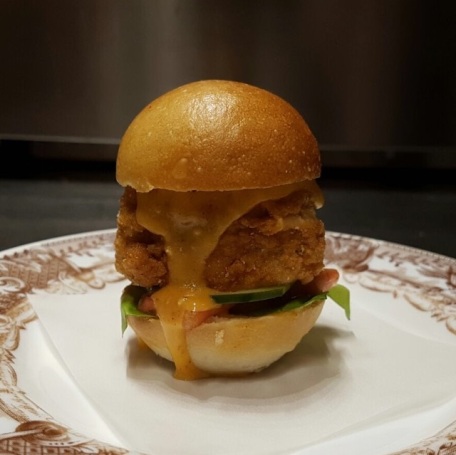
Mollete de Barbate, a David Chang-like bun stacked with Barbate tuna, cucumber, tomato and a dressing of Spanish pimentón, garlic, vinegar and cumin.

dos-pebrots_mollete-de-barbate

Guisantes con jamón, tender young peas in a jamón Ibérico broth with a perfect egg yolk in the center to further enrich the sauce.  The inspiration supposedly goes back to the time when the wine God Bacchus was known a the little “pea.”


Gerry Dishes: My interpretation back in the states of the Guisantes con jamón dish inspired by Albert Raurich at Dos Pebrots: Peas in a white wine, Spanish Extra Virgin Olive oil, water and  bits of jamón Ibérico broth with a fresh egg yolk spooned in at the end.   I bought a bag of Trader Joe's English Peas and started the dish with some tacos de  jamón Ibérico (diced bits jamón Ibérico leftovers that I always buy in the markets to use in dishes) sauteed in some Spanish EVOO, then the peas, then a little white wine, then some water.  I let the peas cook about 2 minutes or so, then took them out, put them in bowls, poured the hot broth in, then spooned a raw egg yolk into each bowl.

Cebolla negra, a Neolithic blackened onion served with garum (the fermented Roman anchovy-fish sauce of legend).  Don't eat the hay underneath even at a attempt to get at the garum--it tastes like hay;


Tortilla unilateral de piñones, a single sided ‘tortilla” (omelette) with perifollo (chervil), garum (I really wanted to try some authentic garum!) and honey, inspired by a recipe from the 1st Century BC.


The parade of dishes--Raurich uses a mix of different antique china pieces (few match, as if they were purchased at Flea Market) as serving plates and bowls--began with the nicely done, but too bland puerros (leeks); then lovely, high quality beberechos (cockles) that were reminiscent of many such dishes in Galicia and the Basque Country cooking; and the exquisite guisantes con jamón, the superb peas with Ibérico ham broth and that egg yolk that is so simple, but one of my favorite sauces.  The peas would be a star dish anyway.

I was looking forward to the roasted cebolla negra, “blackened onion” with garum, which is a dish with great potential, but I found it begged for a more flavorful roasted onion (I love roasted onions) and a more assertive garum sauce, at least as I have long imagined garum.  I brought the gentrified garum up with Raurich later and he promised the next time he will serve me a “brutalgarum.   

Anthony Bourdain and crew finished filming and began to file out past our table to get to their next shoot.  Bourdain stopped to say hello and asked if I was living in Barcelona full-time now. (No.)  And Albert Adrià, the genius—with his brother Ferran—behind Tickets, Bodega 1900, Pakta, Hoja Santa and more), whom I have known since 1997 and with whom I spent a little time at Madrid Fusión the week before and at his places in Barcelona last year, stopped by for abrazos and a few pleasantries.
 
After the film crew filed out, a server came to our table with pad to protect the surface, a hot cast-iron two handled skillet, a pair of palillos (chopsticks), and the ingredients to whip up table-center using the sticks the 1st Century-inspired tortilla unilateral de piñones, the single sided omelette with chervil, garum (this time the dish called for the more restrained garum) and honey.  It was delicious and one of the most visually attractive dishes on the menu. 


Kay and I had had an incredible lunch that afternoon on a taburete (barstool) at the counter of Quim de la Boquería in La Boquería market, a lunch that had not ended until after five p.m., when my friend Quim Marquéz decided we had had enough dishes of his super-star food and Juve y Camps Pinot Noir Rosat Cava, so we were fine with the dishes we had ordered at Dos Pebrots.   The menu recommends that if you do not have mucha hambre, are not very hungry, you should order only 5-6 plates. 

The Best Girl in the World, my fiancee Kay, at Dos Pebrots, Barcelona, Friday, Feb. 3, 2017

We planned to finish our Raventós i Blanc Blanc de Nits and perhaps get a chance to talk to Albert Raurich once things settled down a bit.  High on the wall over the entrance, so you can see it on your way out, is a humorous PhotoShopped color photograph of the main players at the legendary, now-closed, elBulli.  Looking like a rather roughshod band of fishermen are the now superstars that made elBulli into a legend: chef de cuisine Albert Raurich, my old friend the late Juli Soler, chef Ferran Adrià and chefs Oriol Castro, Mateu Casañas, Eduard Xatruch, and Albert Adrià. 


Now that the Bourdain videotaping ban on approaching the open kitchen had been lifted, I walked up to photograph the Executive Chef Borja García Ordoño, who, sporting some serious neck tattoos, was putting the finishing touches on some dishes.


However, we were not done.  Unordered, but sent out by Raurich, the tetas de cerda Ibérica Maldonado confitado arrived, served on the upturned ceramics “Ibérico” sow with the gelatinous looking rounds of sliced off, grilled tits confit--four of them, each strategically placed along where they might have been on a real pig.  Maldonado is a quality producer of jamones Ibéricos de bellota, hams produced from free-run Ibérico pata negra pigs allowed to graze for two months under the oaks in in the Dehesa de Extremadura D. O. of western Spain.  I am sure Sr. Maldonado´s jamones Ibéricos de bellotain must be stupendous, but these were tetas, acorn flavored or not. And except for the Sherry glass with a side teta chaser of Ibérico broth, this dish supposedly dates back to the Romans, where it must have been the rage at orgies, sliced off real pig carcasses.  It is tempting to guess that the decline of the Roman Empire began precisely with the presumed rise in the popularity of this dish. 


The tetas not withstanding, I found the concept at Dos Pebrots fascinating, a trip down a little-known historical culinary trail that Chef Albert Raurich is blazing and no doubt soon, admiring chefs will soon begin to imitate.   Raurich’s ideas and execution are terrific and the history-based dish ideas will continue to grow as he expands his intellectual pursuit of long-lost culinary concepts.  
 
Dos Pebrots is indeed a trip back in time, with some very refined modern creative touches from the mind and talent of a great chef. 

Albert Raurich is an amusing, fun-loving guy.  He sat down with us at the end of our meal and began to clown around for these photographs.


Albert Raurich in a pensive moment at Asisa Madrid Fusión 2017.

All photos and texts copyright 2017 by Gerry Dawes.

  * * * * *

Constructive comments are welcome and encouraged.
 
 
If you enjoy these blog posts, please consider a contribution to help me continue the work of gathering all this great information and these photographs for Gerry Dawes's Insider's Guide to Spanish Food, Wine, Culture and Travel. Contributions of $5 and up will be greatly appreciated. Contributions of $100 or more will be acknowledged on the blog. Please click on this secure link to Paypal to make your contribution.
 
Text and photographs copyright by Gerry Dawes©2021.  Using photographs without crediting Gerry Dawes©2021 on Facebook.  Publication without my written permission is not authorized.
 
* * * * *
  Shall deeds of Caesar or Napoleon ring
More true than Don Quixote's vapouring?
Hath winged Pegasus more nobly trod
Than Rocinante stumbling up to God?
 
Poem by Archer M. Huntington inscribed under the Don Quixote on his horse Rocinante bas-relief sculpture by his wife, Anna Vaughn Hyatt Huntington,
in the courtyard of the Hispanic Society of America’s incredible museum at 613 W. 155th Street, New York City.
 ________________________________________________________________________
 Gastronomy Blogs

In 2019, again ranked in the Top 50 Gastronomy Blogs and Websites for Gastronomists & Gastronomes in 2019 by Feedspot. (Last Updated Oct 23, 2019) 

"The Best Gastronomy blogs selected from thousands of Food blogs, Culture blogs and Food Science blogs in our index using search and social metrics. We’ve carefully selected these websites because they are actively working to educate, inspire, and empower their readers with frequent updates and high-quality information."  

36. Gerry Dawes's Spain: An Insider's Guide to Spanish Food, Wine, Culture and Travel


About Gerry Dawes

My good friend Gerry Dawes, the unbridled Spanish food and wine enthusiast cum expert whose writing, photography, and countless crisscrossings of the peninsula have done the most to introduce Americans—and especially American food professionals—to my country's culinary life." -- Chef-restaurateur-humanitarian José Andrés, Nobel Peace Prize Nominee and Oscar Presenter 2019


Gerry Dawes was the Producer and Program Host of Gerry Dawes & Friends, a weekly radio progam on Pawling Public Radio in Pawling, New York (streaming live and archived at www.pawlingpublicradio.org and at www.beatofthevalley.com.)

Dawes was awarded Spain's prestigious Premio Nacional de Gastronomía (National Gastronomy Award) in 2003. He writes and speaks frequently on Spanish wine and gastronomy and leads gastronomy, wine and cultural tours to Spain. He was a finalist for the 2001 James Beard Foundation's Journalism Award for Best Magazine Writing on Wine, won The Cava Institute's First Prize for Journalism for his article on cava in 2004, was awarded the CineGourLand “Cinéfilos y Gourmets” (Cinephiles & Gourmets) prize in 2009 in Getxo (Vizcaya) and received the 2009 Association of Food Journalists Second Prize for Best Food Feature in a Magazine for his Food Arts article, a retrospective piece about Catalan star chef, Ferran Adrià. 


". . .That we were the first to introduce American readers to Ferran Adrià in 1997 and have ever since continued to bring you a blow-by-blow narrative of Spain's riveting ferment is chiefly due to our Spanish correspondent, Gerry "Mr. Spain" Dawes, the messianic wine and food journalist raised in Southern Illinois and possessor of a self-accumulated doctorate in the Spanish table. Gerry once again brings us up to the very minute. . ." - - Michael & Ariane Batterberry, Editor-in-Chief/Publisher and Founding Editor/Publisher, Food Arts, October 2009. 
 
Pilot for a reality television series on wine, gastronomy, culture and travel in Spain.
 
Related Posts with Thumbnails