Share This Gerry Dawes's Spain Post


Instagram

In 2026, ranked #7 in the Top 30 Gastronomy Blogs (and Websites for Gastronomists & Gastronomes by Feedspot. (Ranked in the top 50 since 2019). "The Best Gastronomy blogs selected from thousands of Food blogs, Culture blogs and Food Science. We’ve carefully selected these websites because they are actively working to educate, inspire, and empower their readers with . . . high-quality information.

More than 3,640,000 views since inception, 123,000+ views in August 2026.


Ranked #7. Gerry Dawes's Spain: An Insider's Guide to Spanish Food, Wine, Culture and Travel gerrydawesspain.com

"My good friend Gerry Dawes, the unbridled Spanish food and wine enthusiast cum expert whose writing, photography, and countless crisscrossings of the peninsula have done the most to introduce Americans—and especially American food professionals—to my country's culinary life. . .” - - Chef-restaurateur-humanitarian José Andrés, Nobel Peace Prize Nominee and Oscar Presenter 2019; Chef-partner of Mercado Little Spain at Hudson Yards, New York 2019

7/15/2013

Madrid Classic: La Casa del Abuelo for Gambas al Ajillo (fired in stove-top clay ceramics cazuelas or caceroles).


* * * * *

Gamba (shrimp) painted on a window at La Casa del Abuelo, Madrid, specialist in gambas al ajillo fired in stove-top clay ceramics cazuelas or caceroles.  Photo: Gerry Dawes©2012 / gerrydawes@aol.com

 Gambas al ajillo being cooked in a stove-top cazuela at La Casa del Abuelo (grandfather's place), Madrid. 
Photo: Gerry Dawes©2012 / gerrydawes@aol.com

 
 Firing gambas al ajillo in a stove-top cazuela at La Casa del Abuelo (Grandfather's place), Madrid.  
Photo: Gerry Dawes©2012 / gerrydawes@aol.com

___________________________________________________ About Gerry Dawes

Gerry Dawes was awarded Spain's prestigious Premio Nacional de Gastronomía (National Gastronomy Award) in 2003. He writes and speaks frequently on Spanish wine and gastronomy and leads gastronomy, wine and cultural tours to Spain. He was a finalist for the 2001 James Beard Foundation's Journalism Award for Best Magazine Writing on Wine, won The Cava Institute's First Prize for Journalism for his article on cava in 2004, was awarded the CineGourLand “Cinéfilos y Gourmets” (Cinephiles & Gourmets) prize in 2009 in Getxo (Vizcaya) and received the 2009 Association of Food Journalists Second Prize for Best Food Feature in a Magazine for his Food Arts article, a retrospective piece about Catalan star chef, Ferran Adrià. 

In 2009, Dawes was awarded the Food Arts Silver Spoon Award in a profile written by José Andrés

". . .That we were the first to introduce American readers to Ferran Adrià in 1997 and have ever since continued to bring you a blow-by-blow narrative of Spain's riveting ferment is chiefly due to our Spanish correspondent, Gerry "Mr. Spain" Dawes, the messianic wine and food journalist raised in Southern Illinois and possessor of a self-accumulated doctorate in the Spanish table. Gerry once again brings us up to the very minute. . ." - - Michael & Ariane Batterberry, Editor-in-Chief/Publisher and Founding Editor/Publisher, Food Arts, October 2009. 
 
Mr. Dawes is currently working on a reality television series  
on wine, gastronomy, culture and travel in Spain.
 

Madrid Classic: Painting at the original Las Bravas (Callejón del Gato, 3 Madrid), the place where patatas bravas, a Madrid-origen specialty, originated.


* * * * *

Painting at the original Las Bravas (Callejón del Gato, 3 Madrid), the place where patatas bravas, a Madrid-origen specialty, originated (the owners have a registered patent on the sauce).  Patatas bravas subsequently became a tapas famous around the world. This incredible painting is one of my all-time favorites of a culinary subject (second only to the original that used to hang over the bar at La Bravas and for years hung there with a big tear in it).  
Photo by Gerry Dawes©2009 / gerrydawes@aol.com

Madrid Classics. Taurine aficionados' hangout Viña ‘P’ bar-restaurant, Plaza Santa Ana


* * * * *


Madrid Classics. Taurine aficionados' hangout Viña ‘P’ bar-restaurant, Plaza Santa Ana, Madrid.  
Photos by Gerry Dawes©2009. Contact: gerrydawes@aol.com / Facebook / Twitter.

Al Andalus Train, New Camino de Santiago Itinerary to Open July 21


* * * * *

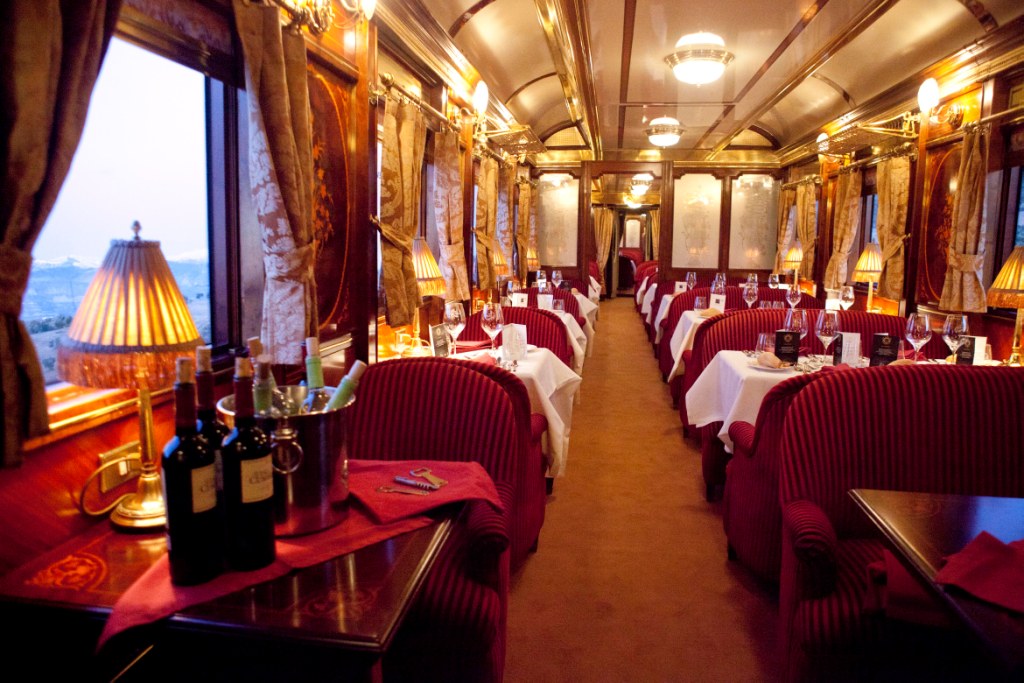
 Al Andalus from the Luxury Train Club
Al Andalus Train, New Camino de Santiago Itinerary  - new and innovative route, 6 days and 5 nights, Zaragoza to A Coruña. 
The itinerary will include visits to La Rioja, Burgos, Astorga, Santiago de Compostela, Pontevedra and Vigo. 

La Rioja – wine tasting in a classic bodega of world-renowned Rioja wine; 

Burgos – Castilian history, El Cid and superb Gothic architecture.

Astorga - founded by the Romans, famous for pastries and chocolate; 

Santiago de Compostela – the final destination of pilgrims who have for over 1,000 years walked the St. James Way, ‘El Camino de Santiago’, to the Cathedral where the remains of the apostle Saint James are buried; 

Pontevedra – (derived from Old Bridge in Latin), sitting between mountains and the sea, with typical Galician mansions (pazos) and its shellfish cuisine accompanied by the local Albariño wine. 

Vigo – Galicia’s largest city and seaport, with a long and often turbulent history reflected in its architecture and culture; 

A Coruña – an important sea port for centuries, it played a key role in the Napoleonic Wars in the early 18th century. 

Departure dates from Zaragoza: 21 and 28 July 2013 

Prices per person for this special 6-days / 5-nights journey 

Superior Suite, double € 3,650 Superior Suite, single € 4,850 Standard Suite, double € 2,950 Standard Suite, single € 3,950 Triple supplement (children under 12) : € 1,000 

Contact us for more information and availability. - See more at: http://www.luxurytrainclub.com/press/al-andalus-st-james-itinerary


Al Andalus Camino de Santiago Itinerary

Zaragoza – Santiago de Compostela- A Coruña

Sunday July 21, AVE Madrid Atocha to Zaragoza Delicias, Visit to Zaragoza, Night in Miranda de Ebro

After the arrival of the group at 12:00h in the Delicias de Zaragoza station and comfortably boarding on the train, we will go eat in the city centre where we will visit in the beginning early afternoon. Zaragoza was founded by Cesar Augusta in the year 24 a. C. Under the name Medina Albaida Sarakosta, the Arabs turned the ancient Roman city into one of the major centres of the cultural world during its time. An exceptional relic from this time period is the palace-fortress of the Aljafería, which has been magnificently preserved. We will also visit La Plaza de Las Catedrales which is the meeting place of the very significant buildings la Basílica del Pilar and la Catedral of San Salvador. 

  Monument to Goya in the center of Zaragoza. 
Photo: Gerry Dawes©2010 / gerrydawes@aol.com.


Nuestra Sra. del Pilar, Artisan Chocolate Shop near the Cathedral.  Souvenir of Zaragoza: "It is a sin. . .not to try it."  Photo: Gerry Dawes©2010 / gerrydawes@aol.com.


La Catedral-Basílica de Nuestra Señora del Pilar de Zaragoza, image of La Virgen del Pilar.
Photo: Gerry Dawes©2010 / gerrydawes@aol.com.


Nuestra Señora del Pilar de Zaragoza, image of La Virgen del Pilar. Image in a shop near the Cathedral. 
 Photo: Gerry Dawes©2010 / gerrydawes@aol.com.  

After the visit to Zaragoza, the train will to take us on the journey to Miranda de Ebro and during the trip we will have our first dinner on board.

We will spend the night with the train stationed in Miranda de Ebro (Burgos province).
________________________________________________________________________ 

About Gerry Dawes   

Gerry Dawes was awarded Spain's prestigious Premio Nacional de Gastronomía (National Gastronomy Award) in 2003. He writes and speaks frequently on Spanish wine and gastronomy and leads gastronomy, wine and cultural tours to Spain. He was a finalist for the 2001 James Beard Foundation's Journalism Award for Best Magazine Writing on Wine, won The Cava Institute's First Prize for Journalism for his article on cava in 2004, was awarded the CineGourLand “Cinéfilos y Gourmets” (Cinephiles & Gourmets) prize in 2009 in Getxo (Vizcaya) and received the 2009 Association of Food Journalists Second Prize for Best Food Feature in a Magazine for his Food Arts article, a retrospective piece about Catalan star chef, Ferran Adrià. 


 ". . .That we were the first to introduce American readers to Ferran Adrià in 1997 and have ever since continued to bring you a blow-by-blow narrative of Spain's riveting ferment is chiefly due to our Spanish correspondent, Gerry "Mr. Spain" Dawes, the messianic wine and food journalist raised in Southern Illinois and possessor of a self-accumulated doctorate in the Spanish table. Gerry once again brings us up to the very minute. . ." - - Michael & Ariane Batterberry, Editor-in-Chief/Publisher and Founding Editor/Publisher, Food Arts.
 
Mr. Dawes is currently working on a reality television series
on wine, gastronomy, culture and travel in Spain.
 

Madrid Classics: Lhardy, one of Madrid's greatest delicatessens.


* * * * *


Gerry Dawes at Lhardy, one of Madrid's greatest delicatessens.  This historic place dates to the 19th Century and has a full service restaurant upstairs.  Stopping between noon and 2 pm for a cup of bouillon, spiked with a Sherry of your own choosing (and pour) and accompanied by a self-service canape and a glass of cool water from a samovar, is a venerated Madrid custom. 
Photo by Docsconz, John Sconzo.

7/12/2013

Authentic Sevilla Gazpacho Doña María


* * * * *
 

Bowl of gazpacho or what's left of a bowl of gazpacho. 
Photo: Gerry Dawes©2011 / gerrydawes@aol.com.

Authentic Sevilla Gazpacho Doña María, named after my Spanish mother, María Franco, who showed my former wife, Diana Valenti, and I how to do it. Many Sevillanas use green pepper, I use red pepper. The six guarniciones are: diced tomatoes, cucumbers, onions (I use chopped scallions), green bell pepper (I use red), cubed bread and chopped hard cooked eggs. 

In latter day Spain, in the days before the crisis anyway, in some places, as a sign of their prosperity I guess, they began the fashion of added chopped jamón Ibérico as a garnish. I do not. That takes this wonderful all-veggie dish out of the vegetarian category, is superfluous and dimishes the greatness of the dish, IMHO.


* * * * *


Gazpacho Slide Show

_______________________________________________________________________________________________


About Gerry Dawes  

Gerry Dawes was awarded Spain's prestigious Premio Nacional de Gastronomía (National Gastronomy Award) in 2003. He writes and speaks frequently on Spanish wine and gastronomy and leads gastronomy, wine and cultural tours to Spain. He was a finalist for the 2001 James Beard Foundation's Journalism Award for Best Magazine Writing on Wine, won The Cava Institute's First Prize for Journalism for his article on cava in 2004, was awarded the CineGourLand “Cinéfilos y Gourmets” (Cinephiles & Gourmets) prize in 2009 in Getxo (Vizcaya) and received the 2009 Association of Food Journalists Second Prize for Best Food Feature in a Magazine for his Food Arts article, a retrospective piece about Catalan star chef, Ferran Adrià. 


". . .That we were the first to introduce American readers to Ferran Adrià in 1997 and have ever since continued to bring you a blow-by-blow narrative of Spain's riveting ferment is chiefly due to our Spanish correspondent, Gerry "Mr. Spain" Dawes, the messianic wine and food journalist raised in Southern Illinois and possessor of a self-accumulated doctorate in the Spanish table. Gerry once again brings us up to the very minute. . ." - - Michael & Ariane Batterberry, Editor-in-Chief/Publisher and Founding Editor/Publisher, Food Arts, October 2009. 

 
Trailer for a proposed reality television series on wine, gastronomy, culture and travel in Spain.
 
The Spanish Artisan Wine Group - Gerry Dawes Selections

Experience Spain With Gerry Dawes: Customized Culinary, Wine & Cultural Trips to Spain & Travel Consulting on Spain

 Gerry Dawes can be reached at gerrydawes@aol.com

7/07/2013

Iconic Food and Wine Photographs From Spain


* * * * *


This painting at Madrid's Las Bravas, where patatas bravas originated,  used to hang over the bar in its original form (complete with a prominent tear in the canvas).  Now it appears to be a faithful reproduction--without the hole in the canvas--and it hangs in its own special place at the far end of the restaurant, which has now been remodeled to resemble something like a Spanish McDonald's. This piece is so incredibly camp that it is one of my favorite culinary works of art in Spain, or anywhere else for that matter.  Ole, Las Bravas!

* * * * *

(Double click on image, go to Picasa web albums, click on slideshow and the F11 for full screen view.)
___________________________________________________________  

About Gerry Dawes  

Gerry Dawes's Spain: An Insider's Guide to Spanish Food, Wine, Culture and Travel  

Gerry Dawes was awarded Spain's prestigious Premio Nacional de Gastronomía (National Gastronomy Award) in 2003. He writes and speaks frequently on Spanish wine and gastronomy and leads gastronomy, wine and cultural tours to Spain. He was a finalist for the 2001 James Beard Foundation's Journalism Award for Best Magazine Writing on Wine, won The Cava Institute's First Prize for Journalism for his article on cava in 2004, was awarded the CineGourLand “Cinéfilos y Gourmets” (Cinephiles & Gourmets) prize in 2009 in Getxo (Vizcaya) and received the 2009 Association of Food Journalists Second Prize for Best Food Feature in a Magazine for his Food Arts article, a retrospective piece about Catalan star chef, Ferran Adrià. 

In December, 2009, Dawes was the subject of the Food Arts Silver Spoon Award in a profile written by José Andrés

". . .That we were the first to introduce American readers to Ferran Adrià in 1997 and have ever since continued to bring you a blow-by-blow narrative of Spain's riveting ferment is chiefly due to our Spanish correspondent, Gerry "Mr. Spain" Dawes, the messianic wine and food journalist raised in Southern Illinois and possessor of a self-accumulated doctorate in the Spanish table. Gerry once again brings us up to the very minute. . ." - - Michael & Ariane Batterberry, Editor-in-Chief/Publisher and Founding Editor/Publisher, Food Arts, October 2009. 
 
Mr. Dawes is currently working on a reality television series 
on wine, gastronomy, culture and travel in Spain.

4/04/2013

Sherry Primer - Part Two With Gerry Dawes - Bodegas Hidalgo Sherries


* * * * *

 
Sherry Primer - Part Two

Explaining Sherries with poet Robert Balun. Tasting and descriptions of a range of Bodegas Hidalgo La Gitana Sherries with Spanish wine expert, Gerry Dawes, Founder & Jefe of The Spanish Artisan Wine Group - Gerry Dawes Selections. (Hidalgo Sherries are imported by Classical Wines (Seattle, WA), not The Spanish Artisan Wine Group.) Gerry Dawes©2013; gerrydawes@aol.com

_________________________________________________________________________________________________

About Gerry Dawes  

Gerry Dawes's Spain: An Insider's Guide to Spanish Food, Wine, Culture and Travel  

Gerry Dawes was awarded Spain's prestigious Premio Nacional de Gastronomía (National Gastronomy Award) in 2003. He writes and speaks frequently on Spanish wine and gastronomy and leads gastronomy, wine and cultural tours to Spain. He was a finalist for the 2001 James Beard Foundation's Journalism Award for Best Magazine Writing on Wine, won The Cava Institute's First Prize for Journalism for his article on cava in 2004, was awarded the CineGourLand “Cinéfilos y Gourmets” (Cinephiles & Gourmets) prize in 2009 in Getxo (Vizcaya) and received the 2009 Association of Food Journalists Second Prize for Best Food Feature in a Magazine for his Food Arts article, a retrospective piece about Catalan star chef, Ferran Adrià. 

In December, 2009, Dawes was the subject of the Food Arts Silver Spoon Award in a profile written by José Andrés

". . .That we were the first to introduce American readers to Ferran Adrià in 1997 and have ever since continued to bring you a blow-by-blow narrative of Spain's riveting ferment is chiefly due to our Spanish correspondent, Gerry "Mr. Spain" Dawes, the messianic wine and food journalist raised in Southern Illinois and possessor of a self-accumulated doctorate in the Spanish table. Gerry once again brings us up to the very minute. . ." - - Michael & Ariane Batterberry, Editor-in-Chief/Publisher and Founding Editor/Publisher, Food Arts, October 2009. 
 
Pilot for a reality television series 
on wine, gastronomy, culture and travel in Spain.

Experience Spain With Gerry Dawes: Customized Culinary, Wine & Cultural Trips to Spain & Travel Consulting on Spain  

Gerry Dawes can be reached at gerrydawes@aol.com.

Sherry Primer - Part One With Gerry Dawes - Bodegas Hidalgo Sherries


* * * * *

  Sherry Primer - Part One 

Explaining Sherries with poet Robert Balun. Tasting and descriptions of a range of Bodegas Hidalgo La Gitana Sherries with Spanish wine expert, Gerry Dawes, Founder & Jefe of The Spanish Artisan Wine Group - Gerry Dawes Selections. (Hidalgo Sherries are imported by Classical Wines (Seattle, WA), not The Spanish Artisan Wine Group.) Gerry Dawes©2013; gerrydawes@aol.com

_________________________________________________________________________________________________

About Gerry Dawes  

Gerry Dawes's Spain: An Insider's Guide to Spanish Food, Wine, Culture and Travel  

Gerry Dawes was awarded Spain's prestigious Premio Nacional de Gastronomía (National Gastronomy Award) in 2003. He writes and speaks frequently on Spanish wine and gastronomy and leads gastronomy, wine and cultural tours to Spain. He was a finalist for the 2001 James Beard Foundation's Journalism Award for Best Magazine Writing on Wine, won The Cava Institute's First Prize for Journalism for his article on cava in 2004, was awarded the CineGourLand “Cinéfilos y Gourmets” (Cinephiles & Gourmets) prize in 2009 in Getxo (Vizcaya) and received the 2009 Association of Food Journalists Second Prize for Best Food Feature in a Magazine for his Food Arts article, a retrospective piece about Catalan star chef, Ferran Adrià. 

In December, 2009, Dawes was the subject of the Food Arts Silver Spoon Award in a profile written by José Andrés

". . .That we were the first to introduce American readers to Ferran Adrià in 1997 and have ever since continued to bring you a blow-by-blow narrative of Spain's riveting ferment is chiefly due to our Spanish correspondent, Gerry "Mr. Spain" Dawes, the messianic wine and food journalist raised in Southern Illinois and possessor of a self-accumulated doctorate in the Spanish table. Gerry once again brings us up to the very minute. . ." - - Michael & Ariane Batterberry, Editor-in-Chief/Publisher and Founding Editor/Publisher, Food Arts, October 2009. 
 
Pilot for a reality television series 
on wine, gastronomy, culture and travel in Spain.

Experience Spain With Gerry Dawes: Customized Culinary, Wine & Cultural Trips to Spain & Travel Consulting on Spain  

Gerry Dawes can be reached at gerrydawes@aol.com.

3/06/2013

Patatas a la Riojana, One of the Greatest Folk Dishes of Spain


 * * * * *
 
Vicenta Pérez Escarta, owner-chef at Casa Masip in Ezcaray, La Rioja
with a pot of patatas a la riojana, one of the greatest folk dishes of Spain.
  Photograph by Gerry Dawes©2012; gerrydawes@aol.com / Facebook / Twitter.

A pot of patatas a la riojana, one of the greatest folk dishes of Spain, made 
by owner-chef Vicenta Pérez Escarta at Casa Masip in Ezcaray, La Rioja.
 Photograph by Gerry Dawes©2012; gerrydawes@aol.com / Facebook / Twitter.

________________________________________________________________________

About Gerry Dawes   

Gerry Dawes was awarded Spain's prestigious Premio Nacional de Gastronomía (National Gastronomy Award) in 2003. He writes and speaks frequently on Spanish wine and gastronomy and leads gastronomy, wine and cultural tours to Spain.  He was a finalist for the 2001 James Beard Foundation's Journalism Award for Best Magazine Writing on Wine and won The Cava Institute's First Prize for Journalism for his article on cava in 2004.  He was awarded the CineGourLand “Cinéfilos y Gourmets” (Cinephiles & Gourmets) prize in 2009 in Getxo (Vizcaya) and received the 2009 Association of Food Journalists Second Prize for Best Food Feature in a Magazine for his Food Arts article, a retrospective piece about Catalan star chef, Ferran Adrià. 


". . .That we were the first to introduce American readers to Ferran Adrià in 1997 and have ever since continued to bring you a blow-by-blow narrative of Spain's riveting ferment is chiefly due to our Spanish correspondent, Gerry "Mr. Spain" Dawes, the messianic wine and food journalist raised in Southern Illinois and possessor of a self-accumulated doctorate in the Spanish table. Gerry once again brings us up to the very minute. . ." - - Michael & Ariane Batterberry, Editor-in-Chief/Publisher and Founding Editor/Publisher, Food Arts. 
 
Mr. Dawes is currently working on a reality television series  
n wine, gastronomy, culture and travel in Spain.
 

3/05/2013

Warning: Beware of Rental Car Deals That Seem To Good To Be True

A warning about rentalcars.com.  There prices seem to good to be true.  They are.  They have you pay up front for what looks like a great deal.  I reserved and paid for a car to pick up at the Vigo airport in Galicia.  I was told it would be Europcar and it was.  When I got to Vigo and went to the counter to pick up my car, the lady at Europcar was very nice and very apologetic. She informed me that there would be a $70+ airport pickup charge that had to be put on my credit card.  So I paid the normal price and got no deal at only.  Also, it is very easy to get upgrades to a better, bigger car this days, since all the car companies are getting stuck with cars that use more gas or deisel, so they are glad to give you one.  The catch is it will cost you a chunk more in gas money!

3/01/2013

Plaza Santa Ana, Plaza Mayor, Goya's Madrid, John Dos Passos "Rosinante To The Road Again" (1922)

 * * * * *

"All the gravel paths of the Plaza Santa Ana were encumbered with wicker chairs. At one corner seven blind musicians all in a row, with violins, a cello, guitars and a mournful cornet, toodled and wheezed and twiddled through the "Blue Danube." 

At another a crumpled old man, with a monkey dressed in red silk drawers on his shoulder,  ground out "la Paloma" from a hurdygurdy. In the middle of the green plot a fountain sparkled in the yellow light that streamed horizontally from the cafés fuming with tobacco  smoke on two sides of the square, and ragged guttersnipes dipped their legs in the slimy basin round about it, splashing one another, rolling like little colts in the grass.


From the cafés and the wicker chairs and tables, clink of glasses and dominoes, patter of voices, scuttle of waiters with laden trays, shouts of men selling shrimps, prawns, fried potatoes, watermelon, nuts in little cornucopias of red, green, or yellow paper. Light gleamed on the buff-colored disk of a table in front of me, on the rims of two beer-mugs, in the eyes of a bearded man with an aquiline nose very slender at the bridge who leaned towards me talking in a deep even voice, telling me in swift lisping Castilian stories of Madrid. 


First of the Madrid of Felipe Cuarto: corridas in the Plaza Mayor, auto da fé, pictures by Velasquez on view under the arcade where now there is a doughnut and coffee shop, pompous coaches painted vermilion, cobalt, gilded, stuffed with ladies in vast bulge of damask and brocade, plumed cavaliers, pert ogling pages, lurching and swaying through the foot-deep stinking mud of the streets; plays of Calderon and Lope presented in gardens tinkling with jewels and sword-chains where ladies of the court flirted behind ostrich fans with stiff lean-faced lovers.

Then Goya's Madrid: riots in the Puerta del Sol, majas leaning from balconies, the fair of San Isidro by the river, scuttling of ragged guerrilla bands, brigands and patriots; tramp of the stiffnecked grenadiers of Napoleon; pompous little men in short-tailed wigs dying the dos de Mayo with phrases from Mirabeau on their lips under the brick arch of the arsenal; frantic carnivals of the Burial of the Sardine; naked backs of flagellants dripping blood, lovers hiding under the hoop skirts of the queen. 


Then the romantic Madrid of the thirties, Larra, Becquer, Espronceda, Byronic gestures, vigils in graveyards, duels, struttings among the box-alleys of the Retiro, pale young men in white stocks shooting themselves in attics along the Calle Mayor. "And now," the voice became suddenly gruff with anger, "look at Madrid. They closed the Café Suizo, they are building a subway, the Castellana looks more like the Champs Elysées every day.... It's only on the stage that you get any remnant of the real Madrid. Benavente is the last madrileño.  Tiene el sentido de lo castizo. He has the sense of the ..." all the end of the evening went to the discussion of the meaning of the famous word "castizo."


The very existence of such a word in a language argues an acute sense of style, of the manner of doing things. Like all words of real import its meaning is a gamut, a section of a spectrum rather than something fixed and irrevocable. The first implication seems to be "according to Hoyle," following tradition: a neatly turned phrase, an essentially Castilian cadence, is castizo; a piece of pastry or a poem in the old tradition are castizo, or a compliment daintily turned, or a cloak of the proper fullness with the proper red velvet-bordered lining gracefully flung about the ears outside of a café.  

Lo castizo essence of the local, of the regional, the last stronghold of Castilian arrogance, refers not to the empty shell of traditional observances but to the very core and gesture of them. Ultimately lo castizo means all that is salty, savourous of the red and yellow hills and the bare plains and the deep arroyos palaces and belfries, and the beggars in snuff-colored cloaks and the mule-drivers with blankets over their shoulders, and the discursive lean-faced gentlemen grouped about tables at cafés and casinos, and the stout dowagers with mantillas over their gleaming black hair walking to church in the morning with missals clasped in fat hands, all that is acutely indigenous, Iberian, in the life of Castile."
 

About Gerry Dawes

Gerry Dawes was awarded Spain's prestigious Premio Nacional de Gastronomía (National Gastronomy Award) in 2003. He writes and speaks frequently on Spanish wine and gastronomy and leads gastronomy, wine and cultural tours to Spain. He was a finalist for the 2001 James Beard Foundation's Journalism Award for Best Magazine Writing on Wine, won The Cava Institute's First Prize for Journalism for his article on cava in 2004, was awarded the CineGourLand prize in 2009 and received the Association of Food Journalists 2009 Second Prize for Best Food Feature in a Magazine for his Food Arts article, a retrospective piece about Catalan star chef, Ferran Adrià.


Mr. Dawes is currently working on a reality television
series on wine, gastronomy, culture and travel in Spain.


Experience Spain With Gerry Dawes: Culinary Trips to Spain & Travel Consulting on Spain

Gerry Dawes can be reached at gerrydawes@aol.com; Alternate e-mail (use only if your e-mail to AOL is rejected): gerrydawes@hotmail.com

2/28/2013

John Dos Passos: A Tale of Madrid, La Plaza Santa Ana, Jorge Manrique, Pastora and Why We Love Spain!


 * * * * *

ROSINANTE TO THE ROAD AGAIN
Copyright, 1922, George H. Doran Company, New York
I: A Gesture and a Quest

Telemachus had wandered so far in search of his father he had quite forgotten what he was looking for. He sat on a yellow plush bench in the café El Oro del Rhin, Plaza Santa Ana, Madrid (see related story on Cervecerías in the Plaza Santa Ana), swabbing up with a bit of bread the last smudges of brown sauce off a plate of which the edges were piled with the dismembered skeleton of a pigeon. Opposite his plate was a similar plate his companion had already polished.  Telemachus put the last piece of bread into his mouth, drank down a glass of beer at one spasmodic gulp, sighed, leaned across the table and said:

"I wonder why I'm here."
 

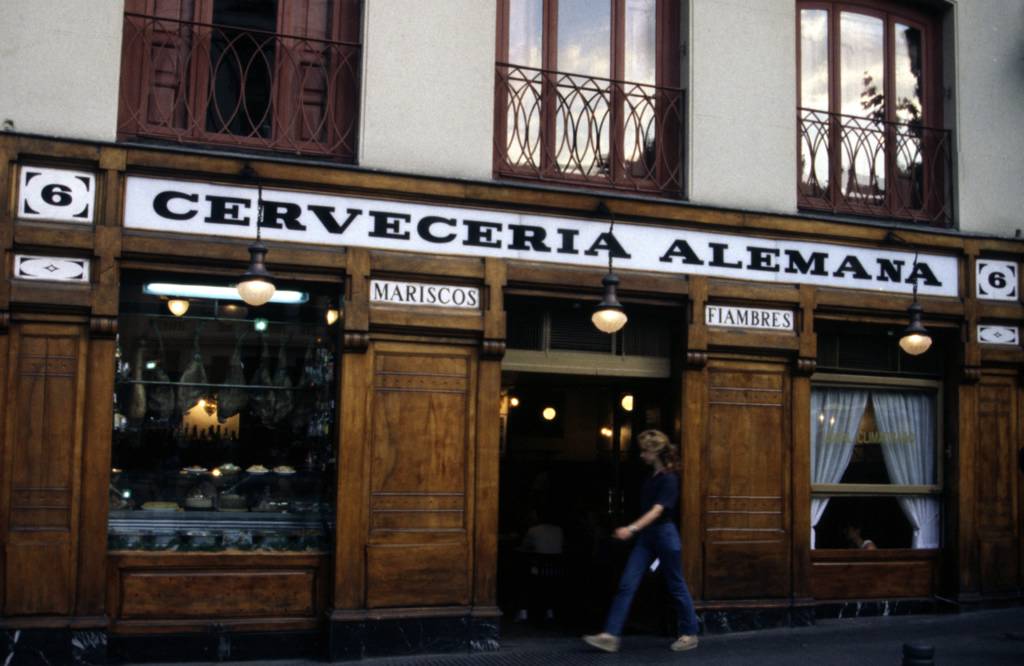
Cervecería Alemana, Hemingway Hangout
Gerry Dawes copyright 2011
 
"Why anywhere else than here?" said Lyaeus, a young man with hollow cheeks and slow-moving hands, about whose mouth a faint pained smile was continually hovering, and he too drank down his beer.

At the end of a perspective of white marble tables, faces thrust forward over yellow plush cushions under twining veils of tobacco smoke, four German women on a little dais were playing Tannhauser. 

Smells of beer, sawdust, shrimps, roast pigeon.

"Do you know Jorge Manrique? That's one reason, Tel," the other man continued slowly.


With one hand he gestured to the waiter for more beer, the other he waved across his face as if to brush away the music; then he recited, pronouncing the words haltingly:

    'Recuerde el alma dormida,
    Avive el seso y despierte
    Contemplando
    Cómo se pasa la vida,
    Cómo se viene la muerte
    Tan callando:
    Cuán presto se va el placer,
    Cómo después de acordado
    Da dolor,
    Cómo a nuestro parecer
    Cualquier tiempo pasado
    Fué mejor.'
[O let the soul her slumbers break, 
Let thought be quickened, and awake;
Awake to see
How soon this life is past and gone,
And death comes softly stealing on,
How silently!
Swiftly our pleasures glide away,
Our hearts recall the distant day
With many sighs;
The moments that are speeding fast
We heed not, but the past,—the past,
More highly prize.]

"It's always death," said Telemachus, "but we must go on."

It had been raining. Lights rippled red and orange and yellow and green on the clean paving-stones. A cold wind off the Sierra shrilled through clattering streets. As they walked, the other man was telling how this Castilian nobleman, courtier, man-at-arms, had shut himself up when his father, the Master of Santiago, died and had written this poem, created this tremendous rhythm of death sweeping like a wind over the world. He had never written anything else.

They thought of him in the court of his great dust-colored mansion at Ocaña, where the
broad eaves were full of a cooing of pigeons and the wide halls had dark rafters painted  with arabesques in vermilion, in a suit of black velvet, writing at a table under a lemon tree.
Down the sun-scarred street, in the cathedral that was building in those days, full of a smell of scaffolding and stone dust, there must have stood a tremendous catafalque where lay with his arms around him the Master of Santiago; in the carved seats of the choirs the stout canons intoned an endless growling litany; at the sacristy door, the flare of the candles flashing occasionally on the jewels of his mitre, the bishop fingered his crosier restlessly, asking his favorite choir-boy from time to time why Don Jorge had not arrived.

And messengers must have come running to Don Jorge, telling him the service was on the point of beginning, and he must have waved them away with a grave gesture of a long white hand,while in his mind the distant sound of chanting, the jingle of the silver bit of his roan horse stamping nervously where he was tied to a twined Moorish column, memories of cavalcades filing with braying of trumpets and flutter of crimson damask into conquered towns, of court ladies dancing, and the noise of pigeons in the eaves, drew together like strings plucked in succession on a guitar into a great wave of rhythm in which his life was sucked away into this one poem in praise of death.

    Nuestras vidas son los ríos
    Que van a dar en la mar,
    Que es el morir....

Telemachus was saying the words over softly to himself as they went into the theatre. The orchestra was playing a Sevillana; as they found their seats they caught glimpses beyond people's heads and shoulders of a huge woman with a comb that pushed the tip of her mantilla a foot and a half above her head, dancing with ponderous dignity. Her dress was pink flounced with lace; under it the bulge of breasts and belly and three chins quaked with every thump of her tiny heels on the stage. As they sat down she retreated bowing like a full-rigged ship in a squall.  The curtain fell, the theatre became very still; next was Pastora.

Strumming of a guitar, whirring fast, dry like locusts in a hedge on a summer day. Pauses that catch your blood and freeze it suddenly still like the rustling of a branch in silent woods at night. A gipsy in a red sash is playing, slouched into a cheap cane chair, behind him a faded crimson curtain. Off stage heels beaten on the floor catch up the rhythm with tentative interest, drowsily; then suddenly added, sharp click of fingers snapped in time; the rhythm slows, hovers like a bee over a clover flower. A little taut sound of air sucked in suddenly goes down the rows of seats. With faintest tapping of heels, faintest snapping of the fingers of a brown hand held over her head, erect, wrapped tight in yellow shawl here the embroidered flowers make a splotch of maroon over one breast, a flecking of green and purple over shoulders and thighs, Pastora Imperio comes across the stage, quietly, unhurriedly. 

In the mind of Telemachus the words return:

    Cómo se viene la muerte
    Tan callando.

Her face is brown, with a pointed chin; her eyebrows that nearly meet over her nose rise in a flattened "A" towards the fervid black gleam of her hair; her lips are pursed in a half-smile as if she were stifling a secret. She walks round the stage slowly, one hand at her waist, the shawl tight over her elbow, her thighs lithe and restless, a panther in a cage.


At the back of the stage she turns suddenly, advances; the snapping of her fingers gets loud, insistent; a thrill whirrs through the guitar like a covey of partridges scared in a field. 

Red heels tap threateningly.


    Decidme: la hermosura,
    La gentil frescura y tez
    De la cara
  
    El color y la blancura,
    Cuando viene la viejez
    Cuál se para?

She is right at the footlights; her face, brows drawn together into a frown, has gone into shadow; the shawl flames, the maroon flower over her breast glows like a coal.


The guitar is silent, her fingers go on snapping at intervals with dreadful foreboding. Then she draws herself up with a deep breath, the muscles of her belly go taut under the tight silk wrinkles of the shawl, and she is off again, light, joyful, turning indulgent glances towards the audience, as a nurse might look in the eyes of a child she has unintentionally frightened with a too dreadful fairy story.


The rhythm of the guitar has changed again; her shawl is loose about her, the long fringe flutters; she walks with slow steps, in pomp, a ship decked out for a festival, a queen in plumes and brocade....

    ¿Qué se hicieron las damas,
    Sus tocados, sus vestidos,
    Sus olores?

   ¿Qué se hicieron las llamas
    De los fuegos encendidos
    De amadores?


And she has gone, and the gipsy guitar-player is scratching his neck
with a hand the color of tobacco, while the guitar rests against his
legs. He shows all his teeth in a world-engulfing yawn.

When they came out of the theatre, the streets were dry and the stars
blinked in the cold wind above the houses. At the curb old women sold
chestnuts and little ragged boys shouted the newspapers.
"And now do you wonder, Tel, why you are here?"
 
__________________________________________________________________________________
About Gerry Dawes

Gerry Dawes was awarded Spain's prestigious Premio Nacional de Gastronomía (National Gastronomy Award) in 2003. He writes and speaks frequently on Spanish wine and gastronomy and leads gastronomy, wine and cultural tours to Spain. He was a finalist for the 2001 James Beard Foundation's Journalism Award for Best Magazine Writing on Wine, won The Cava Institute's First Prize for Journalism for his article on cava in 2004, was awarded the CineGourLand prize in 2009 and received the Association of Food Journalists 2009 Second Prize for Best Food Feature in a Magazine for his Food Arts article, a retrospective piece about Catalan star chef, Ferran Adrià.


Mr. Dawes is currently working on a reality television
series on wine, gastronomy, culture and travel in Spain.


Experience Spain With Gerry Dawes: Culinary Trips to Spain & Travel Consulting on Spain
 

Gerry Dawes can be reached at gerrydawes@aol.com; Alternate e-mail (use only if your e-mail to AOL is rejected): gerrydawes@hotmail.com

2/24/2013

José Andrés with a gintonic at The Bazaar by José Andrés at the SLS Hotel in Beverly Hills

 
* * * * *

José Andrés with a gintonic at The Bazaar by José Andrés at the SLS Hotel in Beverly Hills. 
Photograph by Gerry Dawes©2012 
_______________________________________________________________


Gerry Dawes was awarded Spain's prestigious Premio Nacional de Gastronomía (National Gastronomy Award) in 2003. He writes and speaks frequently on Spanish wine and gastronomy and leads gastronomy, wine and cultural tours to Spain. He was a finalist for the 2001 James Beard Foundation's Journalism Award for Best Magazine Writing on Wine, won The Cava Institute's First Prize for Journalism for his article on cava in 2004, was awarded the CineGourLand “Cinéfilos y Gourmets” (Cinephiles & Gourmets) prize in 2009 in Getxo (Vizcaya) and received the 2009 Association of Food Journalists Second Prize for Best Food Feature in a Magazine for his Food Arts article, a retrospective piece about Catalan star chef, Ferran Adrià. 

". . .That we were the first to introduce American readers to Ferran Adrià in 1997 and have ever since continued to bring you a blow-by-blow narrative of Spain's riveting ferment is chiefly due to our Spanish correspondent, Gerry "Mr. Spain" Dawes, the messianic wine and food journalist raised in Southern Illinois and possessor of a self-accumulated doctorate in the Spanish table. Gerry once again brings us up to the very minute. . ." - - Michael & Ariane Batterberry, Editor-in-Chief/Publisher and Founding Editor/Publisher, Food Arts.


  Trailer for a proposed reality television series on 
wine, gastronomy, culture and travel in Spain.

2/06/2013

Pedroches D.O. (Córdoba) jamón Ibérico cutter Clemente Gómez & Francisco 'Paco' Castro (l), venenciador for the DO Montilla-Moriles at Madrid Fusión 2013 Cutting & Pouring for VIPs


* * * * *
I am just back from one Hell of a trip to Spain, at Madrid Fusión 2013, where I introduced on stage Chef George Mendes of New York's Portuguese and Spanish influenced Aldea Restaurant; shared abrazos to some of Spain's top chefs such as Quique Dacosta, Albert Adrià, Martín Berasategui, David Muñoz (Restaurant DiverXo, Madrid), Dani García, Paco Torreblanca, Sergi Arola, María José San Román, Paco Torreblanca; sat by my old friend the legendary Godfather of modern Spanish cuisine, Juan Mari Arzak, at dinner at Esmeralda Capel (a director of Madrid Fusión); and hung out with Colman Andrews, George Semler, John Sconzo and his son El Jay.  

Had a blast with George Mendes and one of his chefs, Mitch Barr, dragging them to all my old favorite down home places such as Casa Lucio, La Castela and Casa Botín, having carabineros at El Mercado de San Miguel and Canary Islands papas arrugadas con mojo verde y mojo rojo (classic Canary Islands "wrinkled" potatos cooked in salt water and served with a green cilantro-olive oil-and garlic based sauce and a spicy red mojo sauce) at El Escaldón, taking in Flamenco at Café de Chinitas and late night gintonics with George Mendes, George Semler, writer Lisa Abend, CIA's Anne McBride and Starchefs.com Caroline Hatchett.   

Turned on George Mendes, Doc Sconzo, a passle of Colombian foodies and others to the wonderful jamones Ibéricos from my buddy, Clemente Gómez, the expert ham cutter for the Pedroches (Córdoba) D.O. and having Paco Castro, the official venenciador pour glasses of the wonderful Montilla-Moriles D.O. fino from a height for my friends.  That was just the first four days, then the road trip began (more to come). 

IMG_2470.JPG
Francisco 'Paco' Castro (l), venenciador for the DO Montilla-Moriles,
and my great friend, Clemente Gómez (right), ham cutter for Pedroches hams,
at the Pedroches (Córdoba) stand at Madrid Fusión 2013. Photo by Gerry
Dawes copyright 2013 / gerrydawes@aol.com / Facebook / Twitter.


Slide show of Pedroches D.O. (Córdoba) jamón Ibérico cutter Clemente Gómez & Francisco 'Paco' Castro (l), 
venenciador for the DO Montilla-Moriles at Madrid Fusión 2013 Cutting & Pouring for VIPs 
 ________________________________________________________________________________________________
About Gerry Dawes  


Gerry Dawes was awarded Spain's prestigious Premio Nacional de Gastronomía (National Gastronomy Award) in 2003. He writes and speaks frequently on Spanish wine and gastronomy and leads gastronomy, wine and cultural tours to Spain. He was a finalist for the 2001 James Beard Foundation's Journalism Award for Best Magazine Writing on Wine, won The Cava Institute's First Prize for Journalism for his article on cava in 2004, was awarded the CineGourLand “Cinéfilos y Gourmets” (Cinephiles & Gourmets) prize in 2009 in Getxo (Vizcaya) and received the 2009 Association of Food Journalists Second Prize for Best Food Feature in a Magazine for his Food Arts article, a retrospective piece about Catalan star chef, Ferran Adrià. 


". . .That we were the first to introduce American readers to Ferran Adrià in 1997 and have ever since continued to bring you a blow-by-blow narrative of Spain's riveting ferment is chiefly due to our Spanish correspondent, Gerry "Mr. Spain" Dawes, the messianic wine and food journalist raised in Southern Illinois and possessor of a self-accumulated doctorate in the Spanish table. Gerry once again brings us up to the very minute. . ." - - Michael & Ariane Batterberry, Editor-in-Chief/Publisher and Founding Editor/Publisher, Food Arts, October 2009. 

 
Mr. Dawes is currently working on a reality television series 
on wine, gastronomy, culture and travel in Spain.


Related Posts with Thumbnails