Share This Gerry Dawes's Spain Post


Instagram

In 2019, again ranked in the Top 50 Gastronomy Blogs and Websites for Gastronomists & Gastronomes in 2019 by Feedspot. "The Best Gastronomy blogs selected from thousands of Food blogs, Culture blogs and Food Science. We’ve carefully selected these websites because they are actively working to educate, inspire, and empower their readers with . . . high-quality information. (Last Updated Oct 23, 2019)

Over 1,150,000 views since inception, 16,000+ views in January 2020.


36. Gerry Dawes's Spain: An Insider's Guide to Spanish Food, Wine, Culture and Travel gerrydawesspain.com

"My good friend Gerry Dawes, the unbridled Spanish food and wine enthusiast cum expert whose writing, photography, and countless crisscrossings of the peninsula have done the most to introduce Americans—and especially American food professionals—to my country's culinary life. . .” - - Chef-restaurateur-humanitarian José Andrés, Nobel Peace Prize Nominee and Oscar Presenter 2019; Chef-partner of Mercado Little Spain at Hudson Yards, New York 2019

5/27/2007

Press File: English Clips - Spanish Clips

March 27th, 2007

Adrian Murcia's musings on my rant about high alcohol wines from a Spanish wine luncheon at Per Se.


May 17 & May 21, 2007 Two-part Podcast interview at Fenavin by Ryan Opaz, www.catavino.net

Interview with Gerry Dawes, Part One / Part Two

Today, I present part one of an interview I recorded at FENAVIN with Gerry Dawes. Gerry has been traveling Spain for over 30 years and has written several books and articles on his experiences, which have gained both the respect and attention of several other well-known Iberian authors.

From beginning to end, the entire interview lasted about 40 minutes and I think its a great peak into Gerry’s career, along with some of his opinions about Spain, Spanish wine and Spanish food. If you’ve been interested in Spain as a culture, you’ve probably read at least one of his articles, if not several over the years without even realizing it. His endless knowledge on the subject is impressive and worth listening to if you desire an understanding of Spain’s gastronomical and wine evolution beginning right after Franco’s three decades of oppression.
I want to thank Gerry for taking the time to talk with me, and I look forward to crossing paths with him many more times as we continue to explore Iberia.

Cheers, Ryan Opaz

5/26/2007

Gerry Dawes's New Spain Web Log

A new web log on Spanish gastronomy, wines, travel and culture by Gerry Dawes, a award-winning authority on Spain.

Writing, Photography, Speaking Engagements, Culinary & Wine Trips to Spain, Spanish Travel Planning

Available for writing assignments, photography assignments (digital and transparencies), and speaking engagements on Spanish gastronomy, wine, cheeses, travel, etc.

Recent Appearances (Autumn, 2006)

I also customize and lead culinary and wine tours to Spain and do Spanish travel planning.

Contact: gerrydawes@aol.com

"Gerry Dawes--has emerged as the leading American speaker, consultant, and writer on the subject of Spanish wine. . . suffice to say that everyone from The New York Times to the James Beard Foundation, from 60 Minutes to CNN, has sought Gerry's wisdom on... Spanish wine, food and culture." - David Rosengarten, The Rosengarten Report

(Note: To see photographs at optimum quality, please double click on each picture.)


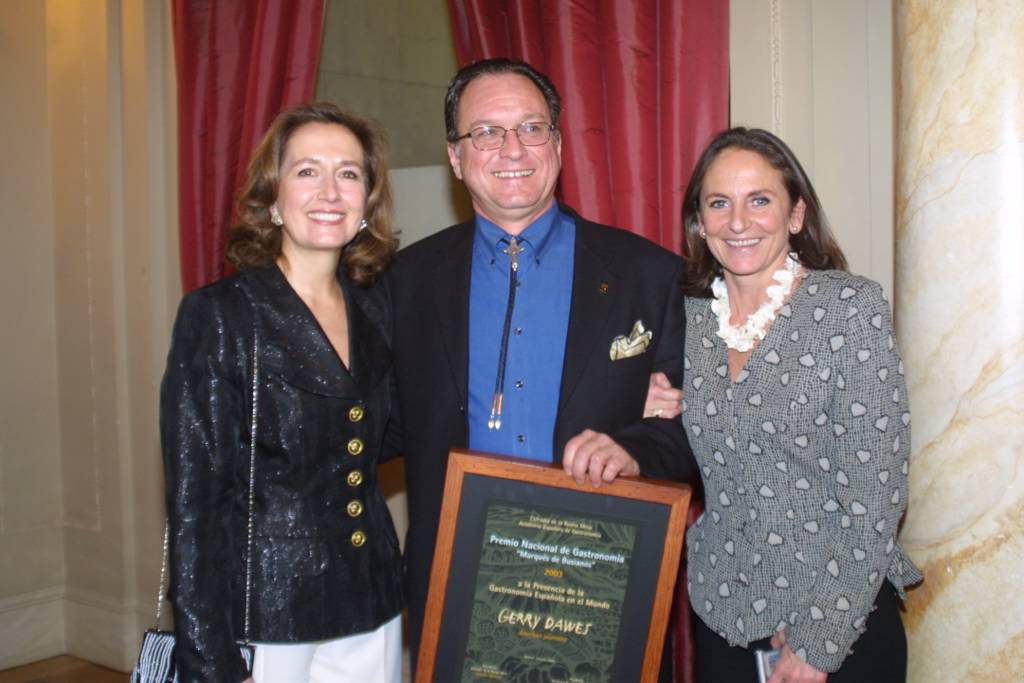
Premio Nacional de Gastronomía 2003 (Spanish National Gastronomy Prize): 2003 Marques de Busianos Award from the Academia Española de Gastronomía (Spanish Academy of Gastronomy) & La Cofradia de la Buena Mesa for writing, photography, and lectures about Spanish gastronomy and wines. At the Casino de Madrid, with Lourdes Plana of Madrid Fusion & Teresa Barrenechea, Chef-owner of Marichu (New York)


Gerry Dawes has been traveling in Spain for more than three decades. Since 1995, he has made sixty extensive food and wine trips to Spain, twenty since 2003 alone. In his Daytimer notebooks, he has written down every dish and every wine he has had in Spain for the past 15 years and photographs most of the dishes with digital cameras.


Gerry's notebook - Navarra, April 2003
Gerry Dawes copyright 2004

Only non-Spaniard to receive the prestigious Premio Cena de Los 11 Vinos, an award created to honor those who have made significant lifetime contribution to enhancing the image and culture of Spanish wines (for writing on Spanish wines.)


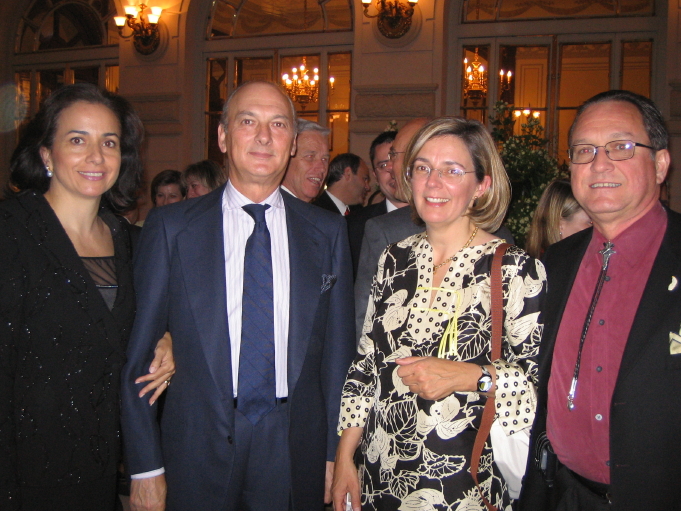
Marqués de Vargas & wife Anya, Gabriela Llamas, Gerry Dawes at Casino de Madrid, Cava Writing Award Presentation, May 2004. Primer Premio--Artículo sobre Cava, Instituto de Cava (Barcelona, Spain): First Prize of 12,000 Euros for Bebiendo Estrellas (Drinking Stars), an article on Spanish Cava (Spanish sparkling wine), written in Spanish for Cocina Futuro magazine (Madrid).


Click for Gerry Dawes Biography & Credits

Gerry Dawes
17 Charnwood Drive - Suite A
Montebello, NY 10901
Cell phone: 914-414-6982
Phone & Fax (call before faxing): 845-368-3486


Telefono movil (durante estancias en España): (011 34) 670 67 39 34
Contact:
gerrydawes@aol.com


Join Our List

5/07/2007

New Spain Posts January-September 2007

Some of my faithful readers, among the dozen of you, have expressed concern about the lack of posts and rightfully so. I have been traveling to Spain too much and can't keep up with it all!!! I am now averaging eight trips per year. To cut down on that average, I consolidated what would have been three-four trips in April-May to a one-month stay, so I have done three trips so far this year, a total of nearly eight weeks, and I am overloaded with information and backlogged with photographs. Some times you wish upon star and the star answers.

Posted (click on links below) and upcoming reports include:

In January, Madrid Fusión and Valencia's Encuentro Verema

In March, more Madrid, a wild, exhilarating swing through all the D.O.s of Galicia (Valdeorras, Rías Baixas, Ribeira Sacra, Ribeiro and Monterrei) in early March and a return to Arévalo for supernal roast suckling pig at Las Cubas.

And in April-May, Madrid again (after all, I am an official "Amigo de Madrid") for Grupo Gourmet's annual Salón Internaciónal de Gourmets

Valencia (Vino Elite & Vino a Toda Vela) with reports on paellas (arroces & fideua), the surprising gastonomic scene in Valencia and Alicante and encounters of another kind with Jonathan Nossiter of Mondovino fame and his wife, Paula Pradini, who showed her MondoEspaña film at Vino Elite.

Another visit to wonderful, under-rated Chinchón

Trujillo's exceptional Feria de Quesos in Extremadura

A visit to an old friend at Restaurante Cala Fornells in Salamanca

Castilla y León's prestigious Premios Zarcillo at which prizes are awarded to the best wines submitted (from around the world), the vast majority of which are from the Castilla y León region, which includes Ribera del Duero, Rueda, Toro, Cigales & Bierzo and Vinos de la Tierra de Castilla y León)

Valladolid, getting re-acquainted with Castilla y León's historic, but modern capital city

Cuídad Real for the Fenavin (Feria Naciónal del Vino; Spain's biggest wine fair) and a re-visit to Mesón del Corregidor in Almagro

And, remarkable Toledo, where chef-restaurateur-bodeguero Adolfo Muñoz and his family (Julita, his wife, and Adolfo and Javier, his sons) took me and my traveling companion captive for nearly 24 hours and charged a handsome ransom. We had to visit their Viñedos Cigarral de Santa María property, which has drop-dead views overlooking Toledo (a stone's throw away) and has a 300+ seat restaurant for weddings and banquets. The cigarral is surrounded by their Pago del Ama vineyards, olive groves and gardens with aromatic plants and flowers that play an important role in Adolfo (and his chef son Adolfo's cooking. We were sequestered for the night in the five-star Hotel Palacio de Eugenia de Montijo hotel where Adolfo operates Belvis restaurant, had dinner at Aldofo restaurant (considered the best in Toledo) and, with Adolfo and restaurant director-summiller son, Javier, we got a private tour of their extensive wine collection, which is housed in the cellars of a 9th-century Jewish home in the old quarter. The next morning we had a tapas-"breakfast" at Adolfo Colección restaurant-delicatessen, then, after re-acquainting myself with monumental Toledo and re-visiting the Santa María La Blanca and Tránsito syngogues (a first for my friend), plus a damascene ware shop, it was back for a farewell lunch at Restaurante Adolfo in Toledo's old Jewish quarter.

After lunch at Adolfo, we headed for Madrid for another remarkable seafood dinner at Casa Mundi, one of a series of remarkable meals with my new-found friend, José Luís Cuerda, the great Spanish film director, producer and screen writer (Bosque Animado, La Lengua de Las Mariposas, Amanecer, The Others and more). Cuerda also owns vineyards and a winery, Sanclodio, in Galicia's Ribeiro, where he produces a delicious treixadura-based white wine, which will soon be available on the East Coast and is the subject of a New York Times article due to be published in late June (for more info on Sanclodio, e-mail alex@marblehillcellars ).

I am going back to Spain in June for two weeks and I will have reports on trout fishing in La Rioja and a much anticipated dinner at Bodegas Riojanas in Cenicero, the wedding of my friend, chef-cookbook author (The Cuisines of Spain, The Basque Table) Teresa Barrenechea's daughter, Maria, in Madrid; the Grupo Gourmet Gourmet Plus Gastronomic Feria in Bilbao at the Palacio Eskalduna from June 15-17; the superb rosados, moscatels and red wines from Navarra; plans for Expo 2008 in Zaragoza; the lastest developments in Cava, Conca de Barberá, & Priorat; another dinner at unbeatable Ca Sento in Valencia; another adventure in Alicante with my friend, María José San Román and her husband, "El Portero Pitu," owners of Monastrell, la Taberna del Gourmet and other excellent restaurants;" and a dash via Jumilla back to Madrid for yet another dinner with Sr. Cuerda, with whom I am planning a Spanish television series based on many of the adventures, people, places, wines and food you are reading about here.

After Spain, it is off to speak at several wine and Spanish artisanal cheese seminars at the Telluride Wine Festival (June 28-July 1), stopping off in Dolores, Colorado, 60 miles south of Telluride, to see my daughter Erica, her husband Ivan and my adorable Gerber Baby grandson, Graham Robert. I keep telling this now eight-month old wonder that I am his Tio Geraldo!

In July, I will be in Portugal's cork country with the Amorim cork producers to report on the state of wine corks. Despite the problems with so-called "cork taint"--many instances of which are not the fault of a cork at all--is an issue that is being successfully addressed by cork producers, for me and many other long-time wine world observers (and participants!!) abandoning the cork for plastic "corks," synthetic closures and the God Awful screw cap is not the answer (scientifically, aesthetically, romantically, image-wise and otherwise).

From Portugal, I will migrate via Oporto back into Spain and spend more time in Galicia, where within a few years fascinating, terroir-driven, indigenous varietal wines will put Spanish white wines on a par with those of the Loire Valley in France (the godello grape has the potential to rival some chardonnays from Burgundy!).

Projecting to September, I will be traveling in Murcia for an in-depth re-visit to the land of the Monastrell grape, Jumilla, Yecla and Bullas.

And, for November, see A Taste of Spain Tour of La Mancha and Andalucía for my cultural, gastronomic and wine tour.

5/03/2007

Rice to Riches, Food Arts (The Surprising Cuisines of Valencia & Alicante)


* * * * *

(Click on each page to enlarge for reading, browse back for each new page.)


4/21/2007

The Wines of La Comunitat Valenciana--Valencia, Alicante, Utiel-Requena: Hitting Their Stride as Their Home Region Hosts the America’s Cup

The exotic, once Moorish-dominated Comunitat Valenciana–which encompasses the provinces of Valencia, Alicante and Castellón de la Plana–and its capital, the ancient, but suddenly ultra-modern and rapidly growing Mediterranean port city, Valencia, has long been known for its wild end-of-winter Fiesta, Las Fallas, and sunny beaches that have become nirvana for northern Europeans who flock to Valencia like Americans do to Florida. Gastronomically, Valencia is known world-wide for paella–in reality a wide variety of rice dishes made with local bomba, senia or bahia arroces–and nationally for its Mediterranean seafood, Valencia oranges and clementines (from Castellón), almonds and almond turrón candy from Jijona and dates from the largest date palm forest in Europe in Elche (both in Alicante province). Until recently, except for the large quantities of bulk wines shipped most to northern Europe, the only vinos la Comunitat Valenciana was known for were a strange, but exotic and wonderful vino rancio from Alicante called Fondillón and sweet dessert mistelas made from luscious moscatel grapes from the vineyards of Valencia and Alicante.

But in recent years, a new dynamic has emerged. Mega Euros have poured into Valencia and the surrounding region fueling an unprecedented building boom. Valencia recently completed the multi-billion dollar La Cuitat des Arts y Ciencies (City of Arts and Sciences), Europe's largest and most advanced such cultural-leisure complex (see), and will play host in 2007 to the world’s most prestigious yacht race, the 32cd America's Cup (see box). This coming of age for one of Spain’s most historically rich regions has spawned a cultural renaissance (the riverbed of the diverted Río Turia is home to La Cuitat des Arts y Ciencies and is now dubbed the Río CulTuria); a growing awareness that Valencian cuisine is among the country’s most distinguished; and that a new wave of wines from Valencia’s three denominaciones de origen (D.O.s)–Alicante, Utiel-Requena and Valencia–are emerging as serious quality contenders. (The importance of wine here is underscored by Verema.com, a locally based wine website with a global following that sponsors a high quality wine conference in Valencia every year).

The influx of money coming into the Comunitat Valenciana has also provided the essential platform to support an important modern cuisine movement–led by Paco Torreblanca, one of the world's greatest pastry chefs, and two of Spain's top young cocina de vanguardia stars, Raúl Aleixandre and Quique Dacosta, as well as some of the most rewarding traditional cuisine restaurants in Spain all of which have drawn attention to Valencian wines in their wake.

Heretofore, only dedicated wine aficionados were aware that this warm Mediterranean region–whose inland higher elevation vineyards are rarely seen by those flocking to the popular beaches of the Costa Blanca–encompasses one of Spain’s largest vineyard areas. La Comunitat Valenciana is located along Spain’s south central coast between Cataluña and Murcia. The vineyards of this region grow on land that rises rapidly inland from the coast to significant elevations. Until recently, the region’s wines had a poor reputation, except those aforementioned moscatel romano-based sweet white wines from Alicante and Valencia and Fondillón, a classic, monastrell-based vino rancio (a purposely oxidized, slightly sweet wine), a once nearly extinct wine.

To understand why the Valencian community is emerging as an area with aspirations to produce quality wines requires some historical context. As recently as twenty years ago, the only wines most wine drinkers outside Spain knew were sherries, table wines from La Rioja, Penedès, and the legendary Vega Sicilia. And, until the turn of this century, most of the wines from the three Valenciana D.O.s were rustic, powerful high volume wines produced for blending or for low-end chain store sales in northern Europe. But, in the late 1980s and 1990s, wine regions such as the Ribera del Duero, Navarra, Priorat, Rueda, Toro, Rías Baíxas Albariño, and single vineyard wines from La Rioja all emerged as worthy of serious consideration by international wine connoisseurs.

On the heels of those successes and in an epoch with a growing international acceptance of dark, ripe rich, higher-octane, new oak-aged wines, producers in the warm country areas of Spain, especially in La Mancha and the Levante (Valencia and Murcia), saw a promising opportunity. In recent years, it has become obvious that with proper vineyard and water management, modern production facilities, and savvy winemakers, a wine fitting the modern international profile can be made just about any place in Spain’s warmer areas. Since Spain has more land planted in vineyards than any other country, if the warm country areas such Australia, South America, South Africa and, indeed, California’s Napa Valley, could produce wines that drew positive, sometimes rave international reviews, why couldn’t similar wines aimed at the new world wine order palate be made in areas such as the Comunitat Valenciana?

On several trips (five in total) since 2003 to La Comunitat Valenciana’s seldom-visited D.O.s, I found a region undergoing dynamic change that happily included quantum leaps in quality in the passage of just three years. Most wineries are now fully modernized and, though many are producing large quantities of wine that is technically correct, if still not totally out of the vino corriente category, several others, while still working their way through the winemaking and viticultural learning curve, are producing reasonably priced good, if not great, wines. I also encountered a number seriously noteworthy producers of both table and dessert wines and a few youth-driven new wineries deserving serious attention.

Established Valencian producers have been rapidly upgrading their winemaking facilities and technology as successful professionals and entrepreneurs, like those in Napa and Sonoma in earlier decades, are building new wineries. Many producers draw on high quality fruit from unirrigated old vines vineyards, many others have planted new vineyards, often with the foreign varieties such as cabernet sauvignon, merlot and syrah trained on wires and equipped with drip irrigation systems. Successful producers from other parts of Spain, such as Juan Carlos López de la Calle, producer of La Rioja’s powerhouse Artadi wines (Grandes Añadas, El Pisón); Galicia’s Agro de Bazán (Gran Bazán Rías Baixas Albariño); and peripatetic winemaker Telmo Rodríguez, originally from Rioja’s Remelluri estate; are now making red wines in Utiel-Requena and Alicante. Consulting enologists such Sara Pérez of Priorat’s Clos Martinet coached fledgling wineries such as Valencia’s promising Celler de Roure. American importers including Stephen Metzler of Classical Wines (Seattle), who recognized the quality of Alicante’s dessert wines early on and begin representing Felipe Gútierrez de la Vega’s Casta Diva some two decades ago, and others like Eric Solomon of European Cellars realized that the region’s concentrated wines are no more powerful than average Napa Valley reds, have made serious commitments in the region.

Historically, the best wines of the Valencian region were semi-sweet to sweet vinos rancios (wines made purposely in oxidative environment) and mistelas (fresh grape must whose fermentation is cut short by the addition of alcohol). Such wines have been made here for centuries—probably since before the epoch of the Moors, among whom there were plenty of Koran-defying imbibers (Spanish Arabic poetry celebrated the virtues of wine and other beverages containing al-quol, an import from the Islamic world). Table wines were another story, however. Valencia and Utiel-Requena, especially, were known producing large quantities of marginal rustic whites and rosé wines for export to northern Europe, but, primarily the region was a major source of bulk wines, much of which were vinos de doble pasta.

Michel Grin, Managing Director of Bodegas Murviedro, who makes wines (95% of which is exported) in Utiel-Requena, Alicante and Valencia D.O.s, says “Vinos de doble pasta are wines made by taking the pasta, or mass of grapeskins, pulp and pips leftover from brief contact with the musts used to make rosés and adding it to the cap already fermenting with red wines, thus doubling up on mass of grapes in a vat. This produces a well-colored, neutral-tasting bulk wine that is ideal for blending with other wines to be sold especially in Nordic markets.”

These bulk wines were shipped from huge warehouses located in Valencia’s historic Grao port area–now completing a major America’s cup makeover to play host to the America’s Cup that includes a marina with more than 600 new berths. But, now most of these shippers have moved out to the hilly Valencia and Utiel-Requena wine-growing areas and made serious investments in new bodegas (winemaking and storage facilities) and vineyards. Among them are Michel Grin’s 1,000,000 case Bodegas Murviedro (formerly known as Schenk) and Vicente Gandía Plá’s Hoya de Cadenas spectacular, new 400,000-plus case bodega in Cuevas de Utiel (Valencia). Andres Proensa, one of Spain’s top wine writers, noted a market-driven change in the basic philosophy of Valencia’s large wine shippers. “They have undergone an important transformation by moving their operations from the port out to the wine country,” Proensa wrote.”

The major thrust of the large producers in the Valencia and Utiel-Requena D.O.s is the production of red wines, including 100% varietal red wines and blends of the native Valencian red varieties monastrell (mourvedre), bobal, and garnacha (usually old vines); Spain’s most important red wine variety, tempranillo; and the foreign grapes cabernet sauvignon, merlot, and, very promising for this warm region, high quality syrah, the great grape of France’s Rhone Valley. They are also producing fresher, cold-fermented white wines from the traditional meserguera, macabeo (viura) and moscatel romano varieties and some chardonnays, albeit not yet distinguished ones. Worth seeking out are the fresh, bright, quaffable rosados, based on the little-known local bobal grape, produced by several Utiel-Requena bodegas.

Bobal, which is the main grape of Utiel-Requena was so little known outside Spain, that as late as 2004, Frank J. Prial wrote in The New York Times in an article on Spanish rosados, “Until someone mentioned it to me recently, I had never heard of it. Bobal is something of a mutt grape. No wine made from it can qualify for Spain's strict denominación de origen rating, which specifies grape varieties and methods of production and exercises other quality controls. So it is unlikely ever to leave Spain. Not legitimately, anyway.”

As it turns out, Bobal is one of only three indigenous red varieties (bobal, tempranillo and garnacha) authorized by the Utiel-Requeña denominación de origen, which is located in Valencia province some 45 miles west of the capital and centered around the long-time wine towns of Utiel and Requena. Utiel-Requeña’s some 75,000 acres of vineyards, which range in altitude from 1,900 to 2,000 feet above sea level, are planted with 80% bobal. In 2001, 60% of Utiel-Requena’s production (more than 4,200,000 gallons) was exported, so wines made from bobal have been leaving Spain “legitimately” in large quantities. The hefty bobal, apart from being used in Utiel-Requeña to make some of Spain’s best and most interesting rosados, is being used by Mustiguillo, one of the new wave heroes from the region, as the basis of several wines that have drawn high praise from reviewers, both in Spain and abroad.

Mustiguillo, a charming small winery built on the site of a former stable, has become the star of the Utiel-Requena, despite the fact that they sell their wines with non-denominación de origen status. Mustiguillo’s owner, Toni Sarrión, a contractor who builds public works projects, is, as Andrés Proensa points out “of short winemaking tradition,” but he has become a new wave Comunitat Valenciana hero alongside Pablo Calatayud of Valencia’s Celler de Roure and Pepe Mendoza from Alicante’s Bodegas Enrique Mendoza. From their own vines, Mustiguillo makes two small production, high-end wines, Finca Terrazo—a blend of 40 % old vines bobal (planted in 1912), 40% tempranillo and 20% cabernet sauvignon—and Quincha Corral—76% old vines bobal, 20% tempranillo and 4% cabernet sauvignon. These massive, inky, intensely rich, unfined/unfiltered reds tip the scales at 14.5% alcohol. Finca Terrazo is fermented in 3,500- and 5,000-liter Radoux tinajas (wooden upright vats) and spends up to 16 months in 70% French oak and 30% American, all of it either new or second year. Quincha Corral 2000, a wine with a 500-case per year production and a hefty price, also spends 16 months oak, 100% French oak, mostly new. On the palate it shows very rich, sweet, Port-like, ripe black cherry and cassis fruit and baker’s chocolate with a noticeable ration of new oak. Mustiguillo Mestizaje, also labelled vino de al tierra (non DO), comes mostly from young tempranillo, cabernet sauvignon, and syrah grapes blended with some older vines bobal and garnacha. of big highly extracted black fruits, new oak-lashed house style. Mustiguillo eventually plans to produce 10,000 cases of wine.

At their impressive Hoya de Cadenas estate near Cuevas de Utiel, well-regarded Bodegas Gandía (Vicente Gandía Plá, founded in 1885), is making its mark with Hoya de Cadenas Reserva Privada (85% tempranillo/15% cabernet sauvignon) and Ceremonia, (also a tempranillo/cabernet sauvignon blend), whose new oak is balanced with a nice melange of rich blackberry, chocolate and licorice flavors. This bodega gives some nodding consideration in its top-of-the line Vicente Gandía ‘Generación I’ to the native Utiel-Requena grape by using 50% bobal blended with cabernet sauvignon, tempranillo and garnacha, but the focus here is on nearly 450 acres of wire-trained plantings of tempranillo and cabernet sauvignon, along with chardonnay and sauvignon blanc (they market a palatable 35% sauvignon blanc/65% chardonnay blend).

Bodegas Murviedro (formerly Bodegas Schenk), partially Swiss owned, may be a huge winery with New World styled wine ambitions, but it produces some good, serviceable wines including the Las Lomas de Requena 100% bobal rosado and a carbonic maceration bobal tinto joven.. Murviedro’s premium wines include a well-balanced Coronilla bobal crianza with black cherry and cassis flavors and a stylish Coronilla Reserva blend of bobal, cabernet sauvignon and merlot.

Mas de Bazán, owned by the producer of Gran Bazán from Rías Baixas, is another important Utiel-Requena project. The winery, whose epoxy-lined cement fermentation and storage vats are decorated with early 20th-century Valencian ceramics tiles, is unusual and exceptionally attractive. The vineyards carry the stamp of hundreds of other new Spanish winemaking operations with predominately new plantings are trained on wires outfitted with drip Like most new wineries, the flavors of roble nuevo (new oak)–Allier and some American– dominates the red wines, generally blends of bobal (45%), tempranillo (45%) and cabernet sauvignon (10%). Mas de Bazán also makes a refreshing dry bobal rosado with flavors that bring strawberries to mind.

Bodegas Iranzo’s Finca Cañada Honda property has been a wine-growing estate since the 14th Century. The Pérez Duque family says they have been making wines since 1896, but their ownership of the Iranzo property dates to 1940 and the plantation of the non-Valencian varieties, tempranillo, cabernet sauvignon and merlot (they also have Bobal and Graciano), dates to 1984. Among their wines, billed as vinos écologicos (from organically farmed vineyards), are the Finca Cañada Honda tempranillo-cabernet sauvignon based, tinto joven, tinto roble and crianza; the smooth, ripe, tempranillo-based Mi Niña; the round, plummy, spicy Vertus tempranillo crianza; and Bodegas Iranzo Tempranillo Selección.

An exceptionally promising new Utiel-Requena winery, Dominio de Aranleón, is owned by Emiliano García, who is also the proprietor of Casa Montaña (in Valencia’s El Cabanyal district, an urban “bodega” that dates to 1836 and is one of the best wine and tapas bars in the capital. García also owns Casa Montaña wine shop and tasting salon, located across the street. He makes two very high quality, delicious Aranleón 50% tempranillo, 50% cabernet sauvignon blends with an ingenious snail design that spells out the bodega’s creed on the label.

Another of the best wines I tasted from this region is made by a German winemaker, Heiner Sauer from the Pfalz, at Bodegas Palmera and does carry the Utiel-Requena DO. The very ripe, powerful (14.5%), but silky and exotic, cassis-flavored L’Angelet d’Or, tasted over luncheon at the Aleixandre family’s superb Ca Sento restaurant in Valencia, was one of the best wines I tasted in two trips. The luncheon that L’Angelet d’Or accompanied was one of my most memorable and gratifying meals in Spain.

Viñedos y Bodegas Vegalfaro makes one of the better Syrah/Shiraz wines in the region, Pago de los Balagueses, a deep black, rich, delicious, wine laced with dark chocolate; Bodegas Los Marchos Miguelius Tinto Crianza, a rich, very ripe, exotic, is one of the best expressions of the bobal grape in the region; and Vicente García’s Pago de Tharsys outside Requena is making some of the most interesting and palatable wines in the area, including a good Vendemia Nocturna white wine (made from godello and albariño), a very good ‘Selección Bodega’ made with 95% merlot and 5% cabernet franc; and an 80% merlot, 20% cabernet franc (all non-D.O. wines due to the grapes used), and the Utiel-Requena D.O. Carlota Suria, a cabernet sauvignon-tempranillo blend. Pago de Tharsys also makes an excellent Cava from macabeo and chardonnay grapes, then as a label dangles a distinctive, artistic piece of Valencian ceramics from a ribbon attached to the bottle’s neck. (Pago de Tharsys is not the only Comunitat Valenciana winery producing cava. Dominio de la Vega, who is also making some interesting white wines based on macabeo (viura) and chardonnay, plus a very good bobal rosado, also produces some very good reserva especial vintage, vintage brut nature and brut rosado cavas, the last from 100% garnacha grapes. Torre Orio is perhaps the largest producer of Cava in the region with seven different budget priced cuvees.

Chozas Carrascal, which, unusual for this region, produces a barrel fermented chardonnay, macabeo (viura) and sauvignon blanc blend called Las Tres, a Las Cuatro rosado (tempranillo, garnacha, merlot, syrah), the very unique Las Ocho (a blend of eight red grapes, including cabernet franc), a Family Cabernet and a Family Garnacha under the guidance of French enologist, Michel Poudou. Other wineries of note include Casa del Pinar, which produces two good five-red grape blends (bobal, tempranillo, cabernet sauvignon, merlot and syrah), Sanfir crianza and Casa del Pinar Reserva; Finca San Blas, which produces Labor del Almadeque, well-crafted wines that are members of the tempranillo-cabernet sauvignon-merlot-syrah brigade; and Vera de Estenas, which makes barrel fermented Chardonnay and Merlot, a crianza and a reserva. while Bodegas Sebirán, producers of the Coto d’Arcis line, though they sometimes use 15% cabernet sauvignon, rely more on the indigenous varieties including the once-maligned bobal.

Utiel-Requena wines showing promise at a tasting luncheon arranged by the DOs consejo regulador (regulatory council) were several bobal-based (sometimes blended with garnacha) rosados, Bodegas Torroja Cañada Mazán and Valle de Tejo; a fruity, intense, oak-aged Dominio de la Vega, a red blend of bobal, cabernet sauvignon and tempranillo; a surprisingly well-balanced, barrel-fermented Bodegas Torroja Sybarus Bobal Edición Limitada (1250 cases made from 30-year old bobal); and the organically produced Dominio de Arenal Syrah.


Alicante

Grape vines were introduced into Alicante by the Phoenicians, wine was made here by the Romans and the praises of Alicante wines were even sung by the Moors. The Alicante D.O. encompasses 37,000 acres divided into two sub-regions in Alicante province: the Alicante subzone (northwest of the capital, Alicante), whose main growing area is the Vinalopó river valley, and La Marina, just inland from the area’s popular beach towns. The winters are short and the nearly rainless summers are long and hot.

Producers of the widely renowned Casta Diva moscatels, Bodegas Gutiérrez de la Vega, has shown that Alicante can make world-class dessert wines. An affable, well-read Renaissance man who dresses in a blue lab coat and plays opera (the superb Valencian-born, Caruso-contemporary tenor Antonio Cortis and Montserrat Caballé) as he works in his pristine winery in Parcent, Felipe Gútierrez de la Vega, is the owner-winemaker. Made from moscatel de Alejandria (also called moscatel romano) grapes grown in the coastal La Marina subzone, Gútierrez’s Casta Diva Cosecha Miel is a luscious dessert wine that is a great match to such dishes as star Alicante chef Quique Dacosta’s laminas de foie gras (layered foie gras with a fragrant apple compote) at the superb El Poblet in nearby Denia. Gútierrez also produces several other excellent wines including a dry white moscatel romano, a good bobal rosado, and several interesting reds, including Imagine (dedicated to John Lennon), Viña Ulises (James Joyce and Homer), and Rojo y Negro (Nobel prize winner Camilo José Cela), plus a silky, exotic blend of giró (a garnacha relative), monastrell, cabernet sauvignon, tempranillo, and merlot that spends 18 months in oak, only 20% of which is new (a practice one wishes more winemakers would adopt).

Pepe Mendoza, the winemaker at Bodegas Enrique Mendoza, an aficionado of New World wines. Regarded by new-wave aficionados within Spain as the great revelation of Alicante, Mendoza has received rave reviews from Spanish wine writers for his barrel-fermented chardonnays; full-bodied, ripe cabernet sauvignons; his notable Shiraz, now a big attention getter in Spain; a Pinot Noir with real potential; his famous Santa Rosa Reserva 1998 (a powerful, rich, oaky blend of cabernet sauvignon, syrah, and merlot); and the Selección Peñon de Ifach, a good, if unorthodox, blend of cabernet sauvignon, merlot and pinot noir.

Laderas de Pinoso (producers of El Sequé) is an Alicante winery with a built-in immediate appeal. It was founded in 1999 by Juan Carlos López de la Calle of La Rioja’s Bodegas Artadi fame and Agapito Rico, producer of Carchelo, a delicious monastrell-based Jumilla red. The Bordeaux-esque Laderas de El Sequé, a monastrell, tempranillo, cabernet sauvignon and syrah blend that spends fewer than six months in oak; El Sequé, a similar blend (with 50% tempranillo), which is a well-made, richer wine, whose finish is dominated by new oak.. The bodega is located in Pinoso (Alicante), a town famous in Spain for its arroz de conejo y caracoles (rabbit-and-snail paella) at Casa Paco, a restaurant legendary for this dish, and Restaurante Casa Elias, in the nearby village of Xinorlet, which is a lesser-known, but exceptional restaurant choice.

At Casa Elias, accompanied by an excellent plate of assorted cured artisanal sausages, wonderful grilled wild mushrooms and a superb rabbit-and-snail thin-layered arroz en paella cooked over grape vine cuttings and served with authentic all-i-oli, I tasted a lineup of wines with Rafael Poveda from Salvador Poveda, a the family bodega that produces Alicante’s most renowned Fondillón (see below). Poveda’s intense red table wines included a good Poveda Tempranillo; a big, complex, cherry-and carob flavored Borrasca Classic Tinto from their Finca El Pou estate’s 50-year old monastrell vines; and the massive, oak-dominated, 100% monastrell, Borrasco Tinto Selección de Barrica (only 600 bottles made).

Almuvedre, a powerful 100% monastrell tinto joven (young red) made by Telmo Rodríguez, the peripetatic, “flying winemaker,” who began at his family’s Remelluri estate in La Rioja and now makes Compañía de Vinos Telmo Rodríguez wines in the Ribera del Duero, Toro, Málaga and other regions, is another notable Alicante table wine that has recently emerged in recent years.

Forward-looking Bocopa is one of the top wine cooperatives in Spain. Known for its first-rate Fondillón Alone (see below), Bocopa also makes the fresh, delicious, off-dry white wine Marina Alta Blanco Gran Selección moscatel; Laudum, a soft, rich monastrell-based, American oak aged crianza red; and Marqués de Alicante, a palate-pleasing crianza blend of monastrell, tempranillo, cabernet sauvignon, and merlot. Bocopa also makes two spectacular vinos de licor–wines typical of this region in which the fermentation of grape must (mistela) is arrested by the addition of orujo, or grape spirits, resulting in lusciously sweet, fresh tasting dessert wines. Marina Alta is an intense sweet white wine with honeysuckle flavors and the dark, delicious Sol de Alicante Dulce Negra (100% monastrell) tastes of black fruit compote, raisins, and chocolate-laced coffee liqueur.

Three other Alicante wineries drawing attention recently are Bodegas Sanbert, which makes a smooth easy drinking monastrell Camps de Gloria Rodriguillo reserva; Bodegas Bernabé Navarro, whose Beryna is made by Joaquin Galvez, who has worked at California’s famed Ridge Vineyards; and Vins de Comtat, whose non-D.O. Penya Cadiella red from the L’Alcudia-Concentina area, uses five different varieties–including monastrell, merlot, giró, tempranillo and cabernet sauvignon–to achieve a smooth balanced wine with wild berry, plum and dark chocolate flavors.

Valle del Carche, in Alicante province, is a promising 400-acre estate with a preponderance of monastrell vineyards. Situated only eight miles from the town of Jumilla in neighboring Murcia, Valle del Carche, also qualifies to produce Jumilla wines, as well as . Alicante D.O. wines, which are made of either cabernet sauvignon, merlot, syrah, tempranillo or blends of those grapes. The most of impressive Valle del Carche’s wines were the easy-drinking Porta Regia Syrah (tasting of currants and baker’s chocolate) and the dark, smooth Domus Romans Reserva 1998 tempranillo/cabernet sauvignon, merlot blend aged in American oak barrels with French oak ends. These wines went very well with an excellent paella cooked over a wood fire by Tomasa, Valle del Carche’s fine country cook.

Alicante’s classic Fondillón, a red grape-based noble wine and a favorite of France’s Louis XIV (the Sun King) and of Alexandre Dumas pere’s fictional Count of Monte Cristo, is a revelation. A wine with 500 years of written history (supposedly Fondillón was on Magellan’s ill-fated trip around the world), until recently, this semi-sweet, monastrell-based rancio wine, aged for a minimum of eight years and usually more than twenty before being released, was nearly extinct except for a few wines made by small family bodegas.

The centenarian Salvador Poveda bodega in Monóvar is the top producer of Fondillón and largely responsible for the recuperation of this legendary Alicante classic that until recently was all but forgotten. The star of Poveda’s stable is their Salvador Poveda Gran Reserva de Fondillón 1980, a splendid, profound, mahogany-colored jewel that tastes literally like someone mixed a great oloroso sherry with a vintage ports and can justifiably be called one of Spain’s greatest “noble” wines, a category that includes all of Andalucía’s superb Sherries.

Rafael Poveda explains how his fondillón is made: “We use 100% Vinalopó valley monastrell grapes selected during the best harvests. They have a very high concentration of sugar–always higher than 16°Baumé, often 18°. We sometimes put the grapes out on mats in the sun for several days to increase the sugar concentration. The must is left in contact with the skins only until it begins to ferment, so skin contact is very short, therefore the wine is born as soft, fruity and light-colored as a Bordeaux, but without the tannic astringency. When the fermentation is finished, we have a very aromatic, medium-dry wine that we age in old oak barrels, usually in a sherry-like solera. But, in an exceptional vintage like 1980, we age the wine separately without mixing it in the solera to make an authentic vintage Fondillón.”

Felipe Gútierrez de la Vega also makes the excellent Casta Diva Fondillón (dedicated to William Blake). Unlike the Povedas, who do short macerations, Gútierrez macerates his 100% monastrell grapes for 20-30 days. He says the wine can ferment up to two months, which leaves it at 17-18 percent natural alcohol. Made from grapes that are allowed to hang on the vine until they become raisiny–unlike the grapes for many other Fondillóns and sherry Pedro Ximénez grapes, which are picked and sun-dried on mats. After Gútierrezages it for 15 years, the result is a Fondillón that is deep plummy, spicy, very rich and Port-like, but is unfortified, thus natural.

Another good fondillón, Bodegas Bocopa’s Alone (ah-lo-nay), is also a well-made, solera-aged, red monastrell-based dessert wine. Some of these fondillóns are reminiscent of tawny Port, others such as Bodegas Brotons Gran Fondillón Reserva 1964, Primitivo Quilés Fondillón (Hístorico) ‘El Abuelo’ Gran Reserva and Poveda Añejo Seco (made from Vidueño, an old Monastrell clone), are very much like great palo cortado Sherries.

Valencia

The large Valencia D.O. fans out from the great port city of Valencia and, while its current wine scene is not yet as promising as Utiel-Requena or Alicante, there are some notable exceptions in this hot, humid region that has a long-standing history of producing massive quantities of bulk red wines, some rather uninspiring Meserguera-based white wines; and sweet, mostly pedestrian-quality moscatel mistelas. Valencia’s 47,000 acres of vineyards are divided into four subzonas, Clariano (southwest of the city near the Castilla-La Mancha Almansa DO); Valentino and Alto Turia (both northwest of the city); and Moscatel de Valencia (west of the city and devoted wines made from its namesake grape).

Perhaps the Valencia wine with the greatest reputation is Vicente Gandís Plá’s Fusta Nova Moscatel de Alejandría, a luscious sweet wine, whose historic roots probably go all the way back to the epoch when El Cid chased the Moorish rulers out of the Valencia. Bodegas Murviedro, which moved its main base of operations to the new bodega in Requena, makes a parallel line of Valencia DO wines under the Murviedro and Los Monteros brands. The main difference between Murviedro’s Valencia and Utiel-Requena lines is the use of monastrell in the Valencia DO to go along with bobal, tempranillo and sometimes merlot. Murviedro Reserva, a blend of bobal, monastrell, merlot and cabernet sauvignon that spends a year in French and American oak, is the best of the bodega’s Valencia wines.

Celler del Roure, a new winery in Moixent in the Clairano area, has shown the most promise of any Valencia D.O. red table wine. Pablo Calatayud, the young owner, consulted with Sarah Pérez of Priorat’s Clos Martinet, to produce some of the most stylish red wines ever made in Valencia . Celler del Roure’s Maduresa, their top-of-the-line wine is, a big, extracted , but relatively well-balanced, blend of cabernet sauvignon (30%), merlot (30%), tempranillo (20%), syrah (10%) and mandó (10%), an old Valencia area variety. The early efforts were aged a year in 90% new French oak, which dominated the finish. Les Alcusses (named for a ancient Iberian village nearby) is a dark black wine with sweet, ripe fruit which sees only four months in oak. The Alcusses showed very well with Calatayud’s mother’s delicious casserole of arroz con garbanzos and this writer much preferred it to Calatayud’s more prized Maduresa.
I told Pablo Calatayud that I liked the Les Alcusses better than the Maduresa because it had less oak, he said, “That’s what my father says.”

As in most of my extensive wine travels in Spain, in the Comunitat Valenciana, I found that the so-called lesser wines like Les Alcusses, with less extraction for extraction’s sake and judicious use of new oak (if used at all), were far more enjoyable, both in tastings and with food, than many of the bodegas’ more “serious” wines. Given that it is region not known for high quality white wines, I found some promising young wines, but none of exceptional merit so far However, there were some very good bobal-based rosados and were some very drinkable “little wines,” some made from indigenous grapes–especially monastrell and bobal–and a few modern New World-style red wines that could draw serious attention from new-wave wine aficionados in the American market. I did find a number of exceptional wines, including those wonderful dessert moscatels and Fondillóns.

Once again in Spain an area not known for quality wines has shown great potential. I came away from my trips with the feeling that the Comunitat Valenciana, an area known its Moorish heritage; its oranges, almonds, date palms and paellas; for the cities of Valencia and Alicante and their beaches; the famous Valencian Las Fallas Fiestas; and, now the great cultural City of Arts and Sciences and the America’s Cup could soon become an area known for wines, which are showing a marked improvement with every passing year.

-- Gerry Dawes

2/01/2007

Madrid Fusión 2007: A Watershed Moment in Spanish Modern Cuisine History

By Gerry Dawes

Madrid, Spain

January’s eagerly awaited, annual, star-studded culinary conference, Madrid Fusión 2007, may turn out to be a watershed moment in the history of modern Spanish cuisine. The theme of this year’s star-studded conference was La Materia Prima Base de la Creatividad (Product: The Base of Creativity) and it perhaps inadvertently brought into high relief the sea change that I have been seeing and hearing all over the country during more than 20 trips in the past three years, a tidal swing that has grown exponentially over the past year especially. The fifth annual edition of Madrid Fusión, a conference whose focus has been overwhelmingly about innovation and technique, turned out to be something of a tug-a-war dynamic between the two modern Spanish culinary movements, both of which utilize some elements of the other, but whose result is often clearly different.

Cocina de vanguardia, a style whose most famous proponent is super-star chef Ferran Adrià and whose global face has been characterized by such innovations as flavored foams, mango and olive oil caviar, titantium-laced wafers, eggs with a gold leaf veil, perfume-flavored ice creams, etc. is currently being challenged by a more restrained modern Spanish cuisine style that features Spanish product-driven, regional tradition-derived dishes that are not as perplexing to the restaurant goers and are not just user-friendly, they often more delicious and comprehensible as well. In places such as Valencia and Alicante, where some remarkable cooking is going on, this emerging direction, which has been coming of age over the past several years, is beginning to draw serious national and international attention. Call it cocina moderna neo-tradicional for lack of a formal term.

Ferran Adrià, the ultra-famous Catalan culinary star, did his annual “Ferran show” that featured a nine-point manifesto entitled Culinary Relections on the Product (Before Cooking) and including such points as the source, in-depth knowledge, proximity, ecological impact, price, etc. of the ingredients used in cooking. American chef Dan Barber (Blue Hill at Stone Barns in New York), who eschews scientific pyrotechnics in his kitchen, presented an elaborate, thoughtful talk describing the great lengths he goes to in developing better agricultural techniques on Blue Hill’s own farm in order to insure the highest quality organically grown, sustainable products for his kitchen. Star Spanish chefs Juan Mari Arzak, Dani Garcia (Calima, Marbella), Quique Dacosta (El Poblet, Denia-Alicante) and London chef Heston Blumenthal all kept the vanguardista flag flying, while Charlie Trotter (Charlie Trotter’s, Chicago), Tetsuya Wakuda (Tetsuya’s, Sydney) and Grant Achatz (Alinea, Chicago) put their unique twists on the theme. But, the headline grabber was three-star chef Santi Santamaria (Raco de Can Fabes in Sant Celoni, outside Barcelona), who appeared for the first time at Madrid Fusión (he disdains culinary conferences) and dropped a culinary mega-bomb, basically denouncing vanguardista cuisine and drawing a five-minute standing ovation.

Somewhere between Santamaria’s somewhat extreme diatribe and the 3-D glasses and candy aromas that were part of Heston Blumenthal’s presentation lies a common ground where Spanish (and global) modern cuisine is heading. Technology, science and equipment will still figure in the evolution of food in Spain, they will just not define and characterize Spanish modern cuisine as they have during the past decade especially, when many dishes often seemed to be the product of high-tech culinary laboratory experiments, rather than focused on getting the best possible food on the plate, something Spanish chefs are particularly gifted at doing.

12/08/2006

Gerry Dawes's A Taste of Southern Spain Tour (Sample Tour; Dates to be Arranged)

* * * * *

Windmills in La Mancha


A Taste of la Mancha & Southern Spain 
 12 days, 11 nights

A Private Tour with Gerry Dawes, guidebook author, wine & food writer, & expert on Spanish wine, gastronomy and culture, who has been traveling in Spain for over 30 years and was a recipient of the Spanish National Gastronomy Prize in 2003.


A Spectacular Historic, Cultural, Gastronomic and Wine
Tour of La Mancha & Andalucía


Exciting Madrid, Don Quixote’s La Mancha
& Exotic Moorish Andalucía


Madrid, Toledo & La Mancha, Granada, Ronda,
Los Pueblos Blancos, Cádiz, Sherry Country,
Sanlúcar de Barrameda, Sevilla, Córdoba & Chinchón


Pricing: $4,495* per person* (double occupancy), $4995* (single occupancy), which does not include airfare, since most travelers will want to arrange their flights using frequent flier miles or via the internet, where fares are often cheaper than group fares. Accommodations will be in excellent four-star hotels and paradores. At least two meals, sometimes three per day, including breakfast, designated multi-course luncheons/dinners and tapas meals will be included in the price (see meal code). All main meals include wines selected by Gerry Dawes.
(Meal Code: B = Breakfast; L = Lunch; D = Dinner; T = Tapas.)
In-country transportation will be by comfortable, roomy, air-conditioned bus.

*$250 discount for payment in full by certified check or money order at time of booking.

(Note: Tour based on a minimum of 16 paying guests. We can accommodate a maximum of 24 people plus the tour guide. *Price subject to change, if exchange rate fluctuates dramatically.)

Itinerary

Day 00 - Wednesday   Evening flight from US to Madrid


(Note: Most people will want to find their own flight arrangements to Madrid. We can discuss a group flight, but since most people usually make their own arrangements through frequent flier miles or other means, we should all plan to rendezvous in Madrid on Thursday morning.)


Day 01 - Thursday  Arrive Madrid (D)


Each tour member should take a taxi (approx $40) or group van ($50 total for up to 5-6 people, depending on luggage, for all, plus a small tip) in to Madrid to our hotel, the Lope de Vega, which is just across the avenue from the Prado Museum.

Free morning and part of the afternoon to get over jet lag, shop, visit museums, etc.

17:00 Meet in our hotel lobby. Guided tour of the Prado Museum

20:00 Meet in hotel lobby. Short walk to a great old Madrid taberna, where we will have an orientation session.
Madrid's Retiro Park

21:00 - We will stroll through the old quarter of Madrid and the Plaza Mayor, then have dinner at a typical Castilian Tavern, dining on such specialities as jamón ibérico, asparagus, roast suckling pig or lamb, lamb chops, etc. and plenty of good Spanish wine.

Roast Suckling Pig at Casa Botín in Madrid

Day 02 - Friday  Madrid (B, D)

Day & afternoon free for visiting museums, shopping, etc.


21:30 - Dinner at one of Madrid’s top restaurants.
As an option, we may sample some of capital city’s “movida” night life.


Day 03 - Saturday  Madrid - Toledo - La Mancha - Almagro (B, L)


In the morning, we will leave Madrid by bus to visit the magnificent town of Toledo, where El Greco painted so many memorable canvases. We will have lunch at the restaurant of a very special chef who has his own vineyard, then drive through Don Quixote country, stopping to see the windmills above the saffron-producing town of Consuegra and for a drink at the Venta del Quixote in Puerto Lapice.


Don Quixote

We will spend the night in Almagro, which has Spain’s best preserved Golden Age theater. The 16th-century teatro was host to many of the Spanish Shakespeare, Lope de Vegas’s plays and is still used for performances today. Evening free to explore this charming, easily walkable old town.

A Winery in La Mancha

Day 04 - Sunday, Nov. 04 Almagro -Granada (B, L)


In the morning, we will leave Almagro and drive to Granada, where a guide will lead us through one of the world’s greatest monuments, the Alhambra, the Moorish palace of legend. We will then visit the Generalife palace above the Alhambra and stroll the gardens.


The Alhambra Palace in Granada

Lunch will be at a special Granada restaurant, whose chef did a part of his apprenticeship at Restaurante Daniel in New York.


In the afternoon, we will visit the Cathedral and the Capilla Real to see the tombs of the Catholic Kings Isabela and Ferdinand, who drove the Moors from Spain and sponsored Columbus’s great voyage of discovery. In a small museum, alongside the tombs, we will see the exquisite collection of Flemish miniatures that belonged to Isabela and were hidden from view for centuries. Later, we will stroll through the labyrinthine streets of the Albaícin, the ancient Moorish quarter.

In the early evening, there will be time to relax before an optional stroll to the Campo del Principe, which has a dozen tapas bars, where we can try the hams of Trevélez, which are cured in caves high up in the Sierra Nevada mountains that soar above Granada. Those still game may want to go to the gypsy caves of Sacromonte to watch a colorful gypsy zambra dance performance.

Day 05 - Monday, Nov. 05 Granada - Ronda (B, D)

After breakfast, we will leave Granada and drive through the Andalucian countryside, visit a couple of unique white towns, arriving in time to explore the spectacular town of Ronda, a former mountain bandit stronghold and Hemingway favorite, which has one of the oldest, most beautiful bullrings in Spain. This town, which sits astride a 300-foot deep gorge, is like a set from Carmen. In fact, the Carmen opera movie was filmed here.


At the end of an exhilarating day, we will have dinner across from the historic bullring in an ambience-filled restaurant, itself a bullfight museum.

Day 06 - Tuesday  Ronda - Pueblos Blancos - Cádiz (B, L)


What a fabulous day we have ahead of us. In the morning, we will leave Ronda and drive through the unique pueblos blancos, the stunning white mountain villages of Cádiz province, which are among the most striking and beautiful in Europe. We will stop for lunch on delicious trout plucked from the southernmost trout stream in Europe - - cooked with a slice of superb mountain ham tucked in its belly.

White Village of Olvera in the Mountains near Ronda

After visiting some of the most wonderful villages in Europe, we will end up in the lovely, but little-visited, African-like city of Cádiz, which is surrounded on three sides by the sea. The afternoon and evening will be free for exploring this marvelous walking city of narrow streets and elegant 19th-Century buildings. Cádiz, the oldest continually occupied city in the western world, is a superb town for chilling out. You may want to take a carriage ride around the city, where the views and sunsets from the esplanades are truly splendid.

Those still game are invited to join an optional tapas hopping tour of the city.


Sunset in Cádiz


Day 07 - Wednesday  Cádiz - El Puerto de Santa María - Cádiz (B, L, D)


In the morning, we will visit Cádiz’s fine provincial museum and tour the colorful market, then take a short ferry ride across the bay to El Puerto de Santa María for a great casual seafood and fish luncheon, where we will buy pre-cooked shellfish by the kilo at one place, superb freshly fried fish at the other, then spread it all out at tables under the archways, order big salads, El Puerto’s excellent, light, dry fino Sherry and/or good Spanish beer.


After lunch we will return to Cádiz, where the afternoon is free for strolling, lollygagging, and, of course, the optional siesta. You will want to take in the sunset from the beach near our hotel. If it is a good day, sunsets here can be unforgettable. Dinner will be at one of the best restaurants in southern Spain.


Tapas (small dishes) with Sherry in southern Spain


Day 08 - Thursday  Cádiz - Jerez - Sanlúcar de Barrameda - Sevilla (B, L)

We will leave Cádiz by bus in the morning, tour one of Jerez’s magnificent, colorful, exotic sherry bodegas, the Saturday morning market in this wonderful sherry town, then take a short ride to the sherry town and fishing port of Sanlúcar de Barrameda. In Sanlúcar, we will meet a top sherry producer and have a splendid seafood luncheon with Sanlúcar’s unique, ethereal, manzanilla sherry in a one of Spain’s greatest traditional cuisine restaurants on Bajo de Guia beach, which overlooks the Guadalquiver River.


Sherry bodega (winery)

In late afternoon, we will arrive in one of Spain's loveliest cities, Sevilla, the city of Carmen. Optional tapas hopping tour of Sevilla in the evening and optional flamenco show in a town where everyone is a flamenco dancer.


Flamenco in Andalucia

Day 9 - Friday  Sevilla (B, D)


Morning guided tour of the Cathedral, Alcázar, and the Barrio de Santa Cruz, the ancient Jewish quarter. Sevilla is an exceptionally charming, magical, historic city filled with orange trees, exotic flowers and often spontaneous guitar music in the streets. (Our tour leader Gerry Dawes lived in this marvelous city for parts of 6 years.) 

Afternoon free for shopping, sightseeing, siestas. Dinner in a colorful Sevilla restaurant.

Giralda & Cathedral of Sevilla


Day 10 - Saturday Sevilla - Córdoba (B, L)

We leave in the morning for a picturesque hour and a half ride to the great old Roman, Moorish and Jewish city of Córdoba, once literally the greatest city in Europe. Home of a magnificent Roman bridge, the legendary Mezquita (Moorish mosque), the atmospheric old Jewish and Moorish quarter, flower be-decked patios and much more, Córdoba lives up to its billing as one of the most memorable, historic and exotic cities in Spain.
We will arrive at our hotel, located in the old quarter, check in, then take a guided tour of Córdoba, then have lunch with Montilla (the dry sherry-like wine of Córdoba) in a lovely ancient house owned by a superb old quarter restaurant with a first-rate wine list (the wines are kept in an old Roman cellar).


The rest of the afternoon will be free to explore this charming old city with optional tapas at a legendary Cordoba tavern-tapas bar and perhaps serendipitous flamenco.


Day 11 - Sunday, Nov. 11 Córdoba - La Mancha - Chinchón - Madrid (B, L)

A Restaurant Entrance in Chinchón

We will leave Córdoba in the morning, drive through parts of La Mancha we missed on the way up, with a few tapas stops along the way, then arrive in the magical 16th-century town of Chinchón, which looks like something right out of Cervantes. The town square is surrounded by balconied, half-timbered buildings and many of the buildings house picturesque restaurants serving superb regional cuisine. We will have a leisurely farewell lunch with local wines, then drive into Madrid, where a light dinner at an old quarter restaurant is optional.

Plaza Mayor in Chinchón


Day 12 - Monday, Nov. 12 Madrid - USA


Flights from Madrid to U.S.


End of tour. Option of more days in Madrid and other Spanish cities.

12/02/2006

Speaking Appearances

Wines of Murcia, Power Point presentation and tasting of the Wines of Murcia at Morrell & Company, followed by a wine tasting dinner speaking engagement on the Wines of Murcia at Solera restaurant, New York City. Nov. 20, 2006

All photos are copyright 2006 by Gerry Dawes and may not be reproduced without permission. 
(Click on image for a larger view.)


San Antonio New World Wine & Food Festival (Nov. 6-12, 2006; dedicated to Spain ). Seminar presenter, Spanish co-ordinator, emcee & guest speaker at gala auction dinner.
http://www.nwwff.org/main/whochef.php?uid=31


CIA-Greystone, Napa Valley (Nov. 1-4): Five seminars with Power Point presentations on Spanish regional gastronomy, cheeses, wines, etc. at the most important Spanish gastronomy conference ever held in the United States.


General Session I: The Spanish Market Basket: Iconic Elements of Tradition, Exchange, and Invention
A culinary exploration of six foods—olive oil, salt, garlic, tomatoes, peppers, and wine—that have shaped the Spanish table and its contribution to world cooking


Moderator/presenter: José Andrés
>Presenters/guest chefs and experts: Miguel Palomo, Mª Carmen Velez, Karen MacNeil, Dani García, Gerry Dawes, Enric Canut, Colman Andrews, Rafael Vidal, María José San Román, Llorenç Petràs, Carles Gaig


General Session III: Rice Traditions of Spain: Preserving, Adapting, and Re-imagining Moderator: Gerry Dawes Presenters: Chefs María Muria Lloret, Carles Gaig, MªCarmen Vélez, and a live feed from our “PaellaCam” with Rafael Vidal in our outdoor rice kitchen

Seminar I B Ecolab Theater
Tasting Valencia: Of Gardens, Groves, and Vineyards
 

Moderator/presenter: Gerry Dawes Presenters: Chefs María Muria Lloret, MªCarmen Vélez, Rafael Vidal

Seminar V A Phelps Room
Spanish Cheeses, American Menus—and the Wines that Match
Moderator: Gerry Dawes Presenters: Cheese Experts & Authors Max McCalman, Enric Canut

Seminar IV Williams Center for Flavor Discovery
Tasting the Best of Traditional and Modern Spain: A Visual Feast of Markets, Tapas Bars, and Classic (and “Modern Classic”) Kitchens
Moderator/presenter: Gerry Dawes Presenter: Chef Jesús Ramiro, Mushroom Expert Llorenç Petràs


Also see Videos of Gerry Dawes speaking on Sherry at CIA-Worlds of Flavor Conference 2003.

Spain's Ten Conference (New York City, Oct. 13, 14, & 15): Emcee & presenter of chefs at a day-long event featuring ten of Spain’s greatest chefs and the most important Spanish gastronomic event ever held in New York.

Podcast Interview with Gerry Dawes about Spain's Ten

Star Chefs and Presenter Gerry Dawes at Spain's Ten


Daniel Boulud, Paco Torreblanca, Ruth Reichl at Spain's Ten

Photography by Gerry Dawes
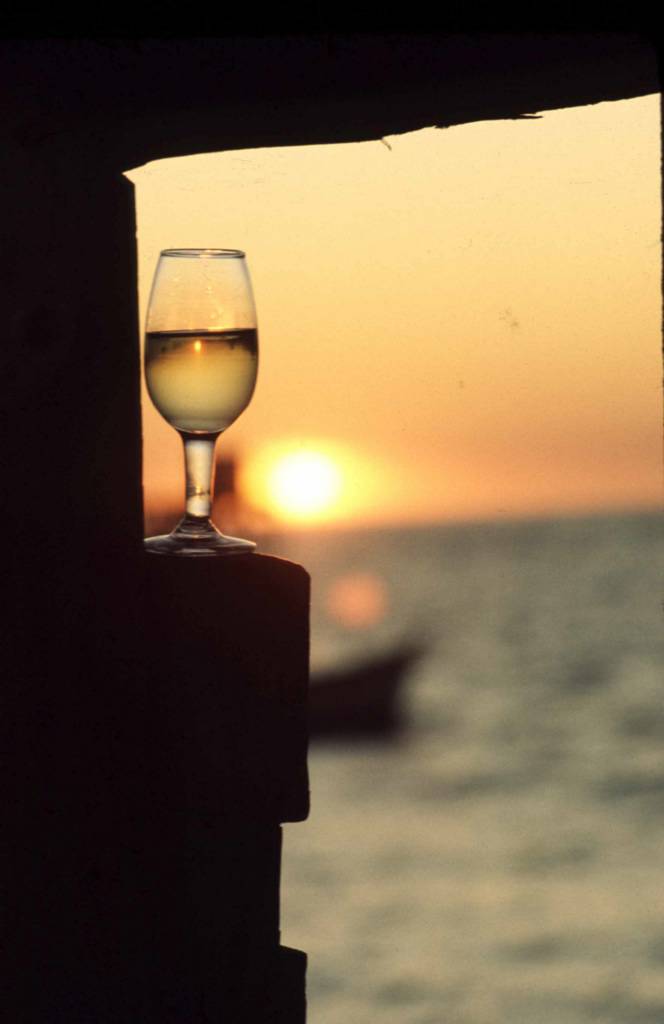

Gerry Dawes copyright 2004

An avid aficionado of Spanish fiestas and a photographer, Gerry Dawes traveled extensively in Spain during the eight years he lived there, putting muchos kilómetros on Rocinante, his Volkswagen sedan. He amassed thousands of color transparencies and a wealth of knowledge about the country, its wine and food, customs and culture. He has published hundreds of wine, food and travel photographs in numerous magazines and has had cover photographs for The Wine Spectator, The Wine News, Wine Enthusiast and others.

His photographs have been published (often with his articles) in The Wine News, Food Arts, Decanter, Wine Enthusiast, Santé, The New York Times, The Chicago Tribune, Food & Wine, Fine Wine Folio, Spain Gourmetour (Madrid), Restauradores (Madrid), Sobremesa (Madrid & Latin America) and many other publications.

He currently shoots both color tranparencies and high resolution digital photographs and is available for assignments.

Gerry Dawes
17 Charnwood Drive - Suite A
Suffern, NY 10901
Phone & Fax (call before faxing): 845-368-3486
Cell phone: 914-414-6982
Telefono movil (durante estancias en España): 670 67 39 34
gerrydawes@aol.com

12/01/2006

Cava: Spain's Champagne Method Bubbly is Perfect for the Holidays

Cava - once cheap, now chic

(First Published in Wine News December/January 2005-06 Gerry Dawes©2006)


Riddling bottles at Juve y Camps

Over the past few years of sipping Cavas in some of Spain's top restaurants, it has become increasingly apparent that a number of the country's smaller producers are bottling some absolutely superb sparkling wines. By contrast, not too long ago, Spanish sparkling wine was little more than quaffable, mass-market bubbly widely available at bargain prices. While that still holds true for a large percentage of the staggering ten million-plus cases of Cava exported each year (another eight million-plus cases are consumed in Spain), during the past ten years — hand-in-hand with quality advances on the country's wine and gastronomy fronts — a number of Champagne-quality Cavas from a wide range of producers have emerged. Some of these exceptional wines are vintage dated, prestige brut cuvées; bone-dry, palate-cleansing brut natures (great with shellfish); and an increasingly impressive group of sparkling rosados (rosats in Catalan), some made with pinot noir, others with indigenous varieties such as trepat, monastrell and garnacha.
Cava Photos

11/27/2006

Con-queso-dores: A Ham & Cheese Adventure in the Conquistador Villages of Western Spain, Castilla y León & The Mountains of Asturias

Con-queso-dores: A Ham & Cheese Journey in the Columbine and Conquistador Villages of Western Spain; the highlands of Castilla y León & The Mountains of Asturias

Text & photographs copyright by Gerry Dawes


One of the most rewarding trips in Spain for lover's of Spain's great cheeses, hams, historic sites and stunning scenery, is a trip through western Spain--ranging from Huelva on the Atlantic Ocean in the south; traversing the superb jamón Ibérico, exceptional queso and conquistador country of Extremadura; Salamanca and its Guijuelo ham country; Zamora for Zamorano cheese and Toro wine; León and its magficent stained-glass cathedral, Bierzo wine and Valdeón cheesese; and ending up back up in the north, again on the Atlantic, in the Asturias, land of cidra (cider) and Spain's Parque Naciónal de Quesos (National Park of Cheeses).

A couple of years ago, I embarked on an ambitious trip to Spain designed to accomplish several missions: My journey would begin in warm, southern Andalucía on the Atlantic Ocean and end in the cool northern coastal regions of the Cantabrian Sea and along the way I would visit some of Spain’s best cheese-producing regions in Extremadura and Castilla y León and end the trip in the so-called Parque Nacional de Quesos (National Park of Cheeses) in the northern provinces of Asturias and Cantabria. Along the way, I planned to sample Ibérico hams and embutidos (cured meats), which were recently approved for eventual importation into the United States.

Driving southeast from Sevilla to Mazagón (Huelva), I arrived at the beautiful Parador de Turismo, which sits on a cliff above a long stretch of Atlantic beach. From Mazagón, I explored Palos de la Frontera, the village where Christopher Columbus recruited his crews and set sail on his first voyage, and the monastery of La Rábida, where Franciscan monks had sheltered and encouraged Columbus, then helped him get his plan before Queen Isabela. Near Huelva, the provincial capital, a huge monument commemorating the discovery of the New World stands at the mouth of the rust red Río Tinto, from which Columbus sailed into the open sea on his way to immortality.

 The next morning I drove north into Huelva’s Sierra de Aracena mountains to Jabugo, famous for its jamones Ibéricos de bellota made from Iberian pata negra (black foot) pigs, which roam free in the autumn months fattening up on acorns foraged beneath the cork oaks. I spent the morning visiting the Consorcio de Jabugo, a producer of the first-rate jamones. Julio Revilla, the firm’s President, showed me around his impressive production facility, where hundreds of the world’s best hams were aging under ideal conditions. Revilla explained that because of aging requirements (2½ years for hams), the jamones will not be available in the U.S. until 2008. In the plant’s dining room, Revilla invited me to lunch (salad, the Consorcio’s own Castilian cheese from Valladolid, plenty of their first-rate ham, chorizo and lomo (cured Ibérico loin), plus cuts of grilled, fresh Ibérico pork, for which a big demand is developing in Japan.

After a stop at Aracena to pick up a Monte Robledo torta de cabra, a rare local small goats' milk cheese (tortas are usually made with sheeps' milk), I explored several little-known hill villages before reaching the intriguing Extremaduran town of Jerez de los Caballeros (Badajoz), hometown to both Hernando de Soto, discoverer of the Mississippi River, and Vasco Nuñez de Balbao, the first Western explorer to report seeing the Pacific Ocean. That evening, arriving in the lovely small city of Zafra, I stayed in the 15th-century fortified Dukes of Feria palace, now the Parador de Turismo. At dinner, served in the soaring, two-story Renaissance patio, I sampled the assertive and delicious Aracena goat torta, an intriguing cheese with hints of mushroom or truffle flavors.

The following day took me through stark, hilly terrain to the remote de la Serena region (Badajoz) to seek out the legendary Torta de la Serena. With much the same characteristics as Torta del Casar, this exceptional, expensive cheese is ~ in springtime and early summer versions ~ creamy, buttery, and spreadable like Brie, but with more intriguing, rustic flavors. I visited two excellent producers making cheeses from the de la Serena Denominación de Origen Protegida (D.O.P.) A D.O.P. operates under rules similar to those governing wine regions and guarantees the origins and production methods of a cheese.

Francisco Murillo, the D.O.P.’s technical director, took me to the Sánchez Ruíz (Toril del Cardo brand) cheese factory near the rocky, hillside town of Benquerencia. Murillo showed me a small artisan plant surrounded by well-trod grounds where scores of merino sheep, the approved breed, rested beneath the shade of oak trees. Murillo explained that D.O.P. Tortas de la Serena are made only with leche cruda de oveja, raw sheeps' milk, and he also pointed out the cardo silvestre (Cynara cardunculus; wild thistle flowers) that produce the vegetable rennet used to coagulate the milk. Cheeses made from this rennet ~ a practice rooted in ancient Moorish and Jewish dietary laws ~ often have a Vacherin Mont d’Or-like creaminess and a pleasant bitter almond finish. Murillo also gave me a tour of Lácteos de Castuera, a modern production plant that still requires careful daily hand-turning of the cheeses and cleaning the planks they rest on while aging. He gave me three tortas de la Serena, each with a lace band around its rind and packaged in a small brown cazuela, a reusable ceramic baking dish.

After stopping in Medellín, where an imposing statue of explorer Hernan Cortés stands in the town square, I drove to the great monumental Roman city of Mérida and checked into the Parador, this one ensconced in a renovated convent on a charming plaza. After touring Mérida’s splendid Roman theater and amphitheater, fine Roman Museum (designed by Rafael Moneo) and awesome Roman bridge over the Guadiana River, I dined at the Parador. The simpática server offered me jamón Ibérico from the D.O. Dehesa de Extremadura, followed by a local cheese selection that included a Manchego-type sheeps' cheese; a creamy, log-shaped Doña Inés goats' cheese; an exceptional Torta de Barros (from south of Mérida; winner of the 2003 Salón Internacional Club de Gourmets Torta cheese competition); and several goat cheeses from Berrocales Trujillanos, including an excellent Ibores from Trujillo.

The next day, my itinerary included the little-known hilltop town of Montánchez. Also famous for its hams, Montánchez soars above the Extremaduran plain and has superb views from the hermitage below the castle ruins that crown the hill. After enjoying a picnic lunch of some Ibérico ham and chorizo, local cured olives, wine and fresh figs, and a Serena Torta, I drove to Trujillo, one of Spain’s most striking and history-steeped towns.

Trujillo was the hometown of Francisco Pizarro, conqueror of Peru, and Francisco Orellana, a kinsman of Pizarro who discovered the Amazon River. The town is filled with photographic opportunities including Pizarro’s great equestrian statue, the towering San Martín church on the storybook town square, a number of palaces including Pizarro’s, a castle on the hill and many distinguished buildings along steep, winding streets that offer dramatic vistas.

Previous paradores were good places to sample local cheeses. Trujillo was no exception, with good reason: The D.O.P. Ibores offices are located here and Trujillo is host to the most highly esteemed cheese competition in Spain, the annual Feria del Queso, where, in the Plaza Mayor on the first weekend in May, some 350 cheeses are available for judging, sampling and sale. At the parador, I was served a smooth, delicious Ibores goat cheese and a soft, rich tortita de Barros – cut in half and surrounded by toast rounds.

After a restful night, I set out for Cáceres to visit a Torta del Casar producer who came highly recommended by Toño Pérez, chef-owner of Átrio, a Michelin one-star restaurant that serves the best modern cuisine in Extremadura. Just southeast of Cáceres is EXLAJA, a modest, artisan quesería that produces a first-rate Torta del Casar ("Tiana"), a famous non-D.O.P. torta (El Castúo), a flavorful semi-curado and a characterful curado (aged one year). Now a D.O.P. recognized by the EU, Torta del Casar is a raw milk Merino sheep cheese that is also coagulated with wild thistle rennet. Similar in style to the French Vacherin Mont d’Or o Epoisses(both cows' milk cheeses), Torta del Casar can be semi-soft or ripened to the point that it becomes molten and can be scooped out with a piece of crusty country bread. Torta del Casar, which gets its name from its torta-shape (like a Spanish potato omelette, or tortilla), is quite expensive since it takes several sheep (two milkings a day) to get the gallon of milk required just to make a two-pound cheese.

I tasted several cheeses at EXLAJA, photographed some charmingly picturesque young lambs and the purple cardo silvestre flowers growing on the property, then drove into Cáceres, enjoying a superb lunch at Átrio – with Torta del Casar ice cream with membrillo strips and vanilla oil for dessert! After lunch I explored the historic old quarter of Cáceres, then drove north, stopping briefly in the town of Casar, from whence the cheese gets its name, to photograph a wonderful scene – the bell tower of the town church crowned with storks in their nests with a herd of sheep in the foreground. Further north, I stopped briefly in late evening at Guijuelo, a town south of Salamanca filled with Ibérico jamon and embutido processing plants, including those of Joselito, the most sought-after in Spain. I spent the night in Salamanca, a city famous for its historic university, its plateresque architecture and the most beautiful Plaza Mayor in Spain. Taking a temporary respite from cheese and ham sampling, I dined that evening on grilled shrimp and the region’s famous tostón, roast suckling pig.

The next day I drove to León, the last stop before continuing into the majestic, but challenging high mountains of the Picos de Europa and the National Park of Cheeses. On the way, I passed through Zamora, where the excellent D.O.P. Zamorano cheese is made from pasteurized milk from churra and castellano sheep. North of Zamora I stopped to visit the ruins of the once magnificent 12th-century Romanesque Cistercian monastery at Granja de Moreruela. Flanking the ruins, standing like soldiers at attention, were thousands of wild thistles, now dried and glowing golden in the rays of the evening sun.

Upon reaching León, I found it in the midst of fiesta, and its restaurants and bars packed. Volunteers worked steadily to create a huge carpet of flowers in front of León’s magnificent Gothic cathedral, but even the flower carpet was upstaged by the sight of the church’s superb stained glass windows lit from inside and glowing like iridescent jewels against the night sky.

The following morning, I headed north to another majestic cathedral, this time a natural one, the mighty Picos de Europa mountains. I had an appointment with Marino González, President of COASA ~ a group of some 40 artisan producers, including González, who is the prime mover behind promoting artisanal food products from the bounteous Asturian cornucopia. Marino led me to Posado de León, a small village in northeastern León province nestled in a valley beneath awesome mountains, which still had pockets of snow in early July. Here the Alonso brothers make Queso de Valdeón, one of the great blue cheeses of Europe. Made principally with cows milk (sometimes laced with a bit of sheeps and/or goats milk), the cheeses are injected with pencillum mold, aged under humid conditions, then wrapped in sycamore leaves before being sold. Valdeón is a wonderfully smooth and creamy cheese with all the character of a classic blue cheese, without the more aggressive traits of other blue cheeses.

After visiting Valdeón, I followed Marino González through the dramatic 14-kilometer canyon, the Desfiladero de Los Beyos, and up into the hills to visit his family home, where his sister produces the highly regarded artisan cheese, Beyos. A historic cheese that was nearly extinct, this dense, compact, "peasant"-style, cows milk queso has a unique flinty texture and flavor. The firmness at first bite melts into a buttery, creamy, chalky paste, which makes it a cheese par excellence with cider or wine. I sampled the Beyos with Asturian cider that Marino poured from a height into wide-mouthed glasses. Versions of Beyos are also made with goats milk and mixed cow and goats milk.

For two days I stayed in the Cangas de Onís, an important Asturian tourist and market town in the foothills, visiting a number of cheese producers who work with Marino González, sampling Cabrales, Spain’s most famous D. O. P. blue cheese, a semi-soft blue (made mostly from raw cows milk) with a strong, spicy flavor, and Gamoneu, one of the few remaining naturally bluing blue cheeses. This is made from raw cows' milk (with some goats or sheeps milk mixed in) and has a creamy, pungent flavor. I watched a Gamoneu producer’s wife work the coagulating curds and whey up to her elbows, after which she stoked the apple wood fire that provides the smoky flavor to rows of aging cheese wheels.

At Arenas de Cabrales, I visited Marino González’s own artisan cheese plant and the dark, humid caves on the hill where hundreds of Cabrales cheeses were maturing. I also tasted such cheeses as Afuega L’Pitu, Peñamellera and Ovín, but recounting my cheese adventures in this National Park of Cheeses is alone the subject for another article.

As I was driving towards Cantabria, the thought occurred to me to attempt to reach Tresviso, a town hidden at the end of a corkscrew road up in the highest peaks of these mountains, where a powerful D.O.P. blue cheese, Picón Bejes-Tresviso, is made. But the road was too difficult in my rental car, and I soon retraced my route and headed for the Parador de Turismo Gil Blas at Santillana del Mar, a Medieval village near the sea, southwest of Santander. As luck would have it, the selection of cheeses that final night at the parador included several Cantabrian cheeses including a pungent, grey-blue cheese from Tresviso. It reminded me that on my next trip to Spain’s National Park of Cheeses, Tresviso will be high on my list of places to visit.
Related Posts with Thumbnails