Share This Gerry Dawes's Spain Post


Instagram

In 2026, ranked #7 in the Top 30 Gastronomy Blogs (and Websites for Gastronomists & Gastronomes by Feedspot. (Ranked in the top 50 since 2019). "The Best Gastronomy blogs selected from thousands of Food blogs, Culture blogs and Food Science. We’ve carefully selected these websites because they are actively working to educate, inspire, and empower their readers with . . . high-quality information.

More than 3,640,000 views since inception, 123,000+ views in August 2026.


Ranked #7. Gerry Dawes's Spain: An Insider's Guide to Spanish Food, Wine, Culture and Travel gerrydawesspain.com

"My good friend Gerry Dawes, the unbridled Spanish food and wine enthusiast cum expert whose writing, photography, and countless crisscrossings of the peninsula have done the most to introduce Americans—and especially American food professionals—to my country's culinary life. . .” - - Chef-restaurateur-humanitarian José Andrés, Nobel Peace Prize Nominee and Oscar Presenter 2019; Chef-partner of Mercado Little Spain at Hudson Yards, New York 2019

10/31/2006

Copa de Jerez Sherry & Food Matching Competition

The International COPA JEREZ is a competition featuring chefs and sommeliers who have won preliminary competitions in their home countries by matching creative dishes to specific Sherrries. The finals in Jerez de la Frontera, capital of the Sherry district, will showcase winning chef and sommelier teams representing Germany, Belgium, Denmark, Spain, USA, The Netherlands, Japan and United Kingdom.


Jerez de la Frontera


Sherry Bodega

During the finals--to be held in Jerez on January 11, 2007--each team will defend and justify their maridaje, or Sherry-and-creative dish marriages, in front of a panel of judges anchored by Heston Blumenthal of Fat Duck, and including Juli Soler of El Bulli, and Doug Frost, MS, MW.


Juli Soler of El Bulli

The Chef/Sommelier team of one of NYC's finest restaurants has been selected to represent the USA at the International Competition of the COPA Jerez in Jerez de la Frontera, Spain next month. Andy Nusser, executive chef, and Nancy Selzer, GM/sommelier, both co-proprietors with Mario Batali and Joe Bastianich of NY's celebrated Casa Mono, have chosen a brilliant array of Sherries to complement their original, creative cuisine.


An Andy Nusser scallop dish at Casa Mono

Copa Jerez was born some years ago with the aim of explaining the potential of Vinos de Jerez in the world’s gastronomy. After the success of the 1st Edition International Final in January 2005, Copa Jerez's prestige has grown rapidly and national competitions in 2006 drew a large number of enthusiastic chef-and-sommelier teams vying for a trip to the finals in Jerez.

American competitors at Copa Jerez 2005

All photographs copyright 2005 by Gerry Dawes.

10/30/2006

Gerry's View - Spanish Food Reports Filed in Foods From Spain News

2006 - Madrid Fusion, Alimentaria & BCN Vanguardia, Salon Internacional de Gourmets, Spain's Ten, CIA-Worlds of Flavor, San Antonio New World Wine & Food Festival

The world of Spanish gastronomy has never been more exciting. Culinary conferences spotlighting Spain, both in Spain and the U.S.; trade shows with a focus on Spanish foodstuffs and wines; and gastronomic promotional events throughout the year offer unique opportunities to sample, savor and learn about both exciting, cutting edge Spanish cuisine and the great cooking based on the rich food traditions of Spain.

In January, as reported in Foods From Spain News (Winter Issue), Madrid Fusión 2006 took center stage in Madrid and dazzled the world press with innovative presentations from Spanish star chefs and culinarians such as Ferran Adrià, Juan Mari Arzak, Martín Berasategui, Thomas Keller, Charlie Trotter, José Andrés and Harold McGee, the author of On Food and Cooking: The Science and Lore of the Kitchen.

On October 14, Madrid Fusión will make its debut in New York appearance with Spain's Ten, a day-long "mini Madrid Fusión"as a part of the events surrounding the inauguration of the new International Center for Food & Wine, an offshoot of the long-established French Culinary Institute. Invited to the event are ten top Spanish modern cuisine chefs including Adrià, Arzak, Berasategui, Joan Roca and Paco Torreblanca. Several of these same chefs will also cook at a gala dinner for the James Beard Foundation on Oct. 12 and for the press and invited American chefs on Oct. 13 in the kitchens of the International Center for Food & Wine.

In March, far less well-known that Madrid Fusión in international gastronomic circles, but quite spectacular for professional culinarians and aficionados was the superb BCNVanguardia ‘06 Congreso Internacional de Gastronomía de Alimentaria that was featured during the huge Alimentaria trade fair, a bi-annual event with thousands of exhibitors, which took place in Barcelona from March 6-10.

In May, late this year because of the Easter holidays, the Salón Internacional del Club de Gourmets (May 8-11 at the Casa del Campo) featured in three different exhibition halls some 1,000 exhibitors showing 35,000 products to more than 50,000 visitors. 2006 marks the 20th Anniversary of this stellar trade show. Grupo Gourmets, the organizers of this annual event is also celebrating 30 years as the publishers of Club de Gourmets magazine and an outstanding, indispensable guidebook series that includes the annual Gourmetour Guía Gastronómica y Turística de España, the Guía de Vinos Gourmets wine guide and GourmetQuesos, a guide to Spain’s superb cheeses. During the Salón Internacional de Gourmets each year, the Bocuse d’Or prize for the best young chef in Spain is awarded, as well as Gourmetour prizes for the best restaurant, best chef, etc. There are also competitions of national significance for the best Cortador de Jamón (Ibérico ham-cutting championship), sponsored /Dehesa de Extremadura, and the Cata-Concurso de los Mejores Quesos de España, a judging of Spain’s finest cheeses that has been narrowed to ten finalists in each of seven categories.

On May 15 and 16 in New York and May 17 and 18 in Chicago, at a series of tastings the government of Navarra’s trade mission to the United States presented a range of Navarra food products such as pimientos de piquillo, asparagus and a wide variety of quality conserved vegetables and fruits, olive oil, cheeses and wines–charming Chardonnays, superb rosados, world-class reds and luscious dessert wines. For more information about products from Navarra, contact: José Guerra (mailto:jose.guerra@mcx.es from Foods From Spain or Miguel Moncada (mmoncada@camaranavarra.com) from the Cámara Navarra, the Chamber of Commerce of Navarra. Tasting & Touring in Navarra.

Also on the calendar are at least two other exciting Spanish-oriented gastronomic events, both of which will take place in November, 2006. The Culinary Institute of America's 9th annual Worlds of Flavor International Conference & Festival, will take place at their Greystone campus (a former monastery and winery) in Napa Valley from November 2-4, 2006. Widely acknow-ledged as the America's premier annual forum on world cuisines and culinary flavor trends for chefs, food journalists, and other food service, beverage and hospitality industry professionals, this year’s Worlds of Flavor event will be dedicated to Spain. Greg Drescher, Senior Director of Strategic Initiatives at the Culinary Institute of America told Foods From Spain News, "This year the CIA will stage the largest and most comprehensive conference ever held in the United States on Spanish food and wine, and the contribution of Spain to world menus past and future. Our 2006 program, Spain and the World Table: Regional Traditions, Invention and Exchange, will bring together more than 50 guest faculty, leading chefs, cooks, cookbook authors, and other culinary and beverage experts from throughout Spain as well as from across the United States and elsewhere around the world. Conference presenters will lead seminars, tastings, and demonstrations and collaborate on special meals and the spectacular food bazaars and cultural events at the World Marketplace held in Greystone's historic 15,000 square foot Barrel Room."

This year’s Worlds of Flavor event, which focuses on the traditional cuisines of Spain–as well as modern cuisine elements–promises to be the most spectacular Spanish gastronomic event of the year. José Andrés, author, Spanish television personality and chef-partner in several Jaleo restaurants in Washington, D.C. will chair the event. For more information see: http://www.prochef.com/WOF2006

Less than a week later, from November 7 to 12, the 2006 San Antonio (Texas) New World Wine and Food Festival will also be dedicated to Spain in general and will highlight the gastronomy of the Canary Islands (many San Antonio area residents trace their roots to the Canary Islands). The festival will feature seminars and tasting on Spanish gastronomy, Spanish wines and cheeses and Canary Islands food, wine and culture. Spanish chefs from both the mainland and the Canary Islands will be invited to do demonstrations, cook at gala dinners, etc.
See: http://www.nwwff.org/

10/01/2006

New Spanish Cookbooks

Fall, 2006

With the publication in the U. S. of four more major Spanish cookbooks in the past several months, the good news for Spanish gastronomy and food products just keeps coming. For years, the only serious Spanish cookbooks that one encountered in the major bookstores were those of pioneer author Penelope Casas, whose body of work grew to more than half a dozen high-quality interpretations of Spanish cuisine over a period of some twenty years, including last year’s La Cocina de Mama. During the same period Janet Mendel, who lives in the village of Mijas on the Costa del Sol, was also publishing several Spanish cookbooks, but their circulation was confined mostly to Europe until recently.

Then came Teresa Barrenechea’s The Basque Table, which joined Colman Andrew’s classic Catalan Cuisine, in highlighting Spanish cuisines regional distinctions. And with the publication in English and importation of new wave cuisine books in Spanish–such as those by super star chef Ferran Adrià on his world-famous restaurant El Bullí–the library of culinary writing on Spain (coupled with its international acceptance as the new culinary mecca), has grow exponentially to lay the foundation for this year’s explosion of new literature. Now, four excellent new books are on the market: Teresa Barrenechea’s The Cuisines of Spain>: Exploring Regional Home Cooking (Ten Speed Press), Janet Mendel’s Cooking From the Heart of Spain, José Andrés’s Tapas: A Taste of Spain in America, and Anya Von Bremzen’s The New Spanish Table, all of which call for Spanish products and list American purveyors where readers can find them.

Barrenechea’s The Cuisines of Spain has the endorsements of four of Spain’s three-star chefs: Ferran Adrià, Juan Mari Arzak, Martín Berasategui and Santi Santamaría. Adrià wrote “Barrenechea captures the essence of our country’s authentic regional cooking in a way never before accomplished.” And Arzak says she has “transmitted the true essence of our regional cuisines through this book.” Barrenechea, in Chapter Two, The Spanish Kitchen has valuable essays on such Spanish ingredients as extra virgen olive oil, sherry vinegar, Spanish cured jamones (both Serrano and Ibérico), piquillo peppers, pimentón de La Vera (paprika), esparragos de Navarra and azafrán (saffron).

Janet Mendel, in her Cooking From the Heart of Spain, emphasizes that “La Mancha’s culinary roots are rural, but beneath their sturdy simplicity, a rich Moorish and Sephardic heritage imbues Manchegan cooking with an aroma of refinement, of delicate complexity. Some of Spain’s most outstanding products come from this region,” Mendel says, “Manchego cheese, saffron, fine wines, serrano ham, and extra virgin olive oil. To give the foods a sense of place, I tell stories about an artisanal cheese maker, a revolutionary wine maker, harvesting saffron, trout fishing, a partridge shoot and making Marzipan in Toledo.”

José Andrés, star of his own wildly popular Spanish television cooking series, Vamos a Cocinar, and executive chef of Washington, D. C. ’s Jaleo, Café Atlantico and its renowned avant-garde tapas Minibar and several other restaurants in the nation’s capital, was recently named Chef of the Year by both Bon Appétit magazine and the Restaurant Association Metropolitan Washington (Rammy awards). His Tapas: A Taste of Spain, Andrés concentrates on modern small-plate tapas such dishes as lobster with clementines and grapefruit in saffron oil, slow-roasted beef tenderloin with Cabrales cheese and octopus with Spanish extra virgin olive oil and pimentón).

To promote her book on Powells bookseller’s website (Powells.com), Anya Von Bremzen, in a wonderful essay about her experiences in writing The New Spanish Table, wrote “Experimental chefs swoon over the luminous quality of native (Spanish) ingredients and the rigorous simplicity of classic preparations — hanging out at old tabernas, tascas, and tapas bars along with the rest of Spanish gourmands. Meanwhile, owners of old-school restaurants send their children and business heirs to apprentice with new-wave maestros for progressive kitchen tricks. I don't know any other place on the globe where the union of old and new is so strong. In the end it's this marriage of tradition and innovation that makes eating in Spain such a thrilling adventure.”

Von Bremzen’s essay sums it up very well. These days, eating in Spain and the quality of Spanish ingredients is indeed is indeed “a thrilling adventure.”

9/01/2006

The Wines of Murcia: Jumilla, Land of Monastrell

Jumilla, a region whose rich, hefty wines are made from the indigenous Monastrell grape have historically been used for blending, has now come into its own. No longer the rustic country bumpkin, Jumilla now produces wines that are finding a growing audience for fans of ripe, fruity, full-flavored wines that are reasonably priced and compare favorably to those from warm-country growing areas such as California and Australia.

Located in an arid mountain valley, some 50 miles inland from the Mediterranean Coast of Alicante, southwest of Valencia in the province of Murcia, Jumilla's 100,000-plus acres of vineyards are planted at altitudes that range from 1,300 to nearly 3,000 feet above sea level. Temperatures here can be extreme, soaring to more than 100 degrees on summer days and dropping to well below freezing in winter. Jumilla gets some 3,000 hours of sun per year and only about 16 inches of annual rainfall, but roots of traditional old vines burrow deep in search of moisture and most modern vineyards are fed by drip irrigation.

But don't be fooled by the climatic conditions in Jumilla. Like many other regions in Spain (the second most mountainous country in Europe), the secret behind making successful, balanced wines in areas that would seem to be too warm to make seriously good wines, is altitude. The vineyards' thermostats may be cranked up during the daylight hours in summer, but at night temperatures at these altitudes cool down dramatically. This allows the vines a good night's rest to buttress themselves for the coming day and is the secret behind Jumilla's emergence from near obscurity. The grapes get properly ripe, but still have enough acids because of the cool nights to carry the hefty weight of the wines they produce.

The brownish soil (with underlying chalk) and the arid conditions in Jumilla are inhospitable to the phylloxera bug that devastated Europe in the late-19th century; so inhospitable that many old Monastrell vineyards in Jumilla are planted on pie franco, or ungrafted French rootstock. In contrast, the vast majority of vineyards in Europe had to be grafted long ago onto American, phylloxera-resistant rootstock.

In Jumilla, Monastrell is the most important authorized grape variety and accounts for 90% of the wine produced. Monastrell is an indigenous grape variety, also sometimes called Mataró or Murviedro in Spain, but known to the rest of the world by the French name Mourvèdre (believed to be the French pronunciation of the ancient Spanish town of Murviedro). To be labelled 'Monastrell,' a Jumilla wine must contain at least 85% of the variety. Other red varieties authorized in the Jumilla denominación de origen (D.O.) are Garnacha Tintorera, which makes a powerful, deeply colored blending wine; Garnacha, the great Spanish grape that is also used widely in La Rioja, Navarra, Aragón and Priorat; Tempranillo/Cencibel, the main grape of neighboring La Mancha; Cabernet Sauvignon; Merlot; the exceptionally promising French Syrah; and Petit Verdot (authorized since 2003), which also shows great promise (Casa de la Ermita makes an exceptional example).

Though white grapes are insignificant at this stage, also authorized are Airén (so widely planted in La Mancha that its acreage ranks first among the world’s white grapes); Macabeo, known as Viura in La Rioja; Pedro Ximénez of Montilla-Moriles (and Sherry) fame; the ancient Mediterranean white variety, Malvasía; and Moscatel Grano Menudo (small berry Moscatel, an important grape of neighboring Alicante and Valencia). This last grape was approved in 2003, along with Chardonnay and Sauvignon Blanc. While not yet officially approved, Viognier may have promise in Jumilla as well, though few bodegas make wines from it.
Aficionados of Spanish wines are discovering the joys of Jumilla wines, and, given the excellent price-quality ratio of many of these Monastrell-based wines, those who are looking for wines that deliver a lot of bang of their buck may find their nirvana in these flavor-packed wines.

Bodegas Agapito Rico is widely distributed by Classical Wines of Seattle, WA (www.classicalwines.com). Agapito Rico's Carchelo Monastrell, a very reasonably-priced wine made from old vines Monastrell blended with small amounts of Syrah and Merlot, has enjoyed steady sales for many years in the U.S. Carchelo Monastrell is an unoaked, bright, full-flavored, balanced wine with delightful ripe red fruit-plums, cherries, red currants-that is a good match for grilled meats, pizza, paella and pasta. Agapito Rico makes just over a thousand cases of Canalizo, an intense 100% Syrah wine that spends 18 months in oak and needs several years in bottle to fully develop. They also produce Altico Monastrell-Syrah, a powerhouse blend that is aged for ten months in French oak.

Bodegas Mayoral 1890, named for the date of its founded in 1890, has also had considerable success in the U.S. with their balanced, richly flavored, inexpensive Jumilla wines. Wines from this bodega include the unoaked Mayoral, a blend of 60% Monastrell and 40% Tempranillo; a crianza (12 months in oak), which contains 70% Monastrell; and a reserva with Monastrell, Tempranillo and 20% Cabernet Sauvignon. They also make a Cabernet Sauvignon (100%), Syrah (100%), and Mayoral Selección (a blend of Cabernet Sauvignon, Monastrell and Tempranillo), all of which spend just four months in oak.

Bodegas Bleda, produces the well-known Castillo de Jumilla brand and exports 85% of its production, mostly to northern Europe. These relatively inexpensive wines are very well-made and show attractive, easy-drinking peppery, black currant, blackberry and chocolate flavors. All these very well balanced wines - even their bright, fruity rosado - are made with a minimum of 55%-60% Monastrell, 40% Tempranillo, and sometimes 5% Merlot. There is also a Castillo de Jumilla Monastrell (100%) and the first-rate Divus, made with 90-95% Monastrell and 5-10% Cabernet Sauvignon or Merlot.

Finca Luzón, an impressive estate vineyard planted en espaldera (on wires), is surrounded by stark, grey mountains. They produce well-made wines, including several Monastrell-based (50%) blends of Cabernet Sauvignon, Merlot and Tempranillo that are aged in new French and American oak. They also make a delicious Monastrell rosado; a rich, sweet 80% Monastrell Finca Luzón; Castillo de Luzón, a crianza (aged one year in oak) with 75% Monastrell; and their top-of-the-line Altos de Luzón, a blend of Monastrell from 50-year-old vines, Cabernet Sauvigon and Tempranillo.

Casa de la Ermita, another impressive small winery that overlooks a vast valley of vines, is drawing attention with their 100% Viognier white wine; a young red that is a blend of Monastrell, Tempranillo, Cabernet Sauvignon, Merlot and Syrah; a Casa de la Ermita crianza made with a predominance of Monastrell and Tempranillo, laced with Cabernet Sauvignon; an organically farmed Ecológico Monastrell (100%); and a set of Monasterio de Santa Ana mono-varietals–Merlot, Monastrell, and Syrah–all of which spend three months in oak. But the Casa de la Ermita wine that is drawing the most interest from Spanish wine aficionados is their 100% Petit Verdot, aged 12 months in new American (75%) and French oak.

The Jumilla winery that has earned the most kudos from both the Spanish and international press is Julia Roch e Hijos Casa Castillo. Their success is based on some splendid old vines vineyards, some of which are well over 50 years old, planted on ungrafted French rootstock in soils that show pronounced terroir. Many of the Casa Castillo wines contain some of the best Monastrell in the Jumilla D.O. The Casa Castilla 2001, blend of 50% monastrell and 50% tempranillo, was a rich mélange of sweet blackberry, currant, chocolate and licorice with a graphite mineral finish. The Casa Castillo Monastrell (85%) is sweet and rich with blackberry and currant flavors. The Casa Castillo Crianza, a Monastrell with 10% Syrah, shows even more of those rich blackberry, currant, chocolate and licorice flavors, again laced with an intriguing mineral finish. Their Las Gravas, a concentrated blend of 70% Monastrell, 15% Cabernet Sauvignon and 15% Syrah, is a tannic wine crammed with cherry, currant and blackberry flavors. The now legendary Pie Franco, a 100% Monastrell wine made from vines planted in 1941 on un-grafted rootstock, is another towering powerhouse that is loaded with soft fruit and has an engaging silky finish. Casa Castillo also produces limited quantities of a top-notch, well-balanced, sweet, late harvest Moscatel de Grano Menudo.

Olivares makes the big, ripe Altos de la Hoya Monastrell table wines from ungrafted old vines. Their red table wines are intense and mineral-laced, but still a bit rustic. However, it is their Monastrell-based sweet wines that are some of the most exciting in the emerging genre of Spanish dessert wines. Olivares can't make these late harvest wines every year, but when they do the results are superb. Olivares Monastrell Dulce, made from low-yield, old vines fruit, is a deep, black wine with currants and exotic spices in the nose and rich, sweet blackberry, coffee and chocolate flavors on the palate. The Olivares Viejísimo 1930 is a very dry Fondillón, an unusual, compelling rancio wine with a cornucopia of flavors - coffee, tobacco, dates, dried citrus peel. But these magnificent, once nearly extinct wines from Murcia and Alicante are a subject deserving of an entire article to themselves.

Many of the better wines of Jumilla are exported. Indeed, some bodegas export 90% of their wines and new wineries like Hijos de Juan Gil with their new brand, Wrongo Dongo, made by an Australian winemaker, are almost entirely aimed at the American market. Juan Gil and the Spanish dynamo in the American market, Jorge Ordoñez of Fine Estates From Spain, also produce the exorbitantly rated and wildly overpriced Clio and El Nido, though fans of Parkerista blockbusters with deep pockets may find much to like in these polished, but niche market-targeted wines.

About the author:

Gerry Dawes was awarded Spain's prestigious Premio Nacional de Gastronomía (National Gastronomy Award) in 2003. He writes and speaks frequently on Spanish cheeses, wine and gastronomy. He was a finalist for the 2001 James Beard Foundation's Journalism Award for Best Magazine Writing on Wine. He has personally visited more than 30 wineries in the Levante region, which includes the Murcia regions of Jumilla, Yecla and Bullas and La Comunitat Valenciana D.O.s of Alicante, Utiel-Requena and Valencia.

O:\Wine Articles & Notes\Jumilla Wines for website.wpd

8/01/2006

Encuentro Verema: Valencia's Winter Wine Conference, January 26 & 27, 2007

Valencia's El Palau de les Arts Reina Sofía — Opera house and performing arts centre

The Sixth Edition of Encuentro Verema, Spain's most prestigious wine conference, took place in Valencia January 26 & 27, 2007 at the five-star Meliá Valencia Palace Hotel.

The conference, organized by Valencia-based Verema.com, one of the world's most visited wine websites, featured two days of high level seminars and tastings.

On January 26, in the evening Bodegas Herederos de Marqués de Riscal, presented "The Evolution of Rioja Wines in the past century," following by a tasting of historic vintages of Marqués de Riscal Reserva wines back to the stellar, legendary 1945, as well as their latest Barón de Chirel, the 2001, perhaps the greatest wine in Barón de Chirel's history.

Seminar on White Wines at Encuentro Verema

After Marqués de Riscal's evening seminar, there will be a walk-around, meet-the-winemaker's tasting of wines from some of the bodegas participating in the 2007 event, including Alión (D.O. Ribera del Duero), Alvaro Palacios (D.O.C. Priorat), Celler del Roure (D.O. Valencia), Cims de Porrera (D.O.Q. Priorat, Clos Martinet (D.O.Q. Priorat), Clos Mogador (D.O.Q. Priorat), Contino (D.O.Ca. Rioja), Dominio de Atauta (D.O. Ribera del Duero), Dominio de Tares (D.O. Bierzo), Enrique Mendoza (D.O. Alicante), López de Heredia (D.O.Ca. Rioja), Marqués de Griñón (D.O. Dominio de Valdepusa), Mauro (V.T. Castilla y León), Maurodos (V.T. Castilla y León), Muga (D.O.Ca. Rioja), Mustiguillo (D.O. Utiel-Requena), Remirez de Ganuza (D.O.Ca. Rioja), Telmo Rodríguez (Various D.O.s), Bodegas Miguel Torres (Various D.O.s) and Vega Sicilia (D.O. Ribera del Duero).

The Events

Saturday, January 27

10:30 - 11:45. Managing Director-Winemaking Team Leader Agustín Santolaya of Bodegas Roda presented a tasting of representative vintages from the winery since its creation.

12:00 - 13:30. Round table on the wines of Barolo (Piedmont)with winemakers from the region.


Seminar with Ricardo Pérez, Desciendentes de J. Palacios (Bierzo) & Juan Such, one of the Directors of Verema.com

13:30 - 14:00. Presentation of the Verema Awards for 2006 to:

- Best Bodega 2006: Bodegas Roda.

- Rising Star Bodega: Viñas del Vero.

- Best Wine Award 2006: Vega Sicilia Único 1994.

- Wine Personality of the Year 2006 Award: Mariano García, Bodegas Mauro, Maurodos
and others.

- Award for Best Restaurant Wine Service: Restaurante Atrio (Cáceres).

Verema.com Awards 2005

Presentation of Verema.com's 2006 National Wine Photography Award

14:00 - 17:30. Wine from participating bodegas and tapas lunch.

19:30 - 21:30. Round Table "Culture and Wine" with various personalities from the fields of theatre, fashion, literature, architecture, humor and sports.


Board of Directors, Verema.com

21:30 – 00:00. Dinner.

Pablo Calatayud, Cellar del Roure (Valencia), explains the finer points of making wine to Jesús Madrazo, winemaker at Contino (La Rioja)

Tres amigos at the Verema.com after-party at Malquerida Restaurante, Valencia


Participating Bodegas Encuentro Verema 2007

- Abadía Retuerta (V.T. Castilla y León)
- Alión (D.O. Ribera del Duero)
- Alvaro Palacios (D.O.C. Priorat)
- Alvear (D.O. Montilla Moriles)
- Anima Negra (Baleares)
- Artadi (D.O.Ca. Rioja)
- Arzuaga (D.O. Ribera del Duero)
- Barbadillo (D.O. Jerez y Manzanilla-San Lúcar de Barrameda)
- Beaucastel (Valle del Ródano)
- Bernabé Navarro (D.O. Alicante)
- Blecua (Somontano)
- Bodegas Aalto (D.O. Ribera del Duero)
- Bodegas Almanseñas (D.O. Almansa)
- Bodegas Bilbaínas (D.O.Ca. Rioja)
- Bodegas de la Marquesa (D.O.Ca. Rioja)
- Bodegas Osborne (Varias D.O.)
- Bodegas y Viñedos Illana (D.O. Ribera del Júcar)
- Bodegas y Viñedos Pintia (D.O. Toro)
- Bruno Clair (Borgoña)
- Can Rafols del Caus (D.O. Penedés)
- Casa de la Ermita (D.O. Jumilla)
- Celler del Roure (D.O. Valencia)
- Chateau Caronne Ste Gemme (Haut Medoc)
- Cillar de Silos (D.O. Ribera del Duero)
- Cims de Porrera (D.O.Q. Priorat)
- Clos Martinet (D.O.Q. Priorat)
- Clos Mogador (D.O.Q. Priorat)
- Contino (D.O.Ca. Rioja)
- Dominio de Atauta (D.O. Ribera del Duero)
- Dominio de Tares (D.O. Bierzo)
- Emilio Moro (D.O. Ribera del Duero)
- Enrique Mendoza (D.O. Alicante)
- Eric Bordelet (Sidra)
- Estancia Piedra (D.O. Toro)
- F. Schatz (D.O. Málaga y Sierras de Málga)
- Gonzalez Byass (D.O. Jerez y Manzanilla-San Lúcar de Barrameda)
- Gramona (Varias D.O.)
- Gutierrez de la Vega (D.O. Valencia)
- Henri Giraud (A.O.C. Champagne)
- Heretat de Cesilia (Sin D.O. - Zona de Alicante)
- Joan Sardá (Varias D.O.)
- López de Heredia (D.O.Ca. Rioja)
- Luis Cañas (D.O.Ca. Rioja)
- Marqués de Griñón (D.O. Dominio de Valdepusa)
- Marques de Riscal (Varias D.O.)
- Marqués de Velilla (D.O. Ribera del Duero)
- Mauro (V.T. Castilla y León)
- Maurodos (V.T. Castilla y León)
- Muga (D.O.Ca. Rioja)
- Mustiguillo (D.O. Utiel-Requena)
- Pago del Vicario (V.T. Castilla La Mancha)
- Pierre Gimonnet & Fils (A.O.C. Champagne)
- Pirineos (D.O. Somontano)
- Remirez de Ganuza (D.O.Ca. Rioja)
- Santiago Ijalba (D.O.Ca. Rioja)
- Sierra Cantabria (D.O.Ca. Rioja)
- Telmo Rodríguez (Varias D.O.)

- Toques et Clochers (Limoux)
- Torres (Varias D.O.)
- Valtravieso (D.O. Ribera del Duero)
- Vega Sicilia (D.O. Ribera del Duero)
- Vegalfaro (D.O. Utiel-Requena)
- Vera de Estenas (D.O. Utiel-Requena)
- Viñas del Vero (D.O. Somontano)
- Yllera (Varias D.O.)

Hotel Accommodations

Hotel Meliá Valencia Palace***** has special rates (112 Euros plus 7% IVA; good only for the nights of the conference) for doubles (or singles) with breakfast included for Encuentro Verema attendees. Those wishing to reserve hotel rooms should communicate directly with the hotel and mention "Encuentro Verema".

HOTEL MELIA VALENCIA PALACE*****

Paseo de la Alameda, 32// 46023 Valencia

Tel:96 337 50 37 Fax:96 337 55 32

web : www.sh-hoteles.com

Persona de contacto: Rosa García Vivó

E MAIL: rosa.garciavivo@sh-hoteles.com

Admission fees to Encuentro Verema are 165 € por persona (IVA included) for members of Club Verema (375 Euros for two). Non-member price is 235 € per person (IVA included)

To register for future Encuentro Verema conferences, e-mail Directors Encuentro Verema at verema@verema.com with the name or names of the person or personas wishing to attend, their mailing address and a contact phone number and e-mail address. Available places are very limited; payment can be done by bank transfer. Contact Verema.com for more information. All conferences are conducted in Spanish. There are no English translatons provided.

El Museu de les Ciències Príncipe Felipe — Science museum

Copa Jerez Sherry & Food Matching Competition

The International COPA JEREZ is a competition featuring chefs and sommeliers who have won preliminary competitions in their home countries by matching creative dishes to specific Sherrries. The finals in Jerez de la Frontera, capital of the Sherry district, will showcase winning chef and sommelier teams representing Germany, Belgium, Denmark, Spain, USA, The Netherlands, Japan and United Kingdom. During the finals--to be held in Jerez on January 11, 2007--each team will defend and justify their maridaje, or Sherry-and-creative dish marriages, in front of a panel of judges anchored by Heston Blumenthal of Fat Duck, and including Juli Soler of El Bulli, and Doug Frost, MS, MW.
(Click on title for full story and photographs.)

6/10/2006

Super Star Chefs Show Their Stuff at Alimentaria’s BCNVanguardia ‘06

Text & Photographs by Gerry Dawes ©2006


BCNVanguardia ‘06 took place in Alimentaria’s 2006 Restaurama section, a pavilion alongside the two very large Intervin buildings that housed hundreds of Spanish wine producers. Directed by Roser Torras, the BCNVanguardia cooking demonstrations were brilliantly focused. Each day featured star Spanish and international chefs doing friendly mano a mano riffs with designated themes within a main theme such as La Tierra (dishes from the earth, i. e., vegetables, beans, potatoes, pasta, rice, salads; El Mar, fish and shellfish; and Las Viandas, meat, game, and birds (with truffles). Each entire day was devoted to these themes in order and pairs of chefs gave their unique interpretations of how to handle their assigned ingredients.


On the first day, Raúl Aleixandre, of Ca Sento in Valencia, a maestro of rice (and shellfish) dishes was paired with Hiroyuki Kanda of Kanda restaurant in Tokyo. It was refreshing to see both chefs doing traditional rice dishes, using traditional ingredients, Aleixandre with his typical, delicious arroz meloso marinero with squid and shrimp flavored with Spanish pimentón (paprika) and Kanda with a traditional Japanese rice dish with vegetables and mushroom.


Ricardo Gil of Restaurante 33 in Tudela (Navarra) did a preparation with regional ingredients–cardoons, borage and white asparagus–from the vegetable rich region of la Ribera de Navarra (from where many of Spain’s superb jarred and tinned vegetables such as pimientos de piquillo come) and the legendary Bitor Arguinzoniz from Restaurante Etexebarri in the Basque Country showed how he has become one of the world masters of grilling, using with laser-made, micro-mesh skillets to grill vegetables over an open fire.


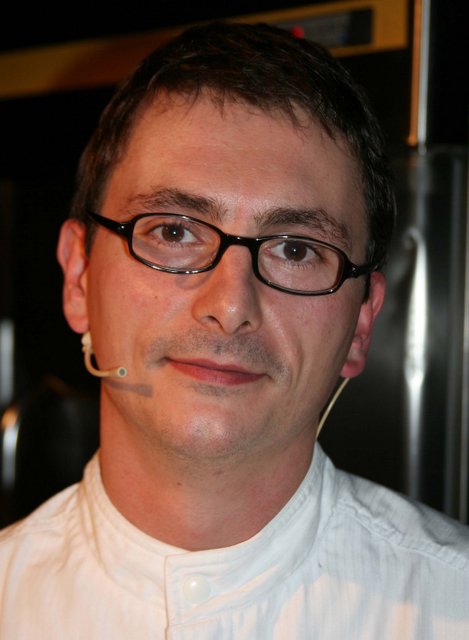
Charlie Trotter did a deconstruction interpretation of the ubiquitous American Caesar Salad, and Andoni Aduriz of Mugaritz, near San Sebastián, produced a beautiful salad of roasted and raw vegetables, sprouts and even edible flowers with a cheese "dressing."


Andoni Aduriz of Mugaritz (near San Sebastián)

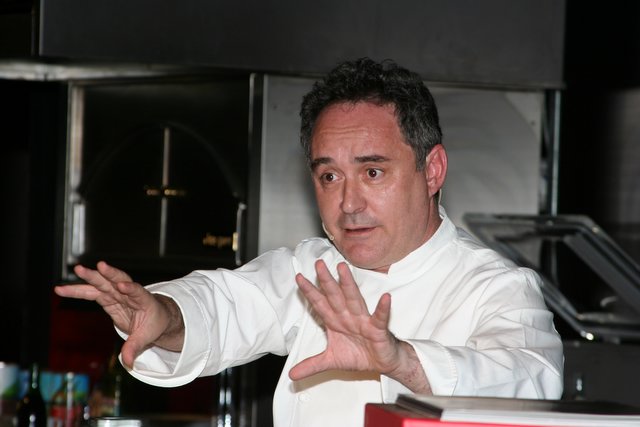
Rounding out the day, to a standing room only crowd, Ferran Adrià presented a master class, A Scientific-Gastronomic Lexicon: A Synthesis of the Philosophy of El Bullí.

Posted by Picasa Ferran Adrià, El Bullì


Day Two at BCNVanguardia ‘06 was a day from heaven for fish and shellfish lovers. Sergi Arola of La Broche in Madrid (and the new Arola in Barcelona) paired with Elena Arzak of San Sebastián’s three-star Restaurante Arzak, one of the most famous restaurants in Europe, to do their takes on sardines and anchovies. Arola did a modernized dish of smoked sardines with trompeta de la muerte mushrooms and Elena Arzak did a futuristic, artistic dish called Ámbar de anchoas, using anchovies, pimientos de piquillo and Spanish extra virgin olive oil.


Turbot, known as rodaballo in Spain, may reach the apogee of its greatness–as perhaps the world’s finest fish–in several restaurants in Getaria (west of San Sebastián), a remarkable fishing village that is the hometown of Juan Sebastián Elkano, the first man to circumnavigate the globe; the designer Balenciaga; and opera singer Plácido Domingo’s mother. The most notable of these restaurants, owned by members of the same family, are Kaia and Elkano. At BCNVanguardia ‘06, the chef-owners of Elkano, Pedro and Aitor Arregui, demonstrated how to grill a whole turbot over wood charcoal, simple, but with magical results. French chef Gérard Allemandou of Restaurante la Cagouille in Paris fileted his turbot and prepared a more French haute cuisine version.


Pedro and Aitor Arregui


Aitor Aregui of Elkano fileting a grilled turbot.


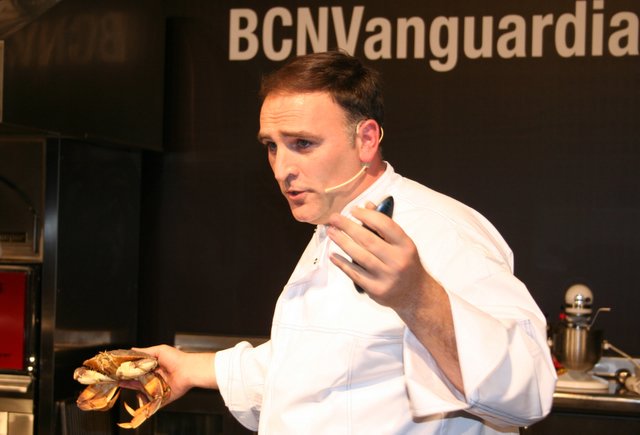
In the Moluscos y Crustáceos segment, two top chefs, Quique Dacosta of El Poblet in Dènia (Alicante) and Josè Andrès of Jaleo in Washington, D.C. prepared several dishes each. Dacosta did a cherry gazpacho with shrimp and an elaborate avant-garde, Frank Gehry’s Guggeneheim Bilbao Museum-inspired dish called Guggenheim 2006 (oysters with platinum and silver, served at room temperature), a dish that actually included fine silver flakes. Josè Andrès brought over on the plane from United States a selection of American molluscs and shellfish, including softshell crabs and demonstrated a modernized version of New England Clam Chowder that featured clam foam and clam gelatin.


José Andrés

The third day featured some of the greatest chefs in Spain, sometimes alternating with French chefs, intrepreting Las Viandas (meat, game and bird dishes [with truffles]. Carles Gaig of Gaig, one of the star restaurants of Barcelona, paired with the great Manchegan chef, Manuel de la Osa (whom this correspondent had the pleasure the next day of introducing to breakfast at Quim de la Boquería in the fabulous Boquería market). Gaig and de la Osa presented dishes made from veal and from suckling goat. Michelin two-star chef Joan Roca of Can Roca in Girona paired with Cánido López of Segovia’s Mesón Cándido. Each did distinct versions of suckling pig, Roca with a terrine that included garlic and membrillo, López with Cándido’s famous traditional signature dish, cochinillo asada, roast suckling pig so tender that he cuts it with the edge of a plate.

Don Juli Soler, Founder-Partner, El Bullì

Three-star chef Martín Berasategui, whose eponymously named restaurant in Lasarte outside San Sebastián is one of the world’s greatest, did a terrine of veal tongue with foie gras and truffles, while his counterpart, Jean Louis Nomicos of Restaurant Lasserre in Paris, made suckling veal sweetbreads and prawns with grated orange and lemon.


Three-star chef Martín Berasategui
Jean Louis Nomicos of Restaurant Lasserre in Paris


Two-star chef Hilario Arbelaitz of Zuberoa (near San Sebastián) paired with Marco Antonio García of Restaurante Mannix in Campospero (Castilla y León), each doing a lamb dish. Arbelaitz made a confit of lamb with cumin and García demonstrating the classic roast suckling lamb of Castilla y León with crispy skin and succulent, juicy, tender meat. Finishing out this spectacular day were Fermí Puig, Executive Chef of Restaurante Drolma in Barcelona’s Hotel Majestic, and Gérard Besson of Restaurante Gérard Besson in Paris doing creative dishes featuring game birds and truffles.


I have been to few gastronomic conferences more rewarding than BCNVanguardia ‘06, which was especially attractive to me because it featured traditional preparations that highlighted the great food products of Spain, as well as the more trendy avant-guardia and alta cocina dishes. This international, but Mediterranean-focused, gastronomic conference was so good, in fact, that one hopes that BCNVanguardia will become an annual event. I am ready to go back!!

6/06/2006

Vinoble: "Noble" Dessert & Fortified Wines Fair in Jerez de la Frontera, the Sherry Capital


 * * * * *

Jerez de la Frontera, Andalucía, Spain
Capital of Sherry Country
May 28-31, 2006.


All photographs by GerryDawes ©2006.

The Vinoble International Noble Wines Exhibition, held every two years at the end of May in Jerez de la Frontera, is the only wine fair dedicated exclusively to fortified, dessert, and naturally produced sweet wines.

Jardines (gardens) of the Alcazar de Jerez.

The setting for Vinoble is Jerez’s beautifully renovated 12th-century Arabic Alcazar fortress, which dates from the Almohade epoch during the Moorish occupation of Spain. The site is spectacular with wine tasting stands occupying the gardens of the Alcazar, wines tastings such as a Château D'Yquem retrospective and a palo cortado Sherries presentation were held in the complex's former mezquita (mosque) and tasting pavilions in the Renaissance Palace of Villavicencio, which was built within the walls of the fortress in the 17th and 18th centuries.

Wine tasting stands occupying the gardens of the Alcazar during Vinoble.

 Tasting wines in a formerly Muslim fortress and mosque is not as ironic and iconoclastic as it seems, since the Arabs introduced al-quol (alcohol), during many periods wine growing in Moorish Al-Andaluz was tolerated and Andalucian Moorish poets wrote verse celebrating the virtues of wine.

Tasting Wines in the Mezquita (Mosque)

More than 100 noble wine producing areas for from fortified and sweet wines from around the world show their best labels at Vinoble. Represented were late harvest, botrytisized, natural sweet wines, muscatels, and so on from Argentina, noble rot wines from Australia, Austrian "fine" rot sweet wines from Kremstal, Neusiedlersee and Neusiedlersee-Hügelland, Canadian ice wines from Ontario, Chilean muscatels and late vintage semillon-sauvignons and riesling-gewürztraminers and a plethora of French wines from Sauternes, Barsac, Alsace, Languedoc-Roussillon, Loire, Mombazillac, Pacherenc, Gaillac, Jurançon, Sainte Croix du Mont, Loupiac and Bergerac.

Germany was represented by late harvest sweet wines--Ausleses, Beerenausleses, Trockenbeerenausleses and Eisweins from the Rhine and Mosel. Greece showed wines from Samos, Santorini, Patras, Macedonia and Crete; Hungary, their legendary Tokays; Italy by vin santo, passito and moscato; and Portugal by Ports, muscatels from Setúbal and wines from Madeira.

Even Japan with noble rot, sweet and fortified wines and sake; New Zealand with late harvests Rieslings and Gewürztraminers; and Slovenia with sweet wines made from Riesling, Sauvignon, Chardonnay and Moscato were represented along with South African muscatels, late harvest and botrytisized wines; Swiss late harvest wines from Valais; Urugayan late harvest Rieslings and Gewürztraminers and dessert wines from California.

Tasting Sherries with Javier Hidalgo at the Bodegas Hidalgo stand at Vinoble.

But, as might be expected it was the host country, Spain, which showed the most extensive variety of high quality sweet and fortified wines. Local Sherry bodegas showed a broad range of high quality fortified wines--finos, manzanillas, olorosos, amontillados, creams, pale creams, moscatels and Pedro Ximénez sweet wines, as did bodegas from nearby Andalucian wine regions such as Montilla-Moriles (Cordoba)with a range of finos, amontillados, olorosos and Pedro Ximénez; the Condado de Huelva with fortified Sherry-like wines, including delicious orange essence-flavored ones; and Málaga, which showed some exceptional moscatels.

Javier Hidalgo, Bodegas Hidalgo, Sanlúcar de Barrameda, directing a tasting of Manzanilla Sherries.

Cataluña was represented by sweet wines from Penedès and Priorat; Valencia by sweet mistela moscatels; Navarra by late harvest moscatels and vinos rancios; Alicante by moscatels and fondillones; Jumilla by late harvest Monastrell-based wines; and Rueda, Rías Baixas and Yecla by late harvest entries.


Felipe Gútierrez de la Vega, owner of Casta Diva (Alicante), producer of fine moscatels and fondillóns.

Only in Jerez at Vinoble can wine professionals and aficionados alike find such a broad range of high quality "Noble" wines. Even one day at Vinoble is an education into this relatively little-known, magical world of late harvest, fortified, botrytisized, dessert and dry wines such as manzanilla, fino and amontillado Sherries. Touring the Spanish stands, I was able to taste an amazing array of wines that underscored the importance of this emerging genre of exceptional wines from all around Spain.

John Salvi, Master of Wine, tasting palo cortado at Palacio de Domecq.


Julian Jeffs, author of "Sherry," tasting palo cortado at Palacio de Domecq.

Also see:

Sherry’s Image Gets a Makeover


6/03/2006

TopWineSpain Huelva May 2006 - A Photo Gallery


El Rocío, the famous Andalucian pilgrimage site was the
backdrop for a tasting of many of the top red wines of Spain.


Sara Pérez and husband René Barbier of Priorat.


Florentino Martinez & Miguel Angel de Gregorio
watch a veneciadora from Condado de Huelva.


Condado de Huelva Venenciadora


Benjamín Romeo, producer of Contador & Carlos Delgado, author & wine journalist


Pepe Mendoza, Bodegas Enrique Mendoza


Isaac Muga, Bodegas Muga


Fernando Remírez de Ganuza, Bodegas Remírez de Ganuza


Carlos Falcó, Marqués de Griñon


Gerry Dawes & Alejandro Fernández,
Owner of Pesquera, Condado de Haza and other bodegas.

1/20/2006

Madrid Fusion 2006: A Personal Behind-the-Scenes View

During the past four years, Madrid Fusión, a conference held every January at the modern IFEMA exhibition center in northeast Madrid, has become the Mecca for cocina de vanguardia, cutting-edge modern cuisine chefs from around the world. Madrid Fusión has become a modern gastronomy pilgrimage destination for such super-star Spanish chefs such as world-famous Catalan, Ferran Adrià of El Bullí, Juan Mari Arzak and Martín Berasategui of San Sebastián; a stellar lineup of emerging stars such as Sergi Arola, José Andrés, Dani García and Andoni Aduriz; and international star chefs such as Tetsuya Wakudi (Australia), Nobu Matsuhisha (New York, London, Las Vegas, etc.) and Charlie Trotter (Chicago).

The three-day conference features science-and-technique orientated presentations by today’s greatest modern cuisine chefs; awards to different culinary stars each year, dinners at some of Madrid’s top restaurants and stands featuring such products as Spanish Ibérico hams, extra virgen olive oils, wines and kitchen implements such as the miracle Termomix food processor.

Madrid Fusión 2006 featured awards to invited American master chefs who had made significant lifetime contributions to the American culinary landscape. They included four American culinary giants: Santa Fe’s Mark Miller, the godfather of modern Southwestern American cuisine; Norman Van Aken, who was the innovator of South Floridian-Carribean Basin fusion cuisine; Louisiana’s Paul Prudhomme, who put Cajun-Creole cuisine on the American culinary map; and Alice Water of Chez Panisse, who is credited with giving birth to new California cuisine. A number of American food-and-wine writers including Michael and Ariane Batterberry, publishers-editors of Food Arts and Judith Miller of Alfred A. Knopf book publishers were also honored.

From ballots given to the journalists attending Madrid Fusión 2006, a selection the Ten Most Influential Chefs in the World was chosen. Adrià topped the list and was followed by Alain Ducasse, Juan Mari Arzak, Michel Bras, Pierre Gagnaire, Heston Blumenthal, Nobu Matsuhisa, Charlie Trotter, Thomas Keller and Tetsuya Wakuda.

The long sought-after Thomas Keller, the superstar chef of The French Laundry in Napa Valley and Per Se in New York, came with Jonathan Bento, his chef de cuisine at Per Se, to cook a demonstration, as did José Andrés, executive chef-partner in several Washington, D. C. restaurants, including three Jaleo Spanish cuisine spots, Zaytinya (Eastern Mediterranean), Oyamel (Mexican) and the highly acclaimed Café Átlantico, where his Ferran Adrià-style minibar has drawn wide acclaim. Andrés has also become the star of the flourishing daily television program in Spain, Vamos a Cocinar, and seems well on his way to becoming the Spanish Emeril Lagasse.

As usual, Ferran Adrià played to packed house of culinarians, many of whom hung on every word during the presentation of his 23-point “manifesto” (some in Spain call his culinary philosophy, Ferranismo), which began with “Cooking is a language through which one can express harmony, creativity, happiness, beauty, poetry, complexity, magic, humor and provocation” and ended with “The knowledge and/or collaboration with experts in different fields (the culture of gastronomy, history, industrial design and science) is primordial in our evolution.”

Madrid Fusión kicked the 2006 conference at a party at the Casa de America celebrating ICEX’s superb GOURMETOUR gastronomic magazine, which celebrated its 20th Anniversary this year.

12/03/2005

Guide to Posts

Currently under revision to repair links, some of which do not work. (Invalid links denoted by *).

Gerry Dawes's New Spain Blog

Kudos for Spain: An Insider's Guide

Scheduled Speaking Appearances *

Links*


SPECTACULAR DALÍ EXHIBITION IN PHILADELPHIA

Sanlúcar Sunset in a Manzanilla Glass

Posting Date:09/23/2004 Summary: Bar Bigote Gerry Dawes copyright 2004 ... And suspended from the rafters, along with a blowfish, are amphoras, the pottery urns, which were used in the days when Spain was a part of the Roman Empire to ship w...Spain: An Insider's Guide to Food, Wine and Travel in Spain by Gerry Dawes Thursday, September 23, 2004 ...

Alicante : Monastrell , Moscatel , Fondillón , Mushrooms ....*

Posting Date:09/28/2004
Summary: Spain: An Insider's Guide to Food, Wine and Travel in Spain by Gerry Dawes Tuesday, September 28, 2004 ...

Cervecerías: Spain's Beer Bars

First appeared in Food Arts, October 2003

If you ask the average Spaniard (and most foreigners, for that matter) for a definition of a cervecería, one of Spain’s ubiquitous so-called beer bars, you will get all kinds of answers, almost none of them right.

Alta Expresión Vino -Black gold or fool's gold?

During the past decade, scores of powerful, highly concentrated, new-wave wines have cropped up all over Spain like the saffron crocuses that proliferate in La Mancha every October. These intensely extracted, international style wines encompass a bewildering array of newly minted brands that vary widely in quality and seriousness. Lumped together under the controversial term vinos de alta expresión ("high expression," or "high concept" wines--read high extract and some say "alta extorsión," for the outrageous prices some command), these potent wines depart sharply from the traditional, mellow, age-worthy style for which La Rioja, the country's premier wine region, is famous. Winning high praise in some circles and vociferous criticism in others, alta expresión wines have pushed Spain smack into the center of the brewing international debate between winemaking traditionalists and advocates of the high-octane New World approach.

First appeared in The Wine News, April/May 2001.

Spain's Vaunted 2001 Vintage

First appeared in The Wine News, April/May 2002.

For fans of Spanish wines, and particularly those crafted from tempranillo - Spain's finest indigenous red wine grape - the 2001 harvest may have produced one of the greatest vintages of all time - an ironic conclusion to a rollercoaster growing season afflicted by hard frost, inordinate heat, prolonged drought and potentially damaging rains.

On back-to-back visits in September and October, I spent more than six weeks prowling the vineyards of Spain's key red wine-producing regions - from the firmly established La Rioja, Ribera del Duero, Navarra, Penedès and Priorato to up-and-coming spots such as Toro and La Mancha. A veteran of more than a dozen Spanish harvests, I have rarely seen grapes in such healthy condition or a harvest season (vendimia) that enjoyed such propitious weather.

Rioja: The Mountain Cat Springs to Life

Because La Rioja is so large and produces so much wine, this old lion may appear to move slowly, but like the mountain cat that it is, once this time-honored region springs to life, it will be hard to hold back. In fact, La Rioja is in a dynamic state of evolution, and many of its classic bodegas are already producing some of the best, modern-style wines in Spain.

Photo Gallery: Spanish Food

A collection of food photographs from around Spain.*


Gentle Corrections Department: Gourmet Magazine
*

Posting Date:09/27/2004 Summary: Spain: An Insider's Guide to Food, Wine and Travel in Spain by Gerry Dawes Monday, September 27, 2004 ...In an article by Alexander Lobrano about Spanish truffles, in which I was glad to see the French own up to getting a lot of their truffles from Spain, the author t ... # posted by Gerry Dawes @ 11:41 AM 0 comments ...

Chocolateria San Gines*

Posting Date:09/21/2004
Summary: Spain: An Insider's Guide to Food, Wine and Travel in Spain by Gerry Dawes Tuesday, September 21, 2004 ...Chocolateria San Gines Gerry Dawes copyright 2004...Churros, C. San Gines Gerry Dawes copyright 2004...Churros con chocolate at Chocolatería San Ginés Gerry Dawes copyright 2004...# posted by Gerry Dawes @ 6:58 PM 0 comments ...

The Estate Wines of Jean León*

Posting Date:08/09/2004 Summary: Miguel Torres Maczassek, Managing Director of Jean León and son of Miguel Torres Riera, Bodegas Miguel Torres, long one of Spain's most important wineries. ... Gerry Dawes copyright 2004...Spain: An Insider's Guide to Food, Wine and Travel in Spain by Gerry Dawes Monday, August 09, 2004 ...

... and in the 1980s spilled over into several emerging wine regions of Spain such as Navarra, Ribera del Duero, Somontano, and Priorato. ... Gerry Dawes copyright 2004... ... by Gerry Dawes ... Within the past few years, there has been a significant trend in Spain towards establishing chât...In Spain, these properties are known as pagos, which are basically agricultural estates based on single-owner vineyard plots in close, often contiguous proximity t o one another. ... Map of Jean León Estate Gerry Dawes copyright 2004...

Spanish Rosados*

Posting Date:08/07/2004 Summary: Spain: An Insider's Guide to Food, Wine and Travel in Spain by Gerry Dawes Saturday, August 07, 2004 ...Saveur can talk about Hemingway downing them in one gulp, but he actually carried Las Campanas rosados around Spain with him in a cooling bag during the Dangerous S ... Garnacha Rosado Gerry Dawes copyright 2004...

The New Wines of The Ancient Kingdom of Navarra

Navarra, the landlocked northern Spanish province that shares a wild stretch of the western Pyrenees with neighboring France, is one of the most rewarding places in Spain for wine aficionados in search of good up-and-coming wines, exceptional regional cuisine and off-the-beaten-track travel experiences. Given the advances of the past few years, Navarra promises to be Spain's next great wine discovery and is set to become a major producer of top-quality wines from across a spectrum that includes world-class whites, exceptional rosés, native and foreign varietal reds and surprising dessert wines.

Food in Navarra: Navarra's Country Cuisine

Navarra's country cuisine, talented chefs and lively restaurants are among the best in Spain. They have at their disposal a vast cornucopia of ingredients to draw from: garden-fresh produce such as artichokes, asparagus, beans and red piquillo peppers from the Ribera of southern Navarra; quail, partridge and rabbit from the mountains; trout from the cold, clear mountain streams; fish and shellfish from the nearby Atlantic; excellent artisan cheeses from Roncal in the Pyrenees; and lamb from all across the province.

Tasting & Touring in Navarra

Bodegas Julián Chivite

The 1994 vintage – combined with the coming of age of the Chivite family's (Fernando, Julián and Mercedes) spectacular 150-hectare Arínzano Estate Vineyard (planted to tempranillo, cabernet sauvignon, merlot and chardonnay near the historic town of Estella) and the maturation of Fernando Chivite's winemaking skills – will firmly place Chivite among the ranks of Spain's greatest wineries.

Rias Baixas Wines*

Posting Date:08/07/2004 Summary: --Gerry Dawes©2003 ... # posted by Gerry Dawes @ 4:13 PM 0 comments ...Spain: An Insider's Guide to Food, Wine and Travel in Spain by Gerry Dawes Saturday, August 07, 2004 ...

Catavino: Sherry Glass

Posting Date:08/07/2004
Summary: Spain: An Insider's Guide to Food, Wine and Travel in Spain by Gerry Dawes Saturday, August 07, 2004 ...Catavino at Vinicola Hidalgo Gerry Dawes Copyright 2004...Catavino: Rider at Feria de Sevilla*
Gerry Dawes Copyright 2004...# posted by Gerry Dawes @ 10:05 AM 0 comments ...

Spain: Looking Back To The Future By GERRY DAWES
First Appeared in The Wine Enthusiast, Sept. 2002

Three-star restaurants, cultish boutique wines and appreciative, affluent consumers: europe’s gastronomic epicenter just may be shifting to España.
When I first began traveling the wine roads of Spain in the early 1970s, the state of Spanish wine and food was dramatically different than it is today...

12/01/2005

Photo Gallery: Spanish Food


Salmorejo & Montilla, Taberna Juan Peña, Córdoba
Gerry Dawes copyright 2004


Jamón Ibérico, Fino La Ina sherry, Casa Juanito, Jerez de la Frontera
Gerry Dawes copyright 2004


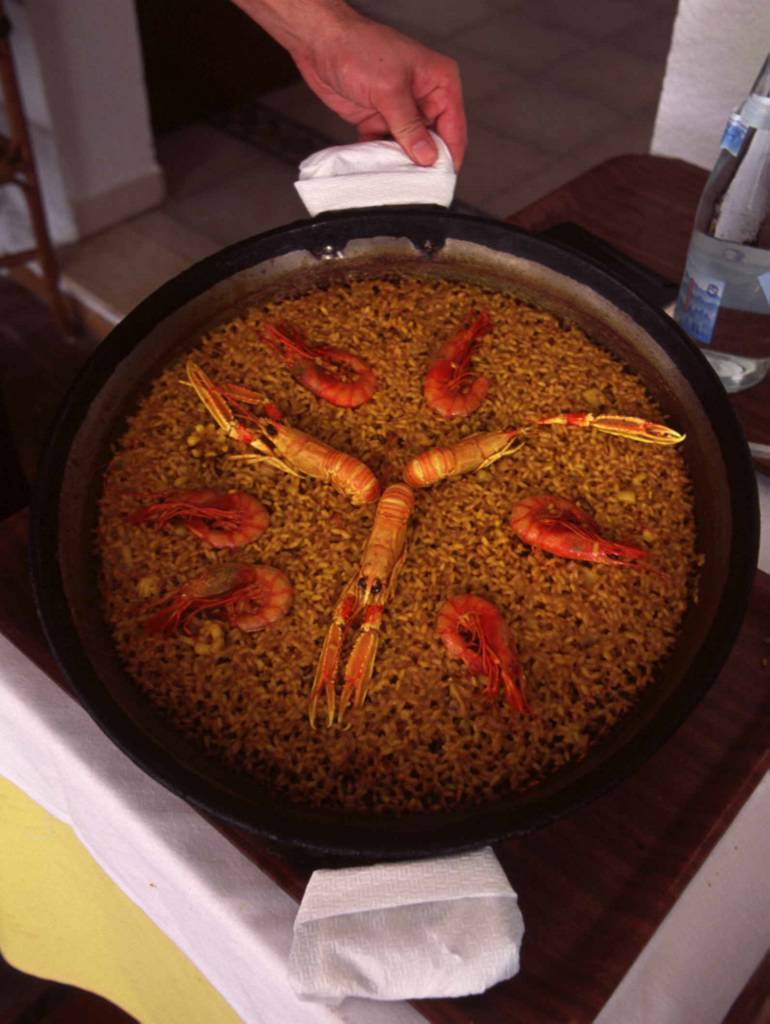
Arroz con mariscos en paella, L'Establiment, El Palmar (La Albufera), Valencia
Gerry Dawes copyright 2004


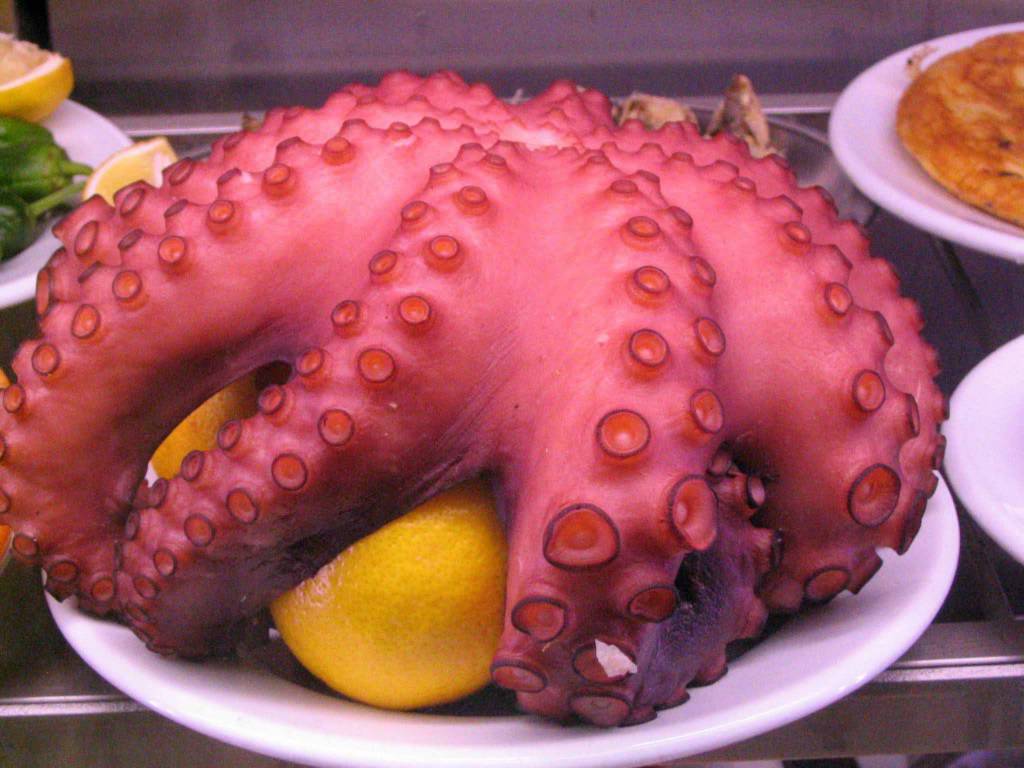
Pulpo, Madrid
Gerry Dawes copyright 2004


Bocata tapas bar, Madrid
Gerry Dawes copyright 2004


Olivas gordas, Los Cuevas (Cuevas brothers) restaurant, Sevilla
Gerry Dawes copyright 2004


Aceitunas (olives), Market, Càdiz
Gerry Dawes copyright 2004


Hongos (porcini mushrooms), Casa Marcelo, Riaza (Segovia)
Gerry Dawes copyright 2004


Almond cookies, Barcelona
Gerry Dawes copyright 2004


Tartaletas de fresas, Barcelona
Gerry Dawes copyright 2004
Related Posts with Thumbnails