Share This Gerry Dawes's Spain Post


Instagram

In 2026, ranked #7 in the Top 30 Gastronomy Blogs (and Websites for Gastronomists & Gastronomes by Feedspot. (Ranked in the top 50 since 2019). "The Best Gastronomy blogs selected from thousands of Food blogs, Culture blogs and Food Science. We’ve carefully selected these websites because they are actively working to educate, inspire, and empower their readers with . . . high-quality information.

More than 3,640,000 views since inception, 123,000+ views in August 2026.


Ranked #7. Gerry Dawes's Spain: An Insider's Guide to Spanish Food, Wine, Culture and Travel gerrydawesspain.com

"My good friend Gerry Dawes, the unbridled Spanish food and wine enthusiast cum expert whose writing, photography, and countless crisscrossings of the peninsula have done the most to introduce Americans—and especially American food professionals—to my country's culinary life. . .” - - Chef-restaurateur-humanitarian José Andrés, Nobel Peace Prize Nominee and Oscar Presenter 2019; Chef-partner of Mercado Little Spain at Hudson Yards, New York 2019

1/20/2006

Madrid Fusion 2006: A Personal Behind-the-Scenes View

During the past four years, Madrid Fusión, a conference held every January at the modern IFEMA exhibition center in northeast Madrid, has become the Mecca for cocina de vanguardia, cutting-edge modern cuisine chefs from around the world. Madrid Fusión has become a modern gastronomy pilgrimage destination for such super-star Spanish chefs such as world-famous Catalan, Ferran Adrià of El Bullí, Juan Mari Arzak and Martín Berasategui of San Sebastián; a stellar lineup of emerging stars such as Sergi Arola, José Andrés, Dani García and Andoni Aduriz; and international star chefs such as Tetsuya Wakudi (Australia), Nobu Matsuhisha (New York, London, Las Vegas, etc.) and Charlie Trotter (Chicago).

The three-day conference features science-and-technique orientated presentations by today’s greatest modern cuisine chefs; awards to different culinary stars each year, dinners at some of Madrid’s top restaurants and stands featuring such products as Spanish Ibérico hams, extra virgen olive oils, wines and kitchen implements such as the miracle Termomix food processor.

Madrid Fusión 2006 featured awards to invited American master chefs who had made significant lifetime contributions to the American culinary landscape. They included four American culinary giants: Santa Fe’s Mark Miller, the godfather of modern Southwestern American cuisine; Norman Van Aken, who was the innovator of South Floridian-Carribean Basin fusion cuisine; Louisiana’s Paul Prudhomme, who put Cajun-Creole cuisine on the American culinary map; and Alice Water of Chez Panisse, who is credited with giving birth to new California cuisine. A number of American food-and-wine writers including Michael and Ariane Batterberry, publishers-editors of Food Arts and Judith Miller of Alfred A. Knopf book publishers were also honored.

From ballots given to the journalists attending Madrid Fusión 2006, a selection the Ten Most Influential Chefs in the World was chosen. Adrià topped the list and was followed by Alain Ducasse, Juan Mari Arzak, Michel Bras, Pierre Gagnaire, Heston Blumenthal, Nobu Matsuhisa, Charlie Trotter, Thomas Keller and Tetsuya Wakuda.

The long sought-after Thomas Keller, the superstar chef of The French Laundry in Napa Valley and Per Se in New York, came with Jonathan Bento, his chef de cuisine at Per Se, to cook a demonstration, as did José Andrés, executive chef-partner in several Washington, D. C. restaurants, including three Jaleo Spanish cuisine spots, Zaytinya (Eastern Mediterranean), Oyamel (Mexican) and the highly acclaimed Café Átlantico, where his Ferran Adrià-style minibar has drawn wide acclaim. Andrés has also become the star of the flourishing daily television program in Spain, Vamos a Cocinar, and seems well on his way to becoming the Spanish Emeril Lagasse.

As usual, Ferran Adrià played to packed house of culinarians, many of whom hung on every word during the presentation of his 23-point “manifesto” (some in Spain call his culinary philosophy, Ferranismo), which began with “Cooking is a language through which one can express harmony, creativity, happiness, beauty, poetry, complexity, magic, humor and provocation” and ended with “The knowledge and/or collaboration with experts in different fields (the culture of gastronomy, history, industrial design and science) is primordial in our evolution.”

Madrid Fusión kicked the 2006 conference at a party at the Casa de America celebrating ICEX’s superb GOURMETOUR gastronomic magazine, which celebrated its 20th Anniversary this year.

12/03/2005

Guide to Posts

Currently under revision to repair links, some of which do not work. (Invalid links denoted by *).

Gerry Dawes's New Spain Blog

Kudos for Spain: An Insider's Guide

Scheduled Speaking Appearances *

Links*


SPECTACULAR DALÍ EXHIBITION IN PHILADELPHIA

Sanlúcar Sunset in a Manzanilla Glass

Posting Date:09/23/2004 Summary: Bar Bigote Gerry Dawes copyright 2004 ... And suspended from the rafters, along with a blowfish, are amphoras, the pottery urns, which were used in the days when Spain was a part of the Roman Empire to ship w...Spain: An Insider's Guide to Food, Wine and Travel in Spain by Gerry Dawes Thursday, September 23, 2004 ...

Alicante : Monastrell , Moscatel , Fondillón , Mushrooms ....*

Posting Date:09/28/2004
Summary: Spain: An Insider's Guide to Food, Wine and Travel in Spain by Gerry Dawes Tuesday, September 28, 2004 ...

Cervecerías: Spain's Beer Bars

First appeared in Food Arts, October 2003

If you ask the average Spaniard (and most foreigners, for that matter) for a definition of a cervecería, one of Spain’s ubiquitous so-called beer bars, you will get all kinds of answers, almost none of them right.

Alta Expresión Vino -Black gold or fool's gold?

During the past decade, scores of powerful, highly concentrated, new-wave wines have cropped up all over Spain like the saffron crocuses that proliferate in La Mancha every October. These intensely extracted, international style wines encompass a bewildering array of newly minted brands that vary widely in quality and seriousness. Lumped together under the controversial term vinos de alta expresión ("high expression," or "high concept" wines--read high extract and some say "alta extorsión," for the outrageous prices some command), these potent wines depart sharply from the traditional, mellow, age-worthy style for which La Rioja, the country's premier wine region, is famous. Winning high praise in some circles and vociferous criticism in others, alta expresión wines have pushed Spain smack into the center of the brewing international debate between winemaking traditionalists and advocates of the high-octane New World approach.

First appeared in The Wine News, April/May 2001.

Spain's Vaunted 2001 Vintage

First appeared in The Wine News, April/May 2002.

For fans of Spanish wines, and particularly those crafted from tempranillo - Spain's finest indigenous red wine grape - the 2001 harvest may have produced one of the greatest vintages of all time - an ironic conclusion to a rollercoaster growing season afflicted by hard frost, inordinate heat, prolonged drought and potentially damaging rains.

On back-to-back visits in September and October, I spent more than six weeks prowling the vineyards of Spain's key red wine-producing regions - from the firmly established La Rioja, Ribera del Duero, Navarra, Penedès and Priorato to up-and-coming spots such as Toro and La Mancha. A veteran of more than a dozen Spanish harvests, I have rarely seen grapes in such healthy condition or a harvest season (vendimia) that enjoyed such propitious weather.

Rioja: The Mountain Cat Springs to Life

Because La Rioja is so large and produces so much wine, this old lion may appear to move slowly, but like the mountain cat that it is, once this time-honored region springs to life, it will be hard to hold back. In fact, La Rioja is in a dynamic state of evolution, and many of its classic bodegas are already producing some of the best, modern-style wines in Spain.

Photo Gallery: Spanish Food

A collection of food photographs from around Spain.*


Gentle Corrections Department: Gourmet Magazine
*

Posting Date:09/27/2004 Summary: Spain: An Insider's Guide to Food, Wine and Travel in Spain by Gerry Dawes Monday, September 27, 2004 ...In an article by Alexander Lobrano about Spanish truffles, in which I was glad to see the French own up to getting a lot of their truffles from Spain, the author t ... # posted by Gerry Dawes @ 11:41 AM 0 comments ...

Chocolateria San Gines*

Posting Date:09/21/2004
Summary: Spain: An Insider's Guide to Food, Wine and Travel in Spain by Gerry Dawes Tuesday, September 21, 2004 ...Chocolateria San Gines Gerry Dawes copyright 2004...Churros, C. San Gines Gerry Dawes copyright 2004...Churros con chocolate at Chocolatería San Ginés Gerry Dawes copyright 2004...# posted by Gerry Dawes @ 6:58 PM 0 comments ...

The Estate Wines of Jean León*

Posting Date:08/09/2004 Summary: Miguel Torres Maczassek, Managing Director of Jean León and son of Miguel Torres Riera, Bodegas Miguel Torres, long one of Spain's most important wineries. ... Gerry Dawes copyright 2004...Spain: An Insider's Guide to Food, Wine and Travel in Spain by Gerry Dawes Monday, August 09, 2004 ...

... and in the 1980s spilled over into several emerging wine regions of Spain such as Navarra, Ribera del Duero, Somontano, and Priorato. ... Gerry Dawes copyright 2004... ... by Gerry Dawes ... Within the past few years, there has been a significant trend in Spain towards establishing chât...In Spain, these properties are known as pagos, which are basically agricultural estates based on single-owner vineyard plots in close, often contiguous proximity t o one another. ... Map of Jean León Estate Gerry Dawes copyright 2004...

Spanish Rosados*

Posting Date:08/07/2004 Summary: Spain: An Insider's Guide to Food, Wine and Travel in Spain by Gerry Dawes Saturday, August 07, 2004 ...Saveur can talk about Hemingway downing them in one gulp, but he actually carried Las Campanas rosados around Spain with him in a cooling bag during the Dangerous S ... Garnacha Rosado Gerry Dawes copyright 2004...

The New Wines of The Ancient Kingdom of Navarra

Navarra, the landlocked northern Spanish province that shares a wild stretch of the western Pyrenees with neighboring France, is one of the most rewarding places in Spain for wine aficionados in search of good up-and-coming wines, exceptional regional cuisine and off-the-beaten-track travel experiences. Given the advances of the past few years, Navarra promises to be Spain's next great wine discovery and is set to become a major producer of top-quality wines from across a spectrum that includes world-class whites, exceptional rosés, native and foreign varietal reds and surprising dessert wines.

Food in Navarra: Navarra's Country Cuisine

Navarra's country cuisine, talented chefs and lively restaurants are among the best in Spain. They have at their disposal a vast cornucopia of ingredients to draw from: garden-fresh produce such as artichokes, asparagus, beans and red piquillo peppers from the Ribera of southern Navarra; quail, partridge and rabbit from the mountains; trout from the cold, clear mountain streams; fish and shellfish from the nearby Atlantic; excellent artisan cheeses from Roncal in the Pyrenees; and lamb from all across the province.

Tasting & Touring in Navarra

Bodegas Julián Chivite

The 1994 vintage – combined with the coming of age of the Chivite family's (Fernando, Julián and Mercedes) spectacular 150-hectare Arínzano Estate Vineyard (planted to tempranillo, cabernet sauvignon, merlot and chardonnay near the historic town of Estella) and the maturation of Fernando Chivite's winemaking skills – will firmly place Chivite among the ranks of Spain's greatest wineries.

Rias Baixas Wines*

Posting Date:08/07/2004 Summary: --Gerry Dawes©2003 ... # posted by Gerry Dawes @ 4:13 PM 0 comments ...Spain: An Insider's Guide to Food, Wine and Travel in Spain by Gerry Dawes Saturday, August 07, 2004 ...

Catavino: Sherry Glass

Posting Date:08/07/2004
Summary: Spain: An Insider's Guide to Food, Wine and Travel in Spain by Gerry Dawes Saturday, August 07, 2004 ...Catavino at Vinicola Hidalgo Gerry Dawes Copyright 2004...Catavino: Rider at Feria de Sevilla*
Gerry Dawes Copyright 2004...# posted by Gerry Dawes @ 10:05 AM 0 comments ...

Spain: Looking Back To The Future By GERRY DAWES
First Appeared in The Wine Enthusiast, Sept. 2002

Three-star restaurants, cultish boutique wines and appreciative, affluent consumers: europe’s gastronomic epicenter just may be shifting to España.
When I first began traveling the wine roads of Spain in the early 1970s, the state of Spanish wine and food was dramatically different than it is today...

12/01/2005

Photo Gallery: Spanish Food


Salmorejo & Montilla, Taberna Juan Peña, Córdoba
Gerry Dawes copyright 2004


Jamón Ibérico, Fino La Ina sherry, Casa Juanito, Jerez de la Frontera
Gerry Dawes copyright 2004


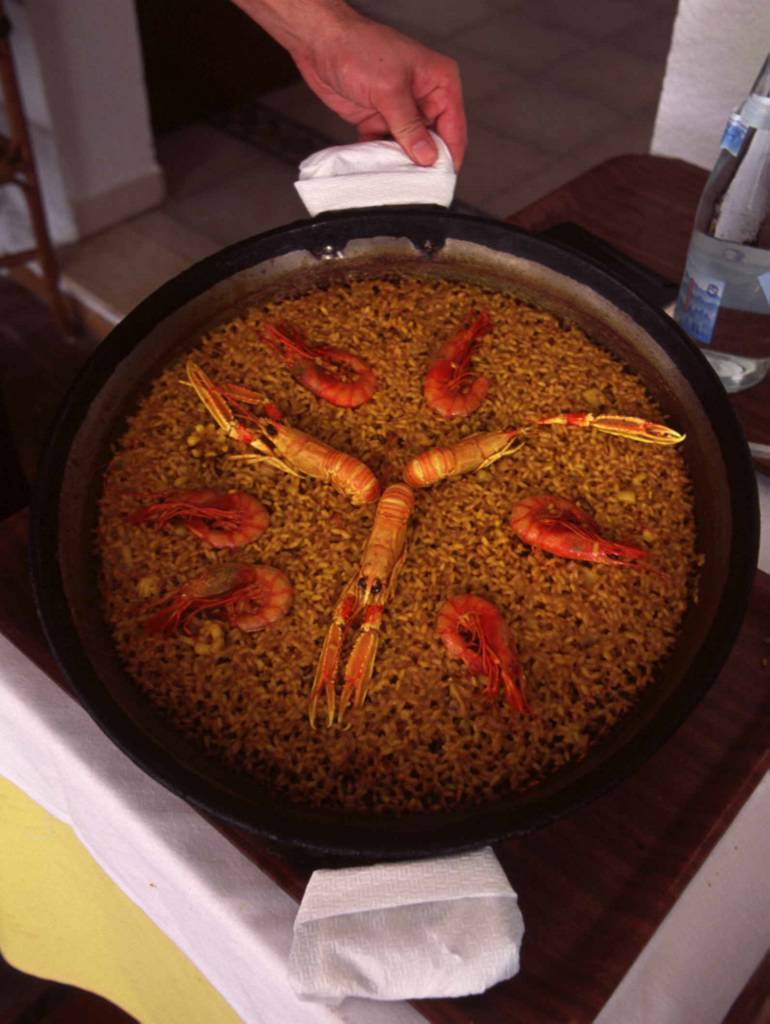
Arroz con mariscos en paella, L'Establiment, El Palmar (La Albufera), Valencia
Gerry Dawes copyright 2004


Pulpo, Madrid
Gerry Dawes copyright 2004


Bocata tapas bar, Madrid
Gerry Dawes copyright 2004


Olivas gordas, Los Cuevas (Cuevas brothers) restaurant, Sevilla
Gerry Dawes copyright 2004


Aceitunas (olives), Market, Càdiz
Gerry Dawes copyright 2004


Hongos (porcini mushrooms), Casa Marcelo, Riaza (Segovia)
Gerry Dawes copyright 2004


Almond cookies, Barcelona
Gerry Dawes copyright 2004


Tartaletas de fresas, Barcelona
Gerry Dawes copyright 2004

11/10/2005

Madrid Scenes


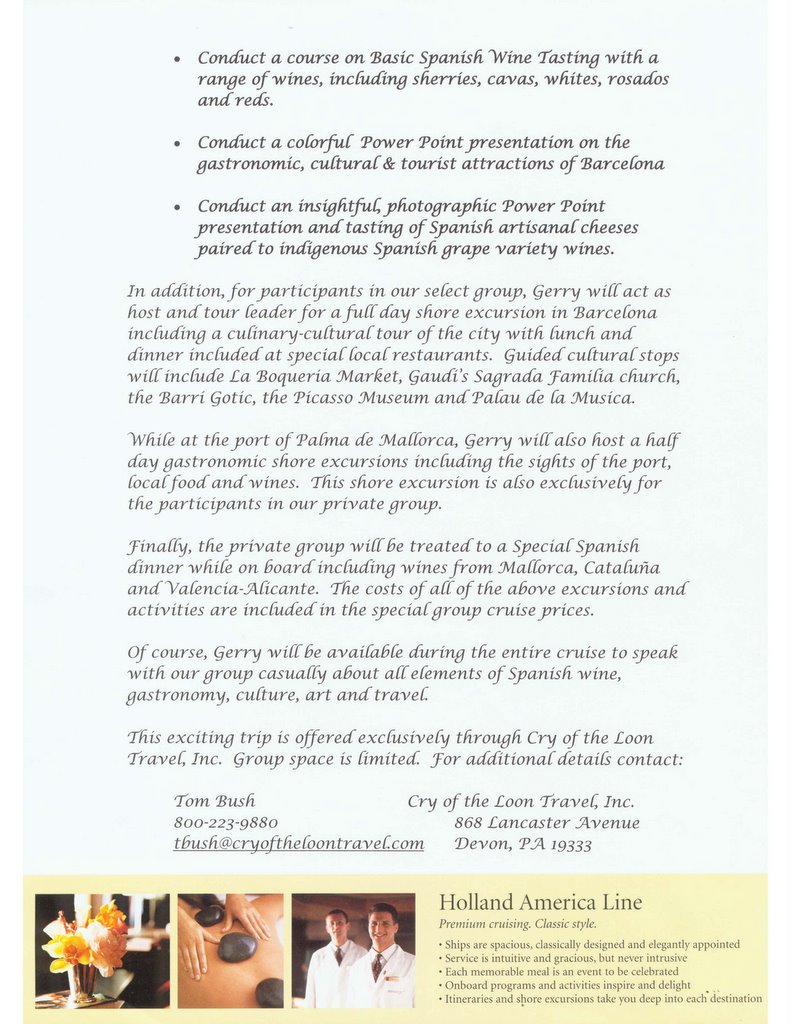
July 20 to 30, 2006 Holland America Lines "Culinary Arts Series"


With Gerry Dawes, Guest Culinary Celebrity

(Booked by Cry of the Loon Travel, Devon, PA)

Civitavecchia (Rome) * Monte Carlo * Livorno * Barcelona

Palma de Mallorca * La Goulette, Tunisia * Palermo, Sicily

Naples, Italy * Civitavecchia

(Double-click on brochure images to view full size.)


Don Quixote Rides Again - The Wines of Castilla - La Mancha

* * * * *


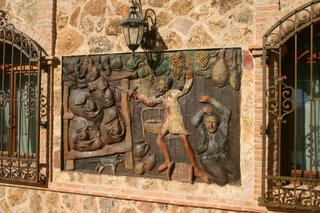
Don Quixote Mural at Bodegas Aresan, La Mancha

Castilla-La Mancha: Don Quixote Rides Again
(Published in Santé Magazine September 2005, with minor revisions in this version. http://www.santemagazine.com)

Text & Photographs By Gerry Dawes

Spain is celebrating the 400th anniversary of the publication of Don Quixote, Miguel de Cervantes’s immortal novel of the Man of La Mancha. Cervantes himself was quite a wine lover, and throughout the book there are references to wine. Historically, however, scorching summers in central Spain’s vast Castilla-La Mancha wine region have contributed to flabby, low-acid, quick-to-oxidize white wines and rustic, acid-deficient red wines that were often four parts Airén-based white wine blended with one part red Cencibel (the traditional Manchegan name for Tempranillo) macerated with the red grape skins to pick up color. The wine was warm-fermented in upright baked-clay tinajas, a king-sized version of ancient amphorae, which used to transport and store wine, water, olives and other commodities all over the Roman Empire. The Manchegan idea of vino tinto was and in some wineries still is, a pale purplish-red wine, which was usually served chilled to mask its crude rusticity.


Industry Modernization

All that has changed within the past few years. The wines of Castilla-La Mancha have become fresher, fruitier, and, in some cases, quite sophisticated. The region’s vanguard red wines, like many of their international-style counterparts, are well-built, rich, ripe, sometimes impenetrably dark, and lashed with new French oak. Fledging efforts to make quality white wines are showing flashes of promise in cold-fermented Airén and Viura, sometimes blended with Chardonnay or Sauvignon Blanc (Ercavio); Chardonnay from Manuel Manzaneque; and Viognier from Finca Vallegracia. Spurred by the successes of warm-country wines such as those from Napa Valley and Australia, quality standards in Castilla-La Mancha (indeed, in all of Spain) have evolved rapidly over the past decade. Although quality is still a relative term, the massive production of wines in this intemperate region has changed substantially for the better.

Enormous resources have gone into modernizing the La Mancha wine industry. Existing wineries have made serious investments in upgrading their equipment, vinification techniques, and vineyard management. New wineries have sprouted like the saffron crocus flowers which color parts of the Manchegan landscape in the fall, and new wire-trained, irrigated vineyards have become common throughout the area.

Airèn and Other Grapes

The La Mancha DO (Denominación de Origen, the equivalent of France’s Appellation d’Origine Controlée) rules were relaxed in 1996 to officially allow the inclusion of foreign grapes such as Cabernet Sauvignon, Merlot, Sauvignon Blanc, and Chardonnay, which were only “experimental” varieties up until the revision. The white native grapes, Viura (or Macabeo) and Pardilla, and the red grapes, Garnacha Tintorera and Moravia, are also approved varieties. But the overwhelming majority of La Mancha wines are still made from either the white Airèn or, increasingly, the red Tempranillo, Spain’s greatest native red wine grape. Although there are more La Mancha red wines in the American market, there is so much Airén in La Mancha that the acreage makes it the most planted white grape on the planet, outdistancing the prolific Ugni Blanc/Trebbiano of France and Italy. The grower-members of Tomelloso’s Cooperativa Virgen de las Viñas, the largest cooperative in Europe, alone have cultivated a staggering 45,000-plus acres of Airén, which---as preposterous as it may seem in a country known for red wines---is more than double the vineyard acreage of the entire Ribera del Duero DO.

Because of its Airén production, Tomelloso makes more wine than any town in the world. According to Miguel Angel Valentín, Director of Bodegas Centro Españolas (producers of the well-made Allozo red wines and some surprisingly good brandy), Tomelloso harvested 275,600 tons of grapes in 2002. The cooperative’s prodigious production highlights the massive dimensions in both size and production capacity of Castilla-La Mancha, which includes five provinces (Ciudad Real, Toledo, Cuenca, Albacete and Guadalajara). The region boasts half the vineyard land in Spain (1.5 million acres) and produces half of Spain’s wine (500 million gallons annually).

Dry Climate

In My Fair Lady, “The rain in Spain falls mainly on the plain.” But what rain really falls on La Mancha’s high plains (manxa was the Moorish word for dry land) is less than an annual average of 16 inches. La Mancha averages 3,000 hours of sunlight per year (eight hours per day) and, during the relatively short but very hot, nearly rainless summers, temperatures can and do soar to more than 110ºF, causing Manchegans to pray for “rain on the plain.” Temperatures sometimes dip below 0ºF and bone-chilling winds sweep across the high plateau called the Meseta (“tabletop”) during the long cold winters.

The intense summer heat prevents the grapes from ripening evenly, a recurring malady underscored by Guadalupe Valdes, enologist at Casa de la Viña, who explains, “Due to the high temperatures in this region, the grape pulp ripens much faster than the grapeskins and seeds. This means that the alcohol levels and total acidity are in equilibrium before the skins and pips are ripe.” Traditionally, vines in La Mancha have been grown low to the ground and en vaso (goblet-pruned) to provide a thick canopy of leaves to protect the grapes from the fierce sun. In recent years, however, almost all new vineyards in this region are trained en espaldera (on wires) and use drip irrigation. class=Section2>

There are benefits to this dry climate. The extreme conditions are so inhospitable to insect pests, for instance, that there are still large numbers of old vineyards on pie franco, or pre-phylloxera French rootstock. The vines of La Mancha normally have few humidity-related fungal diseases. Labor costs are reduced because the vineyards need almost no chemical treatments; their upkeep requires only about half as many work days (about 20 per year) as most French vineyards. Many vineyards are essentially organically farmed.

Appellations and Producers

Just one of several DOs in Castilla-La Mancha, the La Mancha DO, which sprawls across all the region’s provinces except Guadalajara, is larger than some countries, occupying nearly 12,000 square miles. Its 475,000 acres under vines make it the largest wine region in the world. The other Castilla-La Mancha DOs are Almansa, Manchuela (where Spanish wine writer Victor de la Serna’s Finca Sandoval is the prominent fine wine to date), Méntrida, Mondéjar, Ribera del Júcar, Valdepeñas, and parts of Jumilla. The increasingly more important designation, Vino de la Tierra de Castilla, is one that many wineries are using for often top-quality wines that do not strictly conform to the DO regulations in their regions. For example, many of them contain the not-yet-approved Syrah.

The producers in the most important designations---La Mancha, Valdepeñas, and Vinos de la Tierra de Castilla---fall into several categories. In the Valdepeñas DO, an overwhelming majority of the production is still dedicated to inexpensive, quaffable wine turned out by some of the largest wineries in Spain. While several wines, including the Félix Solis Viña Albali reservas, the J. A. Megia e Hijos Corcovo line, Bodegas Los Llanos Pata Negra’s Videva Aniversario, and the wines of Casa de la Viña are palatable and generally inexpensive, none of them are worthy competitors to the elite wines of La Rioja, Ribera del Duero or Priorato.

The huge La Mancha DO has a number of wineries, many of them newcomers working within the regulatory council’s guidelines, that are a notch above Valdepeñas both in the quality of their vinification facilities and wines. These commercial ventures make plenty of reasonably priced good wine to compete on the world market with wine from Chile, Australia, and South Africa. The majority of these wineries have been established recently by outsiders from La Rioja, Jerez, and Ribera del Duero, and some of their wineries and plantations are impressive.

Ribera del Duero’s renowned Alejandro Fernández (Tinto Pesquera) founded El Vínculo in the windmill-crowned town of Campo de Criptana in Cuidad Real Province and is turning out some very good La Mancha DO red wines from contract grapes. In a remote, high-altitude site (2,854 feet) near Los Hinosojos in Cuenca Province, La Rioja’s Martínez Bujanda family (Conde de Valdemar, Finca Valpiedra) has established a large, ultra-modern, James Bond movie set of a winery and a wire-trained, 618-acre vineyard on a 2,412-acre site called Finca Antigua. The inexpensive Finca Antigua wines---a Tempranillo-Cabernet Sauvignon-Merlot crianza, a Cabernet, and a Tempranillo---are delicious bargains. Near Finca Antigua is Finca Los Trenzones, a 1,477-acre, high-altitude estate, which was purchased by the Rioja’s Bodegas Faustino Martinez group. They replanted the Tempranillo vineyards (including an experimental 100-acre organic vineyard), installed modern vinification equipment, and purchased new American oak barrels for ageing the wines. The clean, fruity, Condesa de Leganza 100 percent Tempranillo crianza and a reserva are quite inexpensive but with perhaps too much showy oak.

Several other DO La Mancha wineries making a palatable, moderately priced range of wines include Allozo from Bodegas Centro-Españoles, Fontal (Bodegas Fontana), Vega Moragona (S. Coop. La Magdelena), Torre de Gazate (Vínicola de Tomelloso), Señorío de Guadianeja (Vínicola de Castilla), and Veronés (Santa Rita).

Vanguard Wines

For many modern palates, the most interesting wines in this vast region are the Vinos de la Tierra de Castilla, a wine designation that was established in 1999 to allow wineries experimenting with alternative varieties (e.g., Chardonnay, Viognier, Syrah, and Petit Verdot) and using vinification and aging techniques that were outside the approved DO regulations to produce and market such wines as they see fit. Some of the most powerful and unique producers in the region bottle Vinos de la Tierra de Castilla wines. Many other producers market some of their wines under the DOs La Mancha, Valdepeñas, and so forth, but label their flagship wine as Vino de la Tierra de Castilla.
Vitis Terrarum

Among the top wines under this designation are the two Castilla-La Mancha self-proclaimed Pagos DOs (single vineyard DO properties similar to France’s Château Grillet in the Rhône Valley): the Marqués de Griñon Carlos Falcó’s Dominio de Valdepusa near Toledo, which makes a Cabernet Sauvignon, a Syrah, and the top Petit Verdot in Spain); and Finca Elez, theatrical producer Manuel Manzaneque’s high-altitude vineyards in the Sierra de Alcaraz in Albacete Province. Other standout wines include Ercavio from Mas Que Vinos, Gran Calzadilla (Uribes Madero), La Estacada Syrah (Finca La Estacada), Avalón (Arva-Vitis), Quercus (Bodegas Fontana), Pago Florentino (from the producers of Ribera del Duero’s Arzuaga Navarro wines), Vega Ibor (Bodegas Real), plus Dehesa Carrizal and Vitis Terrarum from eponymously named wineries. Sherry producer Osborne has made a huge investment in its new 2,500-acre estate and 270,000-square-meter bodega near Malpico de Tajo, where three Vino de la Tierra de Castilla red wines are produced: Dominio de Malpica (100 percent Cabernet Sauvignon); an Osborne Selección Solaz{ital] blend of Syrah and Tempranillo; and the bargain-priced Solaz, a blend of Tempranillo (80 percent) and Cabernet Sauvignon (20 percent).

While Don Quixote’s wine-loving creator, Miguel de Cervantes, would certainly not recognize the wines of La Mancha today, many of the world’s top wine critics have begun to discover the potential of the world’s largest wine region. Restaurant wine buyers would be wise to taste La Mancha’s exciting new high-value wines and introduce the best of them to their guests.

What is a Castilla-La Mancha Wine?

General Characteristics
Although some of the region’s white wines---mainly Chardonnay and Viognier---are beginning to show some promise, the real interest lies in the explosion of red-wine contenders. They resemble California and Australia wines with very ripe extracted fruit, lush berry-cherry flavors, and plenty of new oak. The best of these wines can be lush, silky, sweet, and delicious, but with a kick that can hit 14.5 percent alcohol and higher.

Aging

The majority of Castilla-La Mancha’s reds should be consumed within a year or two of purchase. But a number of producers make wines that need 2-5 years to open up and to integrate some of the surfeit of new oak that many carry. Wines such as Dominio de Valdepusa, Gran Calzadilla, and El Vínculo will improve in bottle and need time after release.


Recent Vintages

In La Mancha, more than just the vintage, as indeed everywhere in the wine world, it is more important to follow the best producers, who must turn out the best wine possible every year to guard their bodega’s reputation.

2004 –-- Hailed as very good vintage in most of Spain, Castilla-La Mancha included.

2003 --– One of the hottest years on record. Massive, fat, very ripe, early-maturing wines.

2002 --– A cool rainy year in many parts of Spain, but better in hot and dry Castilla-La Mancha.

2001 –-- Some very good, rich, easy-drinking wines were made.

2000 –-- Good to very good. Ripe, easy-drinking wines. The best are balanced and ready to drink.

Reviewer’s Choice

By Gerry Dawes

Bodegas Alejandro Fernández Tinto Pesquera El Vínculo 2002 La Mancha
100% Tempranillo

Gutsy nose of crushed ripe berries and violets. Powerful, warm country wine with strawberry compote, licorice, dark chocolate, coffee, and new oak. Roast chicken with potatoes, roast meats, pasta, pizza.


Bodegas Vitis Terrarum Tempranillo Vitis Terrarum 2001
Vino de la Tierra de Castilla
100% Tempranillo

Deep, ripe, fruity nose. Round, soft, and easy-drinking with very rich black fruit and chocolate flavors and a tannic new-oak finish. Grilled or roasted meat, especially lamb, Manchego cheese, chorizo.

Mas Que Vinos La Plazuela 2001 Vino de la Tierra de Castilla
88% Tempranillo, 12% Garnacha

Deep, ripe black and red fruit and restrained oak aromas. Ripe and balanced with velvety, rich black fruit, chocolate, and cola flavors. Lamb, game, steaks, soft cheeses.
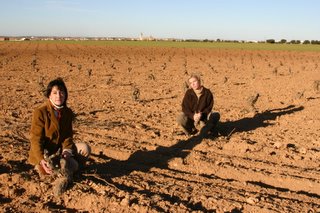

Mas Que Vinos: Margarita Madrigal & Alexandra Schmedes

Dominio de Valdepusa Petit Verdot 2002 / Dominio de Valdepusa
100% Petit Verdot

Vivid black fruits, licorice, and violets. Very rich and ripe with plum, strawberry, currant, and mineral flavors. Game, rack of lamb, refined upscale modern meat dishes.

Tasting Notes (When no price is available, the wine may not have a U. S. importer.)

Bodegas del Muni Corpus del Muni 2003 V. T. de Castilla
75% Tempranillo, 20% Syrah, 5% Garnacha

Clean, ripe compote nose. Gutsy, warm, pleasant ripe black fruits flavors with prominent new oak. Drink now, but would benefit from some more cellaring. Manchego cheese, paella, steaks. Fran Kysela et Fils, Ltd., 540-722-9228, $48/case of 6.

Bodegas del Muni Corpus del Muni Viña Lucía 2001 V. T. de Castilla
100% Tempranillo

Dark black cherry. Toasty, funky nose. Heady and very ripe, but juicy and decently balanced with jammy red currant and strawberry flavors liberally laced with new French oak. Lamb, sheeps’ milk cheeses, beef. Drink now, cellar for a few years.
Fran Kysela et Fils, Ltd., 540-722-9228, $60/case of six.

Conde de Leganza Finca Los Trezones Crianza 1999 D. O. La Mancha
(Owned by Bodegas Faustino Martínez, La Rioja) 100% Tempranillo

Dark, plummy blackberry. Rustic nose of with vanilla, cloves, compote. Facile, easy drinking, balanced with juicy, sweet fruit flavors and vanilla American oak that needs food. Good by the glass. Chicken, spinach pasta with tomato sauce, grilled mushrooms. Drink now, 2-3 years.
Palm Bay Imports, 800-872-5622, $80/case. Value selection.

Bodegas Fontana Mesta Tempranillo 2004 V. T. de Castilla
Tempranillo

Medium black cherry. Clean, fruity nose. Nice, quaffable, strawberry compote with cloves and cinnammon, some chocolate flavors and no oak. Good by the glass (available in magnums). Pizza, pasta, lamb dishes, tuna. Drink now, 1-2 years.
Winebow - VinEspaña Selections, 212-255-9414, $64/case

Fontana Tempranillo Roble 2003 D. O. La Mancha
Tempranillo

Deep black cherry. Clean, ripe fruit, light new oak nose. Spices, cloves, ripe crushed berries, a little jammy, but rich, round, inviting. Drink now. Pizza, pasta, lamb, tuna, swordfish.
Winebow - VinEspaña Selections, 212-255-9414, $84/case

Bodegas Alejandro Fernández Tinto Pesquera El Vínculo 2002 D. O. La Mancha
Tempranillo

Deep black cherry color. Gutsy nose of crushed ripe berries and violets. Big, powerful, warm country wine with strawberry compote, licorice, dark chocolate, coffee and new oak. Roast chicken with potatoes, roast meats, pasta, pizza. Drink now, hold two-four years.
Classical Wines, 800-257-7225, $200/case.

Bodegas Alejandro Fernández Tinto Pesquera El Vínculo Reserva 2001 D. O. La Mancha
Tempranillo

Black cherry. Licorice, ripe fruit, oak. Big, gutsy, tarry, licorice and ripe berry flavors with a liberal lashing of oak. Roast pork loin, lamb, cheese pizza, pasta with Mediterranean sauces. Drink now, hold several years.
Classical Wines, 800-257-7225, $320/case

Osborne Selección Solaz Tempranillo-Cabernet Sauvignon 2003 V. T. de Castilla
50% Tempranillo, 50% Cabernet Sauvignon

Deep plummy red. Ripe fruit, new American oak. Balanced, easy-drinking, versatile with ripe cherry, plum and berry fruit, brassy new oak bite. Good by the glass. Pizza, pasta, hamburgers, grilled vegetables. Near-term drinking.
W. J. Deutsch & Sons, 914-251-9463 $64/case

Osborne Selección Solaz Shiraz-Tempranillo 2003 V. T. de Castilla
50% Shiraz, 50% Tempranillo

Medium pie cherry color. Light oak, spices, red fruit compote. Ripe fruit, warm, noticeably peppery, strawberry, cherry, brassy oak. Good by the glass. Manchego/Zamorano cheeses, grilled beef, pork chops, pizza, hamburgers. Near-term drinking.
W. J. Deutsch & Sons, 914-251-9463 $64/case

Osborne Selección Dominio de Malpica Vendimia Seleccionada 2001 V. T. de Castilla
100% Cabernet Sauvignon

Dark blackberry. Spicey oak, ripe fruit nose. Smooth, easy, fat, round, very ripe with coffee, carob, dark chocolate and licorice flavors. Pork cutlets with leeks, mushrooms and peppers, pasta with cheese, game dishes. Drink now, 2-4 years
W. J. Deutsch & Sons, 914-251-9463, $120/case

Finca Antigua Tempranillo 2002 D. O. La Mancha
(owned by Familia Martínez Bujanda, La Rioja) 100% Tempranillo

Deep black cherry. Pleasant oaky, strawberry compote nose. Bright, ripe strawberry, red currant and chocolate braced with firm oak tannins. Good by the glass with food. Grilled meats, aged cheeses, pizza, barbecue fare. Drink now, 1-2 years.
CIV - USA, 800-669-1972, $80

Finca Antigua Reserva 2001 D. O. La Mancha
75% Merlot, 20% Cabernet Sauvignon, 5% Syrah

Deep, plummy blackberry. Ripe fruit, mature coffee, tobacco nose. Heady, very ripe black fruit compote, tarry licorice, dark chocolate and new oak. Roast chicken, grilled meats, pork roast, mushrooms. Drink now, 2 years.
CIV - USA, 800-669-1972, $144.

Bodegas Vitis Terrarum Vitis Terrarum Tempranillo 2001 V. T. de Castilla
100% Tempranillo (ungrafted single vineyard)

Deep black red. Big, deep, ripe, fruity nose. Big, round, soft, low acid, very rich black fruit and chocolate flavors. Smooth, easy drinking with a tannic new oak finish. Drink now to 5 years. Grilled or roasted meat, especially lamb, Manchego cheese, chorizo.
Boca Wine Imports, 561-212-6095, $320 / case of 6.

Cooperativa Nuestra Señora del Pilar Almedo 2003 V. T. de Castilla
(Special American cuvee) 60% Tempranillo, 25% Syrah, 15% Syrah

Murky plum red. Big, grapey, toasty nose. Strawberry and toast, soft and grapey up front, but with sherry-like flavors and a hot finish that belies the announced 13% alcohol. Pizza, pasta, barbecue grill food. Good value. Drink up.
VinLozano Imports, Inc., 978-297-5477, $60.

Bodega Ecologica Bruno Ruíz Villanueva Roble 2001 V. T. de Castilla
75% Cencibel (Tempranillo), 15% Cabernet Sauvignon, 10% Syrah (organically grown)

Med pie-cherry red. Pie cherries and new oak. Pleasant, easy-drinking mix of spices (cloves, cinnamon and vanilla), strawberry-red cherry fruit and new oak. Good by the glass. Grilled chicken, tuna steaks, pasta, tapas.
VinLozano Imports, Inc., 978-297-5477, $60.

Cruzares, S.A. Marqués de Moral Crianza 2000 Valdepeñas
(Owned by Félix Solís)100% Cencibel (Tempranillo)

Deep black-red. Tanky, rustic, baking spice nose. Rustic, with volatile acidity, but a pleasant, if rough-edged country wine (true to the region) with a core of chocolate-red berry fruit. Grilled food, Italian pasta dishes, cured cheeses. Good value, drink now.
Fran Kysela et Fils, Ltd., 540-722-9228, $48/case of 12


Topping bottles with hot wax at Finca la Estacada

Finca la Estacada Selección Varietal 2001 V. T. Tierra De Castilla
Tempranillo, Cabernet Sauvignon, Merlot, Syrah, Mazuelo (Carignane)

Dark plum-cherry. Violets, licorice, toast, black and red fruits. Cola, cherries, red currants, licorice, spices, good acid and firm new oak (18 months). Upscale modern cuisine dishes, pasta, roast chicken, steaks, pork, lamb. Drink now to 3-5 years.
Grapes of Spain, Inc., 703-249-8028, $84/case of 6.

Mas Que Vinos Ercavio Tempranillo Roble 2003 V. T. de Castilla
Tempranillo (usually with some Cabernet Sauvignon)

Deep plum-red. Very ripe black fruits, licorice, baking spices. Rich, very ripe, sweet black currants, black raspberry, cloves, and licorice. Drink now, 1-2 years. Great value. Barbecues, grilled food, sheeps’ cheeses.
European Cellars/704-358-1565 / $80
Mas Que Vinos Ercavio Reserva 2000 V. T. de Castilla
90% Tempranillo, 10% Merlot

Dark plum-red. Ripe black currants, restrained oak. Delicious, rich, but not overripe, soft black cherry, currants and chocolate flavors with oak in harmony. Grilled lamb, game dishes (quail, rabbit), dishes with chorizo. Drink now to five years.
European Cellars, 704-358-1565, $?

Mas Que Vinos La Plazuela 2001 V. T. de Castilla
88% Tempranillo, 12% Garnacha

Dark black cherry. Deep, ripe black and red fruit nose, restrained oak. Ripe, but again not overripe, velvety, rich black fruit, chocolate and cola flavors with oak in balance. Lamb, game, steaks, soft cheeses. Drink now to five years.
European Cellars, 704-358-1565, $360 / case

Bodegas Hermanos Arenas Sánchez Aresan Crianza 2002 V. T. de Castilla
65% Tempranillo, 35% Cabernet Sauvignon

Deep plum-red. Ripe, sweet, jammy nose. Simple, easy-drinking, ripe blackberry and currant flavors with firm oak tannins. Charcuterie, cured cheeses, grilled meats. Drink now, 1-2 years.
$?

Pago Florentino Pago Florentino 2002 V. T. de Castilla
(owned by Ribera del Duero’s Arzuaga-Navarro) 100% Tempranillo

Deep, thick black plum. Pleasant, very ripe blackberry-black cherry nose. Very concentrated, incredibly rich, powerful (14.5%) black cherry, chocolate and cola flavors. Cheese ravioli, grilled tuna, rack of lamb. Drink now, 3-4 years. $160 / case

Pago del Vicario Agios 2002 V. T. de Castilla
80% Tempranillo, 20% Garnacha Tintorera

Thick, dark blackberry. Intense blackberry jam, licorice. Incredibly concentrated, powerful, rich, extracted with licorice, chocolate and jammy black fruits. Venison, roasted meats, Mediterranean pasta dishes, enchiladas. $220 / case

Arva Vitis Avalon de Arva Vitis 2001 V. T. de Castilla
100% old vines Tempranillo

Med-deep plum-cherry red. Sweet red fruit, light new oak. Good balance, easy-drinking, sweet plum, cherry, strawberry fruit and baking spices. Chicken dishes, tuna, game. $?

Bodegas Real Vega Ibor Tempranillo Barrique Crianza 2001 V. T. de Castilla
100% Tempranillo

Dark blackberry. Cola, cherry jam, ripe strawberries. Rich, soft, round, low acid with strawberry-cherry, cola and tannic oak finish. Pasta, game dishes, charcuterie, sheeps’ milk cheeses. Drink now, 1-2 years. Grape Expectations Wine Imports, 919-781-1655 $56 / case


Bodegas Real Finca Marisánchez Roble 2001 V. T. de Castilla
80% Tempranillo, 15% Cabernet Sauvignon, 5% Merlot

Opaque, thick, black plum. Nice, concentrated nose, new oak. Very concentrated, rich, blackberry-cherry, plum, chocolate, and carob flavors. Deceptively drinkable, but packs a punch
Grape Expectations Wine Imports, 919-781-1655, $176 / case


Dominio de Valdepusa Syrah 2002 D.O. Dominio de Valdepusa
100% Syrah

Deep black plum. Big, concentrated, stewed black fruit. Big, but well-balanced with rich, round, blackberry fruit and licorice. Drink now to five years. Pates, charcuterie, venison, grilled meats.
$300 / case

Dominio de Valdepusa Emeritus 2000 D.O. Dominio de Valdepusa
Cabernet Sauvignon, Petit Verdot, Syrah

Medium deep black-red plum. Big, ripe, modern Bordeaux-esque nose. Very powerful (14.5%), but smooth with intense stewed black fruit, cola, carob and espresso. Drink now to seven years. Venison, country pates, charcuterie, cheese selections, mushrooms. $520 / case

Dominio de Valdepusa Petit Verdot 2002 D.O. Dominio de Valdepusa
100% Petit Verdot

Thick, dark black cherry. Deep black fruits, licorice, violets. Very rich, ripe, delicious with plums, strawberries, red currants and minerals. Drink now to 7-8 years. Game, rack of lamb, refined upscale modern meat dishes.  $440 / case

Pagos de La Familia, S.A. Summa Varietalis 2001 Vino Tinto de Mesa Tinto de Toledo
(Made at Domino de Valdepusa) Cabernet Sauvignon, Petit Verdot, Syrah

Deep plum red. Big, ripe plummy, herbaceous. Very ripe, concentrated, delicious black currant and cherry fruit. Game, mushroom sauces, Spanish cheese selections, serrano ham. $320 / case

Bodegas y Viñedos Uribes Madero Gran Calzadilla 1998 V. T. de Castilla
75% Tempranillo, 25% Cabernet Sauvignon

Deep black raspberry. Big, ripe wild fruit nose, violets, perfume, licorice, oak. Ripe, intense, sweet fruit with loads of strawberries, red cassis, smoke, licorice, violets with tannic new oak finish. Now to 10 years. Great Napa Cabernet / Bordeaux food.
Charmer Industries, 800-794-9615, $93 / case of 6.

Bodegas y Viñedos Uribes Madero Calzadilla 1998 V. T. de Castilla
60% Tempranillo, 15% Cabernet Sauvignon, 12.5% Garnacha, 12.5% Syrah

Deep black cherry. Great, sweet, ripe wild fruit nose, licorice, chocolate. Wonderful, sweet fruit with wild strawberries, currants, black raspberry, coffee and licorice with prominent new oak. Now to 10 years. Napa Cabernet / Cru Classe Bordeaux food. 
Charmer Industries, 800-794-9615, $93 / case of 6.

Finca Sandoval 2001 La Manchuela
93% Syrah (Petit Syrah) / 7 % Monastrell (Mourvedre)

Thick, black as coal. Powerful, deep, ripe black fruits nose. Very sweet, smooth blackberry, black cherry, and cassis flavors with hints of black pepper and firm, but not overwhelming new French oak. Now to 5-7 years. Hermitage food, roasted and grilled meats, wild duck, goats’ and sheeps’ milk cheeses. Jorge Ordoñez - Fine Estates From Spain, 781-461-5767, $240 / case

Finca Sandoval 2002 La Manchuela
93% Syrah (Petit Syrah) / 7 % Monastrell (Mourvedre)

Deep black cherry. Deep, ripe plummy, black fruits and licorice nose. Big, ripe, round, silky with easy-drinking, sweet, black fruits flavors and minerals. Perhaps will develop more complexity with cellaring. Now to 5 - 8 years. Hermitage food, roasted and grilled meats, wild duck, goats’ and sheeps’ milk cheeses. Jorge Ordoñez - Fine Estates From Spain, 781-461-5767, $240 / case

Bodegas Martúe Martúe Syrah 2001 V. T. de Castilla
100% Syrah

Thick, deep black raspberry. Ripe, sweet black fruits, black pepper, oak. Very concentrated with bright black cherry, clove and pepper flavors and a sweet cola and oak finish. Now to 3-5 years. Duck, roast pork, sheeps’ cheeses, steak with peppercorns. $160 / case

Dehesa del Carrizal Selección Privada 2002 V. T. de Castilla
40% Cabernet Sauvigon, 30% Syrah, 30% Merlot

Murky black plum. Spicey nose, new French oak. Cassis, blackberry and minerals, dominated by new oak. Big Napa style, corresponding dishes, venison, grilled meats, goats’ and sheeps’ milk cheeses. 3-5 years. $?

Bodegas Pago de Vallegarcía Syrah 2001 V. T. de Castilla
100% Syrah

Deep black raspberry. Ripe fruit, minerals, coffee, new oak. Sweet, ripe, intense dark black fruits, some pepper, but bound in new oak. Game terrines, roast pork, lamb rib chops, grilled tuna. Needs 3-5 years. $320 / case

11/09/2005

The New Wines of Don Quixote's La Mancha Spain Gourmetour

By Gerry Dawes
Spaingourmetour (Sept.-Dec. 2004)

Being a Don Quixote-like figure myself-one who has peripatetically criss-crossed Spain for some thirty years-I have an affinity for the Man of La Mancha, but until I set out in January of both 2003 and 2004 to investigate the buzz about Castilla-La Mancha's emerging quality wine movement, I had never had the opportunity to explore the region in depth. During my eye-opening trips through La Mancha, I visited more than forty wineries scattered across the core of this vast five-province region (Cuenca, Toledo, Ciudad Real, Albacete, and Guadalajara). I tasted some surprisingly good wines in revitalized existing wineries and saw several impressive new bodegas and vineyards that showed great promise.

Click on the La Mancha link above for the complete article.

6/06/2005

A Personal Homage to the Wines of Bodegas Riojanas on the Occasion of Their 115th Anniversary

(Entry in the book Bodegas Riojanas published to commemorate that anniversary.)

It is a an honor to be invited to contribute to a book celebrating the 115th Anniversary of one of the greatest wineries in La Rioja. I have been drinking well-aged, classic Rioja wines for more than thirty-five years and I consider them to be among the world's finest red wines. My experience with these wonderful wines dates back to the late 1960s, when I was living in Southern Spain and drinking some sublime Rioja wines from the 1950s and even the late 1940s. Among these wines was a magnificent 1947 that may have been the greatest red wine of my life, which includes a 20-year career in the wine trade during which I sold some of France’s greatest Burgundies, Rhône Valley wines and the best red wines of California.

Early on, when I was living in Spain in the 1970s, I was often attracted to bottles of Viña Albina and Monte Real Reservas by their labels, which are some of the most attractive in Spain. The Bodegas Riojanas labels speak of tradition, of experience, and of quality and for me their wines show all three attributes. Those factors should never be discounted no matter how inflated the hyperbolic claims by urban-bound wine writers of instant greatness for so-called modern miracle wines become. I found back then, as now, that the wines of Bodegas Riojanas were not wines to be sipped alone and, especially, in this epoque, not vinos de cata–wines made for blind tastings. Wines such as Viña Albina, made in that lovely Bordeaux claret style that has almost disappeared, and Monte Real, which in vintages such as 1973 (especially, and, with age, in other fine vintages as well) can easily be mistaken for a great aged Burgundy, are food wines par excellence. With their fine acidity and balance, they are perfect accompaniments to a meal. They begin to soar in the third glass as the meal progresses, not overwhelming the diner with a powerful, huge mouthful of blackberry jam at first taste and becomes increasingly more boring to drink as the meal goes on.

Over these many years, it has been my pleasure to have encountered numerous bottles of exceptional wines from Bodegas Riojanas. In March 1998, during a gastronomic conference in Córdoba, I introduced several major American food luminaries and chefs to some of the aged Rioja treasures from the wonderful old Roman-origin cellars at El Churrasco restaurant. Among them was a splendid 1982 Bodegas Riojanas Viña Albina. My colleagues were astounded at how well the wine had aged (and it was only 16 years old!). Our group of a dozen people had four bottles (two of Viña Albina and two of another Rioja of similar age), which amounted to half the price of just one bottle of one of Spain’s most famous wines.

On another occasion, with a group of Washington, D.C. and Philadelphia wine aficionados, on a wonderful October evening in San Sebastián at Jatextea Rekondo, which has one of the greatest wine cellars in Europe, we raided for great Rioja red wines from Txomín Rekondo’s cellars five different decades from the 1980s to the 1940s. 

Representing the decade of the 1950s, we encountered a superb, still lively and rich 1952 Bodegas Riojanas Monte Real Gran Reserva, a wine I also found in excellent condition (again like a great old Burgundy) a couple of years later with New York Times wine writer, Frank J. Prial, in Getaria at Kaia, one of the best seafood restaurants in the world.

Those bottles were all memorable, but I have saved the best two encounters with Bodegas Riojanas wines for last. Some fifteen years ago, when the wine was only 17 years old, at my home outside New York, I served my friend New York Times writer Howard Goldberg a Monte Real Gran Reserva from the 1973 vintage, an incredible sleeper vintage for a number of classic Rioja bodegas, one in which a number of top wines over time began to resemble great aged Burgundy. Goldberg took a sip, pondered the wine and said, "My God, this a dead-ringer for a Burgundy!"

In the fall of 2003, I have was having lunch in the Basque Country in the fishing port of Getaria at Kaia, one of my favorite restaurants with one of my favorite people in La Rioja, Isaac Muga of Bodegas Muga, whose wine, Prado Enea, in vintages such as 1973 and 1981, reminds me a great deal of Monte Real. I suggested that we order some older Rioja wines from other bodegas. He confided that he was not that fond of "aged Rioja wines" anymore. When I presented him with a glass of the magnificent 1964 Monte Real Gran Reserva, Isaac said, "Well, I do like this kind of aged Rioja!"

In September 2005, I had the 1964 Monte Real again with two famous American chefs, Norman Van Aken and Terrance Brennan, also at Kaia. I am happy to report that they also like "this kind of aged Rioja."

For some years now, Viña Albina and Monte Real reservas, have been the alternate choices as my vino tinto at home, the wines I drink when I want a wine that delivers pleasure that builds on each sip and brings me back with its aromas, flavors and charm to one of my favorite places on earth, La Rioja. They could come from no where else.

Bodegas Riojanas has a 115-year history of producing excellent wines across a spectrum of styles and price-ranges. They acquit themselves splendidly in all categories including their rosados and semi-sweet white wines. I can only wish them 115 more years (and more) of continued success.

!Enhorabuena!

--Gerry Dawes

2/25/2005

Links

Artisanal Cheese Center

An excellent, well-cared-for selection of fine Spanish cows', ewes' and goats' milk cheeses. Cheese classes, wine tastings, special events. Check Artisanal's website for Spanish cheese and wine classes by Gerry Dawes.

The Spanish Table

Absolutely first-rate Spanish food, wine and cookware stores in Seattle, Berkeley and Santa Fe. Food & cookware from Spain & Portugal including paella pans that serve one to 200 people, Portuguese copper cataplanas, terra cotta cookware, specialty food items, music, books, and much more! Owned by Steve Winston, el jefe, who opened the Seattle store in 1995.

Spanish Cheeses

Informative source for information on the cheeses of Spain, from the Foods From Spain promotional arm of ICEX, the Spanish Trade Ministry.

Verema.com (English language site)

Excellent, lively forum on Spanish wines, restaurant recommendations in Spain, etc.

Website of Andrew Dornenburg and Karen Page

James Beard Award-winning authors of BECOMING A CHEF, CULINARY ARTISTRY, DINING OUT, CHEF'S NIGHT OUT and THE NEW AMERICAN CHEF

The Rosengarten Report

Excellent thorough coverage of food & wine by the prominent food and wine authority and television personality, David Rosengarten. Rosengarten is one of the world's foremost authorities on food, wine and cooking. He is perhaps best known for his popular TV programs on The Food Network, where he has hosted or co-hosted approximately 2,500 shows.

egullet.com

Leading American web site on gastronomy, wines and food issues


Join Our List

9/27/2004

Spain's Vaunted 2001 Vintage

by Gerry Dawes

For fans of Spanish wines, and particularly those crafted from tempranillo - Spain's finest indigenous red wine grape - the 2001 harvest may have produced one of the greatest vintages of all time - an ironic conclusion to a rollercoaster growing season afflicted by hard frost, inordinate heat, prolonged drought and potentially damaging rains.

On back-to-back visits in September and October, I spent more than six weeks prowling the vineyards of Spain's key red wine-producing regions - from the firmly established La Rioja, Ribera del Duero, Navarra, Penedès and Priorato to up-and-coming spots such as Toro and La Mancha. A veteran of more than a dozen Spanish harvests, I have rarely seen grapes in such healthy condition or a harvest season (vendimia) that enjoyed such propitious weather.

In their reports on the 2001 vendimia, most of Spain's preeminent winemakers concur. In the top red-wine regions, many are using such superlatives as magnífico, espectacular, extraordinario and una cosecha para la historia (a harvest of historic quality) to describe the 2001 vintage. In those early reports, they expressed confidence that the resulting wines will have great depth of color, superb aromatics and concentrated flavors. The best of them were already showing "silky tannins" that will make them drinkable young, but still auger well for long-term cellaring.

Some producers in La Rioja, where tempranillo is the main grape, predicted the 2001 vintage for red wines would be superior even to the exceptional 1994 vintage. A few even ventured that last year's wines might be the best since 1964 (considered by most experts to be the standout vintage of the 20th century in La Rioja).

All was not so rosy, however, earlier in the year. Rather, prospects looked downright grim. In April, hard frosts and "black ice" (caused by freezing mist, thin coatings of ice covered the vines) wiped out 20 to 60 percent of the expected crop in many major wine regions. In the Ribera del Duero, José Manuel Pérez, the Pérez Pascuas family's enologist at Viña Pedrosa, says his crop was only about 40 percent of normal quantity.

Summer brought near-drought conditions to many regions. Miguel Torres, president and technical director of Bodegas Torres, reports his crop was down 25 to 30 percent in Penedès and in Cataluña in general. South of Penedès in Priorato, an area accustomed to dry years (and resulting wines with high alcohol levels), Carles Pastrana of Costers de Siurana, producers of Clos de L'Obac, says summer was inordinately arid, even by Priorato standards. Alvaro Palacios, owner-winemaker of Bodegas Alvaro Palacios, says the early summer dry spell, in tandem with prolonged heat, caused yields to plummet to 50 to 70 percent of normal.

Then, in late summer, torrential rainstorms hit places such as La Rioja, prompting Bodegas Muga owner Isaac Muga to use some salty expletives to describe the gully-washer that had struck his particularly fine-looking stands of grapes. At first, many winegrowers, such as Muga and his son, Jorge, thought the tardy rains would swell the water-starved grapes, only to be followed by more rains ruining what was already going to be a short crop. The September storms broke the drought (a few regions got a little precipitation in August, too).

As it turned out, the rains gave way to classic autumn weather, and the grapes ripened under nearly perfect conditions in most of Spain's key wine regions.

Many growers, though disappointed with their lower yields, were compensated by the superiority of their red grapes. Shortly after the harvest in Cataluña, Miguel Torres observed: "In terms of quality, the result has been excellent with extremely healthy grapes possessing a great wealth of sugars, aromas and tannins." Within a few months, Torres reconfirmed his earlier assessment: "The wines of 2001 are excellent, particularly the reds." Although he is more famous for his cabernet sauvignon-based wines, such as Gran Coronas (Black Label), his Merlots and his Grans Muralles (a blend of four recovered Catalan varietals), he also grows tempranillo, generally using it as a blending agent. "The standout red wines this year are my Tempranillos," he reports. "They are probably the best we have tasted in the past ten years, yet the Merlots and Cabernet Sauvignons are also among the best of the past decade." Torres also predicts great things for his Grans Muralles blend (it hails from an estate in the Conca de Barberá denominación de origen). "The colors are very intense, and it is full and rich in the mouth with an exquisite density of flavor that presages a great future for this wine," Torres says. He also vinified 5.5 tons of fruit from the first harvest of his new vineyard in Priorato. "Despite the fact that the vines are so young, in 2001 we got intense fruit and magnificent structure," he says.

Trailblazing Priorato winemaker Alvaro Palacios, one of Spain's brightest young wine stars, is acquainted with the 2001 vintage from a three-point perspective: In addition to making wine at his eponymous Priorato winery, he oversees with his brother Rafael their family winemaking operations at Bodegas Palacios Remondo in La Rioja Baja and, with a cousin, he makes wines from a spectacular old-vines mencia (a grape related to cabernet franc) vineyard in Bierzo (an up-and-coming DO in northern Spain's León province). "The potential in all three of the regions is great," he observed in December. "My Priorato wines [which include the stellar old-vines L'Ermita Vineyard] will be unusually potent and concentrated. The sporadic September rains served to stabilize the sugar levels and give the wines more acidity to balance the richness." He expects an excellent wine from L'Ermita in 2001.

Carles Pastrana of Costers de Siurana, producer of Clos de L'Obac, says his 2001 Priorato wines have "fantastic concentration." Pastrana, who makes some of the longest-lived wines in the region - his 1998, 1999 and 2000 wines are remarkable - harvests Priorato's native garnacha and cariñena grapes before they reach the overripe levels that many wine critics seem to prize these days. He noted that while the normal harvest period lasts 40 to 45 days, because of the heat and dry weather in 2001, Clos de L'Obac's harvest was completed in just twelve days.

In the Ribera del Duero, at the Pérez Pascuas family's Viña Pedrosa, their high-altitude estate in the Ribera de Burgos region, yields were about 225 gallons of wine per acre. Shortly after the harvest, Pedrosa enologist José Manuel Pérez predicted that 2001 would be one of the greatest vintages of all time in the Ribera del Duero. Interviewed again in February, he remained true to his earlier assessment. "The evolution of these wines in barrel has been magnificent; they are perfectly balanced and show enormous potential as wines for laying down. We are still talking about a year that can be defined as being among the greatest of the Ribera del Duero's great vintages," Pérez confirms.

In the warmer western zones of the Duero Valley, Bodegas Mauro's Mariano García, the man many believe to be Spain's greatest winemaker, is slightly more circumspect. "Two-thousand-one has been an excellent year in the greater part of the Spanish geography," observes García, who also owns Maurodos in Toro and consults at a handful of bodegas in his Castilla-León region and in La Rioja. "It was a short crop, but it has given ripe, very concentrated, deeply colored wines. In the Ribera del Duero and in my Tudela vineyards, 2001 can be compared to 1999 for the quality of its fruit tannins. The wines will be very fruity and should age well."

Florian Miquel Hermann, a wine writer for El Mundo, one of Spain's top newspapers, is cautiously optimistic about the 2001 wines of the western Duero Valley. "There is indeed a lot of euphoria concerning the 2001 Ribera vintage," he says. "I've tasted little so far - only at Mauro, Leda, Aalto (all made by García's hand) and Abadia Retuerta, another non-DO wine from this region - but based on this limited sampling, I found much to like. On the other hand, I strongly believe that it's too soon to judge whether 2001 qualifies as a truly 'historic' vintage.

"We shouldn't forget," Miquel Hermann continues, "that there are many microclimates in the Ribera Valley and that there was hail and frost just after flowering. Therefore, the growers got significant percentages of second generation fruit," he explains. "Obviously, everybody claims that he has eliminated these bunches, but knowing the mentality of the viticultores, I can only smile. All that said, polyphenol levels [phenolics are the myriad organic building blocks in wine that account for color, tannin and flavor attributes] seem to be very high everywhere," adds Hermann, who remains on the fence.

Hermann is not alone. By late February, Spain's famous Vega Sicilia, located at the western end of the Ribera del Duero, had announced it would not make a 2001 Unico, the wine it produces only in what it recognizes as exceptional years. Those who follow Vega Sicilia, however, understand this is not necessarily a warning that the vintage was not great elsewhere. For example, Vega Sicilia's reserve vintages have been an anomaly on many occasions, making Unico in such years as 1974 and 1987 - vintages that were not considered outstanding years by other wineries in the region.

According to Winemaker Xavier Ausas, the hard freeze that hit Vega Sicilia's vineyards in the spring wiped out a large percentage of the crop: "A second flowering of the vines followed, but it produced fruit that lacked the characteristics required for our top-of-the-line Unico, which can spend from 15 to 25 years aging in our cellars." Instead, the grapes that he deemed of "good quality" were destined for the Valbuena and Alión wines.

In contrast, west of the Ribera del Duero, in Toro, Mariano García again had much for which to be thankful. "The crop was 50 percent of normal, but we have some very opulent, tannic wines," he reports. "The key is the fact that we have achieved elegance and balance."

In Navarra at Bodegas Julián Chivite, Fernándo Chivite, one of Spain's most accomplished winemakers, is ecstatic. He believes "2001 is the best harvest in our history: The yields were low, the concentration is spectacular, and the wines will be extraordinary." Of particular promise is the fruit from Chivite's Arínzano estate, which is ranked among Spain's top vineyards.

Many winemakers in La Rioja, the most important red wine-producing region in Spain, were also elated by the quality of the 2001 vintage, even though production, primarily due to stricter Rioja DO controls, was 25 percent below that of 2000 (a weak vintage for many producers). Francisco Hurtado de Amezaga, technical and production director of La Rioja's oldest winery, the now renascent Marqués de Riscal, thinks the newly renovated bodega's 2001 wines will be noteworthy. "In La Rioja in general, and particularly at Marqués de Riscal, 2001 has been, without a doubt, exceptional," Hurtado says. "Above all, our wines will be characterized by their finesse. Additionally, the quality of the tannins is superior even to the great 1994 vintage. The 2001 wines are rounder and sweeter than the 1994s."

Hurtado, like Torres, is particularly impressed by the quality of the tempranillo: "We sincerely believe that 2001 is a year in which tempranillo has come very close to reaching its greatest potential, if, indeed, it has not done so."

Jésus Madrazo, a member of the family that owns the Compañía Vínicola del Norte de España or CVNE (pronounced Koo-nay) and Contino, a single vineyard Rioja Alavesa "chateau" winery at which he is winemaker, was nothing short of effusive about CVNE's 2001s. "The stability of the color held up magnificently after malolactic fermentation and the purity of the aromatics of each varietal was maintained. We have color, body, alcohol content and beautiful aromas," he enthuses. "We are standing before one of the greatest vintages in history." At Contino, Madrazo claims to have made his best Graciano ever in 2001 - "a wine as dark as ink with 14.2 percent alcohol."

"They haven't seen such levels of color in La Rioja in a long time," observes Mauro's Mariano García, who also consults for such wineries as Bodegas Villabuena, producers of Viña Izadi, a fine, up-and-coming Rioja Alavesa wine. "The raw materials - black wines with fresh fruit flavors - are great, but it will be important to see how the wines evolve before we can be sure that they can be rated historic."

María Martínez Sierra, winemaker at La Rioja's Bodegas Montecillo, is among those withholding judgment on the 2001 harvest in La Rioja. In November, she went on record saying she expected "very good" wines, but felt it was a bit early to proclaim 2001 excellent. By February, she had nudged her assessment up a notch: "I can confirm that 2001 is a very good to excellent vintage. The wines are very deep, intense, well colored and very rich. This is due to several factors: the growers eliminated grapes in late spring (which is key), warm temperatures persisted all season, plus the level of rainfall was ideal." She also believes "the wines have very good concentration, as well as a lot of aging potential," and compares 2001 to the great 1994 vintage. Yet she still has some reservations. "There are already several voices in the area saying that 2001 is even better than the '94, but I do not agree because the big and complex '94 wines are not so easy to repeat," she explains.

Isaac Muga, one of La Rioja's most important producers, says some people in La Rioja are euphoric over wines whose sugar contents soared during the warm days of early October, yet he warns that while the grapes appeared ripe, the essential components that translate to color, aroma and structure were not fully mature. "Those who based the harvesting of their grapes solely on the sugar levels, had some unpleasant surprises after their wines finished malolactic fermentation," he says. Muga, who sources from several vineyards in the higher elevations of La Rioja Alta - in contrast to Jésus Madrazo's situation at the Contino estate along the banks of the Ebro River - says his Graciano harvest was the worst in memory. Still, Muga, who is also very high on his 2000 wines, expects both 2000 and 2001 to be superior in quality to "the mythical 1994 and 1995" crops, which were among the best in the past 20 years.

If the 2001 vintage has an Achilles' heel, it could be those high alcohol levels, and the corresponding acid deficiency that is often the hallmark of such wines. As Muga points out, in some regions wines were made from fruit that was high in sugar, but not phenologically mature.

Having visited all of the main winegrowing areas of northern Spain, Christopher Canaan, president of Europvin, Inc., (importers of such wines as Vega Sicilia, La Rioja Alta and Clos Mogador), underscores Muga's points. "Everyone is happy with the vintage," Canaan reports, "even if it was not always easy to judge the correct maturity of the grapes. The alcohol levels everywhere are high (in some cases at 14.5 to 15 percent before the grapes were phenologically ripe). However," Canaan continues, "all the serious growers were able to cope with this phenomenon resulting in delicious, rich, concentrated wines with masses of ripe fruit, but also good color, structure and balanced acidity."

White wines from 2001, though not being assessed in the same glowing terms as the reds, may also be quite good in many regions. Mariano Fuster of Juve y Camps, one of Spain's top cava producers, lamented the lack of rain (which could signal lower acid levels), but says all the white varieties used for sparkling wines - parelleda, xarello, macabeo (viura) and chardonnay - had a "magnificent aspect, matured at a good pace and were exceptionally healthy." Freixenet, the giant cava producer, reported lower yields and excellent quality, but noted that the "record very dry" year had caused a "light dimunition of acidity." Miguel Torres, who makes some of Spain's best white wines, such as Milmanda Chardonnay, Fransola Sauvignon Blanc and Gran Viña Sol, says 2001, though not excellent for whites, will prove a "very good" year. He is particularly pleased with the harvest from his higher elevation vineyards of garnacha blanca, a native variety that had almost disappeared from Penedés because it was not one of the main grapes in cava, 90 percent of which is produced in that region.

Whether 2001 will be as great as any of the milestone vintages of the past century remains to be seen. But it is clear already that it will produce some truly superlative wines with deep color, exceptional aromatics and superb concentration. And the good news doesn't stop there. Due to the fact that the past few vintages in Spain produced a glut of red wine, many wineries had lowered their prices on unsold wines and subsequently paid far less for top-quality grapes in 2001 than in years past.

Given the perceived quality of the 2001 vintage, prices are sure to be far from cheap, but we will probably not see the absurd prices that marked many of the releases from the mid-1990s.

Looking back on last year, there are many things that most of us would like to forget, but by most accounts, the 2001 harvest in Spain will not be among them. 

9/26/2004

Gentle Corrections Department

A gentle correction to an article in the current October 2004 Restaurant Issue of Gourmet Magazine, an issue that has some excellent articles. (If readers find errors like this in my pieces, please e-mail them to me, I would rather have a little egg on my face than steer you wrong.)

In an article by Alexander Lobrano about Spanish truffles, in which I was glad to see the French own up to getting a lot of their truffles from Spain, the author tells of Joel Dennis, the sous chef from Alain Ducasse's New York restaurant meeting up with his Spanish truffles contact at "Hostal Los Manos, a flourescent-lit truck stop in the backcountry of Catalonia." He then goes on to talk about truffles country and mentions the towns of Mora de Rubielos and Albentosa, which are in the truffles country in the southern foothills of the mountainous El Maestrazgo region in the province of Teruel in Aragón, not Cataluña. Hostal Los Maños, not Manos (hands), is in Albentosa. Los Maños is a colloquial term for the people of Aragón. If the Hostal were named "The Hands," it would be Las Manos, since manos is a feminine noun.

8/09/2004

The Estate Wines of Jean León

by Gerry Dawes

Within the past few years, there has been a significant trend in Spain towards establishing château- and estate-style wineries a la Bordeaux, where all or most of the grapes come from the property surrounding the winery. In Spain, these properties are known as pagos, which are basically agricultural estates based on single-owner vineyard plots in close, often contiguous proximity to one another.


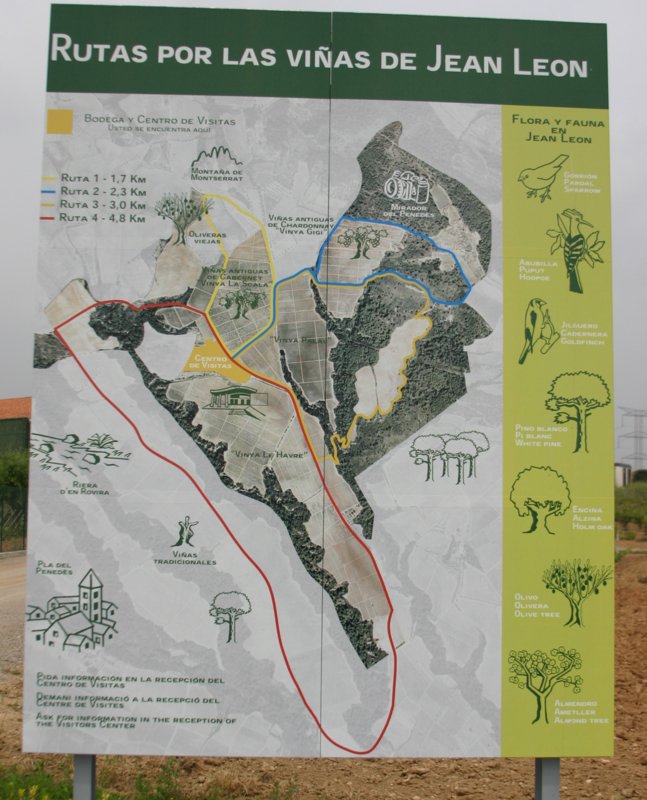
Map of Jean León Estate
Gerry Dawes copyright 2004


In La Rioja, the well-known Contino and Remelluri estates were established in the 1970s, but the modern godfather of this concept in Spain was Jean León, a Spanish expatriate who emigrated to the United States, worked in a number of restaurants frequented by movie stars and politicos, and with legendary actor James Dean founded La Scala restaurant, a popular Los Angeles hangout for movie stars.


Jean León came to America, began as a dishwasher in New York and went to work for Frank Sinatra at the singer’s Villa Capri restaurant in Hollywood. He served in the US military during the Korean War, became a naturalized American citizen, and with just $3500 opened La Scala and eventually saw five American presidents and an untold number of movie stars dine there.


In the early 1960s, Jean León used some of the profits from the lucrative La Scala to buy a 370-acre estate near Torrelavit in the highlands of the Catalan wine-growing area of Penedés west of Barcelona. He smuggled cabernet sauvignon vines that he had obtained from Châteaux Lafite-Rothschild, cabernet franc from La Lagune, and chardonnay from Burgundy’s exceptional Corton Charlemagne vineyards (and some pinot noir), ripped up the existing xarel-lo, parellada and macabeu vines (Catalan white grape varieties) ~ much to the surprise of local vine growers, who called him “a crazy American” ~ and planted these foreign varieties on 60 hectares of his land.


View of Jean León Vineyards in the Alt Penedès, Torrelavid (Barcelona)
Gerry Dawes copyright 2004


In 1969, Jean León released his first wine, a Cabernet Sauvignon Gran Reserva, almost all of which was sold in his La Scala restaurant or given as gifts to his celebrity friends. It was the first cabernet sauvignon varietal wine made commercially in Spain. In the 1970s, Jean León’s wine, though an anomaly since virtually no Spanish wineries were selling varietal wines, became an underground wine legend. His cabernet sauvignon and cabernet franc-laced blends established a level of quality for those varietals that was unknown in Spain at the time.


Inspired by Jean León’s bold venture, Miguel Torres Riera, then the young French-trained heir to the Bodegas Torres winemaking mantle, soon procured foreign varieties and planted them on his family’s nearby properties. Within a decade his Mas la Plana Black Label Gran Reservas (which eventually were made from 100% cabernet sauvignon) had gained international recognition, even topping the eminent Château Latour in a blind tasting held in Paris.


If Jean León first showed how successful Bordeaux and Burgundy varieties could be in Cataluña, Torres became the leading edge of a wave of cabernet sauvignon, merlot, and chardonnay that washed over the Penedés and in the 1980s spilled over into several emerging wine regions of Spain such as Navarra, Ribera del Duero, Somontano, and Priorato.


Jaume Rovira, who has been the winemaker at Jean León since the bodega was founded in 1964.
Gerry Dawes copyright 2004


Jean León became ill in his sixties and sold his winery and estate to the firm of Miguel Torres. Torres was his friend and the man most responsible for making Jean León’s dream of producing great wines from French grape varieties a huge success in Spain. The wines of the Jean León estate are still made by the original enologist, Jaume Rovira, but the direction and sales of the wines are now in the hands of Miguel Torres Riera’s son, Miguel Torres Maczassek (known as Miguel Torres, Jr.).


Miguel Torres Maczassek, Managing Director of Jean León and son of Miguel Torres Riera, Bodegas Miguel Torres, long one of Spain's most important wineries.
Gerry Dawes copyright 2004


This writer has long admired the red wines of Jean León and, in recent years, especially a young, fresh, barely-oaked chardonnay (it spends less than two months in oak, just the right touch). In mid-September 2001, with Chef Mark Miller of Santa Fe’s Coyote Cafe, I joined Miguel Torres Jr. at the superb Catalan restaurant Ca l’Isidre in Barcelona for an excellent dinner. We began with that wonderful Jean León white wine, which is sold under the charming name of Petite Chardonnay. With the rest of the meal we drank the wines of Bodegas Miguel Torres, including the supernal, Burgundy-esque Milmanda Chardonnay 1999, the top-of-line Mas la Plana Cabernet Sauvignon 1995, and the multi-faceted Grans Muralles 1997, a new Torres wine from Conca de Barbarà that is a blend of several different recuperated Catalan varieties.


Just over a year later, in November 2002, I met Miguel Torres, Jr., Juan-Ramón Pujol, his American marketing manager, and the representative from Five Star (Jean León’s New York distributor), at Chef Terrance Brennan’s Picholine, one of New York City’s top restaurants. We enjoyed a tasting dinner in the private wine room featuring just the wines produced by Jean León. The dishes, personally prepared by Picholine’s chef de cuisine David Cox, were spectacular and the wines kept pace.


Picholine’s Wine Director Richard Shipman first served us a sample of the fine, fragrant, stylish, boutique Cava (sparkling wine), María Casanova, which, though not made by Jean León or Torres, was from Cataluña and a perfect aperitif to prepare our palates for the tasting. After the Cava, we were served the spicy, floral Terrasola 2001, a delicious chardonnay (85%) and garnacha blanca (15%) blend. Terrasola in Catalan means “small terrace,” the terraced vineyards on which vines were traditionally grown in Cataluña. There are two other wines in the very fine Terrasola line, all of which pair a native variety with a local grape: a rich, peppery syrah-cariñena blend and a muscat-parellada blend.


OVER DINNER AND IN A SUBSEQUENT INTERVIEW, Torres, Jr. and I talked about the Jean León estate, in which he has a significant personal investment, both financially and professionally.

WFSN: Could you tell me a few things about the Jean León bodega, vineyards, and wines?


MT, Jr.: Yes, I think that we have something very good, which are some of the oldest vines of cabernet sauvignon, cabernet franc and merlot in the region. The cabernet is already 39 years old, and the soil does not provide many nutrients, so the vines are stressed and are producing the best quality for us.


WFSN: What changes have you implemented?


MT, Jr.: Since 1994 we have done a lot of work in the winery. We first started by acquiring new oak barrels, both French and American, and reorganizing the installations. During 2000, 2001 and 2002 we made the biggest improvements. We decreased even more the production, lowering it to 4,500 kg per hectare (just over 2 tons per acre) and less for the Cabernet Sauvignon Gran Reserva. I did not want irrigation because I believe that we have to show what the vines can give us naturally. The second thing I did was to invest in a new temperature-con-trolled room, so that we can perfectly control the fermentation of our barrel-fermented chardonnay. It also helps a lot to cool down all grapes before crushing them in the press. The third thing was to maintain the oak barrels even more carefully, I liked some good American oak for the reserva, but I liked French oak better for the longer-lived gran reserva, so now I use only new French small-grain oak barrels for the gran reserva and the chardonnay. Also for the reservas and the gran reservas, I thought that they were sometimes not expressing the primary aromas clearly since they were aged for up to two years in new oak. We decided that only for the first year would they be aged in new oak and then we would put them in 4- or 5-year old barrels the second year so that they would not absorb too much oak flavor.


WFSN: Anything else?


MT, Jr.: Yes, I wanted the cellars to be cooler at Jean León! So, now with new equipment we can regulate the temperature not only during the fermentation, but also in the cellar and even in the grape pick up area, which is also very important. And on November 9th we started operations in a new visitor’s center at Jean León, located in the heart of the vineyards with a breathtaking view of the Penedés region. So now Jean León is open to all the wine lovers who want to visit us.


AS ONE MIGHT EXPECT FROM THE PRICE DIFFERENTIAL, the Jean León estate wines were the stars of the evening at Picholine. There was the spicy, rich, buttery, very classy Jean León Chardonnay 2000 made from grapes grown at Viña Gigi, a 40-acre chardonnay vineyard, which is the oldest chardonnay vineyard in Spain.


The Jean León Merlot 1999, a 100% merlot varietal, was a deep blackberry-colored wine with rich, spicy, fruity merlot flavors and a long tannic finish that showed it would benefit from more aging. Jean León’s merlot vines, now ten years old, were a late addition to the estate.


Jean León Cabernet Sauvignon 1996, a blend of 85% cabernet sauvignon and 15% cabernet franc, was a clean, clear medium blackberry color, had a nice mint and cedar nose, showed lovely, rich blackberry and chocolate flavors on the palate and had a long spicy, well-stuctured finish.


The nicely structured Jean León Cabernet Sauvignon Reserva 1995 (same blend), a serious black raspberry-colored wine with a minty, eucalyptus nose, chocolate, ripe fruit flavors and earthy hints of cabernet franc, spent 2 years in oak and like a good Bordeaux, will benefit from cellaring.


The exceptional Jean León Cabernet Sauvignon Gran Reserva 1994 is basically the same grape blend as the reservas, but it all comes from specially selected lots made from the oldest vines grown on the estate’s La Scala vineyard. This dark, plummy, blackberry colored wine has a deep, ripe nose and luscious, delicious, complex flavors and firm structure that puts it on the level with many great Bordeaux châteaux wines.


We finished our meal at Picholine with a selection of superb Spanish cheeses and a selection of older cabernet sauvignon wines from Jean León, including the still vital, but mellow 1985; the still-closed, Bordeaux-esque 1979; and the excellent minty, complex 1975.


During the heyday of La Scala restaurant in Beverly Hills, Jean León became known as “the wine of the stars.” Now, some thirty years later, the wines of Jean León are showing their own star potential.


Gerry Dawes has been writing about Spanish wine, food and culture for more than 25 years.

8/07/2004

Rias Baixas Wines

Rías Baixas Wines

Rías Baixas Wines On a ten-day tasting trip last spring through six wine growing regions of northwestern Spain, I got a crash course in just how promising Spanish native varietals can be in the Atlantic Ocean- influenced climates of Galicia (Rías Baixas, Ribeira Sacra and Valdeorras) and Castilla-León (Bierzo, Toro and Rueda). In this post I will cover Rías Baixa. In subsequent posts, I cover the others.

First, I flew from Madrid to Santiago de Compostela, the monumental destination city at the end of the Camino de Santiago, the medieval pilgrimage route that runs from France down into the Iberian Peninsula and then more than 600 miles across northern Spain. From Santiago, I began my visit to emerald-green Galicia's Rías Baixas, where I tasted some 50 wines, including some superb 100% Albariños. Pazo de Señorans, Fillaboa, Do Ferreiro, Lagar Pedregales, Palacio de Fefiñanes, Lusco, and Pazo de Barrantes, not only reinforced my belief in the excellence of this white native varietal, it alerted me to aspects of albariño's versatility and ageworthiness of which I was unaware.

From my tastings of barrel fermented Rías Baixas white wines, I re-confirmed my belief that new oak does not significantly enhance these fresh, fruity wines; in fact, it often obscures their fruit and charm. Most wineries are experimenting with barrel-fermented (a current fad) Albariños, but hardly any of them were better than the bodega's un-oaked Albariño.

I also discovered that two notable producers, Pazo de Señorans and Palacio de Fefiñanes, were making Albariños that see no new oak and are eminently ageworthy. Pazo de Señorans produced a stunning 1996 Albariño aged on the lees in stainless steel for three years, which is undoubtedly the greatest Rías Baixas wine I have tasted. Palacio de Fefiñanes showed a superb vertical lineup (from 2001 through 1996) of Albariños aged in large used oak vats. Another surprise was a luscious, sweet, complex, vendimia tardia (late harvest) Albariño made as an experiment at Pazo de Barrantes.


Galician Seafood & Albarino Posted by Hello


The Rías Baixas denominación de origen is composed of five subzones: Val do Salnés, Soutomaior, O Rosal, Condado de Tea, and Ribeira do Ulla, the newest of the designated wine growing areas. Surrounded on three sides by the Atlantic Ocean, the Ría de Arousa and the Ría de Pontevedra, the area known as Val do Salnés, with more than 60% of Rías Baixas's registered vineyards, is the most important of the five, followed by Condado de Tea and O Rosal, both along the Miño river. Because of Galicia's high rainfall and humidity, vines are trained on tall wire trellises, which are usually anchored by granite or concrete posts. The grapes are grown several feet off the ground to allow for maximum air circulation, which promotes even ripening and helps prevent rot and associated vine and grape afflictions.

To use the Albariño varietal designation on a label, in all five Rías Baixas subzones a wine must be 100% albariño. Since 94% of just over 5900 acres of registered vineyards in the Rías Baixas DO are albariño, this is often a moot point. By law, other white Rías Baixas-designated wines of must contain a minimum of 70% Albariño. The remaining 30% of the blend is usually composed of one or more of the other authorized, preferred grape varieties - - treixadura, loureira, and caiño blanco (some godello, torrontés, and marqués grapes are also authorized) - - which add different aromas, body, and often more complexity to the wines.

Although Albariños are among the world's finest single-varietal white wines, the Rías Baixas blends often match them in quality. In tasting albariño-treixadura blends such as Adegas Galegas's Veigadares, Valmiñor's Dávila, Marqués de Vizhoja's Señor de Folla Verde, in the Condado de Tea subzone of Rías Baixas, along the Miño River that is the Galicia's border with Portugal, and albariño, loureiro, and treixadura blends such as Terras Gauda, Santiago Ruíz, Pazo San Mauro, and in the O Rosal subzone, I also saw significant potential in loureiro and treixadura as blending grapes which add complexity to albariño-based wines.

It is not politically incorrect to call Rías Baixas wines of the most feminine in Spain, especially since the consejo regulador's president is María Soledad Bueno (the owner of Pazo de Señorans) and many top wines are made by women enologists, including Isabel Salgado (Granja Fillaboa), Cristina Mantilla (Adegas Galegas - Veigadares), Angela Martín (Castro Martín- Casal Caiero), María del Pilar Jiménez (Pazo de Barrantes), Ana Martín (Salnesur - Condes de Albarei), Ana Oliveira (Terras Guada), Ana Quintela (Pazo de Señorans), and María Luisa Freire (Santiago Ruíz).

Rías Baixas Albariños and albariño-based blends are some of the most versatile, delicious, food-friendly, and least intimidating wines in the market. They usually are a lovely green-tinged straw color and their fruity albariño aromas are reminiscent of white peaches, pears, apricots or pineapple. On the palate they are fruity and often luscious, but finish dry. The fruit is usually beautifully balanced by a fine-edged underpining of acidity and the wines exhibit lovely, complex, mineral-laced flavors in the finish. These qualities make them ideal matches for a wide variety of modern and traditional dishes, as well as delicious wines for sipping as an aperitif or to accompany tapas, Spain's wide variety of little dishes.


Galician Seafood & Pazo de SenoransPosted by Hello


Albariño blends are also supernal companions to the splendid seafood that Galicia was known for before the criminal actions of the Prestige single-hull oil tanker, which sank off the coast of Spain in November 2002, destroyed the most important source of prime shellfish in Europe, and ruined the livelihoods of hundreds of thousands of hard-working Spaniards and Portuguese, including those who work in the superb marisquerías, or seafood restaurants of these two maritime countries. I am happy to say in this update on August 7, 2004, the Galicians, through a Herculean effort have recuperated much of their fishing grounds. --Gerry Dawes©2003
Related Posts with Thumbnails